 CULTURETECHLENS
The Encyclopedia · CTL-ENC-000056
Milton P. Webster
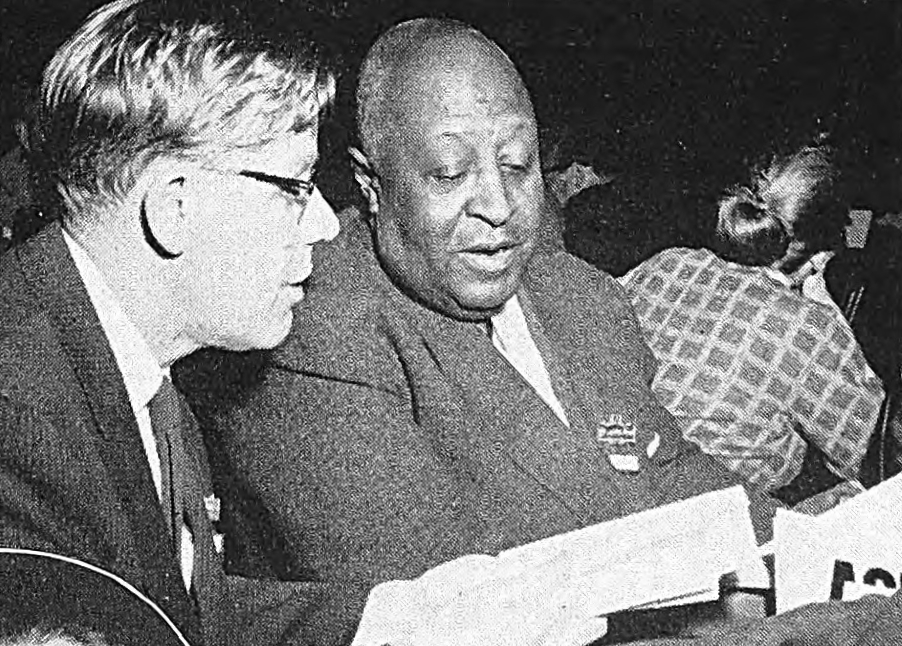
Randolph got the headlines; Webster ran the city where the union had to win.
| At a glance | |
|---|---|
| Type | PERSON — person |
| Dates | – |
| Chicago connection | CORE — see the Chicago connection section |
| Known for | Randolph got the headlines; Webster ran the city where the union had to win. |
| Verification | PROVISIONAL |
| CTL ID | CTL-ENC-000056 |
Overview
Randolph got the headlines; Webster ran the city where the union had to win. Milton Price Webster (April 23, 1887 – February 24, 1965) was an American trade unionist, first vice president of the Brotherhood of Sleeping Car Porters and leader of its Chicago division, and, as the union's lead negotiator, a central figure in securing the collective bargaining agreement with the Pullman Company — the first national contract won by any Black-led American trade union. In the CultureTechLens stores he has no standalone record at all: he survives only inside the composite build record for Randolph, Webster, and the Brotherhood together, which is why this staged record exists.
Encyclopedia.com's chronology gives the Chicago ground he stood on. He became an assistant bailiff in Chicago's municipal court in 1924 and a ward leader for the Republican Party in Chicago in 1925 — a former Pullman porter with twenty years in the job, per the union's history, who had been fired by the company for attempting to organize porters in an earlier association. He began his relationship with A. Philip Randolph and the Brotherhood in 1926, heading the union's first organizing drive in Chicago, one of the Pullman Company's three largest terminals alongside Oakland and St. Louis. The drive met, in the scholarly account carried by Temple University Press, a magnificent response from the porters themselves, even as most local Black leaders and the city's Black newspapers initially advised porters to support the company union instead.
Life and career
In 1929 Webster was elected first vice-president of the Brotherhood and announced a forthcoming national labor conference in Chicago. The Encyclopedia.com entry describes the working method that followed: he protested the Pullman Company's long practice of low pay, long hours, and harsh treatment of its overwhelmingly African American porters; he handled Brotherhood cases before the Railroad Adjustment Board; and he served as chief negotiator of the union's contracts with the railroad. The results are dated in the chronology: the Pullman Company recognized the Brotherhood as the bargaining unit for porters and maids in 1935, the American Federation of Labor granted the union its international charter in 1935 — the first African American union to win a national contract and the first bargaining agreement won against Pullman — and the contractual agreement itself followed in 1937, raising wages and capping the work month at 240 hours.
The war years widened the brief. Webster was appointed by President Franklin D. Roosevelt as a member of the Fair Employment Practice Committee and its successor commission, representing the Brotherhood on the first FEPC from 1941 and working to end racial discrimination in the defense industry; the committee's work helped open jobs for Black workers in industries with federal war contracts. The charter with the AFL also led to his seat on the federation's International Board. The Chicago History Museum holds his 1951 portrait as the Brotherhood's first vice president and Chicago division leader, and preserves his April 1944 open letter answering a newspaper charge that the Brotherhood discriminated against Filipino workers: he replied that a substantial number of the Chicago division's paid-up members were Filipinos who held staff positions and enjoyed every right the constitution provided. He died on February 24, 1965, in Bal Harbour, Florida. The composite record that carried his name is hereby separated, per the founder's SEPARATES ruling: Webster's record is his own.
The museum's holdings also give the Chicago division a face beyond its president. Among its Brotherhood artefacts, the Chicago History Museum preserves a 1929 certificate of membership in the American Federation of Labor, issued through the Sleeping Car Porters, for Archibald Motley — father of the Harlem Renaissance painter Archibald Motley Jr. — and a group photograph of Brotherhood officers from about 1935. The artefacts make the structural point the documents argue: Webster's Chicago division was not a mailing address but a membership institution woven into the city's Black civic life, enrolling working men whose families were simultaneously building Bronzeville's churches, businesses, and art world. This record is a staged proposal pending the founder's classification sitting.
Chicago connection
Milton Price Webster (April 23, 1887 – February 24, 1965) was an American trade unionist, first vice president of the Brotherhood of Sleeping Car Porters and leader of its Chicago division, and, as the union's lead negotiator, a central figure in securing the collective bargaining agreement with the Pullman Company — the first national contract won by any Black-led American trade union. Encyclopedia.com's chronology gives the Chicago ground he stood on. He became an assistant bailiff in Chicago's municipal court in 1924 and a ward leader for the Republican Party in Chicago in 1925 — a former Pullman porter with twenty years in the job, per the union's history, who had been fired by the company for attempting to organize porters in an earlier association. Philip Randolph and the Brotherhood in 1926, heading the union's first organizing drive in Chicago, one of the Pullman Company's three largest terminals alongside Oakland and St. In 1929 Webster was elected first vice-president of the Brotherhood and announced a forthcoming national labor conference in Chicago. [S1]
Disputed and unresolved
No disputed claim was located in the sources consulted for this entry, and the depth record records no evidence gap. Open items, if any, are listed in Editorial notes.
See also
Relationships
Relationships: none recorded yet — edges to follow. This entry's graph connections are being built; it publishes now on its sources.
Sources
- S1: Encyclopedia.com. "Webster, Milton P." Accessed October 25, 2026. https://www.encyclopedia.com/african-american-focus/news-wires-white-papers-and-books/webster-milton-p.
- S2: Wikipedia. "Milton P. Webster." Accessed October 25, 2026. https://en.wikipedia.org/wiki/Milton_P._Webster.
- S3: Chicago History Museum. "Filipinos and the Brotherhood of Sleeping Car Porters." Accessed October 25, 2026. https://www.chicagohistory.org/filipinos-brotherhood-of-sleeping-car-porters/.
- S4: Chicago History Museum. "The Brotherhood of Sleeping Car Porters." Collection highlights. Accessed October 25, 2026. https://www.chicagohistory.org/brotherhood-sleeping-car-porters/.
Cite this entry
- Permanent ID: CTL-ENC-000056 · Crosswalked graph record: CTL-ESS-0009 · Version: 0.1 · Date: 2026-10-28
- Chicago: CultureTechLens. "Milton P. Webster." CultureTechLens Encyclopedia, version 0.1, October 28, 2026. CultureTechLens NFP. CTL-ENC-000056.
- APA: CultureTechLens. (2026). Milton P. Webster (Version 0.1, Entry CTL-ENC-000056). CultureTechLens Encyclopedia. CultureTechLens NFP.
- MLA: CultureTechLens. "Milton P. Webster." CultureTechLens Encyclopedia, version 0.1, CultureTechLens NFP, 28 Oct. 2026. Entry CTL-ENC-000056.
Further reading
- CultureTechLens Knowledge Graph record CTL-ESS-0009 (no published graph register match located — see Editorial notes).
Image credits
- Milton P. Webster photograph: see Images block in the frontmatter for the full credit line, rights status, and rights document.
Citation
CultureTechLens. "Milton P. Webster." CultureTechLens Encyclopedia, Vol. 1 — Black Chicago, version 0.1, 2026-10-28. CultureTechLens NFP. CTL-ENC-000056.
<!-- =======================