 CULTURETECHLENS
The Encyclopedia · CTL-ENC-000016
Oakland
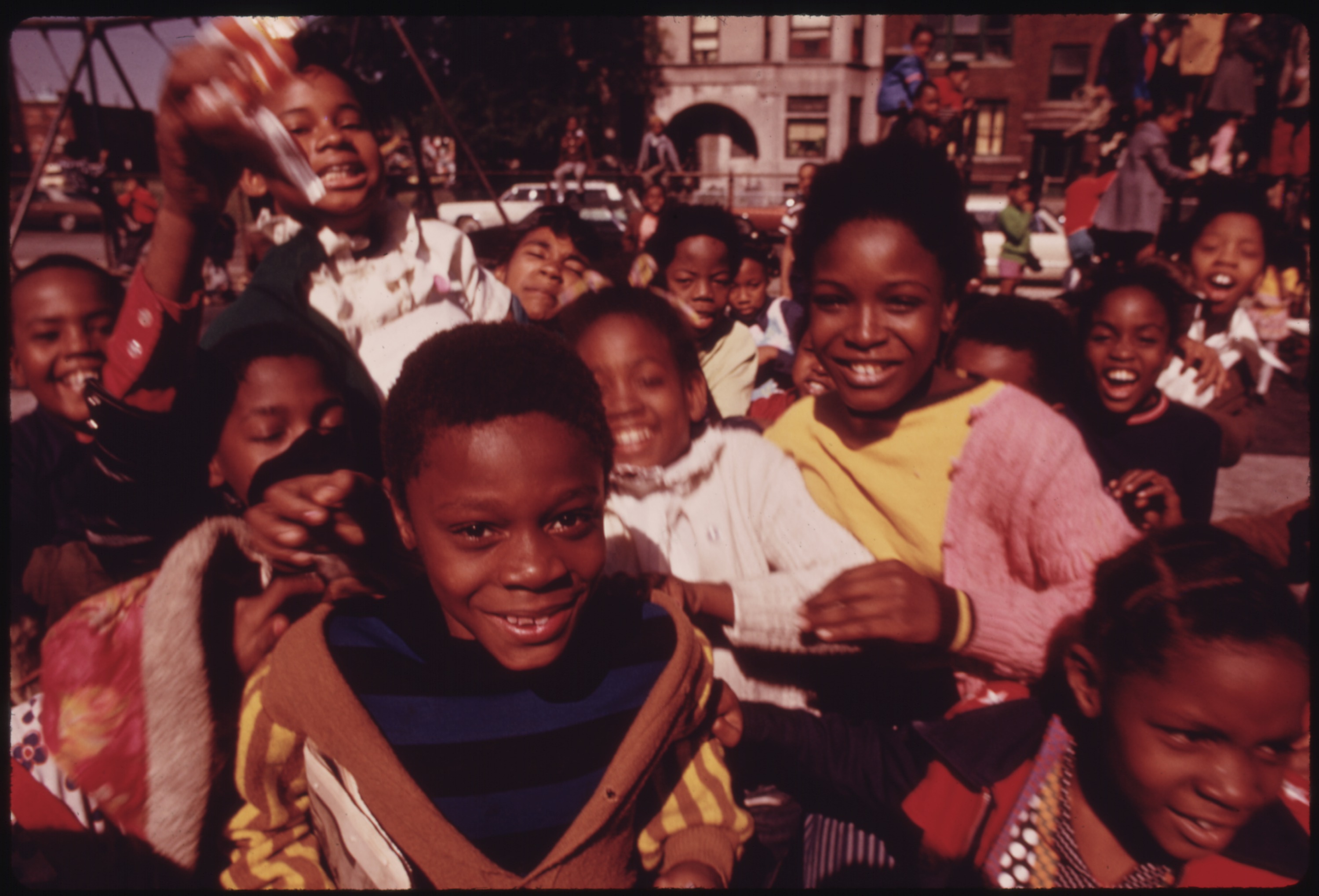
First, the identification, because the name invites the error: the graph's Oakland is not Oakland, California.
| At a glance | |
|---|---|
| Type | PLACE — community area |
| Dates | – |
| Chicago connection | CORE — see the Chicago connection section |
| Known for | First, the identification, because the name invites the error: the graph's Oakland is not Oakland, California. |
| Verification | VERIFIED |
| CTL ID | CTL-ENC-000016 |
Overview
First, the identification, because the name invites the error: the graph's Oakland is not Oakland, California. The master record at rank 200 of the depth queue is Chicago's Oakland community area — community area 36, on the South Side lakefront — and its verification source is the Chicago Metropolitan Agency for Planning's community snapshot, which counts 6,937 residents (2020–2024 American Community Survey estimates). This entry is written for the Chicago neighborhood the master describes.
It is one of the city's oldest neighborhoods. In 1851 Charles Cleaver, an English immigrant soap manufacturer, bought twenty-two acres near 38th Street and Lake Michigan, built his factory, and laid out a company settlement for its workers called Cleaverville. Renamed Oakland in 1871 — for the oak trees, in the standard account — the settlement was absorbed into the expanding city and became, with the Illinois Central's terminal at 39th and Cottage Grove in 1881 (the intersection older residents called the Five Crossings), a first landing place: first for prosperous commuters in the mansions that lined its streets, then, by 1900, for a working-class and increasingly Irish population as the wealthy moved on.
History
Its landmark is institutional. The Abraham Lincoln Centre, opened in 1905 at 700 East Oakwood Boulevard under Unitarian minister Jenkin Lloyd Jones — settlement house, church, and community center in one — was designed by Frank Lloyd Wright, the architect's only religious-commission building of its kind in the city, and became a center of South Side civic life. The Great Migration redrew the neighborhood again: Black families settled Oakland in large numbers between 1916 and 1920, and the community has been predominantly Black since, sitting at the northern edge of the historic Black Belt, pressed against Kenwood to the south and Grand Boulevard to the west.
The scale is the record's distinctive fact. Oakland is the smallest of Chicago's seventy-seven community areas — about 0.6 square miles — and its 2020 census population, 6,799 (86.7 percent Black, per the reference entry's census figures), and the CMAP survey estimate of 6,937 differ by instrument rather than by disagreement, as with Kenwood above: census count against survey estimate, each stated as its source gives it. A neighborhood of under seven thousand people holds a Frank Lloyd Wright landmark, a Cleaverville company-town origin, and a Great Migration history complete in itself — which is why the graph carries it as a distinct Place record at VERIFIED grade, adjacent to its Bronzeville-orbit neighbors in the South Side cluster, rather than letting it dissolve into the larger districts around it.
Two more facts define the modern neighborhood. Parts of Oakland and neighboring North Kenwood sit within Chicago's North Kenwood–Oakland Conservation District, a locally designated area created to manage redevelopment pressure from the University of Chicago and Hyde Park to the south — the planning instrument that has shaped the neighborhood's twenty-first-century rebuilding, including new housing along Cottage Grove and the restoration of its historic greystone and brick housing stock. Its green anchors are Ellis Park and Mandrake Park, the latter with the community's fieldhouse and programs, and its eastern edge is the lakefront at Oakwood Beach and the 41st Street pedestrian bridge. The neighborhood's position — the smallest community area in the city, wedged between the lake, Kenwood, and Grand Boulevard at the top of Bronzeville — is precisely what the graph's neighborhood edges encode: Oakland as its own Place node, small enough to be absorbed by its neighbors in most accounts, and old enough, from Cleaverville in 1851 forward, to insist on being counted separately. The 2020 census counted 6,799 residents; the CMAP survey estimate carried by the master is 6,937; the entry states both with their instruments, as the program requires.
Chicago connection
The master record at rank 200 of the depth queue is Chicago's Oakland community area — community area 36, on the South Side lakefront — and its verification source is the Chicago Metropolitan Agency for Planning's community snapshot, which counts 6,937 residents (2020–2024 American Community Survey estimates). This entry is written for the Chicago neighborhood the master describes. Oakland is the smallest of Chicago's seventy-seven community areas — about 0.6 square miles — and its 2020 census population, 6,799 (86.7 percent Black, per the reference entry's census figures), and the CMAP survey estimate of 6,937 differ by instrument rather than by disagreement, as with Kenwood above: census count against survey estimate, each stated as its source gives it. Parts of Oakland and neighboring North Kenwood sit within Chicago's North Kenwood–Oakland Conservation District, a locally designated area created to manage redevelopment pressure from the University of Chicago and Hyde Park to the south — the planning instrument that has shaped the neighborhood's twenty-first-century rebuilding, including new housing along Cottage Grove and the restoration of its historic greystone and brick housing stock. [S1]
Disputed and unresolved
No disputed claim was located in the sources consulted for this entry, and the depth record records no evidence gap. Open items, if any, are listed in Editorial notes.
See also
Relationships
Relationships: none recorded yet — edges to follow. This entry's graph connections are being built; it publishes now on its sources.
Sources
- S1: Chicago Metropolitan Agency for Planning. “Oakland Snapshot / 2020–2024 ACS Data for Chicago Community Areas.” Accessed October 25, 2026. https://cmap.illinois.gov/download/6181/?tmstv=1790170245.
- S2: Wikipedia. “Oakland, Chicago.” Accessed October 25, 2026. https://en.wikipedia.org/wiki/Oakland,_Chicago.
- S3: Encyclopedia of Chicago (Chicago History Museum / Newberry Library). “Oakland.” Accessed October 25, 2026. http://www.encyclopedia.chicagohistory.org/pages/923.html.
Cite this entry
- Permanent ID: CTL-ENC-000016 · Crosswalked graph record: CTL-PL-0199 · Version: 0.1 · Date: 2026-10-28
- Chicago: CultureTechLens. "Oakland." CultureTechLens Encyclopedia, version 0.1, October 28, 2026. CultureTechLens NFP. CTL-ENC-000016.
- APA: CultureTechLens. (2026). Oakland (Version 0.1, Entry CTL-ENC-000016). CultureTechLens Encyclopedia. CultureTechLens NFP.
- MLA: CultureTechLens. "Oakland." CultureTechLens Encyclopedia, version 0.1, CultureTechLens NFP, 28 Oct. 2026. Entry CTL-ENC-000016.
Further reading
- CultureTechLens Knowledge Graph record CTL-PL-0199 (crosswalked; published graph register id CTL-E-0216).
Image credits
- Oakland photograph: see Images block in the frontmatter for the full credit line, rights status, and rights document.
Citation
CultureTechLens. "Oakland." CultureTechLens Encyclopedia, Vol. 1 — Black Chicago, version 0.1, 2026-10-28. CultureTechLens NFP. CTL-ENC-000016.
<!-- =======================