 CULTURETECHLENS
The Encyclopedia · CTL-ENC-000001
Bronzeville
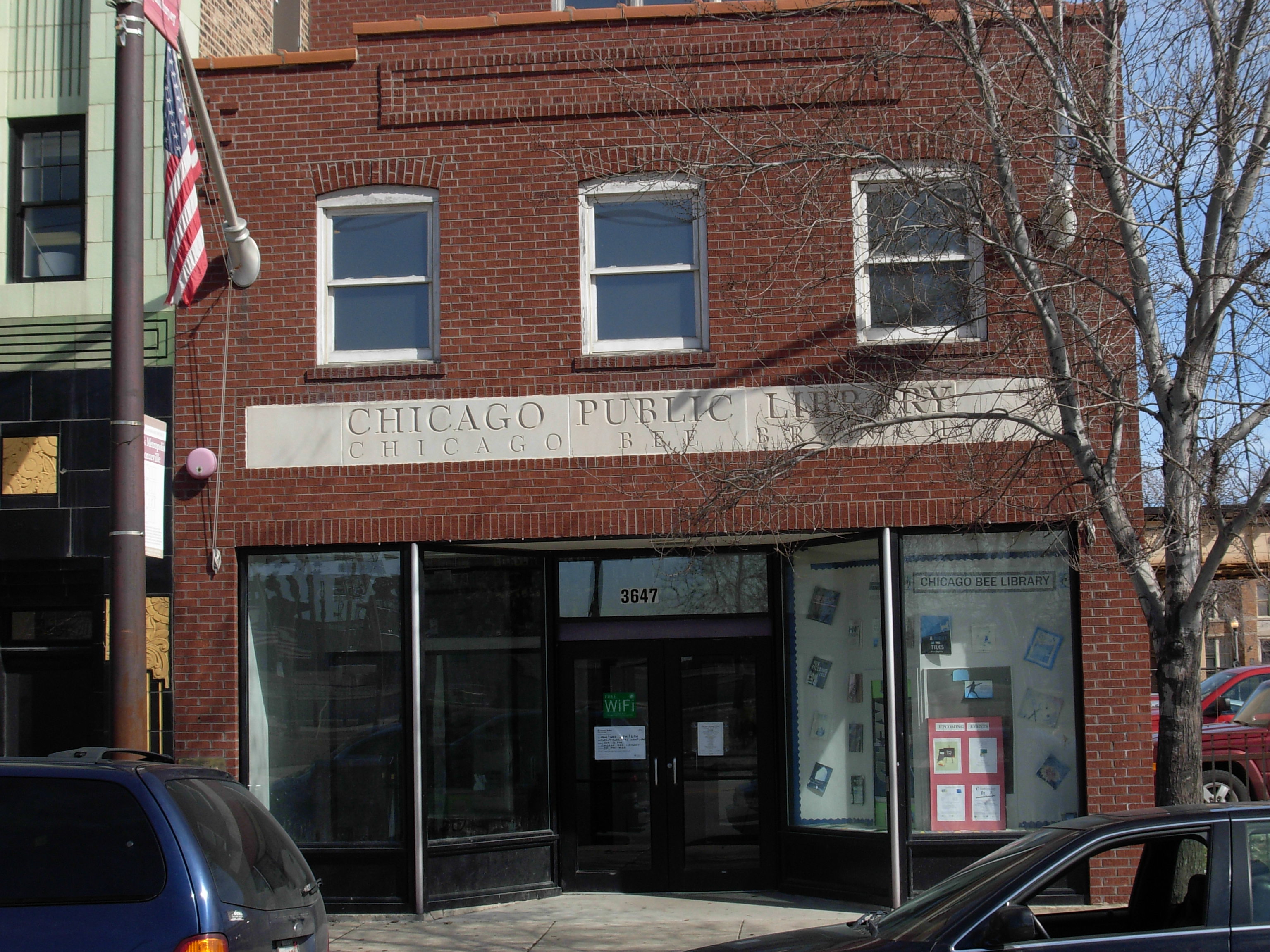
Historic Black neighborhood on Chicago's South Side — the early twentieth-century “Black Metropolis” — whose nine-landmark district and 2023 National Heritage Area preserve the institutional landscape built by the Great Migration.
| At a glance | |
|---|---|
| Type | PLACE — neighborhood |
| Dates | – |
| Chicago connection | Chicago, South Side — Douglas, Grand Boulevard, and Oakland community areas |
| Known for | The "Black Metropolis"; Black Metropolis–Bronzeville District (nine Chicago Landmarks, designated 1998); Bronzeville–Black Metropolis National Heritage Area (2023) |
| Verification | VERIFIED |
| CTL ID | CTL-ENC-000001 |
Overview
Bronzeville is the historic Black neighborhood of Chicago's South Side, comprising the Douglas, Grand Boulevard, and Oakland community areas and known in the early twentieth century as the "Black Metropolis" — the African American Registry's summary, and the graph's verification anchor, for a district that functioned as a city within a city. The National Park Service describes what that meant in practice: in the twentieth century the Bronzeville area became known as the Black Metropolis, "a mecca of African American business, arts, music and culture, politics and more that would influence our nation," built by the Great Migration that carried Black Southerners to Chicago in search of work and a different life.
Origins and the Black Metropolis
The historic core is formally mapped. The Black Metropolis–Bronzeville District, in the Douglas community area, runs between the Dan Ryan Expressway to the west, Martin Luther King Jr. Drive to the east, 31st Street to the north, and Pershing Road (39th Street) to the south. Nine structures in the district were designated Chicago Landmarks on September 9, 1998: the Overton Hygienic Building, the Chicago Bee Building, the Wabash Avenue YMCA, the Chicago Defender Building, Unity Hall, the Eighth Regiment Armory, the Sunset Cafe, the Victory Monument, and the Supreme Life Building. Six of the nine were already listed on the National Register of Historic Places in 1986. Read as a list, it is an institutional census of the Black Metropolis: a cosmetics-and-banking fortune (Overton), a Black newspaper and its rival's offices (the Bee and Defender buildings), a YMCA that housed migrants, a National Guard armory for the Black Eighth Regiment, a jazz room, a war memorial, and the headquarters of Black-owned insurance.
The Park Service's own points of interest extend the map into memory: the Bronzeville Trail, the Emmett Till and Mamie Till-Mobley National Monument at Roberts Temple Church of God in Christ, the Monument to the Great Migration, the Ida B. Wells Monument, Quinn Chapel, and the Muddy Waters house museum, with Ida B. Wells, the Tills, and bicycle racer Major Taylor among the figures the heritage area names. The NPS account stresses the neighborhood's national roles — in the growth of the labor movement through Black workers, in the shaping of the Civil Rights Movement, and in the blues, jazz, and gospel music that came to Chicago with the Migration.
Federal recognition
Federal recognition arrived in two steps that sources date differently and that this entry keeps distinct. Congress passed the Bronzeville–Black Metropolis National Heritage Area Act at the close of the 117th Congress in December 2022 — Senators Duckworth and Durbin, its sponsors, noted on January 3, 2023 that the bill created the first National Heritage Area dedicated to the story of the Great Migration, running from 18th Street to 71st Street, Lake Michigan to Canal Street — and the National Heritage Area Act (Public Law 117-339) was signed on January 5, 2023, with up to $10 million in federal funding designated over fifteen years to support preservation of more than 200 locations. The Chicago Metropolitan Agency for Planning, which is crafting the heritage area's management plan with the Bronzeville Community Development Partnership, frames the area as a memorial to the Great Migration of 1910–70, in which approximately 600,000 African Americans migrated north.
Legacy
In the graph, Bronzeville sits inside Chicago (CTL-PL-0182) and carries the neighborhood's institutions with it — the Urban League's historic South Side home, the Bud Billiken Parade's route down King Drive, and the Chicago Black Renaissance located within it. Its CTL weight comes from density rather than size: few American neighborhoods hold this much documented Black institutional history in this few square miles, and fewer still have had that history written into federal law as a landscape worth preserving whole.
Chicago connection
Bronzeville is Chicago: the neighborhood sits on the city's South Side, comprising the Douglas, Grand Boulevard, and Oakland community areas, and its record is a Chicago record from the start [S1]. Its institutions named in the sources above are Chicago institutions — the Bud Billiken Parade's route runs down King Drive, the Muddy Waters house museum stands in the neighborhood, and the Chicago Black Renaissance is located within it [S2][S5]. The National Heritage Area that Congress created in 2023 is, by its own terms, a Chicago landscape: 18th Street to 71st Street, Lake Michigan to Canal Street [S3].
Disputed and unresolved
| Claim | Version A (source) | Version B (source) | CTL position |
|---|---|---|---|
| When federal recognition arrived | Congress passed the Bronzeville–Black Metropolis National Heritage Area Act at the close of the 117th Congress in December 2022 (S4) | The National Heritage Area Act (Public Law 117-339) was signed on January 5, 2023 (S5) | Both dates are documented and are kept distinct in this entry: passage (December 2022) and signing (January 5, 2023) are separate events, not competing claims |
See also
- Muddy Waters — the Muddy Waters house museum is among the heritage area's named points of interest
Relationships
- served_by — First Church of Deliverance (CTL-E-0506) — Restated from the CultureTechLens Knowledge Graph: Bronzeville (CTL-E-0205) served_by First Church of Deliverance (CTL-E-0506), verification Verified.
- impacted_by — The Great Migration to Bronzeville (CTL-E-0919) — Restated from the CultureTechLens Knowledge Graph: Bronzeville (CTL-E-0205) impacted_by The Great Migration to Bronzeville (CTL-E-0919), verification Verified. The depth record documents the Great Migration as the force that built the neighborhood (S1–S3).
Sources
- S1: African American Registry. "The Bronzeville Neighborhood, a Story." African American Registry. Accessed October 25, 2026. https://aaregistry.org/story/the-bronzeville-neighborhood-a-story/.
- S2: National Park Service. "Bronzeville–Black Metropolis National Heritage Area." National Park Service. Accessed October 25, 2026. https://home.nps.gov/places/bronzeville-black-metropolis-national-heritage-area.htm.
- S3: Chicago Metropolitan Agency for Planning. "Bronzeville–Black Metropolis National Heritage Area." Engage CMAP. Accessed October 25, 2026. https://engage.cmap.illinois.gov/black-metropolis-national-heritage-area.
- S4: Duckworth, Tammy. "Congress Passes Duckworth, Durbin Bill to Create National Heritage Area in Chicago's Bronzeville Community." U.S. Senate. Accessed October 25, 2026. https://www.duckworth.senate.gov/news/press-releases/congress-passes-duckworth-durbin-bill-to-create-national-heritage-area-in-chicagos-bronzeville-community.
- S5: "Black Metropolis–Bronzeville District." Wikipedia. Accessed October 25, 2026. https://en.wikipedia.org/wiki/Black_Metropolis%E2%80%93Bronzeville_District.
- S6: CultureTechLens Knowledge Graph (schema v0.3.1), entities.json and relationships.json — CTL's own graph register, consulted 2026-10-28 for crosswalk facts and restated relationships.
Cite this entry
- Permanent ID: CTL-ENC-000001 · Crosswalked graph record: CTL-PL-0021 · Version: 0.1 · Date: 2026-10-28
- Chicago: CultureTechLens. "Bronzeville." CultureTechLens Encyclopedia, version 0.1, October 28, 2026. CultureTechLens NFP. CTL-ENC-000001.
- APA: CultureTechLens. (2026). Bronzeville (Version 0.1, Entry CTL-ENC-000001). CultureTechLens Encyclopedia. CultureTechLens NFP.
- MLA: CultureTechLens. "Bronzeville." CultureTechLens Encyclopedia, version 0.1, CultureTechLens NFP, 28 Oct. 2026. Entry CTL-ENC-000001.
Further reading
- CultureTechLens Knowledge Graph record CTL-PL-0021 (crosswalked; published graph register id CTL-E-0205).
Image credits
- Chicago Bee Building photograph: see Images block in the frontmatter for the full credit line, rights status, and rights document.
Citation
CultureTechLens. "Bronzeville." CultureTechLens Encyclopedia, Vol. 1 — Black Chicago, version 0.1, 2026-10-28. CultureTechLens NFP. CTL-ENC-000001.
<!-- =======================