 CULTURETECHLENS
The Encyclopedia · CTL-ENC-000002
Muddy Waters
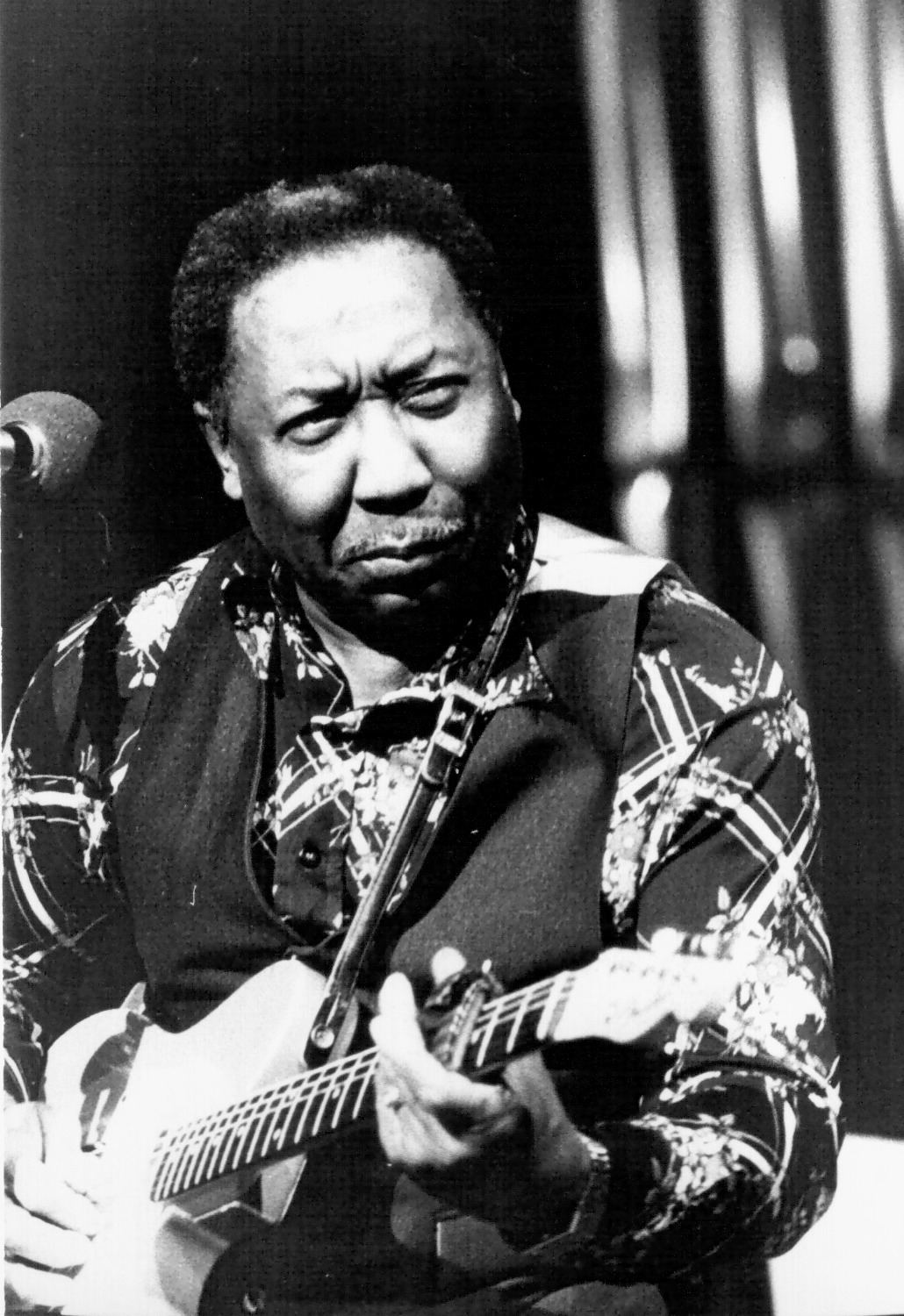
McKinley Morganfield (1913–1983), the Mississippi-born singer and guitarist who moved to Chicago in 1943 and turned Delta blues into electric Chicago blues at Chess Records — the father of modern Chicago blues.
| At a glance | |
|---|---|
| Type | PERSON — musician |
| Dates | 1913-04-04 – 1983-04-30 |
| Chicago connection | Moved to Chicago in 1943; Chess Records artist; Kenwood home (Honorary Muddy Waters Drive, 1985) |
| Known for | "Rollin' Stone" (1950), "Hoochie Coochie Man" (1954), "Mannish Boy" (1955); father of modern Chicago blues |
| Verification | VERIFIED |
| CTL ID | CTL-ENC-000002 |
Overview
McKinley Morganfield was born on April 4, 1913, in Issaquena County, Mississippi — the date supported by his marriage license, union card, and Social Security application, though he claimed 1915 and his gravestone repeats the later year — and raised by his grandmother Della Grant on Stovall Plantation near Clarksdale. The Mississippi Blues Trail marker text, which verifies the CTL record, carries him under his working name: the boy who played in the mud of Deer Creek became Muddy, and the water he played in became Waters. In 1941 and again in 1942, Alan Lomax and John W. Work III recorded him at Stovall for the Library of Congress, a sharecropper singing country blues into a federal microphone. In 1943 he did what the marker and the music both insist on: he moved to Chicago, and the Delta went electric.
Career
The transformation is documented session by session. He took up the electric guitar in 1944, recorded first for Columbia in 1946 under another singer's billing, and then found Aristocrat Records, the Chess brothers' label, where "I Can't Be Satisfied" and "I Feel Like Going Home" became hits in 1948 and "Rollin' Stone" followed as his signature record, cut in 1950. Aristocrat became Chess Records, and Waters assembled the band that defined the idiom — Little Walter Jacobs on harmonica, Jimmy Rogers on guitar, Elga Edmonds on drums, Otis Spann on piano, and Willie Dixon writing and playing bass behind classics the Rock and Roll Hall of Fame later listed among the songs that shaped rock and roll: "Rollin' Stone" (1950), "Hoochie Coochie Man" (1954), "Mannish Boy" (1955), and "Got My Mojo Working" (1957). The CTL graph attaches those songs, and the album Hard Again, to Waters as works he authored. His 1958 tour of England landed electric blues on musicians who would carry it back as rock — the Rolling Stones took their very name from his "Rollin' Stone" — and his live album At Newport 1960 fixed the band's power on record.
The middle of the career shows an artist managing his own canon. At Newport in 1960 his band's performance produced his first live album, with "Got My Mojo Working" as its signature. Folk Singer (1963) stripped him back to an acoustic setting; Electric Mud (1968) dressed his songs in psychedelic arrangements he himself disowned; Fathers and Sons (1969), pairing him with younger white blues-rock musicians and his own veterans, became his most successful album, reaching number 70 on the Billboard 200. The pattern through the decade is a man negotiating, on the record, with an industry that kept rediscovering him on its own terms — and the Chess catalog beneath the negotiations never stopped selling the original sound.
Later life
The last decade compounded the honors rather than coasting on them. After the Chess years, Johnny Winter produced four albums for him on Blue Sky — Hard Again (1977), I'm Ready (1978), the live Muddy "Mississippi" Waters — Live (1979), and King Bee (1981) — and all but the last won Grammy Awards, completing a run of six career Grammys between 1972 and 1980. In November 1981 he sang at the Checkerboard Lounge in Bronzeville with three Rolling Stones sitting in. He died at his home in Westmont, Illinois, on April 30, 1983 — the date the Blues Trail marker gives — and is buried in Restvale Cemetery in Alsip. Chicago named the block by his former South Side home Honorary Muddy Waters Drive in 1985; the Blues Foundation inducted him in 1980 and the Rock and Roll Hall of Fame in 1987, and the Grammys gave him a Lifetime Achievement Award in 1992. They call him the father of modern Chicago blues. The record supports the title the plain way: he carried a Delta repertoire into a bandstand format in Chicago, and the format became the template the world copied.
Legacy
The commemoration has been built into both of his landscapes. In Mississippi, the Blues Trail marks his Stovall cabin site. In Chicago, beyond the honorary street name by his Kenwood home, a ten-story mural by the Brazilian artist Eduardo Kobra, commissioned for the Chicago Blues Festival, went up in 2017 on the building at 17 North State Street downtown. The federal government put him on a 29-cent postage stamp in 1994, two years after the Grammy Lifetime Achievement Award; in 2016 the International Astronomical Union named a crater on Mercury for him. A sharecropper's son from Issaquena County, carried in the end from the Blues Trail to the surface of another planet — each honor documented, each one earned in Chicago.
Chicago connection
Chicago is where the transformation this entry documents happened: Waters moved to Chicago in 1943 and the Delta went electric there [S1][S2]. He recorded for the Chess brothers' Aristocrat, which became Chess Records, in Chicago [S2]. In November 1981 he sang at the Checkerboard Lounge in Bronzeville with three Rolling Stones sitting in [S2]. The city named the block by his former South Side (Kenwood) home Honorary Muddy Waters Drive in 1985, and a ten-story mural by Eduardo Kobra, commissioned for the Chicago Blues Festival, went up in 2017 at 17 North State Street [S2].
Disputed and unresolved
| Claim | Version A (source) | Version B (source) | CTL position |
|---|---|---|---|
| Birth year | 1913 — supported by his marriage license, union card, and Social Security application (S2) | 1915 — claimed by Waters himself and repeated on his gravestone (S2) | DISPUTED at the claim level; this entry uses April 4, 1913, the documented date, and shows both |
See also
- Bronzeville — Waters sang at the Checkerboard Lounge in Bronzeville in November 1981; his house museum is a named Bronzeville heritage point of interest
Relationships
- recorded_for — Chess Records (CTL-E-0165) — Depth record: Waters found Aristocrat Records, the Chess brothers' label, in 1948; Aristocrat became Chess Records, and his signature Chess recordings followed (S2). Also restated from the graph: CTL-E-0001 recorded_for CTL-E-0165, Verified.
- collaborated_with — Willie Dixon (CTL-E-0003) — Depth record: Willie Dixon wrote and played bass behind Waters's Chess classics (S2). Graph register carries the same collaboration (CTL-E-0003 collaborated_with CTL-E-0001, Verified).
- associated_with — Kenwood (CTL-E-0215) — Restated from the CultureTechLens Knowledge Graph: Muddy Waters (CTL-E-0001) associated_with Kenwood (CTL-E-0215), Verified. The depth record documents his Kenwood home and Honorary Muddy Waters Drive (S2).
Sources
- S1: Mississippi Blues Commission. "Muddy Waters." Mississippi Blues Trail. Accessed October 25, 2026. https://visitmississippi.org/things-to-do/blues-trail/mississippi-blues-trail-muddy-waters/.
- S2: "Muddy Waters." Wikipedia. Accessed October 25, 2026. https://en.wikipedia.org/wiki/Muddy_Waters.
- S3: CultureTechLens Knowledge Graph (schema v0.3.1), entities.json and relationships.json — CTL's own graph register, consulted 2026-10-28 for crosswalk facts and restated relationships.
Cite this entry
- Permanent ID: CTL-ENC-000002 · Crosswalked graph record: CTL-P-0032 · Version: 0.1 · Date: 2026-10-28
- Chicago: CultureTechLens. "Muddy Waters." CultureTechLens Encyclopedia, version 0.1, October 28, 2026. CultureTechLens NFP. CTL-ENC-000002.
- APA: CultureTechLens. (2026). Muddy Waters (Version 0.1, Entry CTL-ENC-000002). CultureTechLens Encyclopedia. CultureTechLens NFP.
- MLA: CultureTechLens. "Muddy Waters." CultureTechLens Encyclopedia, version 0.1, CultureTechLens NFP, 28 Oct. 2026. Entry CTL-ENC-000002.
Further reading
- CultureTechLens Knowledge Graph record CTL-P-0032 (crosswalked; published graph register id CTL-E-0001).
Image credits
- Muddy Waters, Paris, 1976: see Images block in the frontmatter for the full credit line, rights status, and rights document.
Citation
CultureTechLens. "Muddy Waters." CultureTechLens Encyclopedia, Vol. 1 — Black Chicago, version 0.1, 2026-10-28. CultureTechLens NFP. CTL-ENC-000002.
<!-- =======================