 CULTURETECHLENS
The Encyclopedia · CTL-ENC-000051
Earl B. Dickerson
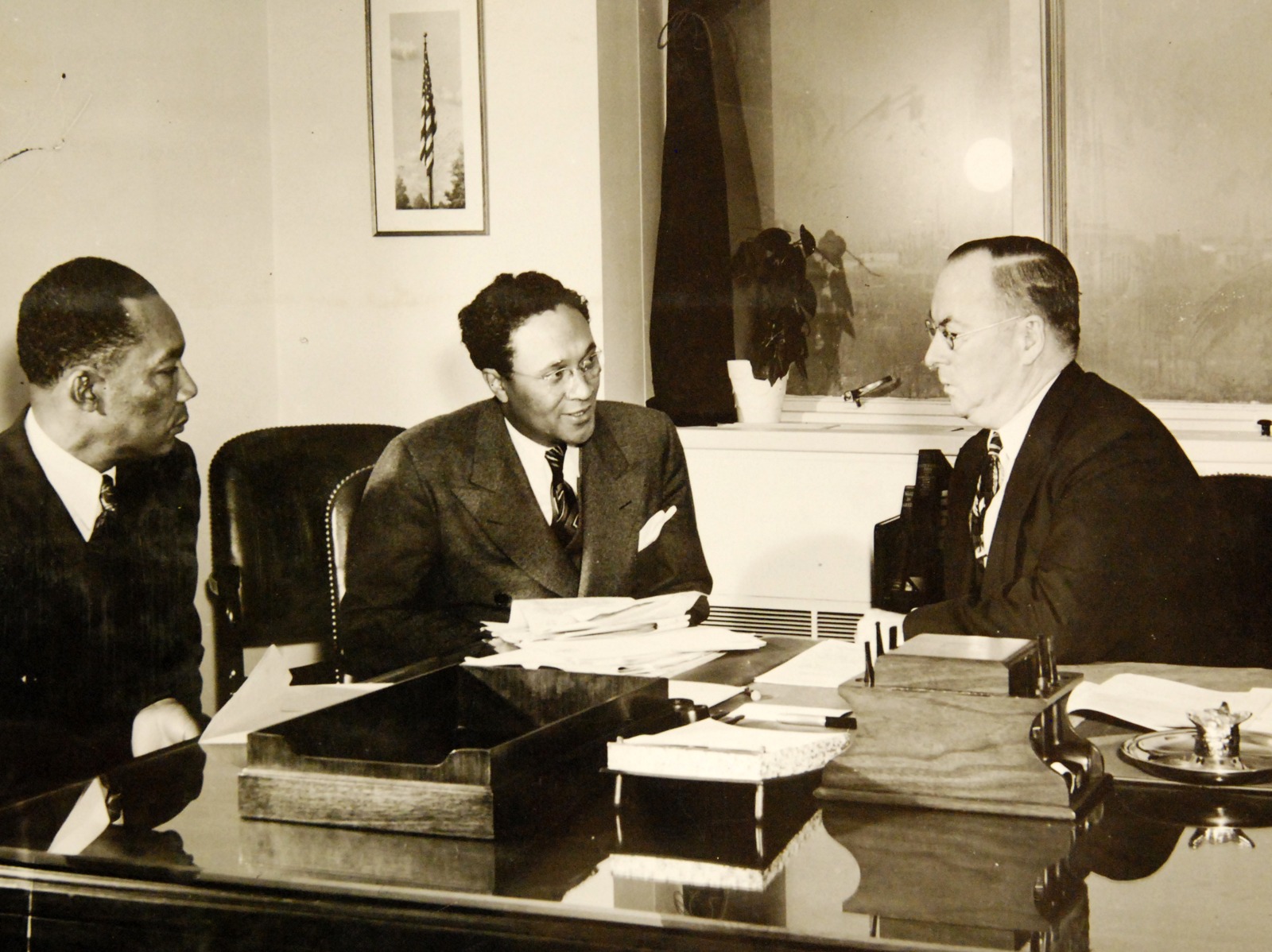
Earl Burrus Dickerson (June 22, 1891 – September 1, 1986) was a Chicago lawyer, insurance executive and civil-rights leader — in the African American Registry's phrase, "the dean of Chicago's Black lawyers." He is not
| At a glance | |
|---|---|
| Type | PERSON — person |
| Dates | – |
| Chicago connection | CORE — see the Chicago connection section |
| Known for | Earl Burrus Dickerson (June 22, 1891 – September 1, 1986) was a Chicago lawyer, insurance executive and civil-rights leader — in the |
| Verification | PROVISIONAL |
| CTL ID | CTL-ENC-000051 |
Overview
Earl Burrus Dickerson (June 22, 1891 – September 1, 1986) was a Chicago lawyer, insurance executive and civil-rights leader — in the African American Registry's phrase, "the dean of Chicago's Black lawyers." He is not Ernest R. Dickerson, the cinematographer and film director who appears elsewhere in the CultureTechLens master; the shared surname is the only connection, and this record is the lawyer's alone. Dickerson was born in Canton, Mississippi, and relocated to Chicago at fifteen — the Registry recounts that his mother bribed railroad porters to hide her son aboard a train to escape Jim Crow. He graduated from the University of Illinois in 1914, taught for a year at Tuskegee Institute, served in World War I as an infantry lieutenant with the American Expeditionary Forces — fighting discrimination against Black servicemen and serving as defense counsel in courts-martial of Black soldiers — and in 1920 became the first African American to receive a J.D. from the University of Chicago Law School.
His business monument was insurance. While still a law student in 1919 he helped draft the articles of incorporation of the Liberty Life Insurance Company of Illinois; in 1921 he became general counsel of the company — soon Supreme Liberty Life — and he considered that work his most outstanding contribution to American society. Supreme Life grew into the largest African American-owned business in the North, filling the void left by white insurers who generally refused to insure Black customers or employ Black workers, and during the Great Depression it provided mortgage loans to struggling families when few others would. Dickerson rose from general counsel to chief executive in 1955, held the post until 1971, and then chaired the board. In 1927 he had also helped establish Burr Oak Cemetery, one of the few African American cemeteries in southwestern Cook County, and persuaded Supreme to save it when it defaulted on its mortgage during the Depression.
Life and career
His public career ran on parallel tracks. He was the first Black Democratic alderman of Chicago, representing the Second Ward from 1939 to 1943; served as Illinois assistant attorney general from 1933 to 1939, the first African American in that post; helped organize the NAACP Legal Defense Fund in 1939 and sat on the NAACP's national board for three decades; and served on President Roosevelt's Fair Employment Practices Committee from 1941 to 1943, whose investigations exposed the scope of race discrimination in war production — the wartime work pictured in the photograph attached to this record. His signature case was Hansberry v. Lee (1940): Dickerson represented Carl Hansberry — father of playwright Lorraine Hansberry — from trial through appeal to victory in the United States Supreme Court, striking at the racially restrictive covenants that confined Black Chicagoans to Bronzeville. In 1947 he was elected president of the National Bar Association. He died in Chicago on September 1, 1986; the University of Chicago Black Law Students Association is named in his honor, and his papers rest in the Vivian G. Harsh Research Collection at the Carter G. Woodson Regional Library.
The organizational presidency trail shows how completely Chicago's Black civic infrastructure ran through one office. The King Institute's biographical note at Stanford records that Dickerson presided over the Chicago Urban League twice — 1939 to 1947 and again 1951 to 1955 — sat on the NAACP's national board from 1941 to 1980, and served a term as president of the National Lawyers Guild, alongside the insurance presidency he held from 1955 to 1971. The University of Chicago guide adds the personal stake behind the Hansberry litigation: in 1949 Dickerson and his family moved into a three-flat on Drexel Boulevard that they had purchased in 1947 — the first Black family to live in Hyde Park since before World War I — so the lawyer who broke restrictive covenants in the Supreme Court then tested the judgment in his own housing. His Chicago Bar Association admission had itself been a group breakthrough, won in 1935 with a cohort of Black lawyers the association had previously excluded. This record is a staged proposal pending the founder's classification sitting.
Chicago connection
Earl Burrus Dickerson (June 22, 1891 – September 1, 1986) was a Chicago lawyer, insurance executive and civil-rights leader — in the African American Registry's phrase, "the dean of Chicago's Black lawyers." He is not Ernest R. Dickerson was born in Canton, Mississippi, and relocated to Chicago at fifteen — the Registry recounts that his mother bribed railroad porters to hide her son aboard a train to escape Jim Crow. from the University of Chicago Law School. He was the first Black Democratic alderman of Chicago, representing the Second Ward from 1939 to 1943; served as Illinois assistant attorney general from 1933 to 1939, the first African American in that post; helped organize the NAACP Legal Defense Fund in 1939 and sat on the NAACP's national board for three decades; and served on President Roosevelt's Fair Employment Practices Committee from 1941 to 1943, whose investigations exposed the scope of race discrimination in war production — the wartime work pictured in the photograph attached to this record. Lee (1940): Dickerson represented Carl Hansberry — father of playwright Lorraine Hansberry — from trial through appeal to victory in the United States Supreme Court, striking at the racially restrictive covenants that confined Black Chicagoans to Bronzeville. [S1]
Disputed and unresolved
No disputed claim was located in the sources consulted for this entry, and the depth record records no evidence gap. Open items, if any, are listed in Editorial notes.
See also
Relationships
- affiliated_with — Supreme Life Insurance Company (CTL-E-0190) — Restated from the CultureTechLens Knowledge Graph: Earl B. Dickerson (CTL-E-1357) affiliated_with Supreme Life Insurance Company (CTL-E-0190), verification Verified. General counsel of Supreme Life Insurance Company from 1921; president from 1952.
- related_to — Carl A. Hansberry (CTL-E-1169) — Restated from the CultureTechLens Knowledge Graph: Earl B. Dickerson (CTL-E-1357) related_to Carl A. Hansberry (CTL-E-1169), verification Verified. As general counsel of Supreme Liberty Life, Dickerson arranged the mortgage loan that let Carl Hansberry buy the Woodlawn home at the center of Hansberry v. Lee (1940).
- affiliated_with — National Association for the Advancement of Colored People (NAACP) (CTL-E-0498) — Restated from the CultureTechLens Knowledge Graph: Earl B. Dickerson (CTL-E-1357) affiliated_with National Association for the Advancement of Colored People (NAACP) (CTL-E-0498), verification Verified. Member of the national board of the NAACP.
Sources
- S1: BlackPast.org. "Earl B. Dickerson (1891-1986)." Accessed October 26, 2026. https://blackpast.org/african-american-history/dickerson-earl-burrus-1891-1986/.
- S2: University of Chicago Library. "Earl B. Dickerson Research Guide — Biography." Accessed October 26, 2026. https://guides.lib.uchicago.edu/c.php?g=959059&.
- S3: University of Chicago Library. "Earl B. Dickerson Papers — Finding Aid." Accessed October 26, 2026. https://mts.lib.uchicago.edu/artifacts/index.php?id=dickerson.
- S4: Wikipedia. "Earl B. Dickerson." Accessed October 26, 2026. https://en.wikipedia.org/wiki/Earl_B._Dickerson.
- S5: African American Registry. "Earl Dickerson, Chicago Civic Leader born." Accessed October 26, 2026. http://aaregistry.org/story/earl-dickerson-a-chicago-leader/.
- S6: CultureTechLens Knowledge Graph (schema v0.3.1), entities.json and relationships.json — CTL's own graph register, consulted 2026-10-28 for crosswalk facts and restated relationships.
Cite this entry
- Permanent ID: CTL-ENC-000051 · Crosswalked graph record: CTL-ESS-0264 · Version: 0.1 · Date: 2026-10-28
- Chicago: CultureTechLens. "Earl B. Dickerson." CultureTechLens Encyclopedia, version 0.1, October 28, 2026. CultureTechLens NFP. CTL-ENC-000051.
- APA: CultureTechLens. (2026). Earl B. Dickerson (Version 0.1, Entry CTL-ENC-000051). CultureTechLens Encyclopedia. CultureTechLens NFP.
- MLA: CultureTechLens. "Earl B. Dickerson." CultureTechLens Encyclopedia, version 0.1, CultureTechLens NFP, 28 Oct. 2026. Entry CTL-ENC-000051.
Further reading
- CultureTechLens Knowledge Graph record CTL-ESS-0264 (crosswalked; published graph register id CTL-E-1357).
Image credits
- Earl B. Dickerson photograph: see Images block in the frontmatter for the full credit line, rights status, and rights document.
Citation
CultureTechLens. "Earl B. Dickerson." CultureTechLens Encyclopedia, Vol. 1 — Black Chicago, version 0.1, 2026-10-28. CultureTechLens NFP. CTL-ENC-000051.
<!-- =======================