 CULTURETECHLENS
The Encyclopedia · CTL-ENC-000005
Chicago Urban League
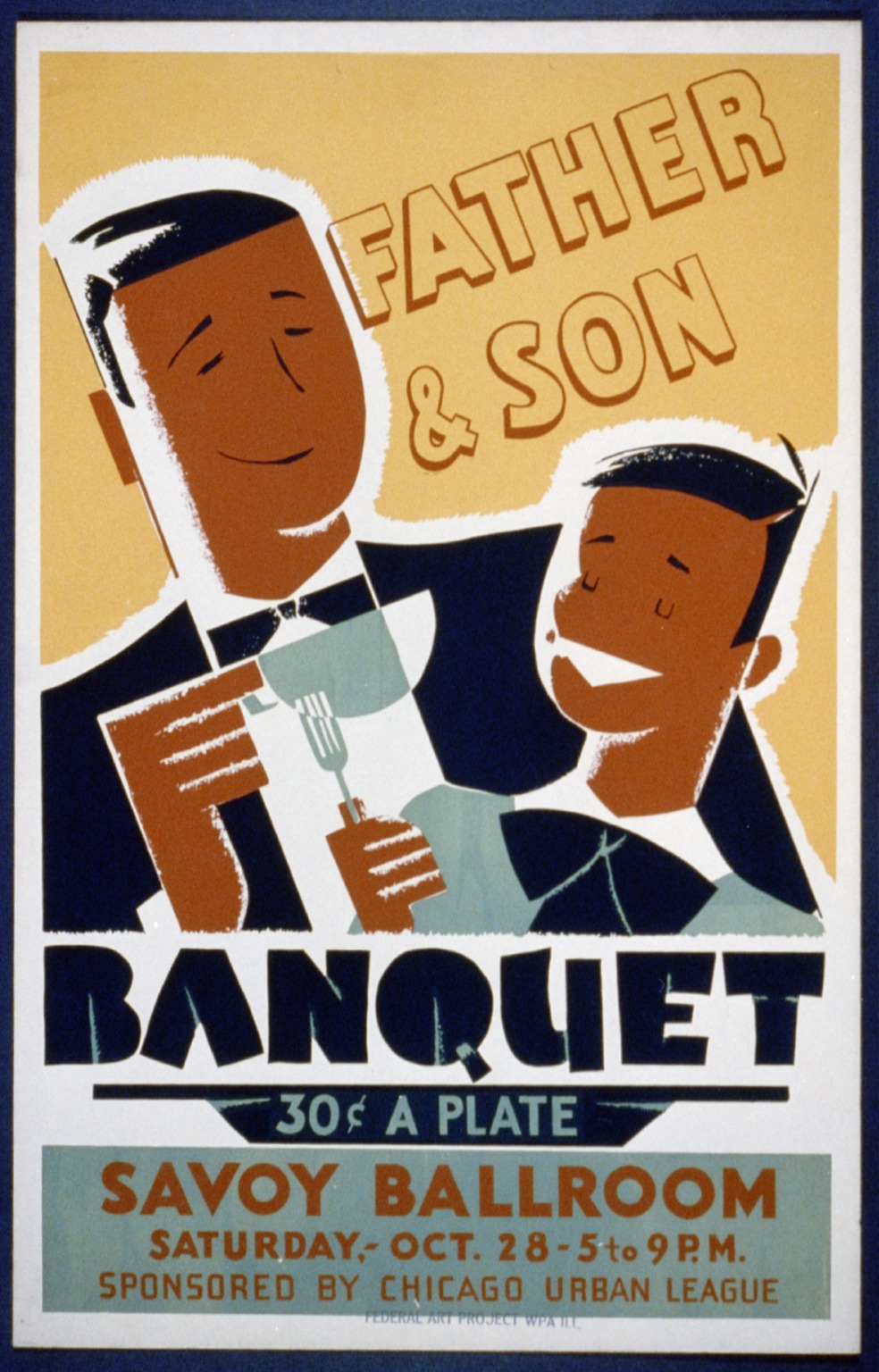
The Chicago Urban League was established in 1916 — the date its own institutional boilerplate carries, and the graph's verification anchor — which makes it one of the oldest Black civic institutions in Chicago and
| At a glance | |
|---|---|
| Type | ORGANIZATION — civil-rights |
| Dates | – |
| Chicago connection | CORE — see the Chicago connection section |
| Known for | The Chicago Urban League was established in 1916 — the date its own institutional boilerplate carries, and the graph's verification anchor — |
| Verification | VERIFIED |
| CTL ID | CTL-ENC-000005 |
Overview
The Chicago Urban League was established in 1916 — the date its own institutional boilerplate carries, and the graph's verification anchor — which makes it one of the oldest Black civic institutions in Chicago and, in the League's own formulation, "one of the oldest and largest affiliates of the National Urban League." The Chicago Community Trust's history of the organization adds the founding sociology: it was established by Black and white sociologists, social workers, and philanthropists in response to a city changing fast around them, part of the wave of Urban League affiliates founded as Black Southerners arrived in northern cities looking for work, housing, and schooling. Its mission, in the boilerplate the League still uses: to drive economic empowerment, cultivate leadership, and dismantle systemic barriers for Black communities and other communities facing historic disinvestment.
The institution's geography is a Bronzeville story. Docomomo US's register of the League's headquarters records that its earliest home was the Frederick Douglass Center, a multistory building at 3032 South Wabash Avenue, opened in 1912 as a settlement house serving African Americans; in the mid-1960s the League moved to a stately mansion neighboring Bronzeville's historic Eighth Regiment Armory. When it outgrew that house, it made the decision that defines its modern identity: League president James W. Compton, overruling a board that wanted to move downtown or to the suburbs, insisted the headquarters stay in the Black community of the South Side. The result is the building it still occupies — designed by John Warren Moutoussamy, one of Chicago's pioneering Black architects, a onetime associate of Howard University architecture dean Howard T. Lovett and former partner of city planning commissioner Homer Price; begun in 1982 and completed in 1984 at a cost of $2.8 million, it is a 32,000-square-foot, three-story brick postmodern headquarters, and the Docomomo record notes that Moutoussamy's firm became one of the most successful Black-owned firms in the country.
History
The work runs on two tracks the League's own descriptions keep together. The service track operates across five program areas — Youth Services, Workforce Development, Entrepreneurship and Innovation, Housing, and Financial Services. The research track is older than most policy shops: the Chicago Community Trust notes that the League has produced fact-based analyses of Chicago's racial and economic condition for decades, including its Research & Policy Center's State of Black Chicago series. Two titles mark the public record: The Vicious Circle: Revisiting the Black-White Achievement Gap in Chicago (2002) and Still Separate, Unequal, Race: Place and Policy in Chicago (2005), which placed Chicago as the fifth most segregated metropolitan area in the United States. The League also built and manages the Woodlawn Resource Center, a community center in the South Side's Woodlawn neighborhood.
The advocacy record continues into the present decade: the Community Trust's account credits the League's partnership with Legal Aid Chicago with passage of Illinois's Predatory Loan Prevention Act in 2021, landmark legislation capping consumer-loan interest across the state at 36 percent. In the CultureTechLens graph the League is an Institution located in Chicago and affiliated with the National Urban League (CTL-I-0246), which is itself recorded as affiliated with the Chicago chapter — the graph's way of holding both the local institution and the national federation it belongs to. Filed beside the Bronzeville and Bud Billiken records in this batch, it completes a triptych: the neighborhood, its parade, and the organization founded in 1916 to make the neighborhood's newcomers into citizens with work, housing, and standing.
The affiliate relationship runs in both directions in the graph, and it is worth stating what it means institutionally: the National Urban League, founded in 1910, built its model in the migration cities, and Chicago — the destination of the Defender-promoted migration that the Bud Billiken record beside this one documents — became one of its largest and oldest local instruments. The research function is the thread connecting the League's settlement-house origins to its twenty-first-century policy wins: the same organization that once helped newcomers find rooms and jobs now publishes the State of Black Chicago analyses and helps draft, with legal partners, the consumer-protection statutes of Illinois.
Chicago connection
The Chicago Urban League was established in 1916 — the date its own institutional boilerplate carries, and the graph's verification anchor — which makes it one of the oldest Black civic institutions in Chicago and, in the League's own formulation, "one of the oldest and largest affiliates of the National Urban League." The Chicago Community Trust's history of the organization adds the founding sociology: it was established by Black and white sociologists, social workers, and philanthropists in response to a city changing fast around them, part of the wave of Urban League affiliates founded as Black Southerners arrived in northern cities looking for work, housing, and schooling. The result is the building it still occupies — designed by John Warren Moutoussamy, one of Chicago's pioneering Black architects, a onetime associate of Howard University architecture dean Howard T. The research track is older than most policy shops: the Chicago Community Trust notes that the League has produced fact-based analyses of Chicago's racial and economic condition for decades, including its Research & Policy Center's State of Black Chicago series. Two titles mark the public record: The Vicious Circle: Revisiting the Black-White Achievement Gap in Chicago (2002) and Still Separate, Unequal, Race: Place and Policy in Chicago (2005), which placed Chicago as the fifth most segregated metropolitan area in the United States. The advocacy record continues into the present decade: the Community Trust's account credits the League's partnership with Legal Aid Chicago with passage of Illinois's Predatory Loan Prevention Act in 2021, landmark legislation capping consumer-loan interest across the state at 36 percent. [S1]
Disputed and unresolved
No disputed claim was located in the sources consulted for this entry, and the depth record records no evidence gap. Open items, if any, are listed in Editorial notes.
See also
Relationships
- located_in — Grand Boulevard (CTL-E-0207) — Restated from the CultureTechLens Knowledge Graph: Chicago Urban League (CTL-E-0287) located_in Grand Boulevard (CTL-E-0207), verification Verified. The Chicago Urban League's headquarters at 4510 S. Michigan Avenue sits in the Grand Boulevard community area.
- partnered_with — Coordinating Council of Community Organizations (CCCO) (CTL-E-1387) — Restated from the CultureTechLens Knowledge Graph: Chicago Urban League (CTL-E-0287) partnered_with Coordinating Council of Community Organizations (CCCO) (CTL-E-1387), verification Verified. The Coordinating Council of Community Organizations included the Chicago Urban League among its member organizations.
- partnered_with — Coordinating Council of Community Organizations (CCCO) (CTL-E-1387) — Restated from the CultureTechLens Knowledge Graph: Chicago Urban League (CTL-E-0287) partnered_with Coordinating Council of Community Organizations (CCCO) (CTL-E-1387), verification Verified. The Chicago Urban League was a member organization of the Coordinating Council of Community Organizations.
Sources
- S1: Chicago Urban League. "Chicago Urban League Announces 2026 Class of Impact Leadership Development Program." Chicago Urban League, August 20, 2025. Accessed October 25, 2026. https://chiul.org/2025/08/20/chicago-urban-league-announces-2026-class-of-impact-leadership-development-program/.
- S2: Chicago Community Trust. "Black History Month Spotlight: Chicago Urban League." Chicago Community Trust. Accessed October 25, 2026. https://www.cct.org/stories/black-history-month-spotlight-chicago-urban-league/.
- S3: Docomomo US. "Chicago Urban League." Docomomo US Register. Accessed October 25, 2026. https://www.docomomo-us.org/register/chicago-urban-league.
- S4: "Chicago Urban League." Wikipedia. Accessed October 25, 2026. https://en.wikipedia.org/wiki/Chicago_Urban_League.
- S5: CultureTechLens Knowledge Graph (schema v0.3.1), entities.json and relationships.json — CTL's own graph register, consulted 2026-10-28 for crosswalk facts and restated relationships.
Cite this entry
- Permanent ID: CTL-ENC-000005 · Crosswalked graph record: CTL-I-0023 · Version: 0.1 · Date: 2026-10-28
- Chicago: CultureTechLens. "Chicago Urban League." CultureTechLens Encyclopedia, version 0.1, October 28, 2026. CultureTechLens NFP. CTL-ENC-000005.
- APA: CultureTechLens. (2026). Chicago Urban League (Version 0.1, Entry CTL-ENC-000005). CultureTechLens Encyclopedia. CultureTechLens NFP.
- MLA: CultureTechLens. "Chicago Urban League." CultureTechLens Encyclopedia, version 0.1, CultureTechLens NFP, 28 Oct. 2026. Entry CTL-ENC-000005.
Further reading
- CultureTechLens Knowledge Graph record CTL-I-0023 (crosswalked; published graph register id CTL-E-0287).
Image credits
- Chicago Urban League photograph: see Images block in the frontmatter for the full credit line, rights status, and rights document.
Citation
CultureTechLens. "Chicago Urban League." CultureTechLens Encyclopedia, Vol. 1 — Black Chicago, version 0.1, 2026-10-28. CultureTechLens NFP. CTL-ENC-000005.
<!-- =======================