 CULTURETECHLENS
The Encyclopedia · CTL-ENC-000072
Anthony Overton
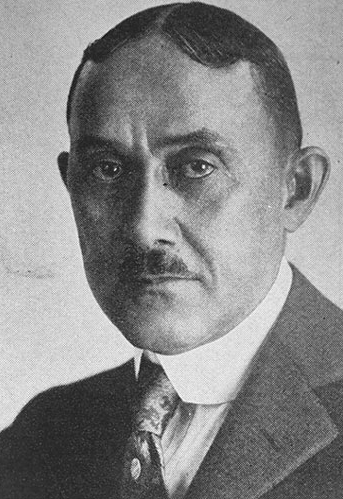
He was born enslaved, and he died the head of a business conglomerate.
| At a glance | |
|---|---|
| Type | PERSON — businessperson |
| Dates | – |
| Chicago connection | CORE — see the Chicago connection section |
| Known for | He was born enslaved, and he died the head of a business conglomerate. |
| Verification | PROVISIONAL |
| CTL ID | CTL-ENC-000072 |
Overview
He was born enslaved, and he died the head of a business conglomerate. Anthony Overton was born on March 21, 1865, in Monroe, Louisiana, in the last months of American slavery. After the Civil War his family moved to Kansas, and Overton pursued the education slavery had been designed to deny: he earned a Bachelor of Laws degree in 1888 — BlackPast records the degree from Washburn College, while other accounts name the University of Kansas law school — was admitted to the bar, practiced law, and served as a judge of the municipal court in Shawnee County, Kansas. He briefly ran a general store in Oklahoma before settling in Kansas City, where in 1898 he founded the Hygienic Manufacturing Company, one of the first companies to specialize in cosmetics created for African American women, sold under the High-Brown name.
The company made him, and then it moved him. Overton Hygienic's line grew to sixty-two products within a few years of its founding, sold by a salaried sales force and more than four hundred door-to-door salespeople, reaching markets as distant as Egypt, Liberia, and Japan. In 1911 Overton moved the company to Chicago to reach the larger market the Great Migration was building, and Chicago became the seat of an empire assembled line by line: the Half-Century Magazine in 1916, a variety magazine for Black readers carrying fiction, news, homemaking features, and essays on succeeding in Black business; the Douglass National Bank, founded in 1922 and chartered in 1923, the second nationally chartered Black-owned bank in the United States and the principal competitor to Jesse Binga's bank; the Victory Life Insurance Company, which he ran from 1922 to 1932; and the Chicago Bee, the newspaper he founded in 1925 to compete with the Chicago Defender. By 1927 the cosmetics business alone employed one hundred fifty people, most of them Black women, and the company was valued at more than one million dollars; BlackPast's judgment is that Overton was by then the most successful Black businessman in the nation.
Life and career
The buildings outlasted the businesses. In 1922 Overton commissioned architect Z. Erol Smith to design the Overton Hygienic Building in Bronzeville, the four-story headquarters from which the conglomerate operated, and the Chicago Bee Building followed, housing the newspaper, the magazine, apartments, and eventually the cosmetics company itself. Both stand inside the geography CultureTechLens maps as the Black Metropolis — the South Side district where Overton and his contemporaries supplied goods, credit, insurance, and news to a community that white retailers merely tolerated and white banks rarely lent to. The Douglass National Bank mattered in exactly those terms: home and business loans for Black Chicagoans in an era when most banks would not approve them.
Recognition came from the movement's own institutions. In 1927 the NAACP awarded Overton the Spingarn Medal for outstanding achievement by an African American — the medal endowed by Joel E. Spingarn, whose brother Arthur B. Spingarn also enters this batch of records. Overton was active in the Chicago Urban League, the YMCA, and Alpha Phi Alpha Fraternity. The Depression broke much of the conglomerate in the early 1930s — the bank and the insurance company both closed in 1932 — but Overton lived in relative financial comfort until his death in Chicago on July 2, 1946, at the age of eighty-one. The Overton Hygienic Company continued into the early 1980s; the city took over its building as a public library, and the building was added to the National Register of Historic Places on April 30, 1986. An Anthony Overton Elementary School in Chicago carries his name.
CultureTechLens's master holds Overton's companies and building as separate records but not the man; this staged record restores the person at the center of them — lawyer, manufacturer, banker, publisher, and, in his biographer's phrase preserved in the graph's build-side record, the merchant prince of Black Chicago. This record is a staged proposal pending the founder's classification sitting.
Chicago connection
In 1911 Overton moved the company to Chicago to reach the larger market the Great Migration was building, and Chicago became the seat of an empire assembled line by line: the Half-Century Magazine in 1916, a variety magazine for Black readers carrying fiction, news, homemaking features, and essays on succeeding in Black business; the Douglass National Bank, founded in 1922 and chartered in 1923, the second nationally chartered Black-owned bank in the United States and the principal competitor to Jesse Binga's bank; the Victory Life Insurance Company, which he ran from 1922 to 1932; and the Chicago Bee, the newspaper he founded in 1925 to compete with the Chicago Defender. Erol Smith to design the Overton Hygienic Building in Bronzeville, the four-story headquarters from which the conglomerate operated, and the Chicago Bee Building followed, housing the newspaper, the magazine, apartments, and eventually the cosmetics company itself. The Douglass National Bank mattered in exactly those terms: home and business loans for Black Chicagoans in an era when most banks would not approve them. Overton was active in the Chicago Urban League, the YMCA, and Alpha Phi Alpha Fraternity. The Depression broke much of the conglomerate in the early 1930s — the bank and the insurance company both closed in 1932 — but Overton lived in relative financial comfort until his death in Chicago on July 2, 1946, at the age of eighty-one. [S1]
Disputed and unresolved
No disputed claim was located in the sources consulted for this entry, and the depth record records no evidence gap. Open items, if any, are listed in Editorial notes.
See also
Relationships
- related_to — Olive M. Diggs (CTL-E-1130) — Restated from the CultureTechLens Knowledge Graph: Anthony Overton (CTL-E-0087) related_to Olive M. Diggs (CTL-E-1130), verification Verified. Diggs was managing editor of Anthony Overton's Chicago Bee from 1929 until the paper closed in 1947.
- founded — Half-Century Magazine (CTL-E-1111) — Restated from the CultureTechLens Knowledge Graph: Anthony Overton (CTL-E-0087) founded Half-Century Magazine (CTL-E-1111), verification Verified. Anthony Overton founded Half-Century Magazine in 1916.
Sources
- S1: BlackPast. "Anthony Overton (1865–1946)." Accessed October 25, 2026. https://blackpast.org/african-american-history/overton-anthony-1865-1946/.
- S2: The Clio. "Overton Hygienic Building." Accessed October 25, 2026. https://theclio.com/api/v1/entries/164832/export.
- S3: Remembering African American History. "March 21 — Anthony Overton." Accessed October 25, 2026. https://raahweb.com/march-21-2/.
- S4: CultureTechLens Knowledge Graph (schema v0.3.1), entities.json and relationships.json — CTL's own graph register, consulted 2026-10-28 for crosswalk facts and restated relationships.
Cite this entry
- Permanent ID: CTL-ENC-000072 · Crosswalked graph record: CTL-ESS-0041 · Version: 0.1 · Date: 2026-10-28
- Chicago: CultureTechLens. "Anthony Overton." CultureTechLens Encyclopedia, version 0.1, October 28, 2026. CultureTechLens NFP. CTL-ENC-000072.
- APA: CultureTechLens. (2026). Anthony Overton (Version 0.1, Entry CTL-ENC-000072). CultureTechLens Encyclopedia. CultureTechLens NFP.
- MLA: CultureTechLens. "Anthony Overton." CultureTechLens Encyclopedia, version 0.1, CultureTechLens NFP, 28 Oct. 2026. Entry CTL-ENC-000072.
Further reading
- CultureTechLens Knowledge Graph record CTL-ESS-0041 (crosswalked; published graph register id CTL-E-0087).
Image credits
- Anthony Overton photograph: see Images block in the frontmatter for the full credit line, rights status, and rights document.
Citation
CultureTechLens. "Anthony Overton." CultureTechLens Encyclopedia, Vol. 1 — Black Chicago, version 0.1, 2026-10-28. CultureTechLens NFP. CTL-ENC-000072.
<!-- =======================