 CULTURETECHLENS
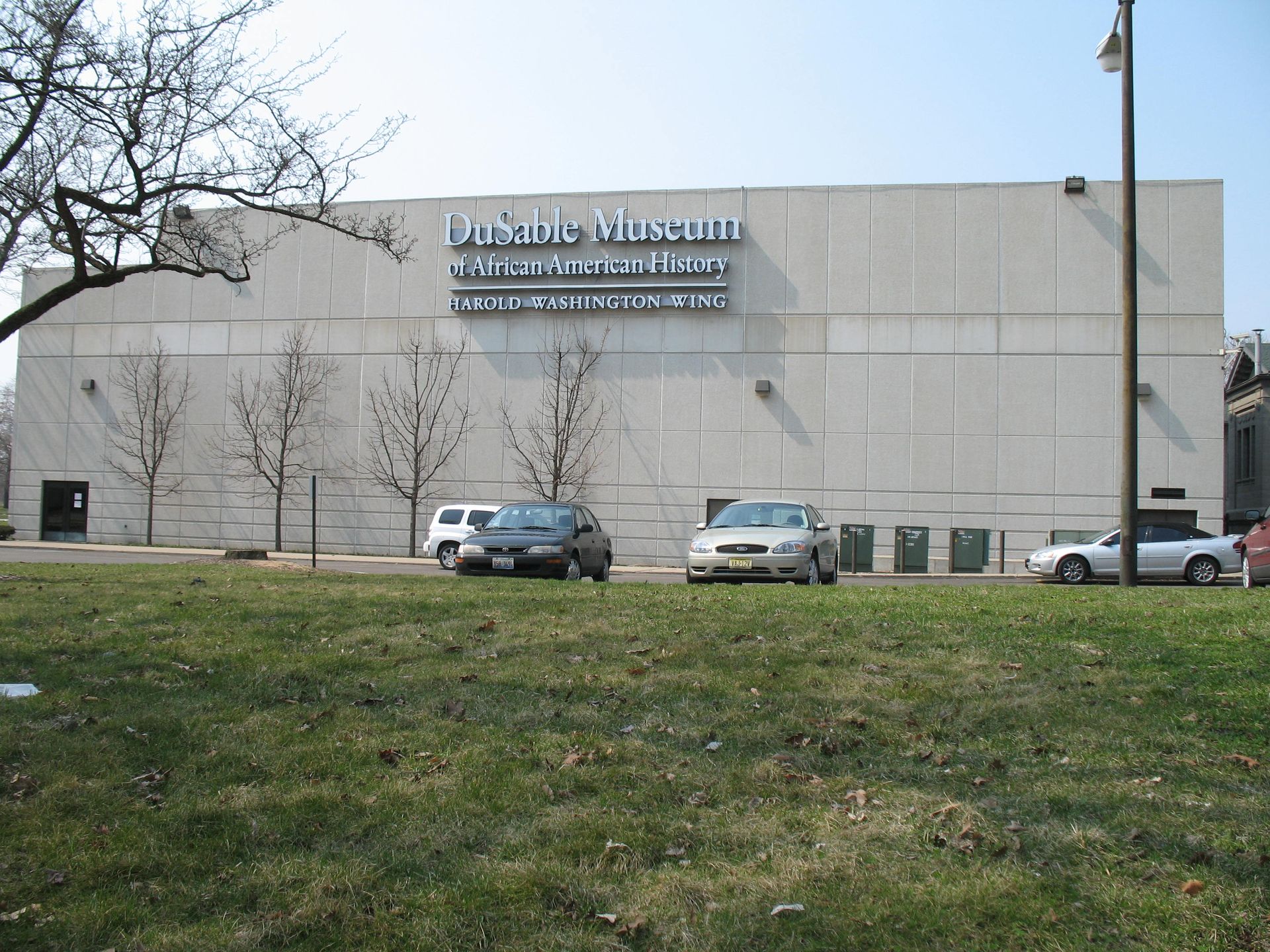
Photo: TonyTheTiger, CC BY-SA 3.0, via Wikimedia Commons
Black Culture Research
Every CultureTechLens publication carries its methodology, its limitations, its sources, and its corrections — and every claim carries a grade.
Evidence first, authority second. Every CultureTechLens publication carries its methodology, its limitations, its sources, and its corrections — and every claim carries a grade.
The datasets, maps, and methods behind this research live in the Research Lab — each published with its question, its method, its output, and its limitations, including the public API and the CTL AI Cultural Accuracy Index.
The public research corpus lives on GitHub — methods, source records, datasets, corrections, and revision history, all under CC BY 4.0. Star the repository and inspect the evidence.
The Institute’s nine research areas are mapped on one page: Research Areas — Black Cultural Intelligence, Chicago, Music + Sound, Black History, Technology + AI, Education, Media, Community, and Cultural Preservation, each with the flagship systems it runs on.
How to read CTL evidence
Claims are graded on a controlled vocabulary: VERIFIED, SUPPORTED, PROVISIONAL, DISPUTED, UNRESOLVED (plus REFUTED and UNVERIFIABLE in evidence files). Only VERIFIED claims feed verified-only knowledge-graph edges; lower grades are shown with their grade visible. Unknowns are never reported as zero.
Full working detail: CTL methodology.
The publication hierarchy
CultureTechLens publishes on a 12-type ladder. The pipeline runs 01 → 08 (capture to discover); 09 connects it all; 10–12 are the durable public forms. Not every question needs a flagship; the strongest briefs get promoted upward.
| Type | Publication | Job |
|---|---|---|
| 01 | Discovery Note | capture — we found something |
| 02 | Research Brief | investigate one question |
| 03 | Research Dossier | establish an entity |
| 04 | Evidence File | prove or test claims |
| 05 | Deep Research Report | analyze what the evidence means |
| 06 | Research Dataset (CTL-RDS) | structure the knowledge — governed, versioned, machine-readable |
| 07 | Research Atlas (CTL-RA) | visualize — map + timeline + graph + media |
| 08 | Research Directory (CTL-RDIR) | discover — what exists, where it is, how to access it |
| 09 | Knowledge Graph | connect everything |
| 10 | Flagship Research Project | the large public research experience |
| 11 | Book / Annual / Journal | publish |
| 12 | Exhibition / Documentary / Curriculum / Public Program | embody |
Build order: Dossiers → Evidence File standard → Deep Research Reports → Datasets → Atlases → Directories. See the methodology page for the full table.
Scholar papers (3)
Standalone papers by William Maxey, published October 2026 on Zenodo (CC BY 4.0) and hosted here in full — one work per page, each with its own DOI and complete scholarly citation record.
Black Technology: Invention, Adaptation and Digital Life
Black technology as a full ecosystem — invention, skilled operation, engineering, enterprise, and cultural adoption — in a 21-page paper distilling CTL-DR-TECH-001.
The Black Memory Emergency
What happens to Black history after collecting — cataloging backlogs, ownership changes, and a transparent preservation triage framework. Distills CTL-DR-PRESERVE-001.
Who Controls the Story?
The Black media infrastructure of America: who owns the presses, stations, and platforms that reach Black audiences. Distills CTL-DR-MEDIA-001.
Flagship research projects (14)
Research complete. Full public publication rolls out in Phase 2; each flagship is a permanent, citable page with entities, timelines, sources, red-team notes, and gap analyses.
The Infrastructure of Black Chicago
The institutions, places, networks, and people that built a cultural metropolis.
The Sound of Black Chicago
The venues, labels, stations, stores, and people that built a music metropolis.
The Black Press
The newspapers, magazines, and journalists that built Black Chicago’s media infrastructure.
The Chicago Black Music Constellation
246 entities, 314 relationships, 465 sources mapping a musical ecosystem.
Who Controls the Story?
The Black media infrastructure of America — national scope, Chicago depth layer.
Transnational Corridors
Chicago-centered transnational corridors in Black cultural life. (Working title revised: the evidence supports corridors, not a “world system.”)
The Black Business Ecosystem
How Black communities built, financed, sustained, and lost economic infrastructure.
The Institutions That Held Communities Together
The Black institutional ecosystem: 81 entities, 329 graded claims.
How We Lived
An encyclopedia of Black everyday life — the source package for Index Edition 2026-10.
Black Technology
Invention, adaptation, and digital life — 22 verified patents, 30 device histories.
The Black Memory Emergency
What happens when Black history disappears? 84 collections surveyed.
Research briefs (41)
Shorter, tightly scoped investigations — one question each, with claim ledgers, entities, relationships, sources, and red-team reviews. Publication in Phase 2, in domain batches.
Why 63rd Street Mattered
The Rise of Bronzeville
Black Chicago’s Commercial Corridors
The Black Belt: Name, Geography and Change
Chicago’s Great Migration Geography
Why Chicago Became a Gospel Center
From Disco to Chicago House
The Black Chicago Record Store
Black Radio as Music Infrastructure
The Chicago Steppers Ecosystem
The Black Funeral Home as Institution
Black-Owned Banks in Chicago
Beauty Shops and Barbershops
The Economics of the Black Newspaper
What Happens When a Neighborhood Anchor Closes?
The Chicago Defender’s Distribution Network
WVON and Black Chicago
Black Images on Chicago Television
Saturday at the Record Store
Sunday in Black Chicago
The Family Reunion as Cultural Infrastructure
The Technology Behind Chicago House
Black Chicago Goes Online
Who Preserves Black Chicago?
The Disappearing Black Web
Research dossiers (8)
Entity-establishing dossiers: 34-section investigations with relationship layers and evidence files. Publication in Phase 2.
Ida B. Wells
Chicago Defender
Washington Park
WVON
Chess Records
Johnson Publishing Company
E2 Nightclub Tragedy
Afro Pick
Need the data behind the research? Request research data — extracts, exports, licensing terms, and turnaround.
The knowledge graph itself is open data: the CultureTechLens static API serves all 4,111 entities and 2,527 relationships as JSON — free to read, no key.
Page updated November 6, 2026.
Source: CultureTechLens
From the Archive
The archive in pictures
The people, places, and institutions this work documents. Photographs from the CultureTechLens research record — rights-cleared, credited, and cited like everything else here.


Trust & evidence
Evidence before authority. CultureTechLens publishes its methods, its limits, and its corrections alongside its findings. Claims carry grades — VERIFIED, SUPPORTED, PROVISIONAL, DISPUTED, UNRESOLVED — and unknowns are never reported as zero.
Every claim graded. Every source named. Every correction public — see the corrections log.