 CULTURETECHLENS
The Encyclopedia · CTL-ENC-000020
Howlin' Wolf
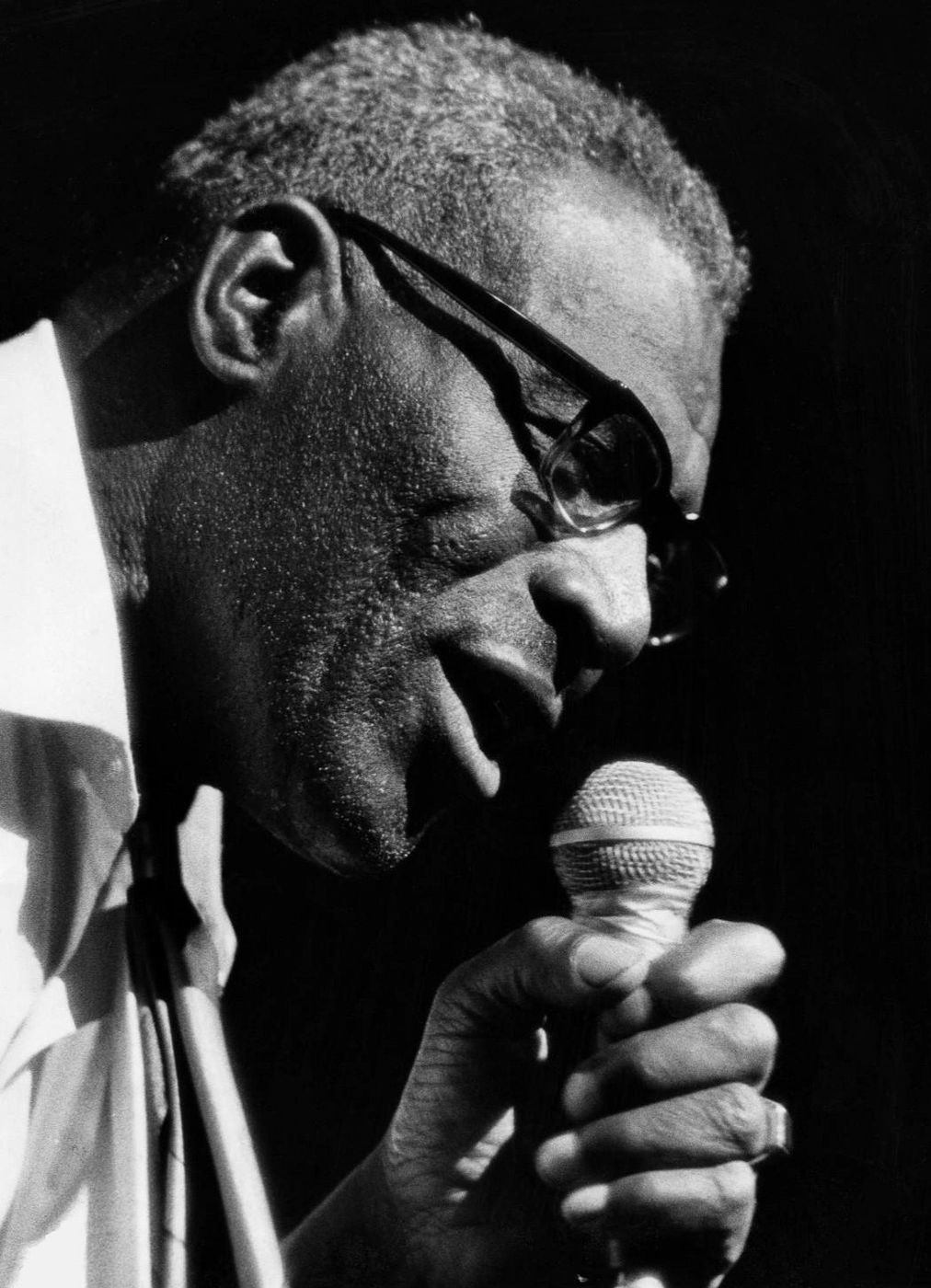
Chester Arthur Burnett (June 10, 1910 – January 10, 1976), known as Howlin' Wolf, was an American blues singer, guitarist, and harmonica player, and one of the most influential musicians of the post-World War II
| At a glance | |
|---|---|
| Type | PERSON — musician |
| Dates | – |
| Chicago connection | CORE — see the Chicago connection section |
| Known for | Chester Arthur Burnett (June 10, 1910 – January 10, 1976), known as Howlin' Wolf, was an American blues singer, guitarist, and harmonica |
| Verification | VERIFIED |
| CTL ID | CTL-ENC-000020 |
Overview
Chester Arthur Burnett (June 10, 1910 – January 10, 1976), known as Howlin' Wolf, was an American blues singer, guitarist, and harmonica player, and one of the most influential musicians of the post-World War II era. The Encyclopedia of Arkansas describes his electric blues guitar, backing his powerful, howling voice, as helping to shape rock and roll, and in the CultureTechLens graph he is recorded as a blues musician whose city is Chicago. He was born on June 10, 1910, in White Station, Mississippi, four miles northeast of West Point, Mississippi, to Leon "Dock" Burnett, a sharecropper, and Gertrude Jones. His parents separated when he was one year old. As a child he was sent to live with an uncle who treated him harshly, and at age thirteen he ran away to the Mississippi Delta, eventually finding his father and his father's new family on a plantation near Ruleville, Mississippi, and beginning work on the plantation.
In the Delta, Charlie Patton, described by the Encyclopedia of Arkansas as the most popular musician in the Delta, showed Burnett a few chords on the guitar. In January 1928 Burnett's father bought him a guitar, and he began to play regularly, eventually teaming with Patton, who taught him many tricks of showmanship. Preferring the life of a blues musician to the harsh life of sharecropping, Burnett began wandering the delta regions of Mississippi and Arkansas, playing music anywhere he could make money. The encyclopedia records that he stood over six feet three inches and weighed some 275 pounds, and became well known in the region not only for his showmanship but also for his large size and loud, howling voice. He learned to play harmonica from blues legend Sonny Boy Williamson and added it to his performing arsenal, and in the 1930s he performed alongside Robert Johnson, Son House, Johnny Shines, Willie Brown, and Robert Jr. Lockwood. Burnett enlisted in the army, returned home to farm after serving, and in 1948 moved to West Memphis, Arkansas. There he assembled a blues band called the House Rockers and made a commitment to make music his career, performing beginning in 1948 on West Memphis radio station KWEM, where he both produced and sold advertising for his program.
Life and career
In West Memphis he attracted the attention of record producer Sam Phillips in Memphis, Tennessee. Phillips's recordings of "Moanin' at Midnight" and "How Many More Years" were leased to Chess Records and became a double-sided hit, making Billboard magazine's R&B top ten. In September 1951 Burnett signed with the Chess label, and the Chess brothers convinced him to move to Chicago in the winter of 1952, the move recorded in his CultureTechLens verification. Upon arriving in Chicago he broke into the scene quickly and assembled a band in the West Memphis style; among its members was guitarist Hubert Sumlin, who would stay with Burnett for the remainder of Burnett's career. The Mississippi Blues Trail's marker for Sumlin records that Sumlin's years with Wolf were highlighted by groundbreaking recordings such as "Killing Floor," "300 Pounds of Joy," "Smokestack Lightning," and "Shake for Me" for the Chess label in Chicago.
In Chicago, Wolf became, with Muddy Waters, one of the defining figures of postwar electric blues. In 1954 he recorded "Evil," his biggest hit to that point, which was also the first of many tunes that Willie Dixon wrote for Burnett. In 1955 he played New York's Apollo Theater and made Cash Box magazine's list of the top twenty-five male R&B vocalists; by that time, the encyclopedia notes, only Muddy Waters rivaled his popularity in the blues arena. In 1956 he recorded what the encyclopedia calls his masterpiece work, "Smokestack Lightnin'," which peaked at number eleven on both the Cash Box Hot Chart and Billboard's R&B chart. Over the next five years he recorded many hits named in the encyclopedia entry, including "I Asked for Water," "Who's Been Talking," "Sitting on Top of the World," "Spoonful," "Wang Dang Doodle," "Back Door Man," "Goin' Down Slow," "I Ain't Superstitious," and "Red Rooster." His first album on Chess, Moanin' in the Moonlight, was released in 1959, followed in January 1962 by Howlin' Wolf, sometimes referred to as the "Rocking Chair" album, which Greil Marcus of Rolling Stone called "the finest of all Chicago blues albums." Later hits included "Tail Dragger" in 1962 and "Killing Floor" in 1964.
In the CultureTechLens graph, ten works are attached to Howlin' Wolf as songs he authored or performed: "Smokestack Lightnin'," "Killing Floor," "Spoonful," "Back Door Man," "The Red Rooster," "I Ain't Superstitious," "Sitting on Top of the World," "Forty Four," "Tail Dragger," and "You'll Be Mine." Most of those titles are independently documented in the sources above as recordings from his Chess years; the graph attachment itself is the record for the full set of ten. His music reached new audiences in the 1960s: in September 1964 he traveled to Europe as part of the American Folk Blues Festival, and in 1965 he appeared on the ABC television show Shindig with the Rolling Stones, who had a number-one hit in England with "Red Rooster." In May 1970 he recorded The London Howlin' Wolf Sessions in London with British rock musicians including Eric Clapton, Mick Jagger, Bill Wyman, Charlie Watts, Steve Winwood, Ringo Starr, and Ian Stewart; it became the only Howlin' Wolf album to appear on the Billboard 200. Despite failing health, including a 1969 heart attack, high blood pressure, and kidney problems, he continued to tour and record, received an honorary doctorate from Chicago's Columbia College in August 1972, and recorded his final studio album, The Back Door Wolf, in August 1973. Diagnosed with a brain tumor on January 7, 1976, he died on January 10, 1976, and is buried at Oak Ridge Cemetery in Chicago. He was elected to the Blues Foundation Hall of Fame in 1980 and inducted into the Rock and Roll Hall of Fame in 1991, and in 1994 he was honored on a United States postage stamp. For CultureTechLens, Wolf is a load-bearing Chicago record: a Mississippi-born musician who carried Delta blues north to Chess Records and Chicago, and whose songs remain core nodes in the graph's blues network.
Chicago connection
The Encyclopedia of Arkansas describes his electric blues guitar, backing his powerful, howling voice, as helping to shape rock and roll, and in the CultureTechLens graph he is recorded as a blues musician whose city is Chicago. In September 1951 Burnett signed with the Chess label, and the Chess brothers convinced him to move to Chicago in the winter of 1952, the move recorded in his CultureTechLens verification. Upon arriving in Chicago he broke into the scene quickly and assembled a band in the West Memphis style; among its members was guitarist Hubert Sumlin, who would stay with Burnett for the remainder of Burnett's career. The Mississippi Blues Trail's marker for Sumlin records that Sumlin's years with Wolf were highlighted by groundbreaking recordings such as "Killing Floor," "300 Pounds of Joy," "Smokestack Lightning," and "Shake for Me" for the Chess label in Chicago. In Chicago, Wolf became, with Muddy Waters, one of the defining figures of postwar electric blues. [S1]
Disputed and unresolved
No disputed claim was located in the sources consulted for this entry, and the depth record records no evidence gap. Open items, if any, are listed in Editorial notes.
See also
Relationships
- collaborated_with — Willie Dixon (CTL-E-0003) — Restated from the CultureTechLens Knowledge Graph: Howlin' Wolf (CTL-E-0002) collaborated_with Willie Dixon (CTL-E-0003), verification Verified. Dixon wrote and produced many of Howlin' Wolf's signature Chess recordings.
- recorded_for — Chess Records (CTL-E-0165) — Restated from the CultureTechLens Knowledge Graph: Howlin' Wolf (CTL-E-0002) recorded_for Chess Records (CTL-E-0165), verification Verified. Howlin' Wolf recorded his classic catalog for Chess Records.
- related_to — Gerald Sims (CTL-E-0589) — Restated from the CultureTechLens Knowledge Graph: Howlin' Wolf (CTL-E-0002) related_to Gerald Sims (CTL-E-0589), verification Verified. In the 1960s Sims owned a music school and store near 79th Street and Cottage Grove Avenue, where he gave guitar lessons to his friend Chester Burnett — Howlin’ Wolf.
Sources
- S1: Encyclopedia of Arkansas. "Howlin' Wolf (1910–1976)." Encyclopedia of Arkansas. Accessed October 25, 2026. https://encyclopediaofarkansas.net/entries/howlin-wolf-631/.
- S2: Encyclopedia.com. "Howlin' Wolf (originally, Burnett, Chester Arthur)." Encyclopedia.com. Accessed October 25, 2026. https://www.encyclopedia.com/arts/dictionaries-thesauruses-pictures-and-press-releases/howlin-wolf-originally-burnett-chester-arthur.
- S3: Mississippi Blues Trail. "Hubert Sumlin." Mississippi Blues Commission. Accessed October 25, 2026. https://msbluestrail.org/blues-trail-markers/hubert-sumlin.
- S4: Memphis Music Hall of Fame. "Howlin' Wolf." Accessed October 25, 2026. https://memphismusichalloffame.com/inductee/howlinwolf/.
- S5: CultureTechLens Knowledge Graph (schema v0.3.1), entities.json and relationships.json — CTL's own graph register, consulted 2026-10-28 for crosswalk facts and restated relationships.
Cite this entry
- Permanent ID: CTL-ENC-000020 · Crosswalked graph record: CTL-P-0033 · Version: 0.1 · Date: 2026-10-28
- Chicago: CultureTechLens. "Howlin' Wolf." CultureTechLens Encyclopedia, version 0.1, October 28, 2026. CultureTechLens NFP. CTL-ENC-000020.
- APA: CultureTechLens. (2026). Howlin' Wolf (Version 0.1, Entry CTL-ENC-000020). CultureTechLens Encyclopedia. CultureTechLens NFP.
- MLA: CultureTechLens. "Howlin' Wolf." CultureTechLens Encyclopedia, version 0.1, CultureTechLens NFP, 28 Oct. 2026. Entry CTL-ENC-000020.
Further reading
- CultureTechLens Knowledge Graph record CTL-P-0033 (crosswalked; published graph register id CTL-E-0002).
Image credits
- Howlin' Wolf photograph: see Images block in the frontmatter for the full credit line, rights status, and rights document.
Citation
CultureTechLens. "Howlin' Wolf." CultureTechLens Encyclopedia, Vol. 1 — Black Chicago, version 0.1, 2026-10-28. CultureTechLens NFP. CTL-ENC-000020.
<!-- =======================