 CULTURETECHLENS
The Encyclopedia · CTL-ENC-000275
Homer G. Phillips Hospital
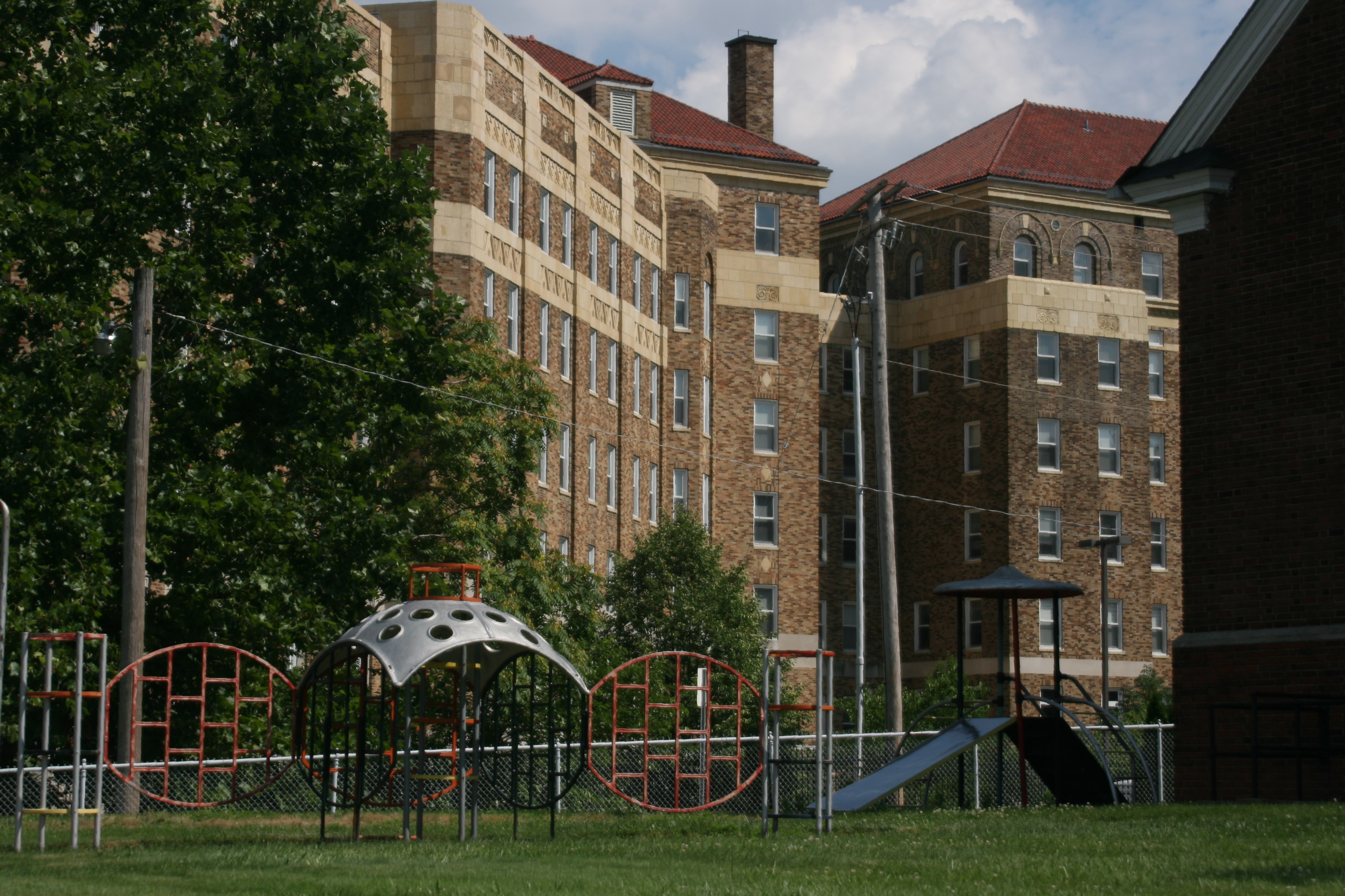
St. Louis public hospital (1937–1979) at 2601 North Whittier Street that was the city's only hospital for Black residents until 1955 and trained, by 1961, the largest number of Black doctors and nurses in the world.
| At a glance | |
|---|---|
| Type | ORGANIZATION — hospital |
| Dates | Opened February 1937 – closed as a full-service hospital 1979 |
| Chicago connection | The Ville, St. Louis, Missouri — national significance (SIGNIFICANT) |
| Known for | Premier training ground for Black physicians and nurses west of the Mississippi; National Register of Historic Places (1982) |
| Verification | SUPPORTED |
| CTL ID | CTL-ENC-000275 |
| Documented address | 2601 N. Whittier Street, St. Louis, MO 63113 |
Overview
Homer G. Phillips Hospital was St. Louis's answer to the same exclusion that built Provident in Chicago — on a municipal scale. Black St. Louis grew by sixty percent between 1910 and 1920 while the public City Hospital served only whites; in 1919 Black community leaders persuaded the city to buy a 177-bed former Barnes hospital as City Hospital No. 2, and the Black attorney Homer G. Phillips then led the campaign for a 1923 civic bond issue to build a proper Black hospital [S1][S3]. Phillips was shot and killed on June 18, 1931, before construction began, and the Board of Aldermen named the finished hospital for him [S3].
The hospital was dedicated in February 1937 at 2601 North Whittier Street in The Ville [S1][S3]. It was the city's only public hospital for African Americans from 1937 until St. Louis began desegregating its hospitals in 1955, and the first teaching hospital west of the Mississippi to serve the city's Black residents [S1]. Washington University's diversity office, which keeps a lecture series in its name, calls it the bright exception among the region's segregated facilities — a hospital that opened in 1937 as a truly public facility [S2].
The training record and the closure
The statistic attached to Homer G. Phillips is the one this volume exists to record: by 1961 it had trained “the largest number of Black doctors and nurses in the world” [S1][S3]. By 1948 its residents included more than a third of all graduates of the nation's two Black medical schools, Howard and Meharry [S3]. For the Chicago reader, the parallel is exact: as Provident and Cook County did in Chicago, Homer G. Phillips converted a segregated mandate into a training institution whose graduates carried Black medicine across the country [S2].
It continued serving St. Louis's Black community after 1955, but desegregation drained its protected role while the city starved its budget — the familiar double bind of the Black hospital after integration. It closed as a full-service hospital in 1979 (Washington University's program dates the closing August 17, 1979) [S1][S2]. Listed as a St. Louis Landmark in 1980 and on the National Register of Historic Places in 1982, the Art Deco building reopened in 2003 as senior living apartments [S1]. One address variant appears in secondary retellings (2425 Whittier Street); the National Register and the hospital's own record give 2601 North Whittier, which this entry documents and geocodes.
Connection
Homer G. Phillips stood in St. Louis and claimed no Chicago site; its connection here is comparative and national (SIGNIFICANT) — the St. Louis counterpart to Chicago's Provident story, training the same generation of Black physicians and nurses [S1][S2].
Documented address and map
Documented address: 2601 N. Whittier Street, St. Louis, MO 63113 — the hospital's National Register address [S1]. Coordinates {lat: 38.65885, lon: -90.23602} are recorded from an exact U.S. Census Geocoder address match on that documented historic address (see coordinates_source in the frontmatter). Map file: maps/CTL-ENC-000275-map.png (built centrally from these coordinates).
See also
Relationships
- located_in — St. Louis — The hospital stood at 2601 N. Whittier Street in The Ville neighborhood of St. Louis, Missouri (S1).
Sources
- S1: "Homer G. Phillips Hospital." Wikipedia (2601 N. Whittier Street, The Ville; opened 1937; St. Louis's only public hospital for African Americans until desegregation in 1955; closed 1979; St. Louis Landmark 1980; National Register of Historic Places 1982; senior living apartments from 2003). https://en.wikipedia.org/wiki/Homer_G._Phillips_Hospital.
- S2: Washington University School of Medicine, Office of Diversity Programs. "The Homer G. Phillips Public Health Lecture Series” program (hospital opened as a truly public facility in 1937; premier training ground for African American medical professionals; closed August 17, 1979). https://mddiversity.wustl.edu/app/uploads/2026/06/2004-Digital-Program.pdf.
- S3: "Homer G. Phillips Hospital” summary drawing on the National Register record (named for attorney Homer G. Phillips, who led the 1923 bond-issue campaign and was killed in 1931; by 1961 the hospital had trained “the largest number of Black doctors and nurses in the world”). https://maierstorm.org/Vampire/index.php/Homer_G._Phillips_Hospital.
Cite this entry
- Permanent ID: CTL-ENC-000275 · Version: 0.1 · Date: 2026-10-29
- Chicago: CultureTechLens. "Homer G. Phillips Hospital." CultureTechLens Encyclopedia, version 0.1, October 29, 2026. CultureTechLens NFP. CTL-ENC-000275. Source: CultureTechLens
- APA: CultureTechLens. (2026). Homer G. Phillips Hospital (Version 0.1, Entry CTL-ENC-000275). CultureTechLens Encyclopedia. CultureTechLens NFP. Source: CultureTechLens
- MLA: CultureTechLens. "Homer G. Phillips Hospital." CultureTechLens Encyclopedia, version 0.1, CultureTechLens NFP, 29 Oct. 2026. Entry CTL-ENC-000275. Source: CultureTechLens
Further reading
- Washington University School of Medicine, Homer G. Phillips Public Health Lecture Series (annual, named for the hospital).
Image credits
- Homer G. Phillips Hospital photograph: see Images block in the frontmatter for the full credit line, rights status, and rights document.
Citation
CultureTechLens. "Homer G. Phillips Hospital." CultureTechLens Encyclopedia, Black Medicine (staged), version 0.1, 2026-10-29. CultureTechLens NFP. CTL-ENC-000275.
<!-- =======================