 CULTURETECHLENS
The Encyclopedia · CTL-ENC-000258
Freedmen's Hospital
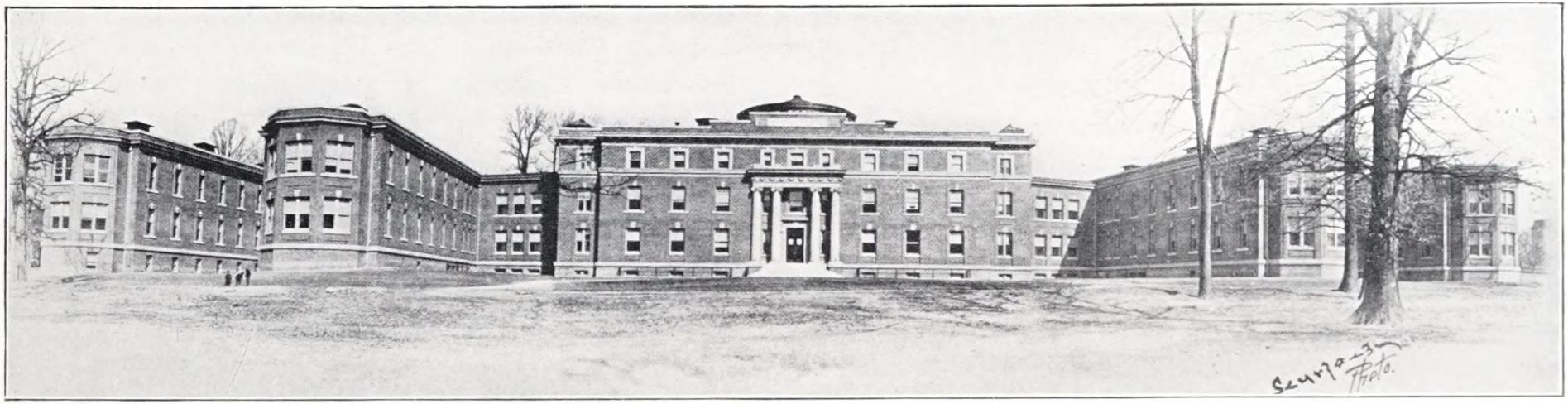
Federal hospital founded in Washington, D.C. in 1862 for freedpeople, which became Howard University's teaching hospital and the training ground of generations of Black physicians.
| At a glance | |
|---|---|
| Type | ORGANIZATION — hospital (Institution) |
| Dates | 1862 – 1975 (succeeded by Howard University Hospital) |
| Chicago connection | SIGNIFICANT — Washington, D.C.; surgical home of Williams (1894-98) and Curtis (1898-1902) |
| Known for | First federal hospital for freedpeople; Howard University's teaching hospital from 1868; 278-bed 1909 building praised in the Flexner era |
| Verification | VERIFIED |
| CTL ID | CTL-ENC-000258 |
| Documented address | 2041 Georgia Avenue, NW, Washington, DC 20060 (successor institution — see Documented address and map) |
Overview
Freedmen's Hospital served Black Washington for more than a century, and trained Black America to serve itself. First established in 1862 on the grounds of Camp Barker, at 13th and R Streets, NW, Freedmen's Hospital and Asylum cared for freed, disabled, and aged Black people in the middle of the Civil War; in 1863 it was placed under Dr. Alexander T. Augusta, the first African American to head a hospital [S1]. After the war it became the teaching hospital of Howard University Medical School, founded in 1868, while remaining under federal control — an arrangement that made it, for generations, the single most important training institution in Black medicine [S1][S2].
The Howard teaching hospital
The hospital moved to Howard University property in 1869 and began its affiliation with the university's College of Medicine as its teaching hospital [S2]. Its administrative history ran through the era's machinery of Black federal care: run by the Freedmen's Bureau before 1874, transferred to the Department of the Interior, administered by the District's commissioners from 1883 to 1905, and passed to the U.S. Public Health Service in 1940 [S1][S3]. Surgeons-in-charge included Charles Burleigh Purvis, appointed by President Chester A. Arthur in 1881 and the first Black person to head a hospital under civilian authority [S3]. In 1909 a new 278-bed hospital building opened on Bryant Street between 4th and 6th Streets; when Abraham Flexner visited that year he was impressed, judging that only Howard's medical school in the city had a promising future [S1][S3].
For this encyclopedia, Freedmen's matters most as the institution that connects Chicago's Provident generation to the national profession. Daniel Hale Williams, Provident's founder, served as its surgeon-in-chief from 1894 to 1898 and reorganized it, founding a nurses' training school there; his protégé Austin Maurice Curtis Sr. succeeded him in 1898; and in the 1940s Charles R. Drew chaired Howard's surgery department and served as Freedmen's chief surgeon, training more than half the era's board-certified Black surgeons [S1]. Howard's own institutional history names the Freedmen's line of notable surgeons in one breath — Augusta, Williams, Warfield, Drew, Leffall, Callender, Cornwell, Frederick [S2].
Transfer and succession
Congress granted Howard University full control of Freedmen's Hospital in 1967 [S2]. The old hospital served until 1975, when the university built a new hospital on the site of the old Griffith Stadium, at Georgia and Florida Avenues — today's Howard University Hospital, at 2041 Georgia Avenue, NW [S2][S1]. The original 1909 Freedmen's building on Bryant Street still stands, now the C.B. Powell Building housing Howard's School of Communications, and Freedmen's Hall, a permanent museum at the university hospital, is devoted to the history of medical education and health care at Howard [S1]. Howard describes the lineage without a break: established in 1862 in converted army barracks, the nation's only teaching hospital on the campus of a historically Black university [S2].
Connection
Freedmen's is classed SIGNIFICANT: a Washington institution whose Chicago connection runs through people, not place. It was the federal post that made Provident's founder a national figure (1894-98), the succession his first intern inherited (1898), and the hospital where Daniel Hale Williams established a second nurses' training school on the Provident model [S1]. Batch A's Chicago story cannot be told without it, and no Chicago anchor is fabricated for it.
Documented address and map
Documented addresses span the institution's sites: the founding site at Camp Barker, 13th and R Streets, NW (1862); the 1869 Howard site at Fifth and W Streets, NW; the 1909 building on Bryant Street between 4th and 6th Streets [S1][S2]. Coordinates are recorded for the successor institution's current, documented address — Howard University Hospital, 2041 Georgia Avenue, NW, Washington, DC 20060, as published by the National Library of Medicine [S1] — geocoded by exact Census Geocoder match (see coordinates_source). Map file: maps/CTL-ENC-000258-map.png (built centrally). The historic sites are documented in this section as history; no coordinates are asserted for them.
See also
Relationships
- operated_by — Howard University — Freedmen's Hospital was transferred to Howard University in 1967 and used as a hospital until 1975, when the university's new hospital succeeded it (National Library of Medicine).
Sources
- S1: National Library of Medicine. "Historic Medical Sites Near Washington DC: Howard University Hospital (Former Freedmen's Hospital)." https://www.nlm.nih.gov/hmd/medtour/dcgeneral.html
- S2: Howard University Hospital. "About Us" (institutional history). https://www.huhealthcare.com/about-us/
- S3: BlackPast.org. "Freedmen's Hospital/Howard University Hospital (1862-- )." https://blackpast.org/african-american-history/freedmen-s-hospital-howard-university-hospital-1862/
Cite this entry
- Permanent ID: CTL-ENC-000258 · Crosswalked graph record: none recorded · Version: 0.1 · Date: 2026-10-29
- Chicago: CultureTechLens. "Freedmen's Hospital." CultureTechLens Encyclopedia, version 0.1, October 29, 2026. CultureTechLens NFP. CTL-ENC-000258. Source: CultureTechLens
- APA: CultureTechLens. (2026). Freedmen's Hospital (Version 0.1, Entry CTL-ENC-000258). CultureTechLens Encyclopedia. CultureTechLens NFP. Source: CultureTechLens
- MLA: CultureTechLens. "Freedmen's Hospital." CultureTechLens Encyclopedia, version 0.1, CultureTechLens NFP, 29 Oct. 2026. Entry CTL-ENC-000258. Source: CultureTechLens
Further reading
- Freedmen's Hall museum, Howard University Hospital; Duke University Medical Center Library, Black History Month hospitals guide.
Image credits
- Historic photograph of Freedmen's Hospital: see Images block in the frontmatter for the full credit line, rights status, and rights document.
Citation
CultureTechLens. "Freedmen's Hospital." CultureTechLens Encyclopedia, Black Medicine (staged), version 0.1, 2026-10-29. CultureTechLens NFP. CTL-ENC-000258.
<!-- =======================