 CULTURETECHLENS
The Encyclopedia · CTL-ENC-000007
Bud Billiken Parade
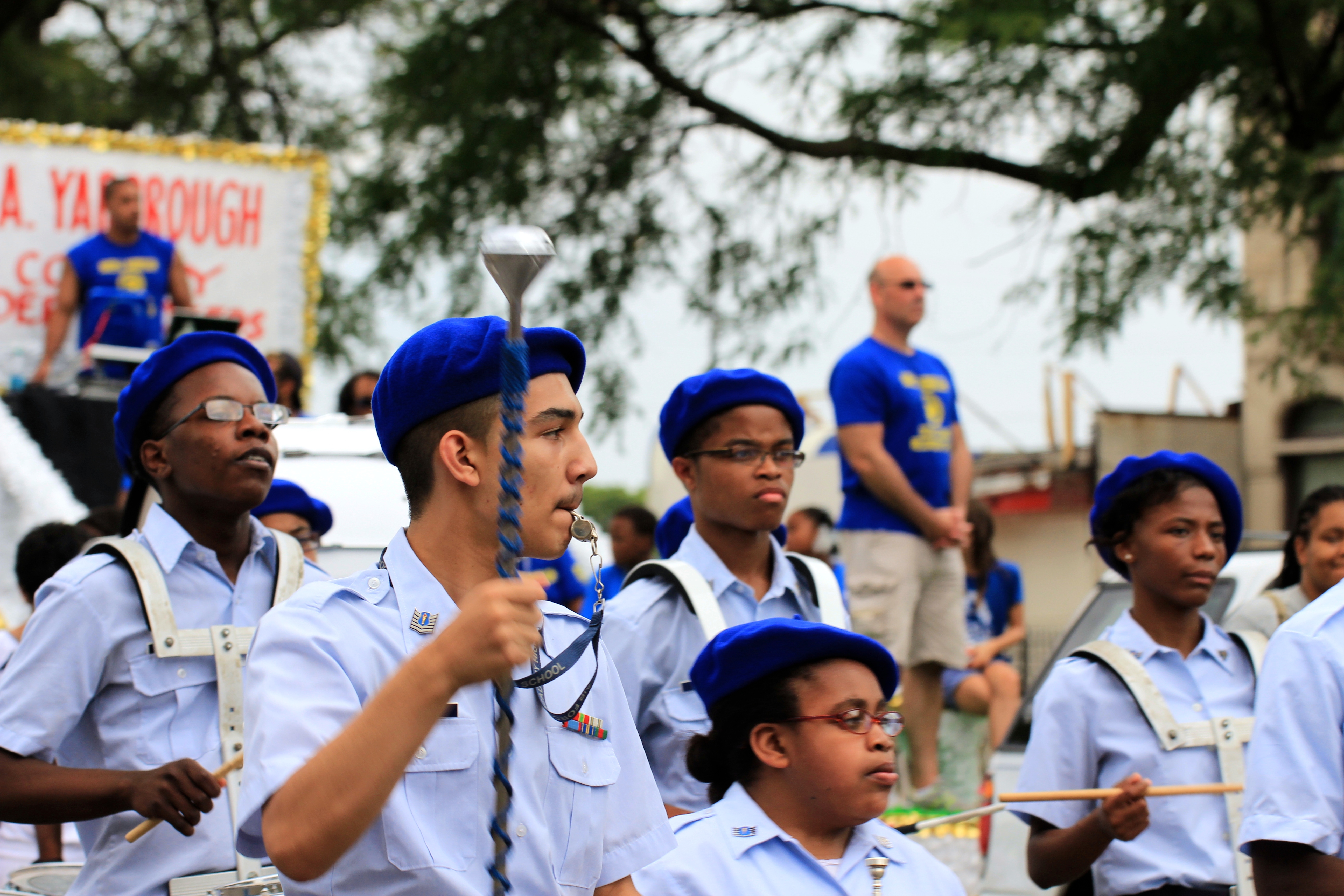
The character came first, and he was a guardian.
| At a glance | |
|---|---|
| Type | EVENT — event |
| Dates | – |
| Chicago connection | CORE — see the Chicago connection section |
| Known for | The character came first, and he was a guardian. |
| Verification | VERIFIED |
| CTL ID | CTL-ENC-000007 |
Overview
The character came first, and he was a guardian. The African American Registry traces "Bud Billiken" to the Billiken figure — in the tradition the Defender drew on, a patron of beauty and guardian angel of children, a symbol of luck, happiness, and good health — and records that Robert Sengstacke Abbott, founder and publisher of the Chicago Defender, built a children's column around the name, with writer Willard Motley as the original "Bud Billiken" voice. The graph's verification anchor, an organizer press release carried by Chicago Defender Charities, gives the institutional fact plainly: the Bud Billiken Parade was founded by Abbott in 1929.
The first parade, on August 11, 1929, was modest in form and exact in purpose. The Registry describes it as originating in a "parade" of newspaper delivery boys down what was then Grand Boulevard into Washington Park for a cookout; the encyclopedia record adds that David Kellum, co-founder of the Defender-sponsored Bud Billiken Club and the parade's longtime coordinator, suggested the parade as a celebration of African American life. The organizer frames the founding value as education, and the parade has remained a back-to-school institution — the moment, as the reference record puts it, marking the end of summer vacation and the resumption of school for Chicago's youth. Chicago Defender Charities, the Defender's charitable arm, still produces it; its marketing manager describes the founding goal as honoring Abbott's hardworking newsboys and children in underserved communities by giving them a chance to showcase their talents.
The event
The modern parade runs on the second Saturday in August down Dr. Martin Luther King Drive through Bronzeville and Washington Park, ending in a picnic and festival in Washington Park — the organizer's 2019 release, for the 90th annual parade, names the same route and the Washington Park festivities, with actor and comedian Lil Rel Howery as grand marshal. The scale claims are consistent across sources of different kinds: the organizer and the reference record both describe it as the largest African American parade in the United States, and Chicago History Museum's Black History Month account puts attendance and viewership at over one million people each year. (Secondary claims that it is the "second-largest parade in the United States" attach it to different comparators in different tellings; this entry carries only the superlative the sources agree on.)
The parade's history is also a record of the Defender itself. The Chicago History Museum account sets the founding in the paper's own story: Abbott, born in Georgia to parents who had once been enslaved, founded the Defender in 1905 after studying at Hampton Institute and being unable to find work as a Black lawyer in Chicago; within two decades it was the most influential Black publication in America, a driver of the Great Migration, and every issue carried the front-page heading "American Race Prejudice Must Be Destroyed." The Registry records the parade's modern interruptions and dedications: the 2008 parade was dedicated to the memory of Chicago comedian Bernie Mac, who died on the morning of the event, and in 2020 and 2021 COVID-19 caused the first cancellations in its 91-year history.
In the graph the parade is located in Chicago, with its post-parade home in Washington Park — the same South Side geography as the Bronzeville record beside it in this batch. Its CTL significance is structural: a newspaper invented a guardian for Black children, turned him into a club, a column, and then a parade, and the parade outlived the paper's golden age to become the largest recurring public celebration of Black youth in the country, still stepping off every August on King Drive.
Chicago connection
The African American Registry traces "Bud Billiken" to the Billiken figure — in the tradition the Defender drew on, a patron of beauty and guardian angel of children, a symbol of luck, happiness, and good health — and records that Robert Sengstacke Abbott, founder and publisher of the Chicago Defender, built a children's column around the name, with writer Willard Motley as the original "Bud Billiken" voice. The graph's verification anchor, an organizer press release carried by Chicago Defender Charities, gives the institutional fact plainly: the Bud Billiken Parade was founded by Abbott in 1929. The organizer frames the founding value as education, and the parade has remained a back-to-school institution — the moment, as the reference record puts it, marking the end of summer vacation and the resumption of school for Chicago's youth. Chicago Defender Charities, the Defender's charitable arm, still produces it; its marketing manager describes the founding goal as honoring Abbott's hardworking newsboys and children in underserved communities by giving them a chance to showcase their talents. The scale claims are consistent across sources of different kinds: the organizer and the reference record both describe it as the largest African American parade in the United States, and Chicago History Museum's Black History Month account puts attendance and viewership at over one million people each year. [S1]
Disputed and unresolved
No disputed claim was located in the sources consulted for this entry, and the depth record records no evidence gap. Open items, if any, are listed in Editorial notes.
See also
Relationships
- related_to — First Bud Billiken Parade (CTL-E-0244) — Restated from the CultureTechLens Knowledge Graph: Bud Billiken Parade (CTL-E-1411) related_to First Bud Billiken Parade (CTL-E-0244), verification Provisional. The Bud Billiken Parade series (CTL-E-1411) begins with the inaugural First Bud Billiken Parade of August 11, 1929 (CTL-E-0244); series-level and inaugural records are kept as distinct nodes per founder approval 2026-10-03.
- related_to — Marjorie Stewart Joyner (CTL-E-1992) — Restated from the CultureTechLens Knowledge Graph: Bud Billiken Parade (CTL-E-1411) related_to Marjorie Stewart Joyner (CTL-E-1992), verification Verified. Joyner helped organize the Bud Billiken Day Parade and headed the Chicago Defender charity network.
- related_to — African/Caribbean International Festival of Life (CTL-E-0435) — Restated from the CultureTechLens Knowledge Graph: Bud Billiken Parade (CTL-E-1411) related_to African/Caribbean International Festival of Life (CTL-E-0435), verification Provisional. Both are long-running annual Black community celebrations in Chicago: IFOL and the Bud Billiken Parade.
Sources
- S1: Chicago Defender Charities. "Actor and Comedian Lil Rel Howery Will Kick Off the 90th Annual Bud Billiken Parade as the Grand Marshal." PRWeb, July 10, 2019. Accessed October 25, 2026. https://www.prweb.com/releases/actor-and-comedian-lil-rel-howery-will-kick-off-the-90th-annual-bud-billiken-r-parade-as-the-grand-marshal-849920852.html.
- S2: "Bud Billiken Parade and Picnic." Wikipedia. Accessed October 25, 2026. https://en.wikipedia.org/wiki/Bud_Billiken_Parade_and_Picnic.
- S3: African American Registry. "The Bud Billiken Parade, a Story." African American Registry. Accessed October 25, 2026. https://aaregistry.org/story/the-bud-billiken-parade-brings-folk-out/.
- S4: Chicago History Museum. "America's Largest African American Parade Is a Celebration of Black Youth." 28 Days of Black History. Accessed October 25, 2026. https://mailchi.mp/28daysofblackhistory/bud-billiken-parade?e=320b980c7f.
- S5: Cincinnati Magazine. "Parade Through Bronzeville." Cincinnati Magazine. Accessed October 25, 2026. https://www.cincinnatimagazine.com/road-trips-2024/parade-through-bronzeville/.
- S6: CultureTechLens Knowledge Graph (schema v0.3.1), entities.json and relationships.json — CTL's own graph register, consulted 2026-10-28 for crosswalk facts and restated relationships.
Cite this entry
- Permanent ID: CTL-ENC-000007 · Crosswalked graph record: CTL-E-0008 · Version: 0.1 · Date: 2026-10-28
- Chicago: CultureTechLens. "Bud Billiken Parade." CultureTechLens Encyclopedia, version 0.1, October 28, 2026. CultureTechLens NFP. CTL-ENC-000007.
- APA: CultureTechLens. (2026). Bud Billiken Parade (Version 0.1, Entry CTL-ENC-000007). CultureTechLens Encyclopedia. CultureTechLens NFP.
- MLA: CultureTechLens. "Bud Billiken Parade." CultureTechLens Encyclopedia, version 0.1, CultureTechLens NFP, 28 Oct. 2026. Entry CTL-ENC-000007.
Further reading
- CultureTechLens Knowledge Graph record CTL-E-0008 (crosswalked; published graph register id CTL-E-1411).
Image credits
- Bud Billiken Parade photograph: see Images block in the frontmatter for the full credit line, rights status, and rights document.
Citation
CultureTechLens. "Bud Billiken Parade." CultureTechLens Encyclopedia, Vol. 1 — Black Chicago, version 0.1, 2026-10-28. CultureTechLens NFP. CTL-ENC-000007.
<!-- =======================