 CULTURETECHLENS
The Encyclopedia · CTL-ENC-000029
Big Bill Broonzy
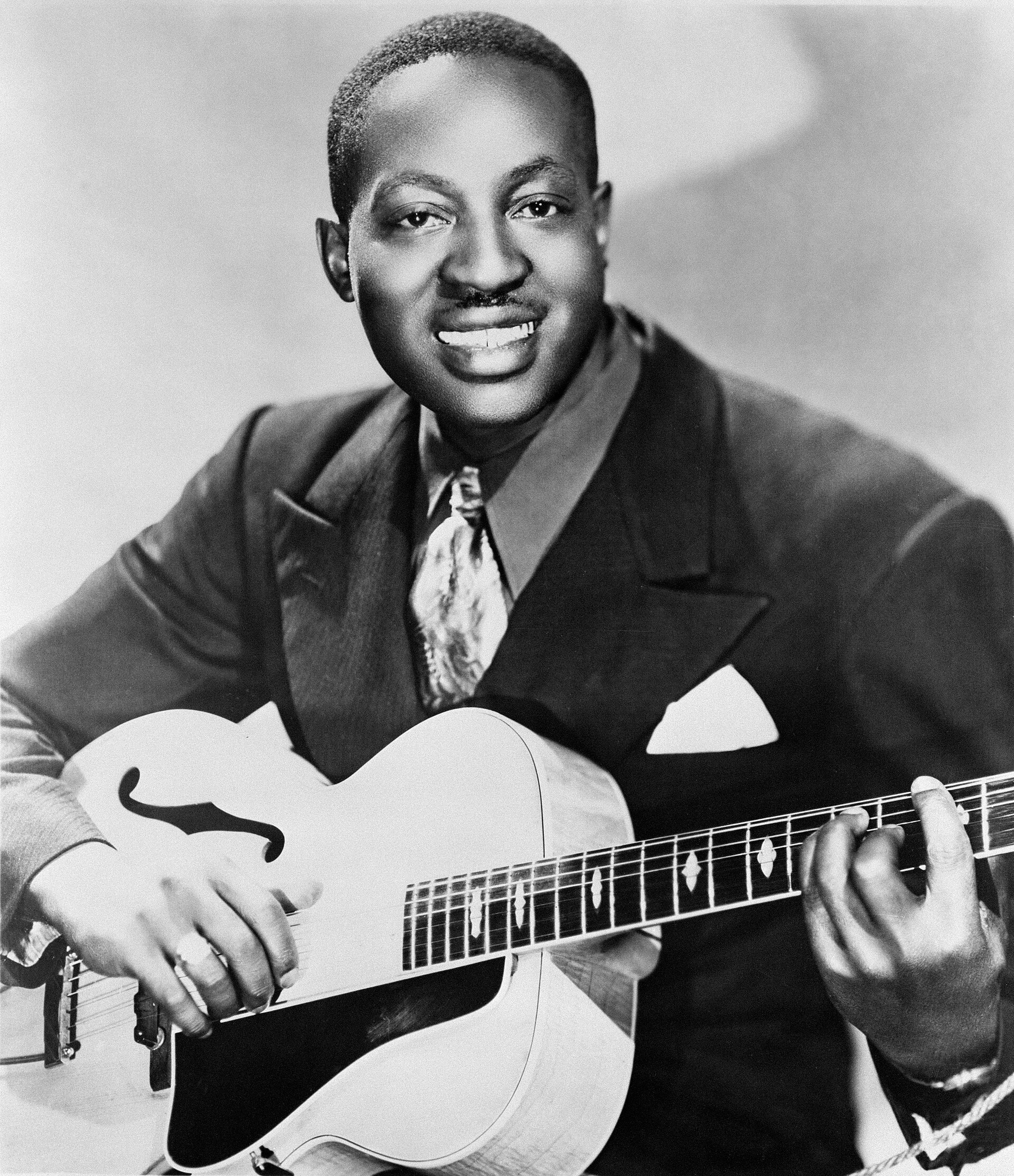
Big Bill Broonzy (born William Lee Conley Broonzy) was the blues singer, guitarist, and songwriter who carried the music from Southern country blues into urban Chicago and back out to the world — among the
| At a glance | |
|---|---|
| Type | PERSON — musician |
| Dates | – |
| Chicago connection | CORE — see the Chicago connection section |
| Known for | Big Bill Broonzy (born William Lee Conley Broonzy) was the blues singer, guitarist, and songwriter who carried the music from Southern country |
| Verification | SUPPORTED |
| CTL ID | CTL-ENC-000029 |
Overview
Big Bill Broonzy (born William Lee Conley Broonzy) was the blues singer, guitarist, and songwriter who carried the music from Southern country blues into urban Chicago and back out to the world — among the finest and most influential of the pre–World War II Chicago bluesmen, in MusicianGuide's assessment, and the bridge figure of the CultureTechLens blues line. His vital data are genuinely unsettled, and this record carries the uncertainty as the sources give it: born June 26, in Scott, Mississippi or Lake Dick, Arkansas, in a year given as 1893, 1898, or even 1903 across the reference accounts, one of seventeen children of parents born into slavery; raised largely in Arkansas, where his uncle made him a cigar-box fiddle, he played string-band music at parties, turned preacher and gave up secular music, returned to the fiddle when drought destroyed his crops in 1916, and served in the U.S. Army in Europe in 1917–19.
Chicago was the making of him. Arriving about 1920 to work for the Pullman Company, he switched from fiddle to guitar, learned from Papa Charlie Jackson, accompanied singers in clubs, and made his first solo records in 1927 for Paramount. The 1930s discography is the foundation of Chicago blues: more than three hundred songs recorded across Paramount, Bluebird, Vocalion, Columbia, and other labels, hokum and ragtime pieces beside straight blues, session work behind Tampa Red, Washboard Sam, Sonny Boy Williamson I, and Memphis Minnie's generation, and a small-band urban style — piano, bass, drums, sometimes horns — that the Encyclopedia of Arkansas credits with foreshadowing the postwar Chicago sound of Muddy Waters and Willie Dixon. In December 1938, when Robert Johnson's death left a hole in John Hammond's Spirituals to Swing concert at Carnegie Hall, Broonzy filled it, and a 1939 return engagement fixed his national standing.
Life and career
The songs hold: "Key to the Highway," standardized in his recording; "Black, Brown and White," his refusal-song about Jim Crow, which American labels of the period would not release; "Just a Dream"; "When Will I Get to Be Called a Man." The postwar years repositioned him — as electric blues took Chicago, Broonzy became folk blues's elder statesman, touring Europe from 1951 to acclaim that seeded London's skiffle and blues scenes and opened European venues to Sonny Boy Williamson II and Muddy Waters after him, working for a time as a janitor at Iowa State University, publishing the autobiography Big Bill Blues (1955, with Yannick Bruynoghe), and helping found Chicago's Old Town School of Folk Music.
He died in Chicago of throat and lung cancer in August 1958 — the 15th in most accounts, the 14th in the Encyclopedia of Arkansas's closing line — and is buried in Lincoln Cemetery, Blue Island, Illinois. The Blues Foundation inducted him into its Hall of Fame in the first class of 1980. The arc is the one the CultureTechLens master states in a line: the singer and guitarist who bridged country blues and urban Chicago blues, and then bridged both to the folk revival and to Europe.
Broonzy's position inside the Chicago scene was social as well as musical. The blues histories describe him and Tampa Red as a kind of clearing house for young musicians newly arrived in the city — finding them engagements, rehearsal space, and collaborators — and Memphis Minnie's legend includes her victory over Broonzy and Tampa Red in a South Side cutting contest, after which she too mentored the newcomers. That clearing-house role is the human mechanism behind the style history: the urban Chicago sound was not only recorded in the city, it was taught there, informally, by the generation Broonzy led. His own songwriting, more than three hundred copyrighted songs in the reference accounting, ranged across the full span of the rural-to-urban experience he had lived — work songs and hokum, love songs and protest — which is why the folk revival could present him, truthfully if partially, as the music's elder: he had in fact been present, as accompanist, songwriter, and star, at nearly every stage of the music's Chicago formation.
Chicago connection
Big Bill Broonzy (born William Lee Conley Broonzy) was the blues singer, guitarist, and songwriter who carried the music from Southern country blues into urban Chicago and back out to the world — among the finest and most influential of the pre–World War II Chicago bluesmen, in MusicianGuide's assessment, and the bridge figure of the CultureTechLens blues line. Chicago was the making of him. The 1930s discography is the foundation of Chicago blues: more than three hundred songs recorded across Paramount, Bluebird, Vocalion, Columbia, and other labels, hokum and ragtime pieces beside straight blues, session work behind Tampa Red, Washboard Sam, Sonny Boy Williamson I, and Memphis Minnie's generation, and a small-band urban style — piano, bass, drums, sometimes horns — that the Encyclopedia of Arkansas credits with foreshadowing the postwar Chicago sound of Muddy Waters and Willie Dixon. The songs hold: "Key to the Highway," standardized in his recording; "Black, Brown and White," his refusal-song about Jim Crow, which American labels of the period would not release; "Just a Dream"; "When Will I Get to Be Called a Man." The postwar years repositioned him — as electric blues took Chicago, Broonzy became folk blues's elder statesman, touring Europe from 1951 to acclaim that seeded London's skiffle and blues scenes and opened European venues to Sonny Boy Williamson II and Muddy Waters after him, working for a time as a janitor at Iowa State University, publishing the autobiography Big Bill Blues (1955, with Yannick Bruynoghe), and helping found Chicago's Old Town School of Folk Music. He died in Chicago of throat and lung cancer in August 1958 — the 15th in most accounts, the 14th in the Encyclopedia of Arkansas's closing line — and is buried in Lincoln Cemetery, Blue Island, Illinois. [S1]
Disputed and unresolved
| Claim | As recorded | CTL position |
|---|---|---|
| Contested point in the record | His vital data are genuinely unsettled, and this record carries the uncertainty as the sources give it: born June 26, in Scott, Mississippi or Lake Dick, Arkansas, in a year given as 1893, 1898, or even 1903 across the reference accounts, one of seventeen children of parents born into slavery; raised largely in Arkansas, where his uncle made him a cigar-box fiddle, he played string-band music at parties, turned preacher and gave up secular music, returned to the fiddle when drought destroyed his crops in 1916, and served in the U.S. (depth record, sources as cited) | DISPUTED — shown as recorded; not resolved in this entry |
| Contested point in the record | The blues histories describe him and Tampa Red as a kind of clearing house for young musicians newly arrived in the city — finding them engagements, rehearsal space, and collaborators — and Memphis Minnie's legend includes her victory over Broonzy and Tampa Red in a South Side cutting contest, after which she too mentored the newcomers. (depth record, sources as cited) | DISPUTED — shown as recorded; not resolved in this entry |
See also
Relationships
- recorded_for — Chess Records (CTL-E-0165) — Restated from the CultureTechLens Knowledge Graph: Big Bill Broonzy (CTL-E-0010) recorded_for Chess Records (CTL-E-0165), verification Verified. AnalogPlanet documents Broonzy's April 1953 recording sessions for Chess; All About Jazz also lists Chess among Broonzy's recording labels.
Sources
- S1: Encyclopedia of Arkansas. ""Big Bill" Broonzy (1893?–1958)." Accessed October 26, 2026. https://encyclopediaofarkansas.net/entries/big-bill-broonzy-2489/.
- S2: Encyclopedia.com (Contemporary Musicians). "Broonzy, Big Bill." Accessed October 26, 2026. https://www.encyclopedia.com/education/news-wires-white-papers-and-books/broonzy-big-bill.
- S3: MusicianGuide.com. "Big Bill Broonzy Biography." Accessed October 26, 2026. https://www.musicianguide.com/biographies/1608000148/Big-Bill-Broonzy.html.
- S4: Amoeba Music (by J Poet). "Big Bill Broonzy — Biography." Accessed October 26, 2026. https://www.Amoeba.com/big-bill-broonzy/artist/148479/bio.
- S5: All About Blues Music. "Big Bill Broonzy." Accessed October 26, 2026. https://www.allaboutbluesmusic.com/big-bill-broonzy/.
- S6: CultureTechLens Knowledge Graph (schema v0.3.1), entities.json and relationships.json — CTL's own graph register, consulted 2026-10-28 for crosswalk facts and restated relationships.
Cite this entry
- Permanent ID: CTL-ENC-000029 · Crosswalked graph record: CTL-P-0361 · Version: 0.1 · Date: 2026-10-28
- Chicago: CultureTechLens. "Big Bill Broonzy." CultureTechLens Encyclopedia, version 0.1, October 28, 2026. CultureTechLens NFP. CTL-ENC-000029.
- APA: CultureTechLens. (2026). Big Bill Broonzy (Version 0.1, Entry CTL-ENC-000029). CultureTechLens Encyclopedia. CultureTechLens NFP.
- MLA: CultureTechLens. "Big Bill Broonzy." CultureTechLens Encyclopedia, version 0.1, CultureTechLens NFP, 28 Oct. 2026. Entry CTL-ENC-000029.
Further reading
- CultureTechLens Knowledge Graph record CTL-P-0361 (crosswalked; published graph register id CTL-E-0010).
Image credits
- Big Bill Broonzy photograph: see Images block in the frontmatter for the full credit line, rights status, and rights document.
Citation
CultureTechLens. "Big Bill Broonzy." CultureTechLens Encyclopedia, Vol. 1 — Black Chicago, version 0.1, 2026-10-28. CultureTechLens NFP. CTL-ENC-000029.
<!-- =======================