 CULTURETECHLENS
The Encyclopedia · CTL-ENC-000019
WVON
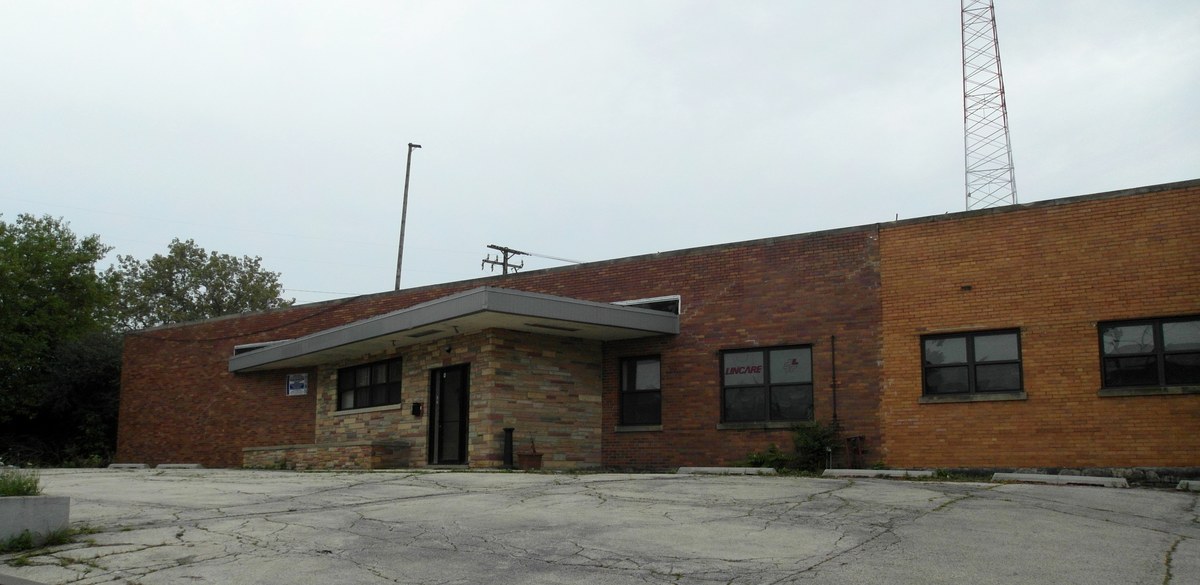
WVON is a Chicago radio station serving the Chicago market with an African-American-oriented format, recorded here as a PROPOSED MINT: the coordinator's master sweep found no WVON record in the CultureTechLens master, and this staged
| At a glance | |
|---|---|
| Type | ORGANIZATION — am |
| Dates | – |
| Chicago connection | CORE — see the Chicago connection section |
| Known for | WVON is a Chicago radio station serving the Chicago market with an African-American-oriented format, recorded here as a PROPOSED MINT: the coordinator's |
| Verification | PROVISIONAL |
| CTL ID | CTL-ENC-000019 |
Overview
WVON is a Chicago radio station serving the Chicago market with an African-American-oriented format, recorded here as a PROPOSED MINT: the coordinator's master sweep found no WVON record in the CultureTechLens master, and this staged record proposes one for Chicago's Black radio institution. Its grade is UNVERIFIED and its census status is PROPOSED. The station is distinct from the people who worked at it — Don Cornelius carries his own record — and from Soul Train, the television series its alumni went on to create; those are cross-references, not this record's subject.
WVON began on April 1, 1963, when WHFC became WVON after being purchased by Leonard and Phil Chess, the owners of Chess Records, for $1 million. The call sign originally stood for "Voice of the Negro" and is now rendered "Voice of the Nation." WVON debuted playing R&B music and quickly became a success, becoming the second most listened-to Chicago station during evening hours by early 1964, despite running 1,000 watts during the day and 250 watts at night. The station's own history, as reproduced in Chicago radio histories, names the handpicked opening personalities — Franklin McCarthy, E. Rodney Jones, Herb Kent, Wesley South, and Pervis Spann — who became known as "The Good Guys," with Ric Ricardo, Bill "Butterball" Crane, Ed Cook, Joe Cobb, Roy Wood, Don Cornelius, Richard Pegue, and others eventually joining the roster under general manager Lucky Cordell.
History
Its reach exceeded its signal. Berry Gordy, the president of Motown Records, sent every song he produced immediately to WVON before any other station, and T Dog Media's fiftieth-anniversary account records the local form of the same fact: Motown often debuted records on WVON first, before anywhere else in the country, even Detroit. Rotation on WVON influenced airplay in other markets, and similar stations across the country took inspiration from its format. The station ranked in Chicago's top five among most-listened stations in its Good Guys era even on its limited power.
WVON was also a civic institution during the Civil Rights Movement, covering it extensively, with prominent African-American leaders regularly featured. The Rev. Jesse Jackson called into the station to report the assassination of Martin Luther King Jr., and T Dog Media records that WVON suspended music temporarily in 1968 for wall-to-wall news coverage of the assassination, acting as a calming presence as unrest tore through Black communities across the city. Its own history makes the same claim in plain terms: during the riots that followed Dr. King's death, WVON's on-air personalities were there to lift spirits and ease tension in neighborhoods across Chicago. Melody Spann-Cooper, the station's later chairwoman, summarized the lineage at the fiftieth anniversary: the station had been a bully pulpit for Martin Luther King Jr. in the 1960s and for an early Barack Obama, "and then throw in Don Cornelius, too."
The Cornelius fact is stated here as station history only: Don Cornelius was a WVON announcer, news reporter, and disc jockey from 1966, and Sid McCoy, another WVON voice, accompanied Cornelius when he formed Soul Train. The station's later history is one of frequency moves and format change: sold after Leonard Chess's death to Globetrotter Communications in 1970, moved from 1450 to 1390 in 1975, returned to 1450 under Midway Broadcasting in 1984 — Midway's principals included former WVON personalities Pervis Spann and Wesley South — adopted a Black-oriented talk format in 1986, and moved its call letters and programming to 1690 AM in 2006, where it airs today under Midway's operation. This record is a staged proposal pending the founder's classification sitting.
The talk era produced its own documented milestones: in 2002, then-State Senator Barack Obama filled in for vacationing host Cliff Kelley, and Roland Martin hosted a program on WVON from October 2005 to October 2008. Both facts come from the station's history and are stated as episodes in the talk format's run, not as claims about the station's music era.
Chicago connection
WVON is a Chicago radio station serving the Chicago market with an African-American-oriented format, recorded here as a PROPOSED MINT: the coordinator's master sweep found no WVON record in the CultureTechLens master, and this staged record proposes one for Chicago's Black radio institution. The call sign originally stood for "Voice of the Negro" and is now rendered "Voice of the Nation." WVON debuted playing R&B music and quickly became a success, becoming the second most listened-to Chicago station during evening hours by early 1964, despite running 1,000 watts during the day and 250 watts at night. The station's own history, as reproduced in Chicago radio histories, names the handpicked opening personalities — Franklin McCarthy, E. The station ranked in Chicago's top five among most-listened stations in its Good Guys era even on its limited power. King's death, WVON's on-air personalities were there to lift spirits and ease tension in neighborhoods across Chicago. [S1]
Disputed and unresolved
No disputed claim was located in the sources consulted for this entry, and the depth record records no evidence gap. Open items, if any, are listed in Editorial notes.
See also
Relationships
- hosted — Herb Kent (CTL-E-0069) — Restated from the CultureTechLens Knowledge Graph: WVON (CTL-E-0179) hosted Herb Kent (CTL-E-0069), verification Verified. Herb Kent, 'The Cool Gent,' was a longtime WVON DJ
- hosted — Ed Cook (CTL-E-0550) — Restated from the CultureTechLens Knowledge Graph: WVON (CTL-E-0179) hosted Ed Cook (CTL-E-0550), verification Verified. WVON personality ("Nassau Daddy"); named among the station’s "Good Guys" roster in the 2013 WVON 50th-anniversary tributes.
- hosted — Pervis Spann (CTL-E-1199) — Restated from the CultureTechLens Knowledge Graph: WVON (CTL-E-0179) hosted Pervis Spann (CTL-E-1199), verification Verified. WVON hired Pervis Spann as a disc jockey in 1963; he became the station's "all-night blues man."
Sources
- S1: "WVON." Wikipedia. Accessed October 25, 2026. https://en.wikipedia.org/wiki/WVON.
- S2: T Dog Media. "WVON at 50." April 2013. https://www.tdogmedia.com/2013/04/wvon-at-50.html.
- S3: WVON. "WVON History." Reproduced in MsOldSchool, "Chicago Radio." Accessed October 25, 2026. https://msoldschool.ning.com/group/chicago/forum/topics/chicago-radio.
- S4: Gapers Block. "WVON Turns 50: An Interview with Melody Spann-Cooper." April 1, 2013. http://gapersblock.com/ac/2013/04/01/youve-been-the-head-of/.
- S5: CultureTechLens Knowledge Graph (schema v0.3.1), entities.json and relationships.json — CTL's own graph register, consulted 2026-10-28 for crosswalk facts and restated relationships.
Cite this entry
- Permanent ID: CTL-ENC-000019 · Crosswalked graph record: CTL-ESS-0063 · Version: 0.1 · Date: 2026-10-28
- Chicago: CultureTechLens. "WVON." CultureTechLens Encyclopedia, version 0.1, October 28, 2026. CultureTechLens NFP. CTL-ENC-000019.
- APA: CultureTechLens. (2026). WVON (Version 0.1, Entry CTL-ENC-000019). CultureTechLens Encyclopedia. CultureTechLens NFP.
- MLA: CultureTechLens. "WVON." CultureTechLens Encyclopedia, version 0.1, CultureTechLens NFP, 28 Oct. 2026. Entry CTL-ENC-000019.
Further reading
- CultureTechLens Knowledge Graph record CTL-ESS-0063 (crosswalked; published graph register id CTL-E-0179).
Image credits
- WVON photograph: see Images block in the frontmatter for the full credit line, rights status, and rights document.
Citation
CultureTechLens. "WVON." CultureTechLens Encyclopedia, Vol. 1 — Black Chicago, version 0.1, 2026-10-28. CultureTechLens NFP. CTL-ENC-000019.
<!-- =======================