 CULTURETECHLENS
The Encyclopedia · CTL-ENC-000441
Paul Robeson
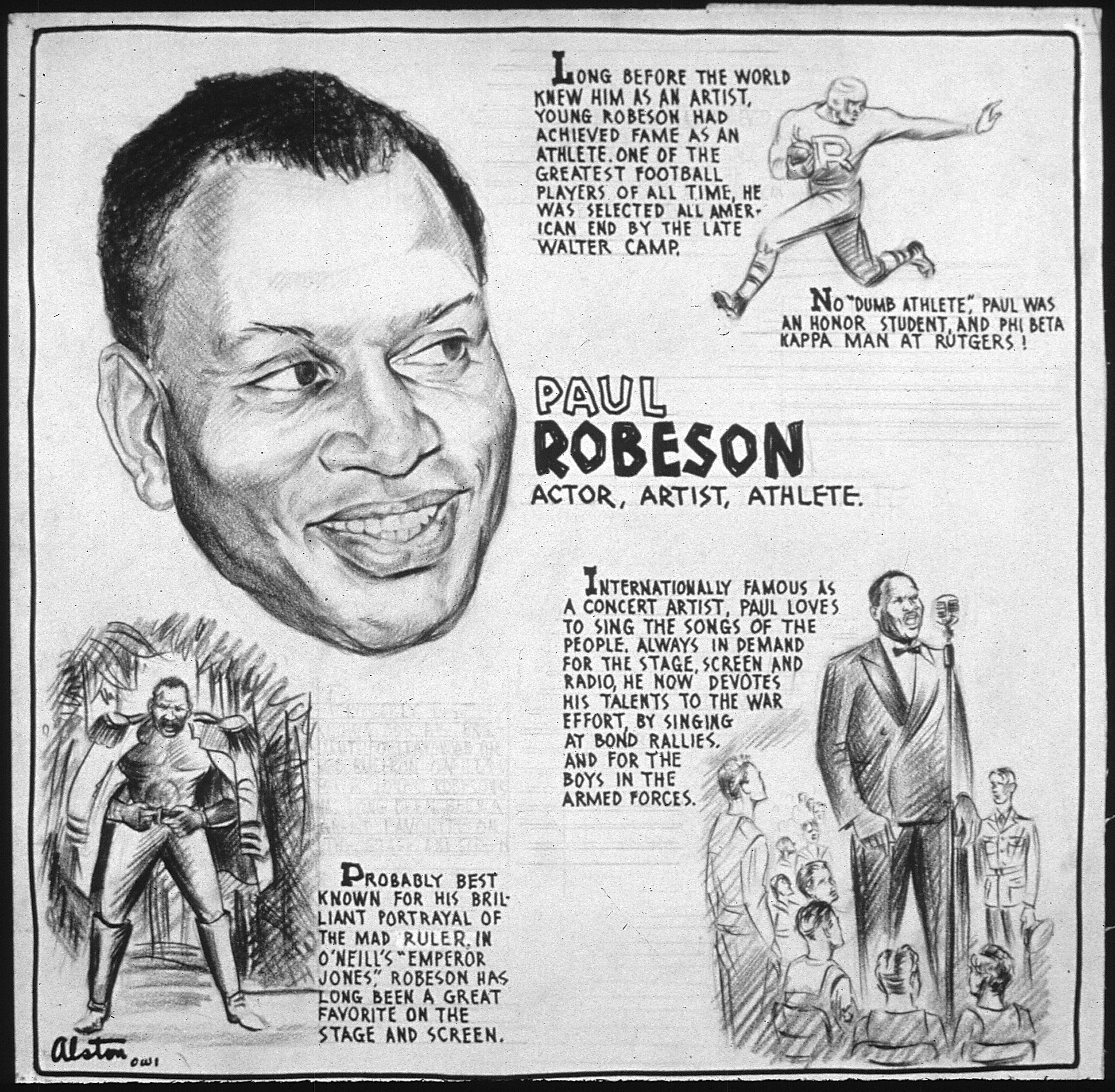
Bass-baritone, actor, and political activist whose Chicago concert record ran from Orchestra Hall triumphs to the movement's stages, and who carried We Charge Genocide to the United Nations in New York in 1951.
| At a glance | |
|---|---|
| Type | PERSON - singer, actor, and activist |
| Dates | April 9, 1898 - January 23, 1976 |
| Chicago connection | SIGNIFICANT |
| Known for | "Ol' Man River"; the 1951 UN presentation of We Charge Genocide; the passport case, Robeson v. Dulles |
| Verification | VERIFIED |
| CTL ID | CTL-ENC-000441 |
| Documented address | None recorded for this entry - see Documented address and map |
Overview
Paul Robeson (1898-1976) - Rutgers scholar-athlete, Columbia law graduate, and by the 1930s the most famous Black performer in the world - sang in Chicago across four decades: Orchestra Hall recitals in his concert prime, when his bass-baritone and his program of spirituals and folk songs of many nations made him a singular figure in American music; the great Othello of 1943-44, which Chicago saw on tour; and, as the Cold War closed around him, the movement venues that would still book him when the commercial halls would not [S1][S2][S3]. Chicago's Black press - the Defender above all - championed him through the years when the mainstream press was instructed by his politics to forget him, and his Chicago concerts of the blacklist years were Defender-covered civic events [S2].
The anchor the selection gives this entry is the petition: in December 1951 Robeson presented We Charge Genocide at the United Nations in New York while Patterson presented it in Paris (see We Charge Genocide) [S2]. The State Department had already revoked his passport in 1950 for refusing to sign a non-Communist affidavit; the eight-year passport fight that followed, ended by the Supreme Court's 1958 Kent v. Dulles decision restoring his travel, is the legal frame of his last decades [S1][S2].
The document of record
Robeson is anchored here by the We Charge Genocide presentation record (1951) and by his Chicago concert record as carried in the Defender and the Chicago performance archives [S1][S2]. His papers are principally at Howard University's Moorland-Spingarn Research Center, with the Robeson archives also held at the Schomburg Center [S2][S3].
Chicago connection
The connection is SIGNIFICANT, on the selection's named evidence: a documented Chicago concert record across his career, sustained in the blacklist years by Chicago's Black institutions and press [S2][S3]. He was never a Chicago resident, and the entry does not make him one.
Documented address and map
No address documented for this entry - Robeson's Chicago presences were performances, with no institutional address of his own documented in the sources consulted; no coordinates are recorded.
Disputed and unresolved
| Claim | Version A (source) | Version B (source) | CTL position |
|---|---|---|---|
| Politics and the record | Robeson's defenders: a principled anti-colonialism and Soviet sympathy honestly held and ruinously punished | His critics, then and since: an apologist for Stalinism who refused to reckon with its crimes | BOTH PRINTED - CTL documents the Chicago record and the petition presentation, states the passport facts from the case record, and carries the political judgment as the era's central dispute about him, unresolved here |
See also
Relationships
- member_of_organization — Civil Rights Congress — Robeson was a leading sponsor and public face of the Civil Rights Congress, whose 1951 petition he presented at the UN in New York (BlackPast; the petition record).
- starred_in — Show Boat (1936 film) — Robeson's screen performance of Joe in the 1936 Show Boat, singing "Ol' Man River," is his signature film role (Britannica).
Sources
- S1: Encyclopaedia Britannica. "Paul Robeson." Britannica. https://www.britannica.com/biography/Paul-Robeson
- S2: BlackPast.org. "Paul Robeson (1898-1976)." https://www.blackpast.org/
- S3: Smithsonian / National Portrait Gallery. Paul Robeson interpretive resources. https://npg.si.edu/
Cite this entry
- Permanent ID: CTL-ENC-000441 · Crosswalked graph record: CTL-E-1526 · Version: 0.1 · Date: 2026-10-29
- Chicago: CultureTechLens. "Paul Robeson." CultureTechLens Encyclopedia, version 0.1, October 29, 2026. CultureTechLens NFP. CTL-ENC-000441. Source: CultureTechLens
- APA: CultureTechLens. (2026). Paul Robeson (Version 0.1, Entry CTL-ENC-000441). CultureTechLens Encyclopedia. CultureTechLens NFP. Source: CultureTechLens
- MLA: CultureTechLens. "Paul Robeson." CultureTechLens Encyclopedia, version 0.1, CultureTechLens NFP, 29 Oct. 2026. Entry CTL-ENC-000441. Source: CultureTechLens
Further reading
- Martin Bauml Duberman, Paul Robeson (Knopf, 1988).
Image credits
- Paul Robeson in the National Archives portrait (NARA 535624), held at 3,000 x 2,938 px on Wikimedia Commons: see Images block in the frontmatter for the full credit line, rights status, and rights document.
Citation
CultureTechLens. "Paul Robeson." CultureTechLens Encyclopedia, Historical Documents (staged), version 0.1, 2026-10-29. CultureTechLens NFP. CTL-ENC-000441.