 CULTURETECHLENS
The Encyclopedia · CTL-ENC-000011
Operation PUSH
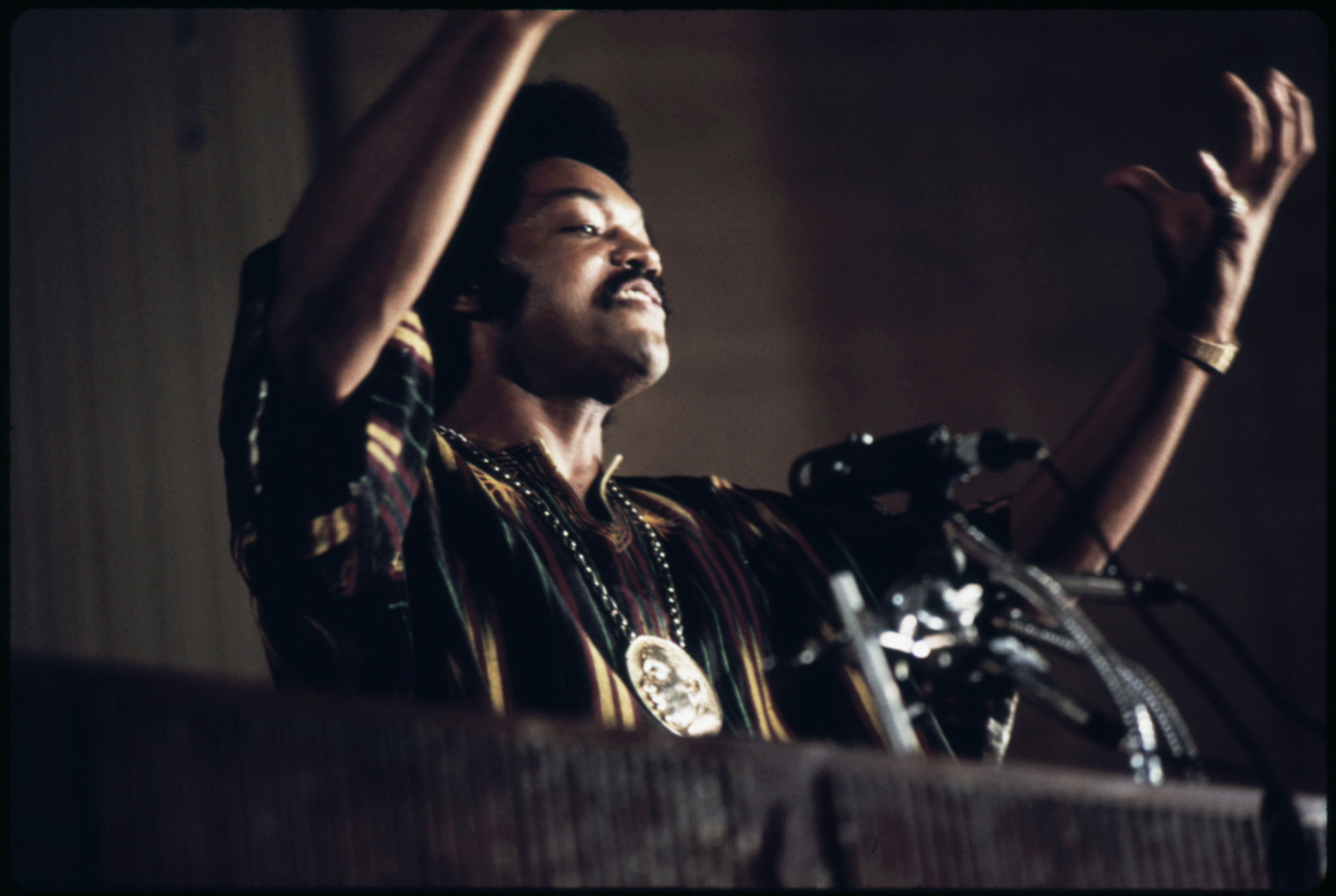
Operation PUSH — People United to Save Humanity, the name later changed to People United to Serve Humanity — was the Chicago civil-economics organization Jesse Jackson (CTL-P-0065) founded at Christmas 1971 and led for a
| At a glance | |
|---|---|
| Type | ORGANIZATION — civil-rights |
| Dates | – |
| Chicago connection | CORE — see the Chicago connection section |
| Known for | Operation PUSH — People United to Save Humanity, the name later changed to People United to Serve Humanity — was the Chicago |
| Verification | VERIFIED |
| CTL ID | CTL-ENC-000011 |
Overview
Operation PUSH — People United to Save Humanity, the name later changed to People United to Serve Humanity — was the Chicago civil-economics organization Jesse Jackson (CTL-P-0065) founded at Christmas 1971 and led for a quarter-century. From its Hyde Park headquarters, christened "Dr. King's Workshop," PUSH turned the consumer power of Black Chicago into negotiated covenants with some of the largest corporations in America, ran a weekly Saturday assembly that functioned as Chicago's Black civic parliament, and built PUSH Excel, an education program carried into schools across the country. It was never only a protest group and never a charity: its working doctrine was "civil economics" — the claim that the movement's next front, after the ballot, was the balance sheet. In 1996 Operation PUSH merged with Jackson's National Rainbow Coalition to form the Rainbow PUSH Coalition, and this record ends where that successor's begins (CTL-I-0022).
PUSH's roots were SCLC's, and the distinction matters. Operation Breadbasket was the Southern Christian Leadership Conference's economic program — launched by the SCLC, directed in Chicago from 1966 by Jackson, who became its national director in 1967 — and its covenant-and-boycott method was proven there first. When Jackson's war with SCLC president Ralph Abernathy ended in December 1971 — Abernathy suspended him amid a dispute over that fall's Black Expo; Jackson had refused the ordered transfer of his operation to Atlanta — Jackson resigned with his entire Breadbasket staff and thirty of its thirty-five board members and began a new organization rather than inheriting the old one. Operation PUSH officially began operations on December 25, 1971. Dr. T. R. M. Howard, the Mississippi-born Chicago physician and veteran boycott strategist who had bankrolled Breadbasket's work, sat on the founding board and chaired its finance committee. PUSH is therefore Breadbasket's Chicago successor generation — same city, same method, many of the same people — but a separate institution, founded in a schism, and this record keeps that line exactly.
History
The instrument was the covenant: a written, voluntary agreement extracted from a corporation by research, negotiation, and the credible threat of a boycott. Jackson called the withdrawal of Black spending a "withdrawal of enthusiasm," and PUSH's covenants demanded jobs and promotions, contracts for Black suppliers, deposits in Black banks, advertising in Black media, and a place in ownership. Coca-Cola, Seven-Up, and Burger King were among the first-rank companies that signed such agreements. The model campaign came in 1981: PUSH's "National Withdrawal of Enthusiasm" against Coca-Cola, launched in July over a company with no Black wholesalers, no Black bottlers, and no Black directors, ended on August 10, 1981, with a covenant carrying more than $30 million in commitments — a $1.8 million loan fund for Black investors, 32 Black-owned distributorships, doubled advertising in Black-owned media, business placed with minority-owned banks, and an education fund. In 1983 PUSH led a boycott of Anheuser-Busch over minority employment in the brewer's distribution network; a boycott of CBS television affiliates followed in 1986; and the Kentucky Fried Chicken campaign was counted among those that won minority job concessions. Not every campaign ended in a signed covenant, and PUSH's critics, inside the movement and out, questioned its finances as well as its founder's dominance of it — by early 1987 the organization was imperiled by debt. But the form it perfected, constituency economics enforced by organized consumers, became standard equipment for Black civic organizations nationwide.
Every Saturday morning, PUSH convened. The Saturday Morning Forum at the Hyde Park headquarters — gospel singing, Jackson's address, visiting political leaders and entertainers as special attractions — was scheduled on Saturdays so the self-described "country preacher" would not compete with other ministers' Sunday pulpits, and it did the work of a parliament: announcing campaigns, honoring achievers, registering voters, and manufacturing the crowd that made a boycott threat credible. Carried beyond the room by broadcast, the Forum was, in BlackPast's assessment, an important source of Jackson's influence in Chicago, and it remained the organization's public heartbeat for decades. PUSH christened its headquarters "Dr. King's Workshop," declaring the building a continuation of the work King had begun in Chicago in 1966.
Two programs carried the organization beyond the boycott. PUSH Expo — descended from the Black Expo trade fair Jackson had staged under Breadbasket in October 1971 — was its annual convention and trade exposition, drawing Black businesses from across the country to Chicago; the surviving federal photographs of the July 1973 convention, taken by John H. White for the Environmental Protection Agency's Documerica project, show Jackson broadcasting from PUSH headquarters to a hall full of delegates. PUSH Excel, the educational arm launched in the mid-1970s — the organization's own later accounts date it 1975; the Encyclopedia of Chicago dates its founding journey to schools to 1976 — sent Jackson and its speakers into school assemblies nationwide with a discipline creed built on the "I Am Somebody" affirmation: students, parents, and teachers pledging attendance, study, and standards, with help toward job placement after graduation. PUSH Excel long outlived the boycott era and was still operating under the successor coalition in the 2020s.
Through the late 1970s and 1980s, PUSH was the institutional base from which Jackson's national career was launched — the voter-registration drives and the 1983 Anheuser-Busch boycott ran from its headquarters — and when Jackson ran for president in 1984 he resigned the PUSH presidency to do so, remaining chairman of its board. What ended Operation PUSH was not collapse but consolidation. In 1996, Jackson merged Operation PUSH with the National Rainbow Coalition, the political organization built out of his presidential campaigns, forming the Rainbow PUSH Coalition, headquartered in Chicago — one successor organization carrying the PUSH name, method, and headquarters forward. The merger gives this record's subject a clean historical boundary: Operation PUSH, 1971–1996. Its successor's record is kept separately in this encyclopedia.
Chicago connection
Operation PUSH — People United to Save Humanity, the name later changed to People United to Serve Humanity — was the Chicago civil-economics organization Jesse Jackson (CTL-P-0065) founded at Christmas 1971 and led for a quarter-century. King's Workshop," PUSH turned the consumer power of Black Chicago into negotiated covenants with some of the largest corporations in America, ran a weekly Saturday assembly that functioned as Chicago's Black civic parliament, and built PUSH Excel, an education program carried into schools across the country. Operation Breadbasket was the Southern Christian Leadership Conference's economic program — launched by the SCLC, directed in Chicago from 1966 by Jackson, who became its national director in 1967 — and its covenant-and-boycott method was proven there first. Howard, the Mississippi-born Chicago physician and veteran boycott strategist who had bankrolled Breadbasket's work, sat on the founding board and chaired its finance committee. PUSH is therefore Breadbasket's Chicago successor generation — same city, same method, many of the same people — but a separate institution, founded in a schism, and this record keeps that line exactly. [S1]
Disputed and unresolved
| Claim | As recorded | CTL position |
|---|---|---|
| Contested point in the record | When Jackson's war with SCLC president Ralph Abernathy ended in December 1971 — Abernathy suspended him amid a dispute over that fall's Black Expo; Jackson had refused the ordered transfer of his operation to Atlanta — Jackson resigned with his entire Breadbasket staff and thirty of its thirty-five board members and began a new organization rather than inheriting the old one. (depth record, sources as cited) | DISPUTED — shown as recorded; not resolved in this entry |
See also
Relationships
- founded_by — Jesse Jackson Sr. (CTL-E-0083) — Restated from the CultureTechLens Knowledge Graph: Operation PUSH (CTL-E-0288) founded_by Jesse Jackson Sr. (CTL-E-0083), verification Verified. Jackson founded Operation PUSH in Chicago in 1971.
- led_by — Rev. Dr. Willie T. Barrow (CTL-E-1403) — Restated from the CultureTechLens Knowledge Graph: Operation PUSH (CTL-E-0288) led_by Rev. Dr. Willie T. Barrow (CTL-E-1403), verification Verified. In 1984 Willie T. Barrow became the first woman executive director (CEO) of Operation PUSH, a civil-rights organization.
- organized — Harold Washington 1982-83 Voter Registration Drive (CTL-E-1393) — Restated from the CultureTechLens Knowledge Graph: Operation PUSH (CTL-E-0288) organized Harold Washington 1982-83 Voter Registration Drive (CTL-E-1393), verification Verified. Operation PUSH turned community discontent into votes and approached Washington with 100,000 new registered voters.
Sources
- S1: Rainbow PUSH Coalition. “A Brief History of the Rainbow Push Coalition.” https://www.rainbowpush.org/brief-history
- S2: BlackPast.org. “Operation PUSH (People United to Serve Humanity).” https://blackpast.org/african-american-history/operation-push-people-united-serve-humanity/
- S3: “Jesse Jackson.” Wikipedia. https://en.wikipedia.org/wiki/Jesse_Jackson
- S4: American Urban Radio Networks. “On This Day: Coca-Cola Boycott Ends Because of Black America.” August 10, 2021. https://aurn.com/on-this-day-coca-cola-boycott-black-america/
- S5: Black America Web. “Little Known Black History Fact: Operation PUSH Boycotts.” August 10, 2014. https://blackamericaweb.com/2014/08/10/little-known-black-history-fact-operation-push-boycotts/
- S6: African American Registry. “Rainbow/PUSH Is Formed.” https://aaregistry.org/story/rainbow-push-formed/
- S7: Encyclopedia of Chicago. “Operation PUSH,” excerpted at Portside, February 17, 2026. https://portside.org/2026-02-17/jesse-jackson-civil-rights-activist-and-presidential-candidate-dies-84
- S8: Windy City Word. “PUSH Excel to Launch 2022–2023 Enrichment Academy.” August 2022. https://windycityword.com/push-excel-to-launch-2022-2023-enrichment-academy/
- S9: “Operation PUSH: A Study.” ERIC ED 240 225. https://archive.org/download/ERIC_ED240225/ERIC_ED240225.pdf
- S10: CultureTechLens Knowledge Graph (schema v0.3.1), entities.json and relationships.json — CTL's own graph register, consulted 2026-10-28 for crosswalk facts and restated relationships.
Cite this entry
- Permanent ID: CTL-ENC-000011 · Crosswalked graph record: CTL-I-0144 · Version: 0.1 · Date: 2026-10-28
- Chicago: CultureTechLens. "Operation PUSH." CultureTechLens Encyclopedia, version 0.1, October 28, 2026. CultureTechLens NFP. CTL-ENC-000011.
- APA: CultureTechLens. (2026). Operation PUSH (Version 0.1, Entry CTL-ENC-000011). CultureTechLens Encyclopedia. CultureTechLens NFP.
- MLA: CultureTechLens. "Operation PUSH." CultureTechLens Encyclopedia, version 0.1, CultureTechLens NFP, 28 Oct. 2026. Entry CTL-ENC-000011.
Further reading
- CultureTechLens Knowledge Graph record CTL-I-0144 (crosswalked; published graph register id CTL-E-0288).
Image credits
- Operation PUSH photograph: see Images block in the frontmatter for the full credit line, rights status, and rights document.
Citation
CultureTechLens. "Operation PUSH." CultureTechLens Encyclopedia, Vol. 1 — Black Chicago, version 0.1, 2026-10-28. CultureTechLens NFP. CTL-ENC-000011.
<!-- =======================