 CULTURETECHLENS
The Encyclopedia · CTL-ENC-000413
Niagara Movement Declaration of Principles
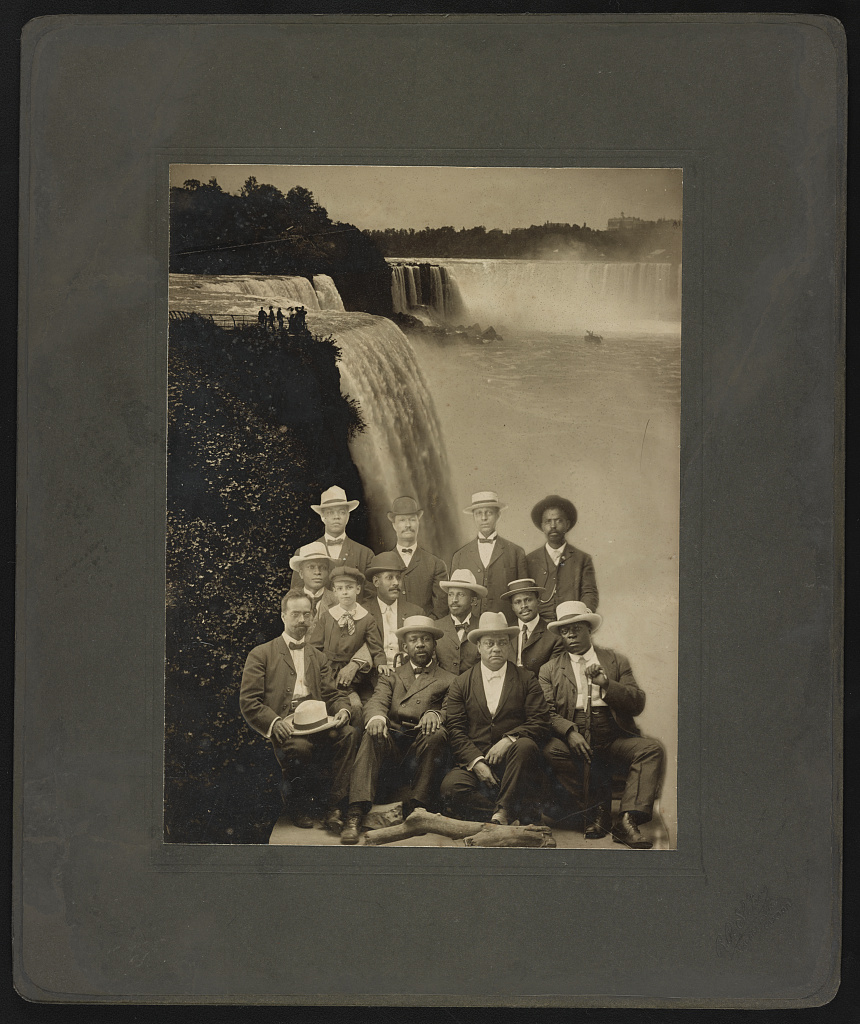
The 1905 statement of the Niagara Movement - Du Bois and Trotter's protest organization - demanding full voting rights, equal enforcement of law, and an end to Jim Crow.
| At a glance | |
|---|---|
| Type | WORK - declaration |
| Dates | August 1905 |
| Chicago connection | SIGNIFICANT |
| Known for | The protest movement's founding platform; precursor text of the NAACP |
| Verification | VERIFIED |
| CTL ID | CTL-ENC-000413 |
| Documented address | None recorded for this entry - see Documented address and map |
Overview
In July 1905, twenty-nine Black men - professors, lawyers, editors, businessmen - answered Du Bois and Trotter's call and, denied lodging on the American side, met at Fort Erie, Ontario, across from Niagara Falls, organizing the Niagara Movement (see W. E. B. Du Bois) [S2][S3]. The Declaration of Principles they adopted is the movement's founding text: a refusal, in its own words, "to allow the impression to remain that the Negro-American assents to inferiority," and a platform of specific demands - the full ballot, equal enforcement of the Fourteenth and Fifteenth Amendments, no Jim Crow in travel or public accommodations, and equal schooling [S1][S2].
The Declaration is the anti-Atlanta text: where the 1895 address deferred (see Atlanta Compromise (address text)), the Declaration demands, and it names the demand as the condition of peace [S1].
The movement's short life and long line
The Niagara Movement met through 1909, harassed by the Tuskegee machine's influence and starved of funds, and its membership and platform flowed directly into the NAACP founded in 1909-1910 - the line from Fort Erie to the Call is the organizational genealogy of the modern civil-rights movement [S2][S3]. The Chicago circle named in the selection - Celia Parker Woolley, the Chicago writer and clubwoman already staged in this encyclopedia - placed Chicago inside the movement's documented membership: she was among the women who joined the Niagara circle and carried its politics into Chicago's club and settlement networks [S3].
Provenance and holdings
The Declaration was published by the movement in 1905 and reprinted in its proceedings and the Black press; the text is reproduced in the Library of Congress's NAACP exhibition materials and in the Du Bois papers at the University of Massachusetts Amherst [S1][S3]. The movement's records survive principally within the Du Bois papers [S3].
Chicago connection
The connection is SIGNIFICANT, on the documented membership: the staged Chicago figure Celia Parker Woolley belonged to the Niagara circle, and Chicago's Black press and clubs argued the Declaration's platform against the city's Washingtonians [S3]. The meeting itself was at Fort Erie; nothing here moves it.
Documented address and map
No address documented for this entry - the Declaration was adopted at Fort Erie, Ontario; no coordinates are recorded.
Disputed and unresolved
| Claim | Version A (source) | Version B (source) | CTL position |
|---|---|---|---|
| Founding size and site | Twenty-nine men at Fort Erie, July 1905 (Britannica; LOC) | Popular retellings placing the meeting at Niagara Falls, New York, or Harpers Ferry (the 1906 meeting) | CTL follows Britannica and the LOC: Fort Erie, 1905; Harpers Ferry was the second meeting, 1906 |
See also
- W. E. B. Du Bois
- Atlanta Compromise (address text)
- The Call (NAACP founding, 1909)
- Booker T. Washington
Relationships
- authored_by — W. E. B. Du Bois (CTL-E-1484) — Du Bois was the Declaration's principal drafter and the movement's general secretary (Britannica; LOC).
- authored_by — William Monroe Trotter — Trotter, the Boston Guardian editor, co-convened the Niagara meeting and stood with Du Bois at the head of the movement that adopted the Declaration (Britannica).
Sources
- S1: Niagara Movement. "Declaration of Principles" (1905). Text as published by the movement and reprinted in movement histories.
- S2: Encyclopaedia Britannica. "Niagara Movement." Britannica. https://www.britannica.com/topic/Niagara-Movement
- S3: Library of Congress. "NAACP: A Century in the Fight for Freedom" - Niagara Movement section. https://www.loc.gov/exhibits/naacp/
Cite this entry
- Permanent ID: CTL-ENC-000413 · Crosswalked graph record: none - see Editorial notes · Version: 0.1 · Date: 2026-10-29
- Chicago: CultureTechLens. "Niagara Movement Declaration of Principles." CultureTechLens Encyclopedia, version 0.1, October 29, 2026. CultureTechLens NFP. CTL-ENC-000413. Source: CultureTechLens
- APA: CultureTechLens. (2026). Niagara Movement Declaration of Principles (Version 0.1, Entry CTL-ENC-000413). CultureTechLens Encyclopedia. CultureTechLens NFP. Source: CultureTechLens
- MLA: CultureTechLens. "Niagara Movement Declaration of Principles." CultureTechLens Encyclopedia, version 0.1, CultureTechLens NFP, 29 Oct. 2026. Entry CTL-ENC-000413. Source: CultureTechLens
Further reading
- Angela Jones, African American Civil Rights: Early Activism and the Niagara Movement (Praeger, 2011).
Image credits
- The Niagara Movement's founders, Fort Erie, Ontario, 1905 - the Library of Congress photograph (LCCN2014645233) held at 860 x 1,024 px on Wikimedia Commons: see Images block in the frontmatter for the full credit line, rights status, and rights document.
Citation
CultureTechLens. "Niagara Movement Declaration of Principles." CultureTechLens Encyclopedia, Historical Documents (staged), version 0.1, 2026-10-29. CultureTechLens NFP. CTL-ENC-000413.