 CULTURETECHLENS
The Encyclopedia · CTL-ENC-000276
Meharry Medical College
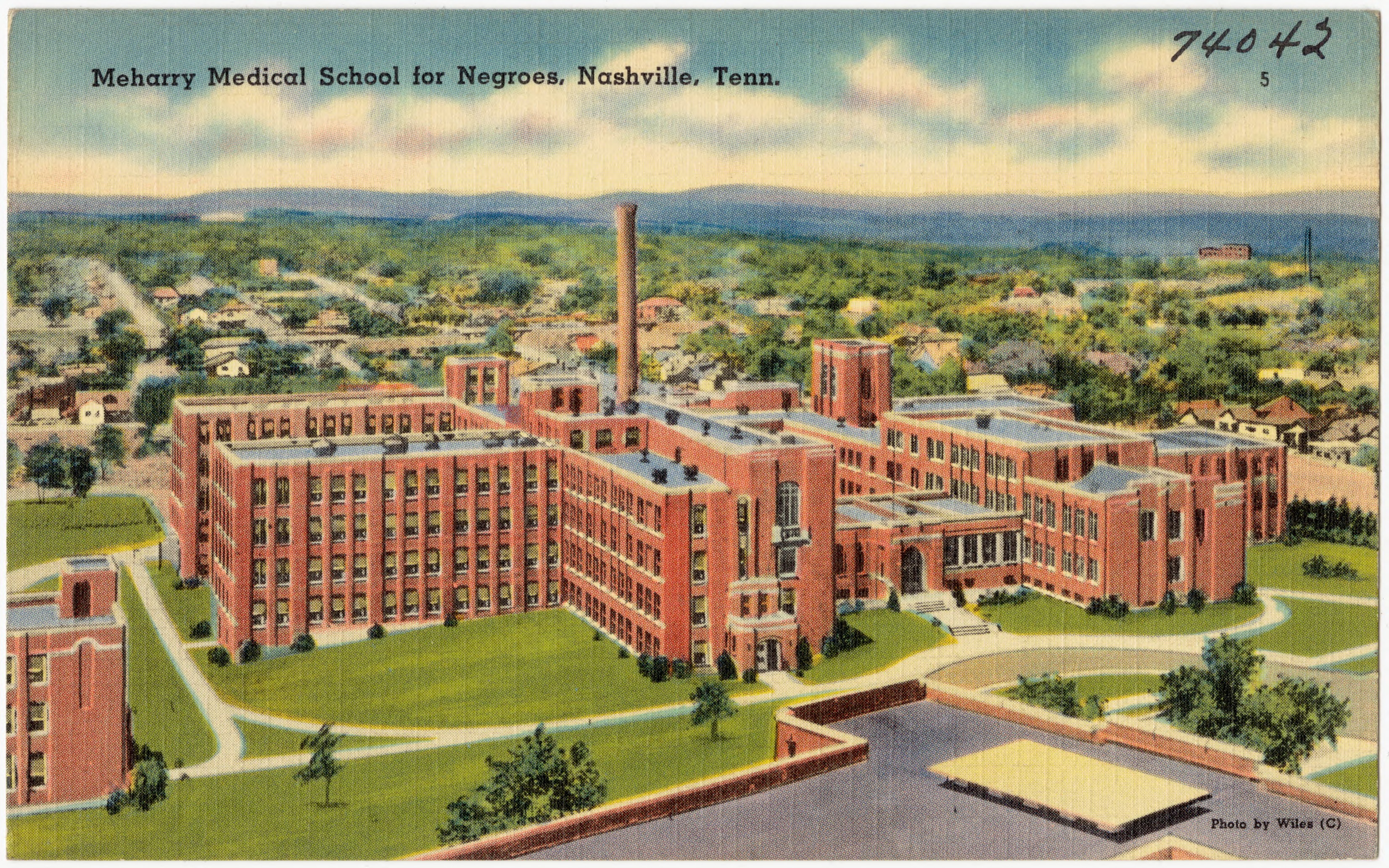
Nashville medical school founded in 1876 as the medical department of Central Tennessee College — the first medical school in the South for African Americans and, with Howard, trainer of a large share of the nation's Black physicians.
| At a glance | |
|---|---|
| Type | ORGANIZATION — medical school |
| Dates | 1876 – |
| Chicago connection | SIGNIFICANT — national significance; no Chicago anchor documented, none invented |
| Known for | First medical school in the South for African Americans (1876); with Howard, trained a large share of U.S. Black physicians |
| Verification | SUPPORTED |
| CTL ID | CTL-ENC-000276 |
| Documented address | 1005 Dr DB Todd Jr Blvd, Nashville, TN 37208 |
Overview
Meharry Medical College in Nashville, Tennessee, is a private, historically Black graduate and professional institution affiliated with the United Methodist Church. It was founded in 1876 as the Medical Department of Central Tennessee College, under the auspices of the Freedman's Aid Society of the Methodist Episcopal Church, with support from Samuel Meharry and his four brothers [S1][S2]. A historical marker on the campus records the founding plainly: after the Civil War, Methodist clergymen organized the Freedman's Aid Society to elevate education for African Americans, and in 1876, with contributions from the Society and the Meharry brothers, the Central Tennessee College medical department was founded [S2]. Meharry is described in institutional histories as the first medical school in the South for African Americans [S1]. Together with Howard University College of Medicine, it trained a large share of the Black physicians who practiced in the United States through the twentieth century, when most white medical schools excluded Black students outright or admitted them in token numbers [S3].
Founding and separation
Central Tennessee College itself became Walden University in 1900, and in 1915 the medical college gained a separate corporate existence, operating thereafter as Meharry Medical College in its own right [S1]. The separation mattered: it gave the school its own charter, its own board, and a single mission — the education of health professionals and scientists for service to minority and underserved communities. That mission, as the college states it today, is to improve the health and health care of minority and underserved communities by offering excellent education and training in the health sciences, placing special emphasis on providing opportunities to people of color and individuals from disadvantaged backgrounds, delivering high-quality health services, and conducting research that fosters the elimination of health disparities [S1]. The college now operates schools of medicine, dentistry, and graduate studies, and edits and owns the Journal of Health Care for the Poor and Underserved [S1].
Why Meharry mattered
The Flexner era closed most of the Black medical schools founded after emancipation; Meharry and Howard were the two that endured as four-year medical schools. Survival turned Meharry into infrastructure. Its graduates staffed Black hospitals from Provident in Chicago to the John A. Andrew Memorial Hospital at Tuskegee, filled the ranks of the National Medical Association, and carried modern medical training into Black communities across the South and the cities of the Great Migration [S3]. The school's own faculty line tells the story in miniature: Charles Victor Roman, a Meharry graduate of 1890, returned to found its department of ophthalmology and otolaryngology, edited the Journal of the National Medical Association, and wrote the college's history [S3]. For Chicago, Meharry's significance is the pipeline: a substantial share of the Black physicians who built Provident Hospital's staff and Chicago's Black medical community trained in Nashville or Washington because Chicago's own schools would not train them in equal numbers.
Connection
This entry is classed SIGNIFICANT. Its subject has no documented Chicago anchor, and none is invented: the connection to this Chicago-centered encyclopedia is the national one stated in the body — the institutions, schools, and associations these entries document trained, credentialed, organized, and wrote the history of the Black physicians who built Chicago's own Black medical world, from Provident Hospital's staff lines to the National Medical Association's Chicago leadership. William A. Hinton (CTL-ENC-000285) is the batch's exception in the other direction: Chicago-born, Boston-made.
Documented address and map
Documented address: 1005 Dr DB Todd Jr Blvd, Nashville, TN 37208. Coordinates: 36.168383731367, -86.80627602032. Source: Address as published by Meharry Medical College (1005 Dr DB Todd Jr Blvd, Nashville, TN 37208); geocoded via the U.S. Census Geocoder (Public_AR_Current), oneline address '1005 Dr DB Todd Jr Blvd, Nashville, TN 37208', exact matchedAddress '1005 DR DB TODD JR BLVD, NASHVILLE, TN, 37208', coordinates x=-86.80627602032, y=36.168383731367, accessed 2026-10-29. Map file: maps/CTL-ENC-000276-map.png (built centrally from these recorded coordinates).
See also
Relationships
- has_alumnus — Charles Victor Roman — Roman entered Meharry in 1886 and graduated in 1890, then returned as professor of ophthalmology and otolaryngology (TSHA).
- located_in — Nashville, Tennessee — Meharry Medical College is located in Nashville, Tennessee, at 1005 Dr DB Todd Jr Blvd (college's published address).
Sources
- S1: Meharry Medical College. "History." Meharry Medical College. Accessed October 29, 2026. https://home.mmc.edu/about/history/.
- S2: "Meharry Medical College and the United Methodist Church." Historical Marker Database (HMdb), marker 207837. Accessed October 29, 2026. https://www.hmdb.org/m.asp?m=207837.
- S3: Byrd, W. Michael, and Linda A. Clayton. An American Health Dilemma: A Medical History of African Americans and the Problem of Race. New York: Routledge, 2000.
Cite this entry
- Chicago: CultureTechLens. "Meharry Medical College." CultureTechLens Encyclopedia, Black Medicine (staged), version 0.1, October 29, 2026. CultureTechLens NFP. CTL-ENC-000276. Source: CultureTechLens
- APA: CultureTechLens. (2026). Meharry Medical College (Version 0.1, Entry CTL-ENC-000276). CultureTechLens Encyclopedia. CultureTechLens NFP. Source: CultureTechLens
- MLA: CultureTechLens. "Meharry Medical College." CultureTechLens Encyclopedia, version 0.1, CultureTechLens NFP, 29 Oct. 2026. Entry CTL-ENC-000276. Source: CultureTechLens
Further reading
- See Sources; institutional histories named there are the entry points for deeper reading.
Image credits
- See the Images block in the frontmatter for the full credit line, rights status, and rights document.
<!-- =======================