 CULTURETECHLENS
The Encyclopedia · CTL-ENC-000283
Martin Robison Delany
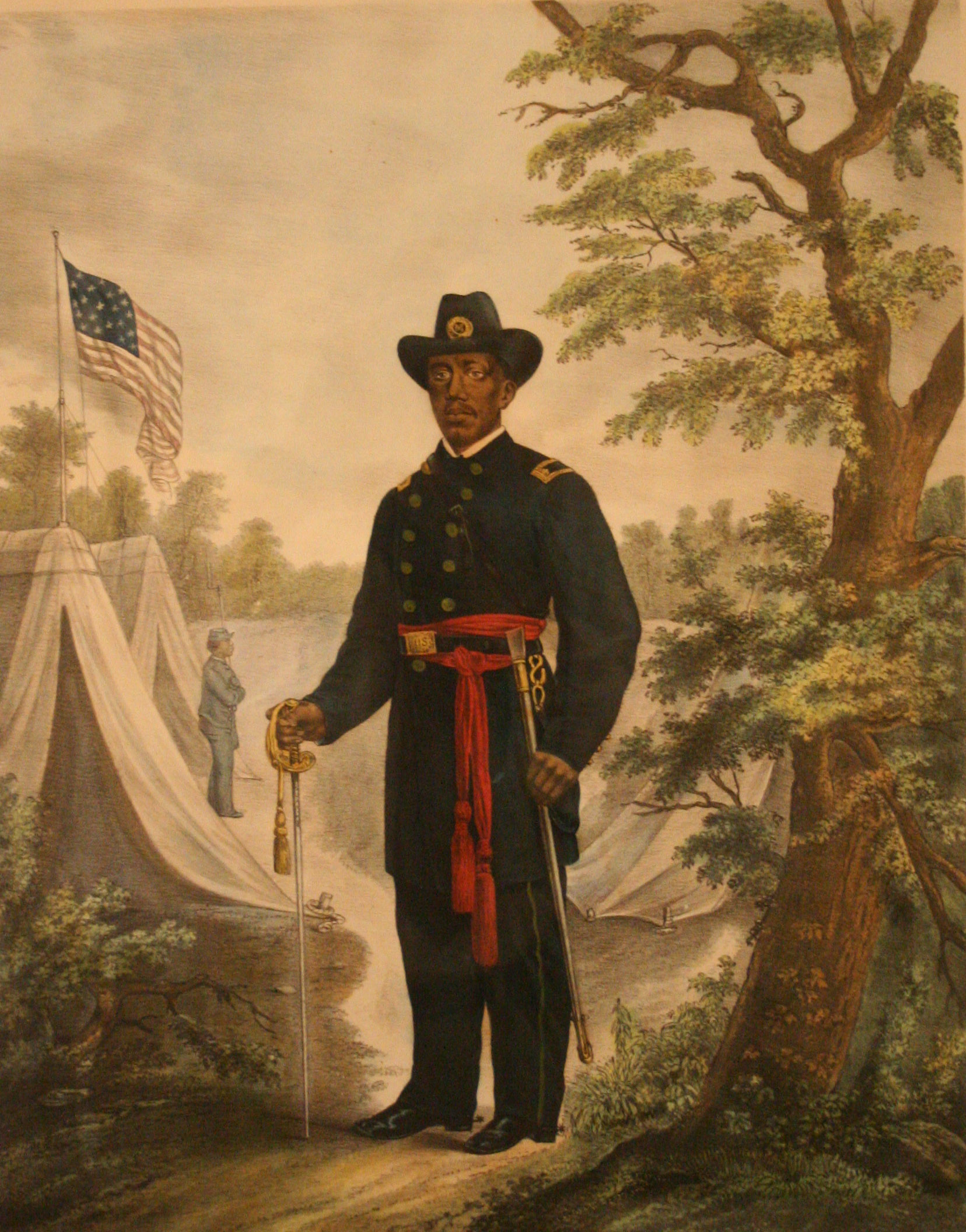
Pittsburgh physician, abolitionist editor, and Black nationalist who apprenticed in medicine, practiced through two cholera epidemics, and in 1850 was one of the first three Black men admitted to Harvard Medical School — dismissed within weeks under white student protest, and never a medical degree-holder.
| At a glance | |
|---|---|
| Type | PERSON — physician |
| Dates | 1812-05-06 – 1885-01-24 |
| Chicago connection | SIGNIFICANT — national significance; no Chicago anchor documented, none invented |
| Known for | One of the first three Black men admitted to Harvard Medical School (1850), dismissed after white student protests; apprenticeship-trained physician; first Black field-grade officer in the U.S. Army (major, 1865) |
| Verification | SUPPORTED |
| CTL ID | CTL-ENC-000283 |
| Documented address | None documented in the sources consulted |
Overview — read the credential carefully
Martin Robison Delany (May 6, 1812 – January 24, 1885) was an American abolitionist, journalist, physician, military officer, and writer, and an early, influential proponent of Black nationalism, credited with the Pan-African slogan "Africa for Africans" [S1]. His medical standing must be stated precisely, because it is often inflated: Delany trained as a physician's assistant and by apprenticeship, practiced medicine for decades, and was admitted to Harvard Medical School in 1850 — but he was dismissed within weeks and never earned a medical degree [S1][S2]. In the apprenticeship era that was a normal route into practice; the distinction matters here only because this encyclopedia does not call him a degree-holder. Born free in Charles Town, Virginia (now West Virginia), raised in Chambersburg and Pittsburgh, Pennsylvania, he apprenticed under abolitionist physicians in Pittsburgh and learned the period's techniques, including cupping and leeching [S1][S2]. During the Pittsburgh cholera epidemics of 1833 and 1854 he treated patients while many doctors and residents fled the city [S1].
Harvard, 1850
In 1850 Delany presented Harvard Medical School with seventeen letters of recommendation from Pittsburgh and Allegheny physicians, with endorsements from three clergymen, and was admitted for the winter term — one of the first three Black men admitted to the school, alongside Daniel Laing Jr. and Isaac H. Snowden [S1][S2]. Within about a month, white students petitioned the faculty that "the admission of blacks to the medical lectures is highly detrimental to the interests, and welfare of the Institution"; within three weeks the three men were dismissed by Dean Oliver Wendell Holmes Sr. [S2]. Delany returned to Pittsburgh and to practice. The expulsion confirmed the argument of his 1852 book, The Condition, Elevation, Emigration, and Destiny of the Colored People of the United States, that Black people had no secure future in the United States and should consider emigration — the founding text, for many scholars, of Black nationalism [S1].
Editor, explorer, major
Delany founded and edited The Mystery in Pittsburgh from 1843 to 1847, then co-edited Frederick Douglass's North Star in Rochester from 1847; he traveled the South in 1839 to observe slavery firsthand and in 1859 led an emigration commission to the Niger Valley in West Africa [S1]. When the United States Colored Troops were created he recruited for them, and in February 1865, after an audience with President Lincoln, he was commissioned a major — the first African American field-grade (line) officer in the United States Army [S1][S2]. He died on January 24, 1885 [S1]. As a medical figure he belongs in this volume not for a degree he was denied but for what the denial documents: the exact mechanism — student petition, dean's capitulation — by which American medical education excluded Black students in 1850, and the apprenticeship practice that carried Black medicine anyway.
Connection
This entry is classed SIGNIFICANT. Its subject has no documented Chicago anchor, and none is invented: the connection to this Chicago-centered encyclopedia is the national one stated in the body — the institutions, schools, and associations these entries document trained, credentialed, organized, and wrote the history of the Black physicians who built Chicago's own Black medical world, from Provident Hospital's staff lines to the National Medical Association's Chicago leadership. William A. Hinton (CTL-ENC-000285) is the batch's exception in the other direction: Chicago-born, Boston-made.
Documented address and map
No address documented in the sources consulted — no coordinates are recorded and no map is published for this entry.
See also
Relationships
- based_in — Pittsburgh, Pennsylvania — Delany apprenticed with Pittsburgh physicians and practiced medicine in Pittsburgh, including through the cholera epidemics of 1833 and 1854 (Philadelphia resolution; Wikipedia biography).
Sources
- S1: "Martin Delany." Wikipedia, drawing on Harvard Medical School records and standard biographies. Accessed October 29, 2026. https://en.wikipedia.org/wiki/Martin_Delany.
- S2: City of Philadelphia. Resolution honoring Martin R. Delany, File #120218 (2012), reciting the Harvard admission and dismissal from the historical record. https://phila.legistar.com/LegislationDetail.aspx?ID=1236193&GUID=8BC8D0B6-AF56-4CE9-A7A7-82B855C7A1D9&Options=&Search=&FullText=1.
Cite this entry
- Chicago: CultureTechLens. "Martin Robison Delany." CultureTechLens Encyclopedia, Black Medicine (staged), version 0.1, October 29, 2026. CultureTechLens NFP. CTL-ENC-000283. Source: CultureTechLens
- APA: CultureTechLens. (2026). Martin Robison Delany (Version 0.1, Entry CTL-ENC-000283). CultureTechLens Encyclopedia. CultureTechLens NFP. Source: CultureTechLens
- MLA: CultureTechLens. "Martin Robison Delany." CultureTechLens Encyclopedia, version 0.1, CultureTechLens NFP, 29 Oct. 2026. Entry CTL-ENC-000283. Source: CultureTechLens
Further reading
- See Sources; institutional histories named there are the entry points for deeper reading.
Image credits
- See the Images block in the frontmatter for the full credit line, rights status, and rights document.
<!-- =======================