 CULTURETECHLENS
The Encyclopedia · CTL-ENC-000014
Greater Grand Crossing
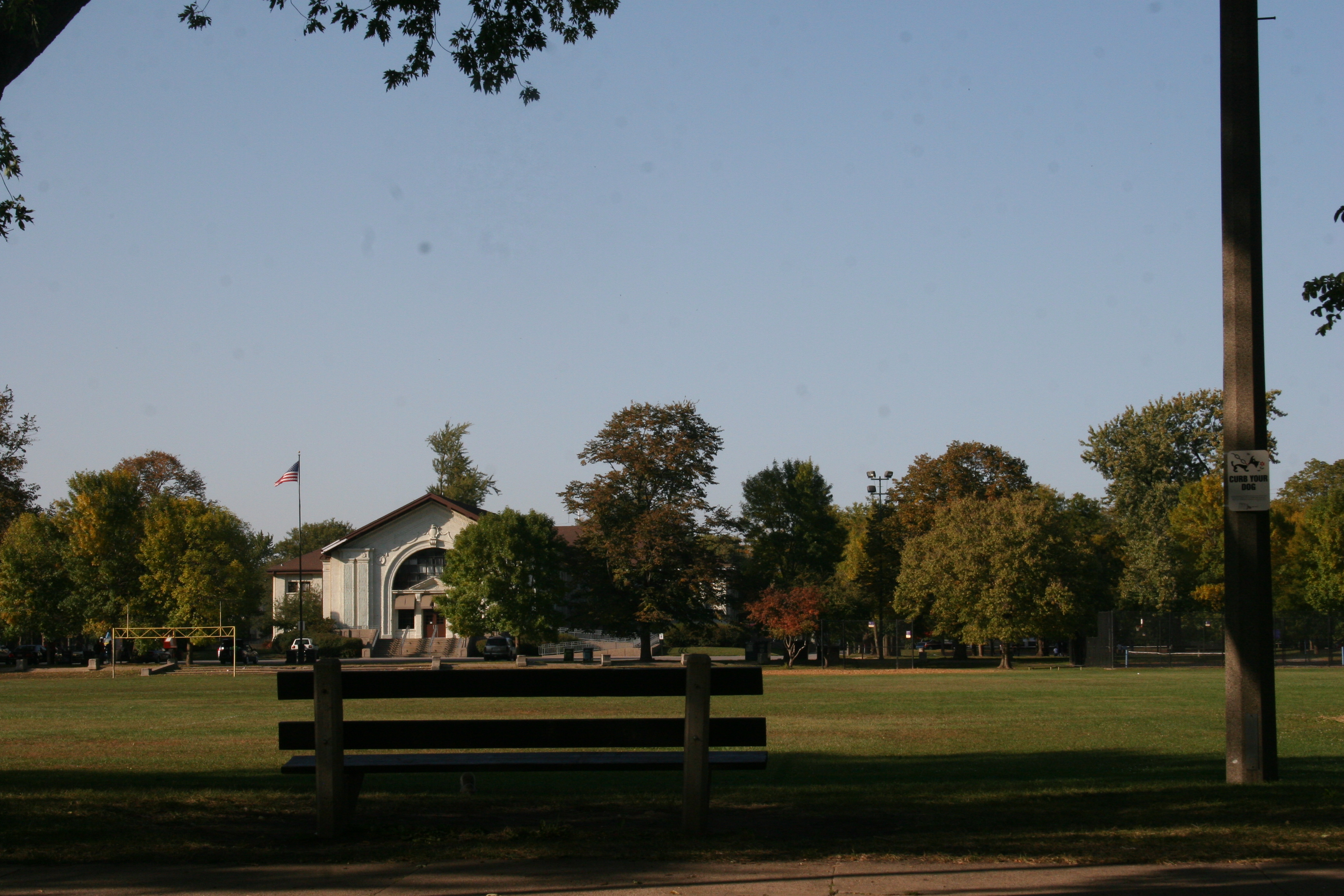
Greater Grand Crossing is a community area on Chicago's South Side whose name is a scar: it commemorates the point where two railroads crossed, and the disaster that happened there.
| At a glance | |
|---|---|
| Type | PLACE — community area |
| Dates | – |
| Chicago connection | CORE — see the Chicago connection section |
| Known for | Greater Grand Crossing is a community area on Chicago's South Side whose name is a scar: it commemorates the point where two |
| Verification | VERIFIED |
| CTL ID | CTL-ENC-000014 |
Overview
Greater Grand Crossing is a community area on Chicago's South Side whose name is a scar: it commemorates the point where two railroads crossed, and the disaster that happened there. The Chicago Metropolitan Agency for Planning snapshot that verifies this record tabulates the community area against the City of Chicago with a total population of 29,143 on 2020–2024 American Community Survey five-year estimates — the only population figure this entry asserts, since the trend series assembled for neighboring Englewood in this batch has no equivalent in the sources consulted here, and none is invented.
The name's origin is documented in the neighborhood's own records, and the graph states it in two steps. The site was first called Cornell, for Paul Cornell, the lawyer and developer who bought a six-hundred-acre tract from W. B. Ogden and founded the town that also gave Chicago Hyde Park — the graph accordingly attaches a founding edge to Cornell. Cornell laid out his town around the crossing of the Illinois Central and what became the Pittsburgh, Fort Wayne and Chicago line. In 1872 the settlement was renamed Grand Crossing by W. B. Kniskern, because another Cornell already existed in Illinois. The crossing itself entered history on April 25, 1853, when Roswell B. Mason — an Illinois Central engineer and later mayor of Chicago — secretly built his line's crossing over the rival Michigan Southern tracks, and a Michigan Southern train ran into an Illinois Central train at the diamond at 75th and South Chicago Avenue, killing eighteen people and injuring forty. After the collision, trains of both lines were required to stop at the crossing, and industry and population grew up around the enforced pause. The tracks were elevated in 1912, ending the at-grade danger.
History
The community area was annexed to Chicago in 1889 as part of Hyde Park Township. Its park record is part of its documented identity: Grand Crossing Park, at 7655 South Ingleside Avenue in the heart of the community area, was acquired by the South Park Commission in 1912; its Craftsman-style fieldhouse, designed by Daniel Burnham's firm with brick, stucco, and half-timbering, was built in 1914, and Edward Bennett, of Burnham and Bennett, planned the grounds in the manner of the Olmsted Brothers, with a playground, tennis courts, and meandering paths — the park district describes it as one of the city's most picturesque small parks. The park's own history carries the community's twentieth century: the district records that when African Americans began moving into the surrounding neighborhood in the 1950s, white residents responded with violence — a documented episode the park district names plainly — and the park was later rededicated, in the early 1970s, to Paul Cornell, with a plaque honoring the founder.
Today's community area, as its reference profile describes it, is a predominantly Black, substantially working-class South Side neighborhood whose built fabric reflects its rail-era growth, and whose name still instructs anyone who reads a map: Grand Crossing first, Cornell before it, and the 1853 collision beneath both. In the graph the neighborhood sits inside Chicago by a located-in edge, with the Cornell founding edge as its second wire. CultureTechLens carries Greater Grand Crossing as a place record on the CMAP snapshot's verification, its park district and encyclopedia record, and the graph's own founding account drawn from the 1900 Tribune transcription — a source limitation flagged in the batch index, since CMAP does not cover name origins and the Tribune text is the graph's single source for the Cornell naming. Because the verifying snapshot is a single five-year tabulation, this entry states Greater Grand Crossing's population as one dated figure — 29,143 residents, 2020–2024 — and no trend. Where the neighboring Englewood record in this batch can document a half-century of population change from multiple dated sources, this record's honest statement is the snapshot, the founding history, and the park, and it leaves the demographic narrative to sources a later pass can verify.
Chicago connection
Greater Grand Crossing is a community area on Chicago's South Side whose name is a scar: it commemorates the point where two railroads crossed, and the disaster that happened there. The Chicago Metropolitan Agency for Planning snapshot that verifies this record tabulates the community area against the City of Chicago with a total population of 29,143 on 2020–2024 American Community Survey five-year estimates — the only population figure this entry asserts, since the trend series assembled for neighboring Englewood in this batch has no equivalent in the sources consulted here, and none is invented. Ogden and founded the town that also gave Chicago Hyde Park — the graph accordingly attaches a founding edge to Cornell. Cornell laid out his town around the crossing of the Illinois Central and what became the Pittsburgh, Fort Wayne and Chicago line. Mason — an Illinois Central engineer and later mayor of Chicago — secretly built his line's crossing over the rival Michigan Southern tracks, and a Michigan Southern train ran into an Illinois Central train at the diamond at 75th and South Chicago Avenue, killing eighteen people and injuring forty. [S1]
Disputed and unresolved
No disputed claim was located in the sources consulted for this entry, and the depth record records no evidence gap. Open items, if any, are listed in Editorial notes.
See also
Relationships
- impacted_by — HOLC Residential Security Map — Chicago Area D74 (CTL-E-0916) — Restated from the CultureTechLens Knowledge Graph: Greater Grand Crossing (CTL-E-0217) impacted_by HOLC Residential Security Map — Chicago Area D74 (CTL-E-0916), verification Provisional. Greater Grand Crossing is a South Side community area within the redlined D-grade geography of the 1940 HOLC Chicago map; HOLC advised lenders to refuse loans in D areas.
- impacted_by — City of Chicago MWBE set-aside program (government contracting) (CTL-E-1354) — Restated from the CultureTechLens Knowledge Graph: Greater Grand Crossing (CTL-E-0217) impacted_by City of Chicago MWBE set-aside program (government contracting) (CTL-E-1354), verification Provisional. Chicago's MWBE construction set-aside directs City construction dollars to minority- and women-owned firms; Greater Grand Crossing is a majority-Black South Side community area within the program's remedial scope.
Sources
- S1: Chicago Metropolitan Agency for Planning. "Community Data Snapshot — Greater Grand Crossing." Chicago Community Area Series. Accessed October 25, 2026. https://cmap.illinois.gov/download/6098/?tmstv=1790170245.
- S2: Chicago Park District. "Grand Crossing Park." Accessed October 25, 2026. https://www.chicagoparkdistrict.com/parks-facilities/grand-crossing-park?order=title&sort=asc&page=1.
- S3: Encyclopedia of Chicago. "Greater Grand Crossing." Entry credited to Wallace Best. Accessed October 25, 2026. https://bestchicagoneighborhoods.com/greater-grand-crossing/.
- S4: CultureTechLens Knowledge Graph (schema v0.3.1), entities.json and relationships.json — CTL's own graph register, consulted 2026-10-28 for crosswalk facts and restated relationships.
Cite this entry
- Permanent ID: CTL-ENC-000014 · Crosswalked graph record: CTL-PL-0168 · Version: 0.1 · Date: 2026-10-28
- Chicago: CultureTechLens. "Greater Grand Crossing." CultureTechLens Encyclopedia, version 0.1, October 28, 2026. CultureTechLens NFP. CTL-ENC-000014.
- APA: CultureTechLens. (2026). Greater Grand Crossing (Version 0.1, Entry CTL-ENC-000014). CultureTechLens Encyclopedia. CultureTechLens NFP.
- MLA: CultureTechLens. "Greater Grand Crossing." CultureTechLens Encyclopedia, version 0.1, CultureTechLens NFP, 28 Oct. 2026. Entry CTL-ENC-000014.
Further reading
- CultureTechLens Knowledge Graph record CTL-PL-0168 (crosswalked; published graph register id CTL-E-0217).
Image credits
- Greater Grand Crossing photograph: see Images block in the frontmatter for the full credit line, rights status, and rights document.
Citation
CultureTechLens. "Greater Grand Crossing." CultureTechLens Encyclopedia, Vol. 1 — Black Chicago, version 0.1, 2026-10-28. CultureTechLens NFP. CTL-ENC-000014.
<!-- =======================