 CULTURETECHLENS
The Encyclopedia · CTL-ENC-000037
Good Times
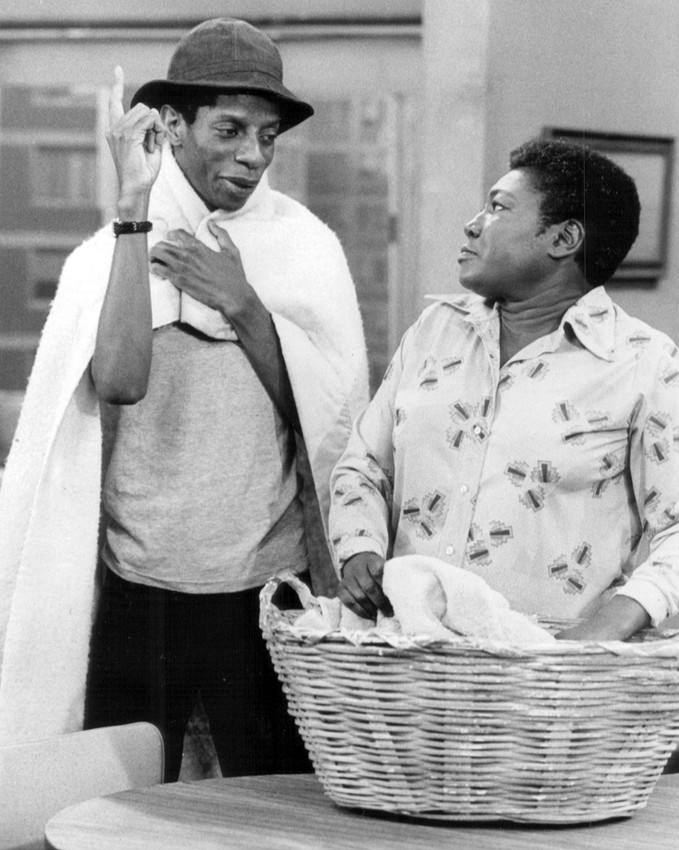
Good Times put a working-class Black family from a Chicago housing project at the center of American network television, and it did so inside the most successful comedy lineage of its era.
| At a glance | |
|---|---|
| Type | WORK — other |
| Dates | – |
| Chicago connection | SIGNIFICANT — see the Chicago connection section |
| Known for | Good Times put a working-class Black family from a Chicago housing project at the center of American network television, and it did |
| Verification | VERIFIED |
| CTL ID | CTL-ENC-000037 |
Overview
Good Times put a working-class Black family from a Chicago housing project at the center of American network television, and it did so inside the most successful comedy lineage of its era. The series aired on CBS from February 8, 1974 to August 1, 1979, running six seasons and 133 episodes. It was created by Eric Monte and Mike Evans and developed by Norman Lear, whose Tandem Productions made it a spin-off of Maude, itself a spin-off of All in the Family. The Television Academy's Interviews record, which anchors the CTL entry, identifies it in exactly those terms: a CBS series spun off from Maude, with its principal cast listed by name and role.
The premise was a rewrite with a purpose. On Maude, Florida Evans had been the Findlays' housekeeper in Tuckahoe, New York, and her husband Henry had worked as a firefighter. For Good Times the couple became Florida and James Evans of Chicago, raising three children in a high-rise public housing project that the series never named on screen, though the opening credits showed the towers of Cabrini-Green and the setting is understood as that development. The Evanses were, as the series is routinely described, television's first African-American two-parent family sitcom household: a mother and father both present, both working or fighting to work, holding a family together in an economy that kept knocking it down. The Television Academy's cast list gives the core of that household: Esther Rolle as Florida, John Amos as James, Jimmie Walker as J.J., Ja'net DuBois as Willona Woods, Ralph Carter as Michael, and BernNadette Stanis as Thelma. Later seasons added Johnny Brown as the building superintendent Bookman, Janet Jackson as the abused young neighbor Penny, and Ben Powers as Thelma's husband Keith.
The work
What the show did inside a half-hour sitcom frame was the point. Its documented subjects included poverty, racism, inner-city life, unemployment, gang violence, drug abuse, evictions, and the rent parties and shut-off notices that structured project life, all played before a studio audience in the Lear manner, where the joke and the grievance shared the same scene. James Evans's struggle to find steady work and Michael's militancy about the family's conditions were not decoration; they were the engine. The CTL graph models the family itself as the work's featured figures — Florida, James, J.J., Thelma, and Michael Evans, with Willona Woods — which fits a series whose real subject was a household: who feeds it, who protects it, who gets to leave it, and at what cost.
The run's shape shows in its episode counts: a thirteen-episode first season in the spring of 1974, then five seasons of twenty-four episodes each, a network order that made the Evans family a fixture rather than an experiment. The subjects the series kept building episodes from were the documented conditions of the Evanses' address — poverty and the arithmetic of the welfare office and the paycheck, racism at the hiring desk and the landlord's office, unemployment as a recurring plot rather than a one-week problem, evictions, and the rent parties neighbors threw to keep a family housed. That a situation comedy carried that list, in prime time, with a laugh track, was the Lear method applied to a household American television had previously kept at the edges of other people's stories.
Good Times is also the end of a three-link chain of descent that structures 1970s television: All in the Family produced Maude, and Maude produced Good Times, each step moving Florida Evans from the white Findlay household's employ to the head of her own family's table. The spin-off mechanics were a promotion in every sense — Rolle's character went from the Findlays' housekeeper to the moral center of her own series, and the show she anchored became the reference point every later Black family sitcom was measured against, from the ones in this graph's own queue to the ones still being pitched.
The later seasons are part of the record too. John Amos left after the third season and James was killed off, a turn Esther Rolle publicly resisted, and Rolle herself departed for a season before returning for the last. J.J.'s catchphrase fame pulled the show toward broader comedy even as its early seasons had set the template for issue-driven Black family sitcoms. CTL catalogs Good Times as a 1974 Chicago-set television work created by Monte and Evans under Lear's development, verified against the Television Academy's Interviews record, and holds it as the first program in its class: a two-parent Black family, in a named American city's public housing, carrying a network sitcom for six seasons.
Chicago connection
Good Times put a working-class Black family from a Chicago housing project at the center of American network television, and it did so inside the most successful comedy lineage of its era. For Good Times the couple became Florida and James Evans of Chicago, raising three children in a high-rise public housing project that the series never named on screen, though the opening credits showed the towers of Cabrini-Green and the setting is understood as that development. CTL catalogs Good Times as a 1974 Chicago-set television work created by Monte and Evans under Lear's development, verified against the Television Academy's Interviews record, and holds it as the first program in its class: a two-parent Black family, in a named American city's public housing, carrying a network sitcom for six seasons. [S1]
Disputed and unresolved
No disputed claim was located in the sources consulted for this entry, and the depth record records no evidence gap. Open items, if any, are listed in Editorial notes.
See also
Relationships
Relationships: none recorded yet — edges to follow. This entry's graph connections are being built; it publishes now on its sources.
Sources
- S1: Television Academy Foundation. "Good Times." Television Academy Interviews. Accessed October 25, 2026. https://interviews.televisionacademy.com/shows/good-times.
- S2: "Good Times." Wikipedia. Accessed October 25, 2026. https://en.wikipedia.org/wiki/Good_Times.
Cite this entry
- Permanent ID: CTL-ENC-000037 · Crosswalked graph record: CTL-W-0064 · Version: 0.1 · Date: 2026-10-28
- Chicago: CultureTechLens. "Good Times." CultureTechLens Encyclopedia, version 0.1, October 28, 2026. CultureTechLens NFP. CTL-ENC-000037.
- APA: CultureTechLens. (2026). Good Times (Version 0.1, Entry CTL-ENC-000037). CultureTechLens Encyclopedia. CultureTechLens NFP.
- MLA: CultureTechLens. "Good Times." CultureTechLens Encyclopedia, version 0.1, CultureTechLens NFP, 28 Oct. 2026. Entry CTL-ENC-000037.
Further reading
- CultureTechLens Knowledge Graph record CTL-W-0064 (crosswalked; published graph register id CTL-E-5447).
Image credits
- Good Times photograph: see Images block in the frontmatter for the full credit line, rights status, and rights document.
Citation
CultureTechLens. "Good Times." CultureTechLens Encyclopedia, Vol. 1 — Black Chicago, version 0.1, 2026-10-28. CultureTechLens NFP. CTL-ENC-000037.
<!-- =======================