 CULTURETECHLENS
The Encyclopedia · CTL-ENC-000219
Etta James
The Rock & Roll Hall of Fame's essay on Etta James, the source that verifies this record, calls her one of the greatest voices of her century and the matriarch of the blues, and names
| At a glance | |
|---|---|
| Type | PERSON — musician |
| Dates | – |
| Chicago connection | SIGNIFICANT — see the Chicago connection section |
| Known for | The Rock & Roll Hall of Fame's essay on Etta James, the source that verifies this record, calls her one of the greatest |
| Verification | VERIFIED |
| CTL ID | CTL-ENC-000219 |
Overview
The Rock & Roll Hall of Fame's essay on Etta James, the source that verifies this record, calls her one of the greatest voices of her century and the matriarch of the blues, and names the records on which that judgment rests: "At Last," "Tell Mama," and "Sunday Kind of Love." She was born Jamesetta Hawkins on January 25, 1938, in Los Angeles, and she died on January 20, 2012, in Riverside, California, of leukemia, five days short of her seventy-fourth birthday. Between those dates she built, across blues, R&B, soul, rock and roll, jazz, and gospel, one of the defining vocal careers in American music — a career whose center of gravity, for a Chicago archive, is the fifteen years she spent recording for Chicago's Chess Records.
She started in church. James began singing gospel as a child, took voice lessons from the age of five, and formed a girl doo-wop group, the Creolettes, before the rhythm-and-blues pioneer Johnny Otis discovered her. Otis renamed the group the Peaches and recorded her, in 1955, on "The Wallflower," better known as "Dance with Me, Henry" — an answer song to Hank Ballard's "Work with Me, Annie" that reached number one on the R&B chart and won the group an opening slot on Little Richard's national tour. After a lackluster run of recordings for Otis's Modern label, she signed in 1960 with Leonard Chess's Chicago label.
Life and career
The Chess years made her. Her debut album, At Last!, released in 1960 by Argo, a Chess division, presented her as a singer of everything — jazz, blues, doo-wop, and R&B dressed in orchestral arrangements the Chess brothers funded because they believed she had crossover pop potential — and it produced the recording that became her signature: "At Last," written by Mack Gordon and Harry Warren for the 1941 film Sun Valley Serenade and recorded by James in 1960. The string of Chess-era recordings the reference record names runs through "I Just Want to Make Love to You," "A Sunday Kind of Love," "Something's Got a Hold on Me," and "All I Could Do Was Cry," and in the later 1960s she recorded in Muscle Shoals, Alabama, trading the strings for a more direct sound: "Tell Mama" was her first Muscle Shoals hit, and "I'd Rather Go Blind," from the same period, became one of her most covered songs. In the graph, both "At Last!" and "I'd Rather Go Blind" are carried as work records authored by her. Leonard Chess's death in 1969 and her own struggles with addiction marked a harder decade, though she continued to record and, in 1978, released Deep in the Night for Warner Bros. and opened for the Rolling Stones.
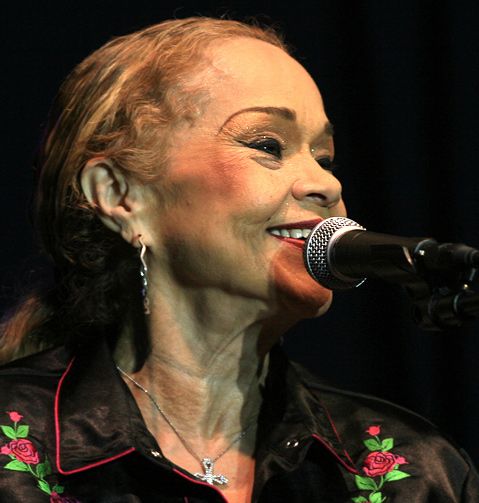
The honors arrived in a rush late in her career, and they are stated here in their documented forms. She sang at the opening ceremonies of the 1984 Olympics and appeared in Chuck Berry's 1987 concert film Hail! Hail! Rock 'n' Roll. Her comeback album Seven Year Itch — its title a reference to seven years without a major-label release — restored her commercially at the end of the 1980s. She was inducted into the Rock & Roll Hall of Fame in 1993 and performed "At Last" at her induction. Across her career she won six Grammy Awards, and in 2003 she received the Grammy Lifetime Achievement Award; her recording of "At Last" entered the Grammy Hall of Fame in 1999. In 2008 Beyoncé portrayed her in Cadillac Records, the film about Leonard Chess. The CultureTechLens record carries her photograph in the master — a 2006 performance image held in the CTL Cited Photo Archive — and this staged record attaches that same archive image, credited on its record, as her portrait.
Chicago connection
Between those dates she built, across blues, R&B, soul, rock and roll, jazz, and gospel, one of the defining vocal careers in American music — a career whose center of gravity, for a Chicago archive, is the fifteen years she spent recording for Chicago's Chess Records. After a lackluster run of recordings for Otis's Modern label, she signed in 1960 with Leonard Chess's Chicago label. [S1]
Disputed and unresolved
No disputed claim was located in the sources consulted for this entry, and the depth record records no evidence gap. Open items, if any, are listed in Editorial notes.
See also
Relationships
- recorded_for — Chess Records (CTL-E-0165) — Restated from the CultureTechLens Knowledge Graph: Etta James (CTL-E-5235) recorded_for Chess Records (CTL-E-0165), verification Verified.
Sources
- S1: Rock & Roll Hall of Fame. "Etta James." Accessed October 25, 2026. https://rockhall.com/inductees/etta-james/.
- S2: JamBase. "Remembering Etta James: Performing 'At Last' at 1993 Rock & Roll Hall of Fame Induction." January 20, 2025. Accessed October 25, 2026. https://www.jambase.com/article/etta-james-at-last-1993-rock-roll-hall-of-fame-induction.
- S3: Women in Rock & Roll's First Wave. "James, Etta." Accessed October 25, 2026. https://www.womeninrockproject.org/reference/james-etta/.
- S4: Houston Press. "Etta James: A Closer Look into One of the Greatest Voices Ever Heard." Accessed October 25, 2026. https://www.houstonpress.com/music/etta-james-a-closer-look-into-one-of-the-greatest-voices-ever-heard-6494808/.
- S5: KXCI. "Etta James – At Last! – KXCI Classic Pick." November 2015. Accessed October 25, 2026. https://kxci.org/2015/11/etta-james-at-last-kxci-classic-pick/.
- S6: CultureTechLens Knowledge Graph (schema v0.3.1), entities.json and relationships.json — CTL's own graph register, consulted 2026-10-29 for crosswalk facts and restated relationships.
Cite this entry
- Permanent ID: CTL-ENC-000219 · Crosswalked graph record: CTL-P-0031 · Version: 0.1 · Date: 2026-10-29
- Chicago: CultureTechLens. "Etta James." CultureTechLens Encyclopedia, version 0.1, October 29, 2026. CultureTechLens NFP. CTL-ENC-000219.
- APA: CultureTechLens. (2026). Etta James (Version 0.1, Entry CTL-ENC-000219). CultureTechLens Encyclopedia. CultureTechLens NFP.
- MLA: CultureTechLens. "Etta James." CultureTechLens Encyclopedia, version 0.1, CultureTechLens NFP, 29 Oct. 2026. Entry CTL-ENC-000219.
Further reading
- CultureTechLens Knowledge Graph record CTL-P-0031 (crosswalked; published graph register id CTL-E-5235).
Image credits
- Etta James photograph: see Images block in the frontmatter for the full credit line, rights status, and rights document.
Citation
CultureTechLens. "Etta James." CultureTechLens Encyclopedia, Vol. 1 — Black Chicago, version 0.1, 2026-10-29. CultureTechLens NFP. CTL-ENC-000219.
<!-- =======================