 CULTURETECHLENS
The Encyclopedia · CTL-ENC-000226
Earl 'Fatha' Hines
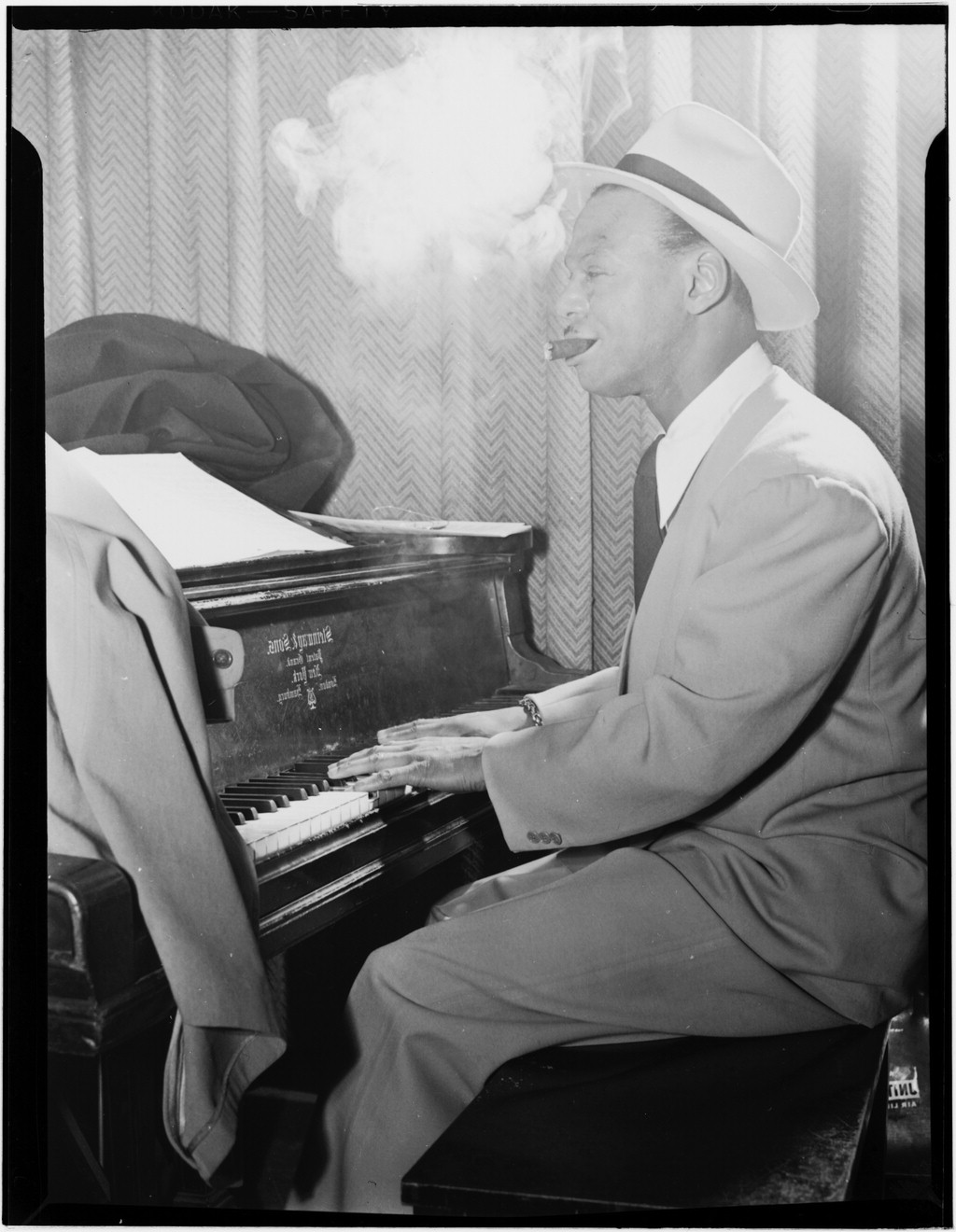
Earl Kenneth Hines (December 28, 1903 – April 22, 1983), known as Earl "Fatha" Hines, was an American jazz pianist and bandleader, one of the small number of pianists whose playing shaped the history of
| At a glance | |
|---|---|
| Type | PERSON — person |
| Dates | – |
| Chicago connection | CORE — see the Chicago connection section |
| Known for | Earl Kenneth Hines (December 28, 1903 – April 22, 1983), known as Earl "Fatha" Hines, was an American jazz pianist and |
| Verification | PROVISIONAL |
| CTL ID | CTL-ENC-000226 |
Overview
Earl Kenneth Hines (December 28, 1903 – April 22, 1983), known as Earl "Fatha" Hines, was an American jazz pianist and bandleader, one of the small number of pianists whose playing shaped the history of jazz. He is not Gregory Hines, the dancer and actor who appears elsewhere in the CultureTechLens master under the same surname; this record is the pianist's alone. Hines was born in Duquesne, Pennsylvania, into a musical family — his father Joseph played cornet and his stepmother Mary played organ — and, after a brief start on cornet himself, studied piano with classical training, intending at first to become a concert pianist. His first major job was accompanying vocalist Lois Deppe, with whom he made his first recordings in 1922.
In 1923 Hines moved to Chicago, the city that made him. He worked with Sammy Stewart and with Erskine Tate's Vendome Theatre Orchestra, toured in 1925–26 with Carroll Dickerson's orchestra, and stayed on as pianist and musical director when Louis Armstrong took over Dickerson's band in 1927. The Armstrong–Hines recordings of 1927–29 — "West End Blues," "Fireworks," "Basin Street Blues," "Muggles," "Skip the Gutter," and their trumpet-piano duet "Weather Bird" — are jazz classics. On them Hines demonstrated the style that changed jazz piano: a "trumpet style" of single-note, horn-like solo lines played in octaves so they would ring over an ensemble, freed from the stride pianists' block-chord left hand, with tremolo and a forceful touch that could break piano strings. AllMusic calls him "the first modern jazz pianist" and notes he had the trickiest left hand in the business, suspending time recklessly without ever losing the beat.
Life and career
Nineteen twenty-eight was his breakthrough year: he recorded his first ten piano solos, including "A Monday Date," "Blues in Thirds" and "57 Varieties"; worked much of the year with Jimmie Noone's Apex Club Orchestra; and, on his birthday, December 28, debuted his own big band at Chicago's Grand Terrace Café. Hines led the Grand Terrace band through the 1930s in a residency that paralleled Duke Ellington's at the Cotton Club, and his later big band of the early 1940s became a bebop incubator whose members included Dizzy Gillespie and Charlie Parker. He was also a composer — "Rosetta," "My Monday Date" and "You Can Depend on Me" are his.
The verdicts of the musicians who followed him are unusually consistent, and they are quoted in the reference record: Gillespie wrote that the modern piano came from Earl Hines and that the roots of Bud Powell and Herbie Hancock run through him; Count Basie called him "the greatest piano player in the world"; Erroll Garner said, "When you talk about greatness, you talk about Art Tatum and Earl Hines"; Horace Silver said no other pianist could get his sound. Hines worked into his final year, recording solo piano of undiminished power in the 1960s and 1970s, and died in Oakland, California, on April 22, 1983. Sources vary on his birth year — 1903 in the reference consensus followed here, 1905 in AllMusic and MusicianGuide — and that variance is recorded rather than averaged.
Hines's formation explains the style's range. Britannica's account, preserved in the SamePassage text consulted here, traces him from high-school trios through bands across the Midwest before the Dickerson tour of 1925–26 placed him beside Armstrong; MusicianGuide adds that his facility as a reader of music, built in school training and private classical lessons, served him for sixty years, and that his command ran from solo piano to small combos to vocal accompaniment to a string-augmented big band — though he always insisted he considered himself a band pianist rather than a soloist. That band-first identity is why the Grand Terrace orchestra mattered beyond its residency: it was a writing and arranging laboratory in which the trumpet-style piano was worked out nightly against a full ensemble, and, in its 1940s edition, a finishing school for the bebop generation that Gillespie and Parker carried out of it. The solo records of his last two decades, made when he was in his sixties and seventies, document the same hands undiminished — the reason the pianists' verdicts quoted above span three generations of players. This record is a staged proposal pending the founder's classification sitting.
Chicago connection
In 1923 Hines moved to Chicago, the city that made him. Nineteen twenty-eight was his breakthrough year: he recorded his first ten piano solos, including "A Monday Date," "Blues in Thirds" and "57 Varieties"; worked much of the year with Jimmie Noone's Apex Club Orchestra; and, on his birthday, December 28, debuted his own big band at Chicago's Grand Terrace Café. [S1]
Disputed and unresolved
| Claim | As recorded | CTL position |
|---|---|---|
| Contested point in the record | Sources vary on his birth year — 1903 in the reference consensus followed here, 1905 in AllMusic and MusicianGuide — and that variance is recorded rather than averaged. (depth record, sources as cited) | DISPUTED — shown as recorded; not resolved in this entry |
See also
Relationships
- collaborated_with — Louis Armstrong (CTL-E-0341) — Restated from the CultureTechLens Knowledge Graph: Earl 'Fatha' Hines (CTL-E-0505) collaborated_with Louis Armstrong (CTL-E-0341), verification Verified.
- performed_at — Grand Terrace Cafe (CTL-E-0130) — Restated from the CultureTechLens Knowledge Graph: Earl 'Fatha' Hines (CTL-E-0505) performed_at Grand Terrace Cafe (CTL-E-0130), verification Verified.
- based_in — City of Chicago (CTL-E-1475) — Restated from the CultureTechLens Knowledge Graph: Earl 'Fatha' Hines (CTL-E-0505) based_in City of Chicago (CTL-E-1475), verification Verified.
Sources
- S1: Wikipedia. "Earl Hines." Accessed October 26, 2026. https://en.wikipedia.org/wiki/Earl_Hines.
- S2: AllMusic. "Earl Hines — Biography." Accessed October 26, 2026. https://www.allmusic.com/artist/earl-hines-mn0000455522.
- S3: MusicianGuide.com. "Earl "Fatha" Hines Biography." Accessed October 26, 2026. https://www.musicianguide.com/biographies/1608000468/Earl-Fatha-Hines.html.
- S4: SamePassage. "Earl Hines." Accessed October 26, 2026. https://samepassage.org/earl-hines/.
- S5: CultureTechLens Knowledge Graph (schema v0.3.1), entities.json and relationships.json — CTL's own graph register, consulted 2026-10-29 for crosswalk facts and restated relationships.
Cite this entry
- Permanent ID: CTL-ENC-000226 · Crosswalked graph record: CTL-ESS-0263 · Version: 0.1 · Date: 2026-10-29
- Chicago: CultureTechLens. "Earl 'Fatha' Hines." CultureTechLens Encyclopedia, version 0.1, October 29, 2026. CultureTechLens NFP. CTL-ENC-000226.
- APA: CultureTechLens. (2026). Earl 'Fatha' Hines (Version 0.1, Entry CTL-ENC-000226). CultureTechLens Encyclopedia. CultureTechLens NFP.
- MLA: CultureTechLens. "Earl 'Fatha' Hines." CultureTechLens Encyclopedia, version 0.1, CultureTechLens NFP, 29 Oct. 2026. Entry CTL-ENC-000226.
Further reading
- CultureTechLens Knowledge Graph record CTL-ESS-0263 (crosswalked; published graph register id CTL-E-0505).
Image credits
- Earl 'Fatha' Hines photograph: see Images block in the frontmatter for the full credit line, rights status, and rights document.
Citation
CultureTechLens. "Earl 'Fatha' Hines." CultureTechLens Encyclopedia, Vol. 1 — Black Chicago, version 0.1, 2026-10-29. CultureTechLens NFP. CTL-ENC-000226.
<!-- =======================