 CULTURETECHLENS
The Encyclopedia · CTL-ENC-000070
Earl Calloway
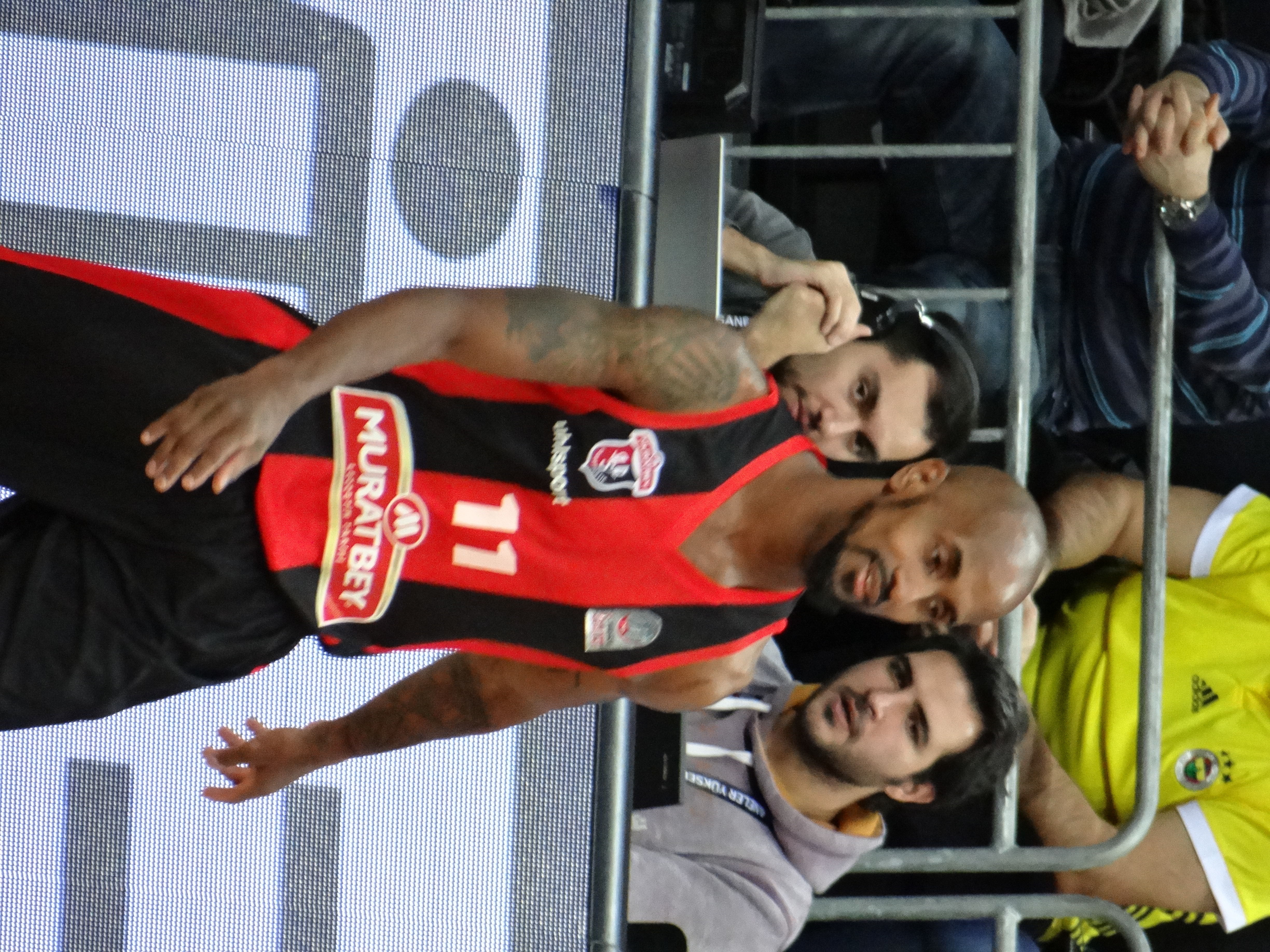
Earl Calloway (October 4, 1926 – August 20, 2014) was the longtime fine arts editor and columnist of the Chicago Defender and a lyric tenor who performed the opera repertoire he spent his days reviewing.
| At a glance | |
|---|---|
| Type | PERSON — journalist |
| Dates | – |
| Chicago connection | CORE — see the Chicago connection section |
| Known for | Earl Calloway (October 4, 1926 – August 20, 2014) was the longtime fine arts editor and columnist of the Chicago Defender and |
| Verification | PROVISIONAL |
| CTL ID | CTL-ENC-000070 |
Overview
Earl Calloway (October 4, 1926 – August 20, 2014) was the longtime fine arts editor and columnist of the Chicago Defender and a lyric tenor who performed the opera repertoire he spent his days reviewing. He is not Vanessa Bell Calloway, the actress who appears elsewhere in the CultureTechLens master; the Defender editor is a different person entirely, and this record is his alone. Calloway was born in Birmingham, Alabama, graduated from the Chicago Musical College of Roosevelt University, and pursued special studies at Chicago State University and Governors State University. Before the Defender he wrote for the Associated Negro Press — the Chicago wire service in this fragment's wider cast — for the Chicago Courier and for Negro Press International.
In September 1963 Calloway joined the staff of the Chicago Daily Defender, which The HistoryMakers calls the nation's last Black daily newspaper, and he stayed for the rest of his working life. The Chicago Collections Consortium's newspaper guide describes the beat plainly: his music reviews covered multiple genres, were a mainstay of the paper for decades, and helped readers discover performers such as the Jackson 5 and playwright Charles Gordone. The funeral notice in Copyline Magazine adds that he wrote thousands of articles about the movers and shakers of the entertainment industry, covered most of the African American entertainers, musicians and actors of his era, declined offers from other publications, and never lost the common touch with his readers. His own 1975 Defender writing, studied in a St. Olaf College course on race and representation in American music, argued the paper's founding creed from inside the arts desk: that the Defender had always put specific emphasis on African American culture, that founder Robert Abbott's personal support touched nearly every Black musician's career, and that the paper's work was amplifying Black excellence in the arts.
Life and career
Calloway built institutions alongside the column. He organized the annual Black Esthetic Festival — now Black Creativity — held at Chicago's Museum of Science and Industry; founded the Philharmonic Youth Choir and Oratorio Society of Shiloh Seventh-day Adventist Church; co-founded the Fine Arts Academy; helped establish a music program for the Children and Adolescent Forum; and was a founding member of the Chicago chapter of the National Association of Black Journalists. As a singer he performed in productions of Die Fledermaus, Carmen, Aida and R. Nathaniel Dett's The Ordering of Moses, toured the operas of Puccini across the United States, and sang as a soloist with the Umbrian Glee Club and the Artist Circle. His awards included the Kuumba Workshop Media Award, the Charles P. Browning Journalism Award and the Cultural Citizens Foundation for the Performing Arts Lifetime Achievement Award.
Calloway died on August 20, 2014, at eighty-seven; his funeral was held at Shiloh Seventh-day Adventist Church, with interment at Lincoln National Cemetery. The HistoryMakers recorded his oral history in Chicago on June 26, 2002. For CultureTechLens, Calloway is the connective tissue of Black Chicago's arts century: a Defender editor who could review an opera on Saturday and sing one on Sunday, and who treated the arts pages of a Black newspaper as a civic institution in their own right.
The Chicago Collections guide also preserves where a fuller Calloway record can be built: interviews and interview transcripts survive in the Barbara E. Allen papers at the Vivian G. Harsh Research Collection of Afro-American History and Literature in the Carter G. Woodson Regional Library, alongside the HistoryMakers oral history catalogued at East Carolina University. The Copyline funeral notice fills in the working reputation behind the column — "a hard worker, a tenacious go-getter," in its words, and "at the top of entertainment writers" — and notes that the offers from other publications came and were always declined, a forty-year loyalty to one Black newspaper that is itself a datum about the Defender's hold on its city. His St. Olaf-studied column closed by naming and picturing ten noteworthy Black musicians, among them the lyric tenor and composer Roland Hayes — a singer-editor saluting a singer, in the pages of the paper both men understood as an arts institution. This record is a staged proposal pending the founder's classification sitting.
Chicago connection
Earl Calloway (October 4, 1926 – August 20, 2014) was the longtime fine arts editor and columnist of the Chicago Defender and a lyric tenor who performed the opera repertoire he spent his days reviewing. Calloway was born in Birmingham, Alabama, graduated from the Chicago Musical College of Roosevelt University, and pursued special studies at Chicago State University and Governors State University. Before the Defender he wrote for the Associated Negro Press — the Chicago wire service in this fragment's wider cast — for the Chicago Courier and for Negro Press International. In September 1963 Calloway joined the staff of the Chicago Daily Defender, which The HistoryMakers calls the nation's last Black daily newspaper, and he stayed for the rest of his working life. The Chicago Collections Consortium's newspaper guide describes the beat plainly: his music reviews covered multiple genres, were a mainstay of the paper for decades, and helped readers discover performers such as the Jackson 5 and playwright Charles Gordone. [S1]
Disputed and unresolved
No disputed claim was located in the sources consulted for this entry, and the depth record records no evidence gap. Open items, if any, are listed in Editorial notes.
See also
Relationships
- affiliated_with — Associated Negro Press (CTL-E-0336) — Restated from the CultureTechLens Knowledge Graph: Earl Calloway (CTL-E-0600) affiliated_with Associated Negro Press (CTL-E-0336), verification Verified. Worked as a writer for the Associated Negro Press before joining the Defender.
Sources
- S1: The HistoryMakers. "Earl Calloway's Biography." Accessed October 26, 2026. https://www.thehistorymakers.org/biography/earl-calloway-39.
- S2: East Carolina University Libraries. "The HistoryMakers Video Oral History with Earl Calloway — Catalog Record." Accessed October 26, 2026. https://librarycatalog.ecu.edu/catalog/5665900.
- S3: Chicago Collections Consortium. "Noted Individuals — Chicago Newspapers LibGuide." Accessed October 26, 2026. https://guides.chicagocollections.org/c.php?g=963156&p=6958211.
- S4: Copyline Magazine. "Funeral Services for Lyric Tenor Earl Calloway." Accessed October 26, 2026. http://copylinemagazine.com/funeral-services-for-lyric-tenor-earl-calloway-longtime-fine-arts-entertainment-editor-for-the-chicago-defender/.
- S5: St. Olaf College. "Music 345: Race, Identity, and Representation in American Music." Accessed October 26, 2026. https://pages.stolaf.edu/americanmusic/author/harris17/.
- S6: CultureTechLens Knowledge Graph (schema v0.3.1), entities.json and relationships.json — CTL's own graph register, consulted 2026-10-28 for crosswalk facts and restated relationships.
Cite this entry
- Permanent ID: CTL-ENC-000070 · Crosswalked graph record: CTL-ESS-0265 · Version: 0.1 · Date: 2026-10-28
- Chicago: CultureTechLens. "Earl Calloway." CultureTechLens Encyclopedia, version 0.1, October 28, 2026. CultureTechLens NFP. CTL-ENC-000070.
- APA: CultureTechLens. (2026). Earl Calloway (Version 0.1, Entry CTL-ENC-000070). CultureTechLens Encyclopedia. CultureTechLens NFP.
- MLA: CultureTechLens. "Earl Calloway." CultureTechLens Encyclopedia, version 0.1, CultureTechLens NFP, 28 Oct. 2026. Entry CTL-ENC-000070.
Further reading
- CultureTechLens Knowledge Graph record CTL-ESS-0265 (crosswalked; published graph register id CTL-E-0600).
Image credits
- Earl Calloway photograph: see Images block in the frontmatter for the full credit line, rights status, and rights document.
Citation
CultureTechLens. "Earl Calloway." CultureTechLens Encyclopedia, Vol. 1 — Black Chicago, version 0.1, 2026-10-28. CultureTechLens NFP. CTL-ENC-000070.
<!-- =======================