 CULTURETECHLENS
The Encyclopedia · CTL-ENC-000068
Dorothy Donegan
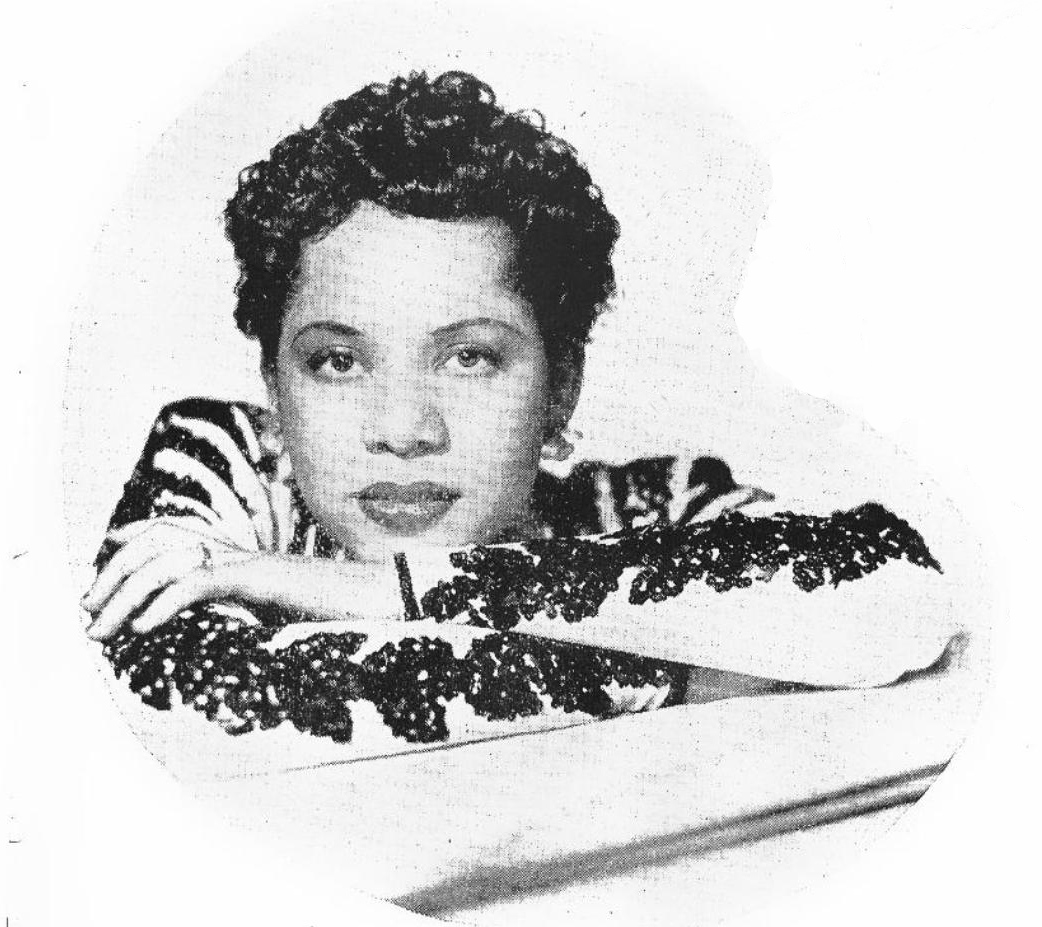
Dorothy Donegan (April 6, 1922 – May 19, 1998) was a Chicago-born, classically trained jazz pianist whose virtuoso playing moved between stride, boogie-woogie, bebop, swing and classical repertoire, sometimes within a single chorus.
| At a glance | |
|---|---|
| Type | PERSON — musician |
| Dates | – |
| Chicago connection | CORE — see the Chicago connection section |
| Known for | Dorothy Donegan (April 6, 1922 – May 19, 1998) was a Chicago-born, classically trained jazz pianist whose virtuoso playing moved between stride |
| Verification | PROVISIONAL |
| CTL ID | CTL-ENC-000068 |
Overview
Dorothy Donegan (April 6, 1922 – May 19, 1998) was a Chicago-born, classically trained jazz pianist whose virtuoso playing moved between stride, boogie-woogie, bebop, swing and classical repertoire, sometimes within a single chorus. She was born and raised in Chicago, the daughter of Donazell Donegan, a railroad chef on the Chicago, Burlington and Quincy line, and Ella (Day) Donegan, who took in lodgers to add to the family income. She began piano lessons as a small child — in 1928, with her mother's encouragement — taking her first lessons from Alfred N. Simms, a West Indian pianist who also taught Cleo Brown, and she was recognised as a prodigy by about the age of eight. At fourteen she was playing in South Side nightclubs for a dollar a night. She graduated from DuSable High School, where she studied with Captain Walter Dyett, the teacher of Dinah Washington, Johnny Griffin, Gene Ammons and Von Freeman, played in the Bob Tinsley band while still at school, and studied further at the Chicago Conservatory of Music, the Chicago Musical College and, in 1953-54, the University of Southern California, as well as classical study with Rudolph Ganz.
Her recording debut came in 1942, with blues and boogie-woogie selections for the Bluebird label. The concert that made her Chicago reputation came in 1943, when she became the first African American artist, and the first jazz pianist, to perform in concert at Chicago's Orchestra Hall: she played Grieg and Rachmaninoff in the first half and jazz in the second — in her own summary, in the first half she played Rachmaninoff and Grieg and in the second she dragged it through the swamp. The concert earned a front-page Chicago Tribune review and caught the attention of Art Tatum, who visited her home, played techniques for her and became her mentor; Tatum is quoted as calling her "the only woman who could make me practice." She appeared in the film Sensations of 1945 with Cab Calloway, Gene Rodgers and W. C. Fields, worked Chicago nightclubs through the 1940s, formed a trio in 1945 before returning to solo work, and in 1949 headlined the first all-Black show at Hollywood's Tom Breneman's Cafe, though she largely turned down Hollywood film work.
Life and career
The paradox of Donegan's career is that the live legend never matched the recorded one. Critics including AllMusic's Scott Yanow describe a brilliant virtuoso who put together spontaneous medleys of unrelated songs and was never shy of dancing while she played — and obituaries argued that exactly that flamboyance, the mixing of unrelated genres in one concert and a willingness to play lounge music, caused her to be undervalued in jazz circles. She recorded only six albums, now obscure, between 1954 and 1963 and nothing between 1964 and 1974. Through the 1950s she played clubs coast to coast. The festival era brought her back: from the 1970s she was a regular on the jazz festival circuit in the United States, Canada and Europe with the Dorothy Donegan Trio, appearing at the Newport Jazz Festival in 1978, the Kool Jazz Festival in 1981, the Montreux Jazz Festival in 1987 — the live recording from Montreux, made when she was sixty-five, finally brought wide critical notice in the recorded jazz world — and later the Floating Jazz Festival (1991), the White House Jazz Festival (1993) and the Playboy Jazz Festival (1994). Live Chiaroscuro albums from 1990 and 1991 found her in peak form, and she received an American Jazz Masters award from the National Endowment for the Arts in 1992. She performed until the fall of 1997, when illness ended her career, and died of colon cancer in Los Angeles on May 19, 1998; the same year she was inducted into the Big Band and Jazz Hall of Fame.
In the CultureTechLens graph, Donegan's record is a DuSable-and-Dyett record as much as a piano record: a South Side prodigy formed by the same Chicago schoolroom that produced a generation of Black musicians, who broke Orchestra Hall's colour line with a two-half programme that stated her whole aesthetic — the classical canon and the swamp, in one concert, at full virtuoso speed. This record is a staged proposal pending the founder's classification sitting.
Chicago connection
Dorothy Donegan (April 6, 1922 – May 19, 1998) was a Chicago-born, classically trained jazz pianist whose virtuoso playing moved between stride, boogie-woogie, bebop, swing and classical repertoire, sometimes within a single chorus. She was born and raised in Chicago, the daughter of Donazell Donegan, a railroad chef on the Chicago, Burlington and Quincy line, and Ella (Day) Donegan, who took in lodgers to add to the family income. She graduated from DuSable High School, where she studied with Captain Walter Dyett, the teacher of Dinah Washington, Johnny Griffin, Gene Ammons and Von Freeman, played in the Bob Tinsley band while still at school, and studied further at the Chicago Conservatory of Music, the Chicago Musical College and, in 1953-54, the University of Southern California, as well as classical study with Rudolph Ganz. The concert that made her Chicago reputation came in 1943, when she became the first African American artist, and the first jazz pianist, to perform in concert at Chicago's Orchestra Hall: she played Grieg and Rachmaninoff in the first half and jazz in the second — in her own summary, in the first half she played Rachmaninoff and Grieg and in the second she dragged it through the swamp. The concert earned a front-page Chicago Tribune review and caught the attention of Art Tatum, who visited her home, played techniques for her and became her mentor; Tatum is quoted as calling her "the only woman who could make me practice." She appeared in the film Sensations of 1945 with Cab Calloway, Gene Rodgers and W. [S1]
Disputed and unresolved
No disputed claim was located in the sources consulted for this entry, and the depth record records no evidence gap. Open items, if any, are listed in Editorial notes.
See also
Relationships
- affiliated_with — DuSable High School (CTL-E-0157) — Restated from the CultureTechLens Knowledge Graph: Dorothy Donegan (CTL-E-5118) affiliated_with DuSable High School (CTL-E-0157), verification Provisional. Dyett taught classical, military, and jazz music to more than 20,000 students at Wendell Phillips and DuSable; credited students include Nat King Cole, Dorothy Donegan, Joseph Jarman, Dinah Washington, Johnny Griffin, and Mwata Bowden.
- performed_at — Trianon Ballroom (CTL-E-0138) — Restated from the CultureTechLens Knowledge Graph: Dorothy Donegan (CTL-E-5118) performed_at Trianon Ballroom (CTL-E-0138), verification Provisional. Jonah Jones & Dorothy Donegan CT Oct 31, 1963 (Chicago Tribune citation in the Trianon Ballroom evidence record, CTL-DR-PLACE-001).
- student_of — Walter Dyett (CTL-E-1183) — Restated from the CultureTechLens Knowledge Graph: Dorothy Donegan (CTL-E-5118) student_of Walter Dyett (CTL-E-1183), verification Verified. Dorothy Donegan studied under Walter Dyett at DuSable High School, where she came under the revered band director's training.
Sources
- S1: Wikipedia. "Dorothy Donegan." Accessed October 26, 2026. https://en.wikipedia.org/wiki/Dorothy_Donegan.
- S2: Encyclopedia.com (Contemporary Black Biography). "Donegan, Dorothy 1922–1998." Accessed October 26, 2026. https://www.encyclopedia.com/education/news-wires-white-papers-and-books/donegan-dorothy-1922-1998.
- S3: African American Registry. "Dorothy Donegan, Chicago Pianist born." Accessed October 26, 2026. https://aaregistry.org/story/windy-city-pianist-dorothy-donegan/.
- S4: AllMusic. "Dorothy Donegan — Biography, Discography, Albums & Expert Reviews." Accessed October 26, 2026. https://www.allmusic.com/artist/dorothy-donegan-mn0000191515.
- S5: CultureTechLens Knowledge Graph (schema v0.3.1), entities.json and relationships.json — CTL's own graph register, consulted 2026-10-28 for crosswalk facts and restated relationships.
Cite this entry
- Permanent ID: CTL-ENC-000068 · Crosswalked graph record: CTL-ESS-0235 · Version: 0.1 · Date: 2026-10-28
- Chicago: CultureTechLens. "Dorothy Donegan." CultureTechLens Encyclopedia, version 0.1, October 28, 2026. CultureTechLens NFP. CTL-ENC-000068.
- APA: CultureTechLens. (2026). Dorothy Donegan (Version 0.1, Entry CTL-ENC-000068). CultureTechLens Encyclopedia. CultureTechLens NFP.
- MLA: CultureTechLens. "Dorothy Donegan." CultureTechLens Encyclopedia, version 0.1, CultureTechLens NFP, 28 Oct. 2026. Entry CTL-ENC-000068.
Further reading
- CultureTechLens Knowledge Graph record CTL-ESS-0235 (crosswalked; published graph register id CTL-E-5118).
Image credits
- Dorothy Donegan photograph: see Images block in the frontmatter for the full credit line, rights status, and rights document.
Citation
CultureTechLens. "Dorothy Donegan." CultureTechLens Encyclopedia, Vol. 1 — Black Chicago, version 0.1, 2026-10-28. CultureTechLens NFP. CTL-ENC-000068.
<!-- =======================