 CULTURETECHLENS
The Encyclopedia · CTL-ENC-000030
DJ Pierre
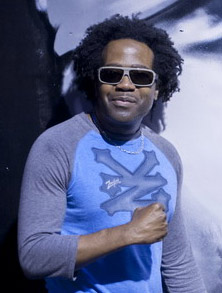
Nathaniel Pierre Jones, known professionally as DJ Pierre, is an American DJ and house music producer from the Chicago area who helped develop acid house, the subgenre built around the squelching sound of the Roland
| At a glance | |
|---|---|
| Type | PERSON — producer |
| Dates | – |
| Chicago connection | CORE — see the Chicago connection section |
| Known for | Nathaniel Pierre Jones, known professionally as DJ Pierre, is an American DJ and house music producer from the Chicago area who helped |
| Verification | SUPPORTED |
| CTL ID | CTL-ENC-000030 |
Overview
Nathaniel Pierre Jones, known professionally as DJ Pierre, is an American DJ and house music producer from the Chicago area who helped develop acid house, the subgenre built around the squelching sound of the Roland TB-303 bass synthesizer. Reference biographies place his birth in Chicago, Illinois, in 1965, and in Harvey, a Chicago suburb, and describe him as based in Chicago through the music's formative years. He is a member of Phuture, the group whose 1987 EP Acid Trax is widely treated as the first acid house recording, and AllMusic calls Jones a crucial DJ and the production wizard partly responsible for the development of Chicago acid house.
Pierre formed Phuture with his friends Spanky, born Earl Smith Jr., the group's founder and technical producer, and Herb J, born Herbert R. Jackson Jr., who played keyboards. Living in the Chicago area in the mid-1980s, the three were exposed to the first house generation: the Hot Mix 5 radio team of Farley "Jackmaster" Funk, Ralphi Rosario, Kenny "Jammin" Jason, Mickey "Mixin" Oliver and Scott "Smokin" Silz, and Frankie Knuckles DJing at the Warehouse, the club from which house music is widely said to take its name. Pierre and Spanky had also attended Ron Hardy's Music Box, the Warehouse's successor room, where Hardy played the rawest rhythm tracks in the city.
Life and career
Phuture's discovery was accidental in the literal sense. Experimenting with a Roland TB-303 bass line synthesizer they had bought without fully knowing how to use it, the group stumbled on the resonant, twisting "squelch" that became acid house's defining sound. The first acid track they recorded was "Acid Tracks," originally titled "In Your Mind" and renamed by Ron Hardy, who played it at the Music Box in 1985 or 1986 to an immediate dancefloor response. Re-recorded at Trax Records with production by Marshall Jefferson, the track appeared in 1986, and Phuture's 1987 EP Acid Trax is described across the reference record as a foundational, and by many the founding, acid house release. A journalist for La Presse in Montreal, Philippe Renaud, is credited in that record with the observation that the term acid house was coined in Chicago in 1987 to describe the sound of the Roland 303 machine, which made its first significant recording appearance on Phuture's record.
Pierre's own catalogue extends well beyond the one group. He has recorded under a long list of names including Audio Clash, Darkman, Photon Inc., Phuture Phantasy Club, Pierre's Pfantasy Club, Phortune and many others, and the tracks attached to those projects include "Your Only Friend," "The Creator," "String Free," "Got the Bug," "Box Energy," "Dream Girl," "Mystery Girl," "Fantasy Girl," "We Are Phuture" and "Spank Spank." His work as Pierre's Pfantasy Club included collaboration with Felix Da Housecat. His first single under his own name, "Generate Power," became standard fare for scores of producers in the years that followed, an early example of a Chicago record functioning as a template for other producers rather than only as a club track.
In 1990 Pierre left what he regarded as a saturated Chicago scene and moved to New York, where he pioneered another house offshoot, the Wild Pitch sound, worked with the Strictly Rhythm label, and produced the Aly-Us record "Follow Me," which became a house standard. In 2010 he moved to Atlanta, Georgia, and in 2014 he opened Afro Acid studios there, continuing to make music aimed at DJs and the dancefloor and arguing publicly for building local infrastructure — shops, clubs, labels and stages — of the kind Chicago had given his own generation. His labels across the career include Trax Records, Strictly Rhythm, Get Physical Music, Numbers and his own Afro Acid.
In the CultureTechLens graph, DJ Pierre's record is a load-bearing Chicago record: it connects the Warehouse and Music Box club lineage, the Hot Mix 5 radio lineage and the Trax Records label economy to a single technical accident, three young producers teaching themselves a misused bass machine, that reorganised dance music on two continents. Acid house travelled from Chicago to the British rave scene within two years of Acid Trax, and Pierre's later Wild Pitch and Afro Acid work shows the same producer repeatedly converting a club practice into a named, exportable form.
Chicago connection
Nathaniel Pierre Jones, known professionally as DJ Pierre, is an American DJ and house music producer from the Chicago area who helped develop acid house, the subgenre built around the squelching sound of the Roland TB-303 bass synthesizer. Reference biographies place his birth in Chicago, Illinois, in 1965, and in Harvey, a Chicago suburb, and describe him as based in Chicago through the music's formative years. He is a member of Phuture, the group whose 1987 EP Acid Trax is widely treated as the first acid house recording, and AllMusic calls Jones a crucial DJ and the production wizard partly responsible for the development of Chicago acid house. Living in the Chicago area in the mid-1980s, the three were exposed to the first house generation: the Hot Mix 5 radio team of Farley "Jackmaster" Funk, Ralphi Rosario, Kenny "Jammin" Jason, Mickey "Mixin" Oliver and Scott "Smokin" Silz, and Frankie Knuckles DJing at the Warehouse, the club from which house music is widely said to take its name. A journalist for La Presse in Montreal, Philippe Renaud, is credited in that record with the observation that the term acid house was coined in Chicago in 1987 to describe the sound of the Roland 303 machine, which made its first significant recording appearance on Phuture's record. [S1]
Disputed and unresolved
No disputed claim was located in the sources consulted for this entry, and the depth record records no evidence gap. Open items, if any, are listed in Editorial notes.
See also
Relationships
- recorded_for — Trax Records (CTL-E-0169) — Restated from the CultureTechLens Knowledge Graph: DJ Pierre (CTL-E-0054) recorded_for Trax Records (CTL-E-0169), verification Verified. Phuture's 'Acid Tracks' (1987), co-created by DJ Pierre (Nathaniel Pierre Jones) as a member of Phuture, was released on Trax Records.
- related_to — Phuture (CTL-E-0521) — Restated from the CultureTechLens Knowledge Graph: DJ Pierre (CTL-E-0054) related_to Phuture (CTL-E-0521), verification Verified. DJ Pierre (Nathaniel Pierre Jones) is a founding member of Phuture alongside Earl "Spanky" Smith Jr. and Herbert "Herb J" Jackson.
- related_to — Ray Barney (CTL-E-0559) — Restated from the CultureTechLens Knowledge Graph: DJ Pierre (CTL-E-0054) related_to Ray Barney (CTL-E-0559), verification Provisional. DJ Pierre released records on Barney's Dance Mania imprint in the label's early years - a documented label/artist professional relationship.
Sources
- S1: Wikipedia. "DJ Pierre." Accessed October 26, 2026. https://en.wikipedia.org/wiki/DJ_Pierre.
- S2: UK Festival Guides. "DJ Pierre." Accessed October 26, 2026. https://www.ukfestivalguides.com/artists/dj-pierre/.
- S3: NTS Radio. "DJ Pierre." Accessed October 26, 2026. https://www.nts.live/artists/3660-dj-pierre.
- S4: Georgia Entertainment. "Part 1: Introducing Afro Acid Pioneer DJ Pierre: Phuture, the Studio and Acid House Music." Accessed October 26, 2026. https://www.georgiaentertainment.com/2017/02/part-1-introducing-afro-acid-pioneer-dj-pierre-phuture-the-studio-and-acid-house-music/.
- S5: CultureTechLens Knowledge Graph (schema v0.3.1), entities.json and relationships.json — CTL's own graph register, consulted 2026-10-28 for crosswalk facts and restated relationships.
Cite this entry
- Permanent ID: CTL-ENC-000030 · Crosswalked graph record: CTL-P-0084 · Version: 0.1 · Date: 2026-10-28
- Chicago: CultureTechLens. "DJ Pierre." CultureTechLens Encyclopedia, version 0.1, October 28, 2026. CultureTechLens NFP. CTL-ENC-000030.
- APA: CultureTechLens. (2026). DJ Pierre (Version 0.1, Entry CTL-ENC-000030). CultureTechLens Encyclopedia. CultureTechLens NFP.
- MLA: CultureTechLens. "DJ Pierre." CultureTechLens Encyclopedia, version 0.1, CultureTechLens NFP, 28 Oct. 2026. Entry CTL-ENC-000030.
Further reading
- CultureTechLens Knowledge Graph record CTL-P-0084 (crosswalked; published graph register id CTL-E-0054).
Image credits
- DJ Pierre photograph: see Images block in the frontmatter for the full credit line, rights status, and rights document.
Citation
CultureTechLens. "DJ Pierre." CultureTechLens Encyclopedia, Vol. 1 — Black Chicago, version 0.1, 2026-10-28. CultureTechLens NFP. CTL-ENC-000030.
<!-- =======================