 CULTURETECHLENS
The Encyclopedia · CTL-ENC-000146
Dizzy Gillespie
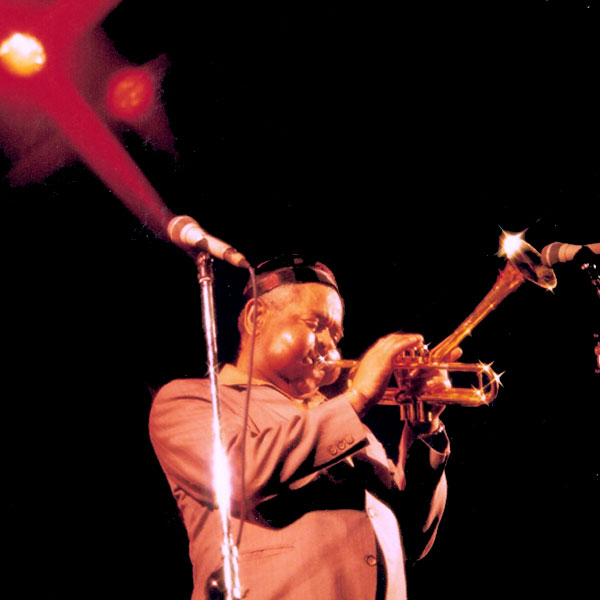
Dizzy Gillespie, born John Birks Gillespie on October 21, 1917, in Cheraw, South Carolina, was an American trumpeter, bandleader, and composer who, with Charlie Parker, co-created bebop and thereby reset the technical and harmonic terms
| At a glance | |
|---|---|
| Type | PERSON — musician |
| Dates | – |
| Chicago connection | CORE — see the Chicago connection section |
| Known for | Dizzy Gillespie, born John Birks Gillespie on October 21, 1917, in Cheraw, South Carolina, was an American trumpeter, |
| Verification | PROVISIONAL |
| CTL ID | CTL-ENC-000146 |
Overview
Dizzy Gillespie, born John Birks Gillespie on October 21, 1917, in Cheraw, South Carolina, was an American trumpeter, bandleader, and composer who, with Charlie Parker, co-created bebop and thereby reset the technical and harmonic terms of jazz. The youngest of nine children, he taught himself trombone and then trumpet, won a scholarship to the Laurinburg Institute in North Carolina, and moved with his family to Philadelphia in 1935. The apprenticeship was the big-band system at its peak: Teddy Hill's orchestra (1937), where he took the chair Roy Eldridge had held and whose style was Gillespie's first model; Cab Calloway's band (1939–1941), ended by the famous spitball incident Calloway misattributed to him; and stints with Ella Fitzgerald, Coleman Hawkins, and Billy Eckstine, in whose 1944 orchestra the bebop generation — Parker, Sarah Vaughan, Gillespie — briefly sat in the same rows.
The revolution was rehearsed in after-hours rooms at Minton's Playhouse and Monroe's Uptown House in Harlem, where Gillespie, Thelonious Monk, Kenny Clarke, and Charlie Christian rebuilt jazz harmony, and it was codified in the 1945 recordings Gillespie and Parker made together — "Groovin' High," "Dizzy Atmosphere," "Shaw 'Nuff," "Hot House," "Salt Peanuts" — and in Gillespie's own big band of 1946–1950, the first to carry bebop at orchestra scale and, through arranger Gil Fuller and the Cuban conguero Chano Pozo, to fuse it with Afro-Cuban rhythm: "Manteca" (1947), co-written with Pozo and Fuller, founded Cubop in a single record. The bent-up bell that became his visual signature began as a 1953 accident — a trumpet sat on at a party emerged with its bell angled upward, and Gillespie, liking the projection, had every subsequent horn built so — alongside the ballooned cheeks that made his face, in photographs, the music's comic mask. The comedy was technique's public face: Gillespie was bebop's great explainer, and his bands remained schools — John Coltrane, Benny Golson, and the young Quincy Jones passed through them.
Life and career
Gillespie also became jazz's first state-sponsored ambassador: in 1956 his big band toured the Middle East, South Asia, and the Balkans for the U.S. State Department, the inaugural tour of the jazz-diplomacy era, and he toured and recorded for four more decades — the United Nation Orchestra of the late 1980s gathering his diaspora of Cuban, Brazilian, and American players into a final flagship band. He ran a mock presidential campaign in 1964 (promising, among other things, to rename the White House the Blues House), received the Grammy Lifetime Achievement Award in 1989 and Kennedy Center Honors in 1990, and died of pancreatic cancer in Englewood, New Jersey, on January 6, 1993.
In the CultureTechLens graph, Gillespie is a foundation node of the jazz spine: co-author of the music's modern language, employer of its next two generations, and — for a Chicago-centered collection — the bebop counterpart to the city's own schools, his 1940s small-group records being the texts Chicago's South Side modernists studied. The NEA named him a Jazz Master in 1982; the bent trumpet in the Smithsonian's collection stands as the artifact of the whole arc.
A note on the Chicago thread is warranted in a Chicago-rooted graph. Gillespie's bands were a finishing school through which the music's Chicago-linked generations passed or measured themselves: Benny Golson and James Moody in the late-1940s orchestra, the young Quincy Jones — formed in part in this band's orbit before his own Chicago-documented career — arranging in the 1950s, and a repertory, from "A Night in Tunisia" to "Manteca," that South Side modernists treated as scripture. His State Department band of 1956 also carried the music's center of gravity visibly abroad at the moment Chicago's own clubs were producing the hard-bop answer to bebop, so that the graph's jazz spine runs through Gillespie twice — as author of the language and as its first official exporter. The Smithsonian's holding of his bent trumpet, and the NEA's 1982 Jazz Master designation, close the institutional record the Britannica biography opens: Cheraw to Minton's to the world, with the cheeks, the bell, and the wit intact.
This record is a staged proposal pending the founder's classification sitting.
Chicago connection
In the CultureTechLens graph, Gillespie is a foundation node of the jazz spine: co-author of the music's modern language, employer of its next two generations, and — for a Chicago-centered collection — the bebop counterpart to the city's own schools, his 1940s small-group records being the texts Chicago's South Side modernists studied. A note on the Chicago thread is warranted in a Chicago-rooted graph. Gillespie's bands were a finishing school through which the music's Chicago-linked generations passed or measured themselves: Benny Golson and James Moody in the late-1940s orchestra, the young Quincy Jones — formed in part in this band's orbit before his own Chicago-documented career — arranging in the 1950s, and a repertory, from "A Night in Tunisia" to "Manteca," that South Side modernists treated as scripture. His State Department band of 1956 also carried the music's center of gravity visibly abroad at the moment Chicago's own clubs were producing the hard-bop answer to bebop, so that the graph's jazz spine runs through Gillespie twice — as author of the language and as its first official exporter. [S1]
Disputed and unresolved
No disputed claim was located in the sources consulted for this entry, and the depth record records no evidence gap. Open items, if any, are listed in Editorial notes.
See also
Relationships
- associated_with — The Gay Sisters (CTL-E-0578) — Restated from the CultureTechLens Knowledge Graph: Dizzy Gillespie (CTL-E-1666) associated_with The Gay Sisters (CTL-E-0578), verification Provisional.
- performed_at — Jazz Showcase (CTL-E-5075) — Restated from the CultureTechLens Knowledge Graph: Dizzy Gillespie (CTL-E-1666) performed_at Jazz Showcase (CTL-E-5075), verification Verified.
Sources
- S1: Encyclopaedia Britannica. "Dizzy Gillespie." Accessed October 26, 2026. https://www.britannica.com/biography/Dizzy-Gillespie.
- S2: National Endowment for the Arts. "Dizzy Gillespie — NEA Jazz Masters." Accessed October 26, 2026. https://www.arts.gov/honors/jazz/dizzy-gillespie.
- S3: Wikipedia. "Dizzy Gillespie." Accessed October 26, 2026. https://en.wikipedia.org/wiki/Dizzy_Gillespie.
- S4: GRAMMY.com (Recording Academy). "Dizzy Gillespie — Artist Page." Accessed October 26, 2026. https://www.grammy.com/artists/dizzy-gillespie/5654.
- S5: CultureTechLens Knowledge Graph (schema v0.3.1), entities.json and relationships.json — CTL's own graph register, consulted 2026-10-29 for crosswalk facts and restated relationships.
Cite this entry
- Permanent ID: CTL-ENC-000146 · Crosswalked graph record: CTL-ESS-0223 · Version: 0.1 · Date: 2026-10-29
- Chicago: CultureTechLens. "Dizzy Gillespie." CultureTechLens Encyclopedia, version 0.1, October 29, 2026. CultureTechLens NFP. CTL-ENC-000146.
- APA: CultureTechLens. (2026). Dizzy Gillespie (Version 0.1, Entry CTL-ENC-000146). CultureTechLens Encyclopedia. CultureTechLens NFP.
- MLA: CultureTechLens. "Dizzy Gillespie." CultureTechLens Encyclopedia, version 0.1, CultureTechLens NFP, 29 Oct. 2026. Entry CTL-ENC-000146.
Further reading
- CultureTechLens Knowledge Graph record CTL-ESS-0223 (crosswalked; published graph register id CTL-E-1666).
Image credits
- Dizzy Gillespie photograph: see Images block in the frontmatter for the full credit line, rights status, and rights document.
Citation
CultureTechLens. "Dizzy Gillespie." CultureTechLens Encyclopedia, Vol. 1 — Black Chicago, version 0.1, 2026-10-29. CultureTechLens NFP. CTL-ENC-000146.
<!-- =======================