 CULTURETECHLENS
The Encyclopedia · CTL-ENC-000194
Dinah Washington
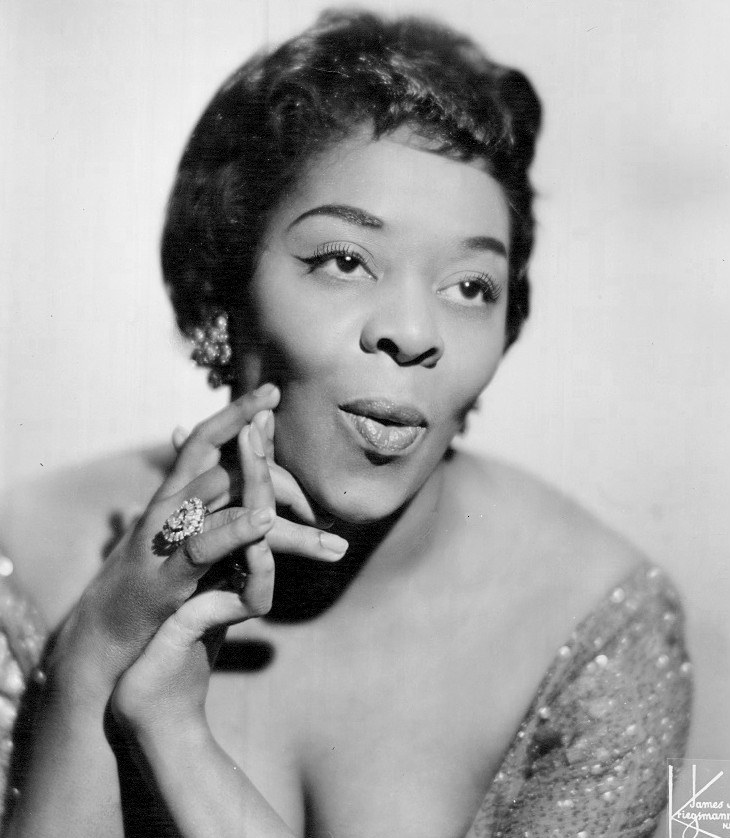
Dinah Washington, born Ruth Lee Jones on August 29, 1924, in Tuscaloosa, Alabama, was an American singer — gospel-formed, blues-phrased, and pop-crowned — whom the industry billed as the Queen of the Blues and whose
| At a glance | |
|---|---|
| Type | PERSON — musician |
| Dates | – |
| Chicago connection | CORE — see the Chicago connection section |
| Known for | Dinah Washington, born Ruth Lee Jones on August 29, 1924, in Tuscaloosa, Alabama, was an American singer — |
| Verification | VERIFIED |
| CTL ID | CTL-ENC-000194 |
Overview
Dinah Washington, born Ruth Lee Jones on August 29, 1924, in Tuscaloosa, Alabama, was an American singer — gospel-formed, blues-phrased, and pop-crowned — whom the industry billed as the Queen of the Blues and whose diction and time influenced virtually every Black woman singer who followed her. Her family moved to Chicago when she was a small child, and Chicago formed her: she played piano and directed the choir at St. Luke's Baptist Church while still in school, won an amateur contest at the Regal Theater at fifteen, and sang gospel with the Sallie Martin Singers even as she began working the Garrick Stage Bar under her new name, winning a job singing upstairs while performing gospel downstairs in the doubleness that marked her start. Lionel Hampton hired her in 1943 — Hampton is credited with the name Dinah Washington — and she toured with his band until 1946, recording her first hit, "Evil Gal Blues," from a session arranged through Leonard Feather.
The Mercury Records years made her a star across the color line the industry maintained. Signing with Mercury in 1946 (after an early Apollo side), Washington recorded in every bag the label could sell: rhythm and blues hits including "Baby Get Lost" (1949, number one R&B), "I Wanna Be Loved" (1950), and "Teach Me Tonight" (1954); jazz sessions with the era's best players; and, decisively, pop standards. Her 1959 recording of "What a Diff'rence a Day Makes" won the Grammy Award for Best Rhythm & Blues Performance and took her to the pop top ten, inaugurating a run of lush orchestral albums — with arrangements by Quincy Jones among others — that made her, for her last years, a mainstream album artist without costing her the blues audience that had raised her. Her duets with Brook Benton in 1960, "Baby (You've Got What It Takes)" and "A Rockin' Good Way," were top-ten pop hits.
Life and career
Washington's personal life — seven marriages, a famous temper, a fortune earned and spent in public — ran beside a work discipline her musicians consistently praised: she was, by the testimony of arrangers including Jones, a singer who heard everything and missed nothing. She died in Detroit on December 14, 1963, at 39, of an accidental overdose of diet pills and alcohol, and was buried at Burr Oak Cemetery in Alsip, Illinois — a Chicagoan's grave for the Tuscaloosa-born singer the city had made. Posthumous honors formalized the standing her peers had always granted: induction into the Rock and Roll Hall of Fame in 1993 in the Early Influence category, the Grammy Hall of Fame, and a 2009 U.S. postage stamp.
In the CultureTechLens graph, Washington's record is a root node: the Regal Theater amateur contest, the Hampton band, and the Mercury catalog connect her to Chicago gospel (Sallie Martin), to the band era, and forward to Aretha Franklin and Nancy Wilson, who named her as a primary influence. Her phrasing — consonants bitten, vowels swung — is one of the graph's clearest lines of musical descent, audible wherever a singer treats a lyric as both sentence and drum.
Her instrument repays a technical sentence or two, because the influence claims in this record are concrete. Washington sang with a diction so precise that horn players studied her phrasing; she placed consonants on the front of the beat and let the vowels swing behind it, a gospel singer's enunciation carried into blues and standards without sanding off either tradition. Quincy Jones, who arranged for her at Mercury, called her a singer who could find the pocket of any arrangement, and the Mercury sessions document the range of pockets on offer — small-combo blues, big-band swing, string-orchestra pop — all of them sounding like the same artist because the phrasing, not the backing, was the identity. Aretha Franklin recorded a full tribute album, Unforgettable: A Tribute to Dinah Washington, in 1964, months after Washington's death; Nancy Wilson and Esther Phillips built careers in her cadence. The line from the Regal Theater amateur contest to the sound of modern R&B singing runs through those records, and it is the reason the Hall of Fame filed her under Early Influence rather than among her chart contemporaries.
Chicago connection
Her family moved to Chicago when she was a small child, and Chicago formed her: she played piano and directed the choir at St. She died in Detroit on December 14, 1963, at 39, of an accidental overdose of diet pills and alcohol, and was buried at Burr Oak Cemetery in Alsip, Illinois — a Chicagoan's grave for the Tuscaloosa-born singer the city had made. In the CultureTechLens graph, Washington's record is a root node: the Regal Theater amateur contest, the Hampton band, and the Mercury catalog connect her to Chicago gospel (Sallie Martin), to the band era, and forward to Aretha Franklin and Nancy Wilson, who named her as a primary influence. [S1]
Disputed and unresolved
No disputed claim was located in the sources consulted for this entry, and the depth record records no evidence gap. Open items, if any, are listed in Editorial notes.
See also
Relationships
- performed_at — Regal Theater (CTL-E-0125) — Restated from the CultureTechLens Knowledge Graph: Dinah Washington (CTL-E-0022) performed_at Regal Theater (CTL-E-0125), verification Verified.
- performed_at — Rhumboogie Cafe (CTL-E-0129) — Restated from the CultureTechLens Knowledge Graph: Dinah Washington (CTL-E-0022) performed_at Rhumboogie Cafe (CTL-E-0129), verification Verified.
- performed_at — Roberts Show Lounge (CTL-E-0136) — Restated from the CultureTechLens Knowledge Graph: Dinah Washington (CTL-E-0022) performed_at Roberts Show Lounge (CTL-E-0136), verification Verified.
Sources
- S1: Encyclopaedia Britannica. "Dinah Washington." Accessed October 26, 2026. https://www.britannica.com/biography/Dinah-Washington.
- S2: Wikipedia. "Dinah Washington." Accessed October 26, 2026. https://en.wikipedia.org/wiki/Dinah_Washington.
- S3: Rock & Roll Hall of Fame. "Dinah Washington." Accessed October 26, 2026. https://rockhall.com/inductees/dinah-washington/.
- S4: GRAMMY.com (Recording Academy). "Dinah Washington — Artist Page." Accessed October 26, 2026. https://www.grammy.com/artists/dinah-washington/12005.
- S5: CultureTechLens Knowledge Graph (schema v0.3.1), entities.json and relationships.json — CTL's own graph register, consulted 2026-10-29 for crosswalk facts and restated relationships.
Cite this entry
- Permanent ID: CTL-ENC-000194 · Crosswalked graph record: CTL-P-0044 · Version: 0.1 · Date: 2026-10-29
- Chicago: CultureTechLens. "Dinah Washington." CultureTechLens Encyclopedia, version 0.1, October 29, 2026. CultureTechLens NFP. CTL-ENC-000194.
- APA: CultureTechLens. (2026). Dinah Washington (Version 0.1, Entry CTL-ENC-000194). CultureTechLens Encyclopedia. CultureTechLens NFP.
- MLA: CultureTechLens. "Dinah Washington." CultureTechLens Encyclopedia, version 0.1, CultureTechLens NFP, 29 Oct. 2026. Entry CTL-ENC-000194.
Further reading
- CultureTechLens Knowledge Graph record CTL-P-0044 (crosswalked; published graph register id CTL-E-0022).
Image credits
- Dinah Washington photograph: see Images block in the frontmatter for the full credit line, rights status, and rights document.
Citation
CultureTechLens. "Dinah Washington." CultureTechLens Encyclopedia, Vol. 1 — Black Chicago, version 0.1, 2026-10-29. CultureTechLens NFP. CTL-ENC-000194.
<!-- =======================