 CULTURETECHLENS
The Encyclopedia · CTL-ENC-000320
David Satcher
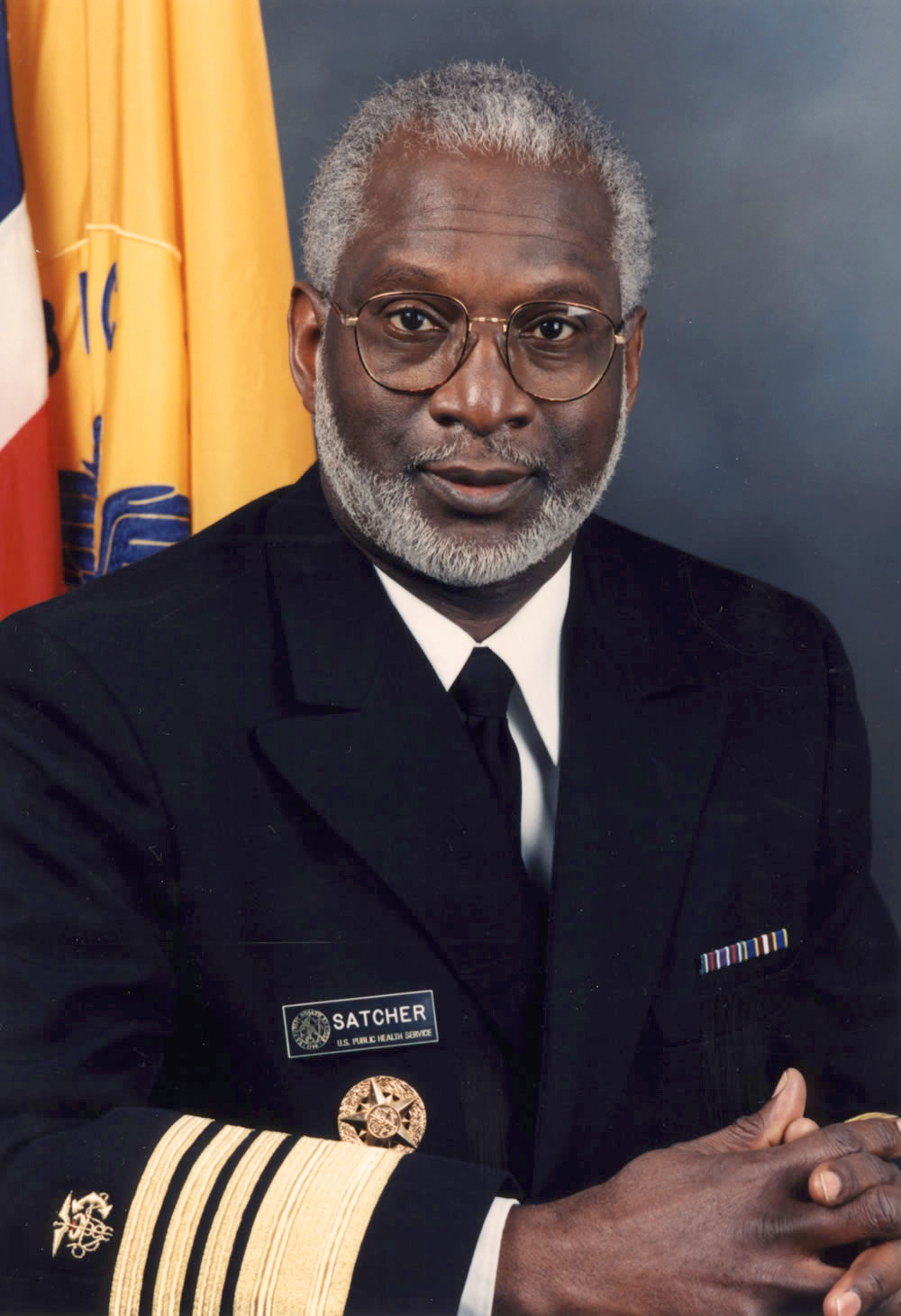
Physician-administrator who led Meharry Medical College and the CDC before serving as the 16th U.S. Surgeon General (1998–2002), then founded the Satcher Health Leadership Institute at Morehouse School of Medicine to attack racial health disparities.
| At a glance | |
|---|---|
| Type | PERSON — physician; public health administrator |
| Dates | 1941 – |
| Chicago connection | SIGNIFICANT — national significance; no Chicago anchor documented in the sources consulted |
| Known for | 16th U.S. Surgeon General; CDC director; Meharry president |
| Verification | VERIFIED |
| CTL ID | CTL-ENC-000320 |
| Documented address | None documented — see Documented address and map |
Overview
David Satcher was born on March 2, 1941, in Anniston, Alabama, to Wilmer and Anna Satcher [S1]. He graduated from Morehouse College in 1963 and earned both his M.D. and a Ph.D. in cytogenetics from Case Western Reserve University in 1970 [S1]. His formation was in family and community medicine: he directed the King-Drew Sickle Cell Research Center in Los Angeles from 1973 to 1979, developed and chaired King-Drew's Department of Family Medicine, and served as interim dean of the Charles R. Drew Postgraduate Medical School [S1].
Building the Black medical schools' leadership line
Satcher served as professor and chairman of community medicine and family practice at Morehouse School of Medicine from 1979 to 1982, and then as president of Meharry Medical College from 1982 to 1993 [S1][S3]. The sequence matters to this encyclopedia: the two great Black medical schools in this package — Meharry (CTL-ENC-000276) and Morehouse — both passed through his hands, one as president, the other as chair, interim president, and institute founder.
Surgeon General
President Bill Clinton appointed Satcher director of the Centers for Disease Control and Prevention and administrator of the Agency for Toxic Substances and Disease Registry in 1993, and nominated him as the 16th Surgeon General of the United States; he was confirmed in February 1998 and served simultaneously as assistant secretary for health until January 2001 [S1][S2]. As surgeon general he made the elimination of racial and ethnic health disparities a stated national goal and issued landmark calls to action, including his 1999 framing of suicide as a national health crisis requiring national prevention strategies [S2]. He held the rank of full admiral in the U.S. Public Health Service Commissioned Corps [S1].
The Satcher Health Leadership Institute
After leaving office, Satcher returned to Morehouse School of Medicine in the fall of 2002 as director of the National Center for Primary Care, served as the school's interim president from December 2004, and in 2006 founded the Satcher Health Leadership Institute, which he directs — its programs work on sexual health, disease prevention, mental health, and the health needs of underserved communities [S1][S2].
Connection
Classed SIGNIFICANT: Satcher's national offices were held from Atlanta and Washington, and no Chicago anchor is documented in the sources consulted. His entry anchors this batch's public-health line — the line that runs from Paul B. Cornely (CTL-ENC-000319) and the desegregation campaign to the Surgeon General's office itself.
Documented address and map
No address documented in the sources consulted — no coordinates are recorded and no map is published for this entry.
See also
- Paul B. Cornely — the public-health generation before him
- Meharry Medical College — the college he led for eleven years
Relationships
- affiliated_with — Meharry Medical College — Satcher served as president of Meharry Medical College from 1982 to 1993 (S1, S2).
- affiliated_with — Centers for Disease Control and Prevention — President Bill Clinton appointed Satcher director of the Centers for Disease Control and Prevention and administrator of the Agency for Toxic Substances and Disease Registry, 1993–1998 (S1).
- affiliated_with — Morehouse School of Medicine — Satcher chaired community medicine and family practice at Morehouse School of Medicine (1979–1982), returned in 2002 to direct its National Center for Primary Care, served as its interim president, and founded the Satcher Health Leadership Institute there in 2006 (S1, S2).
Sources
- S1: The HistoryMakers. "The Honorable Dr. David Satcher." Biography. Accessed October 29, 2026. https://www.thehistorymakers.org/biography/honorable-dr-david-satcher.
- S2: American Academy of Arts and Sciences. "David Satcher." Member profile. Accessed October 29, 2026. https://www.amacad.org/person/david-satcher.
- S3: Kansas State University, Landon Lecture Series. "David Satcher." Speaker biography. Accessed October 29, 2026. https://www.k-state.edu/landon/speakers/david-satcher/.
Cite this entry
- Permanent ID: CTL-ENC-000320 · Crosswalked graph record: CTL-E-4873 · Version: 0.1 · Date: 2026-10-29
- Chicago: CultureTechLens. "David Satcher." CultureTechLens Encyclopedia, version 0.1, October 29, 2026. CultureTechLens NFP. CTL-ENC-000320. Source: CultureTechLens
- APA: CultureTechLens. (2026). David Satcher (Version 0.1, Entry CTL-ENC-000320). CultureTechLens Encyclopedia. CultureTechLens NFP. Source: CultureTechLens
- MLA: CultureTechLens. "David Satcher." CultureTechLens Encyclopedia, version 0.1, CultureTechLens NFP, 29 Oct. 2026. Entry CTL-ENC-000320. Source: CultureTechLens
Further reading
- New Georgia Encyclopedia. "David Satcher (b. 1941)." Accessed October 29, 2026. https://www.georgiaencyclopedia.org/articles/science-medicine/david-satcher-b-1941.
Image credits
- David Satcher official portrait: see Images block in the frontmatter for the full credit line, rights status, and rights document.
<!-- =======================