 CULTURETECHLENS
The Encyclopedia · CTL-ENC-000028
Curtis Mayfield
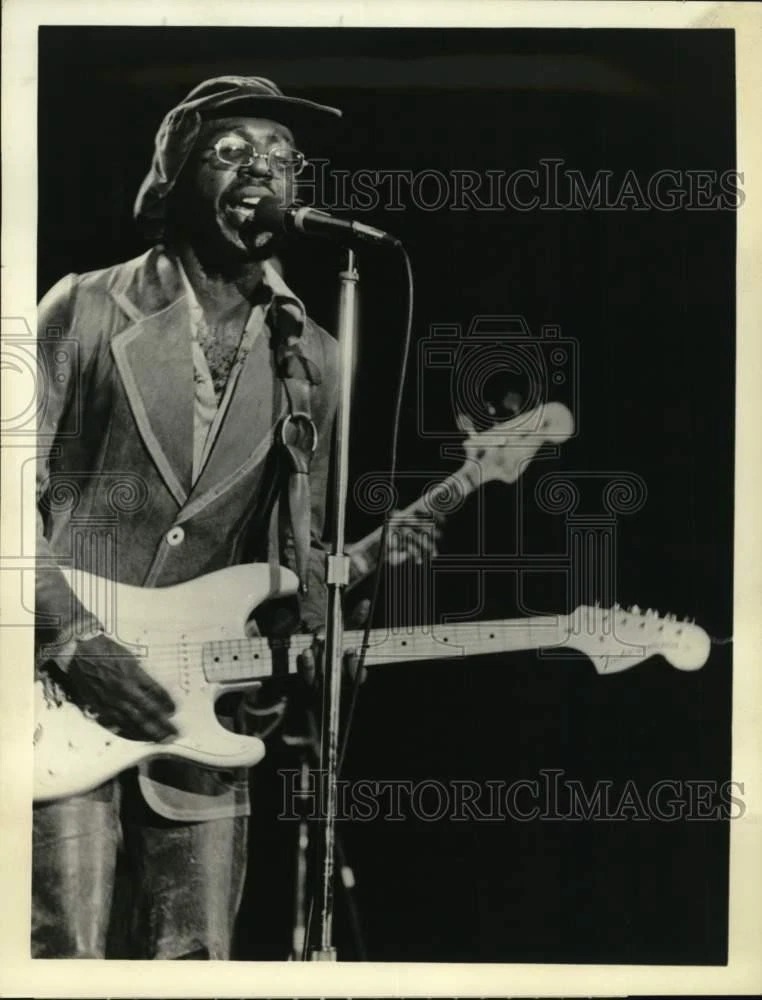
Curtis Lee Mayfield (June 3, 1942 – December 26, 1999) was a Chicago singer, songwriter, guitarist, and producer whose work with the Impressions and as a solo artist made him one of the most important
| At a glance | |
|---|---|
| Type | PERSON — musician |
| Dates | – |
| Chicago connection | CORE — see the Chicago connection section |
| Known for | Curtis Lee Mayfield (June 3, 1942 – December 26, 1999) was a Chicago singer, songwriter, guitarist, and producer whose work with the |
| Verification | SUPPORTED |
| CTL ID | CTL-ENC-000028 |
Overview
Curtis Lee Mayfield (June 3, 1942 – December 26, 1999) was a Chicago singer, songwriter, guitarist, and producer whose work with the Impressions and as a solo artist made him one of the most important voices in American soul music — and one of its first Black owner-entrepreneurs. Encyclopaedia Britannica records that he was born in Chicago, sang in a gospel choir as a boy, and joined the vocal group that became the Impressions in 1958, alongside Jerry Butler; when Butler left, Mayfield became the group's lead singer, guitarist, and songwriter. The Impressions' run of 1960s hits — "Gypsy Woman" (1961), "It's All Right" (1963), "Keep On Pushing" (1964), "People Get Ready" (1965), "We're a Winner" (1967), and "Choice of Colors" (1969) — carried the civil rights movement's hopes in a falsetto of extraordinary gentleness, and "People Get Ready" entered the permanent American songbook.
Mayfield left the Impressions in 1970 for a solo career and for ownership: he had already founded the Curtom Records label in Chicago in 1968, one of the first Black-owned independent labels of its scale. His solo debut, Curtis (1970), and the live and studio records that followed established the solo voice; then came Super Fly (1972), his soundtrack to the blaxploitation film, which the Rock and Roll Hall of Fame's inductee essay treats as a landmark — a score that sold in the millions, produced the hits "Freddie's Dead" and the title track, and, unusually, criticized the drug economy the film glamorized. Britannica notes the tension: Mayfield's songs warned against the very world the movie celebrated, and the album's commercial triumph proved a Black artist could own both the music and the argument.
Life and career
Through the 1970s Mayfield wrote and produced for others on Curtom — Gladys Knight and the Pips' Claudine soundtrack (1974), Aretha Franklin's Sparkle (1976), the Staple Singers' "Let's Do It Again" (1975), a number-one pop hit — while his own records, including There's No Place Like America Today (1975) and the disco-era work, kept charting. The Hall of Fame inducted him twice: with the Impressions in 1991 and as a solo artist in 1999, one of the few double inductees in its history.
On August 13, 1990, a lighting rig fell on Mayfield during an outdoor concert in Brooklyn, paralyzing him from the neck down. He continued to record, singing lying on his back to gather breath, and completed a final album, New World Order (1996). He died in Roswell, Georgia, on December 26, 1999, after years of declining health including diabetes. In the CultureTechLens graph Mayfield is a canonical master record (CTL-P-0016, STRONG EVIDENCE) and a Chicago anchor: Curtom, the Impressions' gospel-to-soul line, and Super Fly's moral counter-argument are core exhibits in the graph's account of Chicago as a capital of Black music ownership. The photograph attached shows him performing on ABC Television's In Concert in 1972, the year of Super Fly.
Two technical facts shaped everything Mayfield made. The first was his guitar: he played in an open F-sharp tuning arrived at from the black keys of the piano, which gave his rhythm guitar its chiming, harp-like voicings and made his accompaniment instantly identifiable under the Impressions' harmonies and his own falsetto. The second was his writing discipline: the Impressions' hits were built as complete moral arguments in three minutes — "Keep On Pushing" and "We're a Winner," the latter initially resisted by radio for its explicit Black pride, trace an arc from endurance to declaration that mirrors the movement years themselves. "People Get Ready," written in the aftermath of the March on Washington and the Birmingham church bombing era, was later named to the Grammy Hall of Fame and the Library of Congress's National Recording Registry orbit of honored American songs, and it has been recorded by hundreds of artists. Mayfield's falsetto — light, precise, never strained — became the model for a generation of soul singers, and his Curtom catalog, from the Five Stairsteps to Linda Clifford, documents a Chicago independent label competing with Motown on Chicago's own terms. His grave in Atlanta and his double Hall of Fame induction close a record that the graph treats as foundational: in Chicago's music history, Mayfield is the proof that the singer, the writer, the guitarist, and the owner could be one man.
Chicago connection
Curtis Lee Mayfield (June 3, 1942 – December 26, 1999) was a Chicago singer, songwriter, guitarist, and producer whose work with the Impressions and as a solo artist made him one of the most important voices in American soul music — and one of its first Black owner-entrepreneurs. Encyclopaedia Britannica records that he was born in Chicago, sang in a gospel choir as a boy, and joined the vocal group that became the Impressions in 1958, alongside Jerry Butler; when Butler left, Mayfield became the group's lead singer, guitarist, and songwriter. Mayfield left the Impressions in 1970 for a solo career and for ownership: he had already founded the Curtom Records label in Chicago in 1968, one of the first Black-owned independent labels of its scale. In the CultureTechLens graph Mayfield is a canonical master record (CTL-P-0016, STRONG EVIDENCE) and a Chicago anchor: Curtom, the Impressions' gospel-to-soul line, and Super Fly's moral counter-argument are core exhibits in the graph's account of Chicago as a capital of Black music ownership. Mayfield's falsetto — light, precise, never strained — became the model for a generation of soul singers, and his Curtom catalog, from the Five Stairsteps to Linda Clifford, documents a Chicago independent label competing with Motown on Chicago's own terms. [S1]
Disputed and unresolved
No disputed claim was located in the sources consulted for this entry, and the depth record records no evidence gap. Open items, if any, are listed in Editorial notes.
See also
Relationships
- collaborated_with — The Impressions (CTL-E-0038) — Restated from the CultureTechLens Knowledge Graph: Curtis Mayfield (CTL-E-0031) collaborated_with The Impressions (CTL-E-0038), verification Verified. Mayfield joined The Impressions as a teenager and became their principal songwriter and frontman.
- collaborated_with — Major Lance (CTL-E-0034) — Restated from the CultureTechLens Knowledge Graph: Curtis Mayfield (CTL-E-0031) collaborated_with Major Lance (CTL-E-0034), verification Verified. Mayfield wrote and produced Lance's hit records for OKeh.
- affiliated_with — Curtom Records (CTL-E-0167) — Restated from the CultureTechLens Knowledge Graph: Curtis Mayfield (CTL-E-0031) affiliated_with Curtom Records (CTL-E-0167), verification Verified. Mayfield founded his own label, Curtom Records.
Sources
- S1: Encyclopaedia Britannica. "Curtis Mayfield." Accessed October 26, 2026. https://www.britannica.com/biography/Curtis-Mayfield.
- S2: Rock and Roll Hall of Fame. "Curtis Mayfield." Accessed October 26, 2026. https://rockhall.com/inductees/curtis-mayfield/.
- S3: Wikipedia. "Curtis Mayfield." Accessed October 26, 2026. https://en.wikipedia.org/wiki/Curtis_Mayfield.
- S4: CultureTechLens Knowledge Graph (schema v0.3.1), entities.json and relationships.json — CTL's own graph register, consulted 2026-10-28 for crosswalk facts and restated relationships.
Cite this entry
- Permanent ID: CTL-ENC-000028 · Crosswalked graph record: CTL-P-0016 · Version: 0.1 · Date: 2026-10-28
- Chicago: CultureTechLens. "Curtis Mayfield." CultureTechLens Encyclopedia, version 0.1, October 28, 2026. CultureTechLens NFP. CTL-ENC-000028.
- APA: CultureTechLens. (2026). Curtis Mayfield (Version 0.1, Entry CTL-ENC-000028). CultureTechLens Encyclopedia. CultureTechLens NFP.
- MLA: CultureTechLens. "Curtis Mayfield." CultureTechLens Encyclopedia, version 0.1, CultureTechLens NFP, 28 Oct. 2026. Entry CTL-ENC-000028.
Further reading
- CultureTechLens Knowledge Graph record CTL-P-0016 (crosswalked; published graph register id CTL-E-0031).
Image credits
- Curtis Mayfield photograph: see Images block in the frontmatter for the full credit line, rights status, and rights document.
Citation
CultureTechLens. "Curtis Mayfield." CultureTechLens Encyclopedia, Vol. 1 — Black Chicago, version 0.1, 2026-10-28. CultureTechLens NFP. CTL-ENC-000028.
<!-- =======================