 CULTURETECHLENS
The Encyclopedia · CTL-ENC-000126
Chief Keef
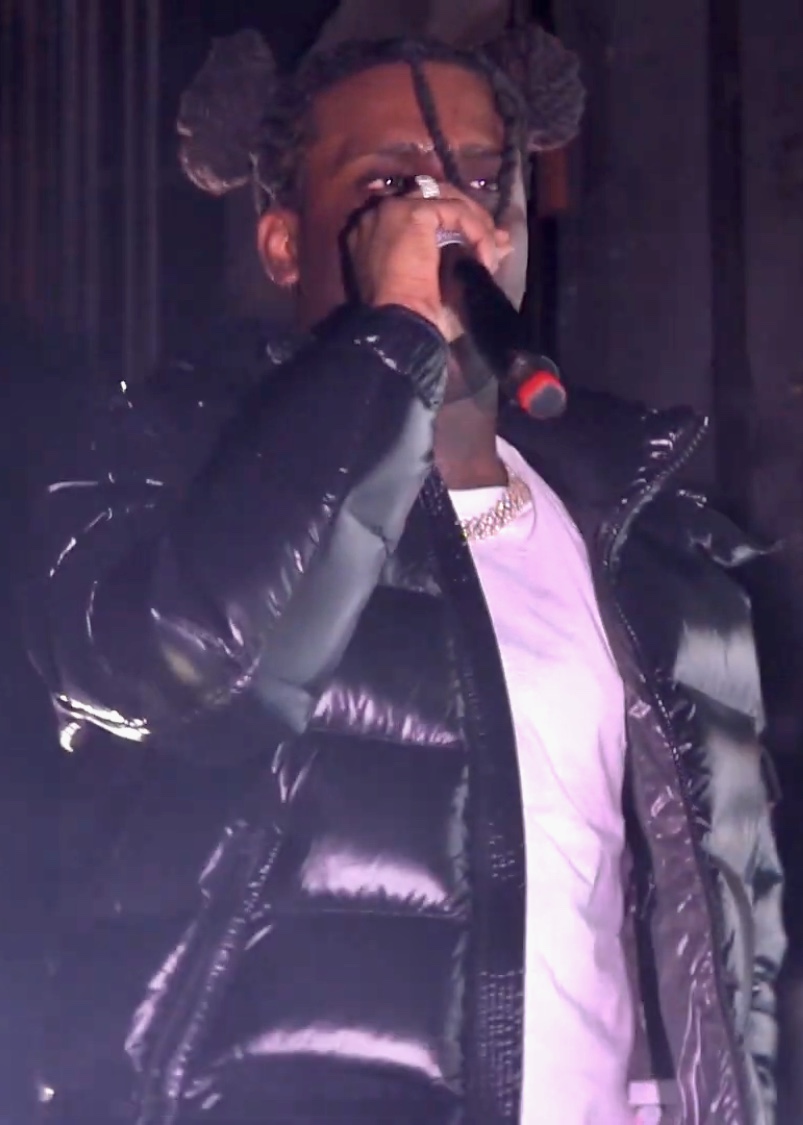
Chief Keef, born Keith Farrelle Cozart on August 15, 1995, in Chicago, is the rapper whom reference accounts credit with popularizing Chicago's drill scene on a worldwide scale.
| At a glance | |
|---|---|
| Type | PERSON — musician |
| Dates | – |
| Chicago connection | CORE — see the Chicago connection section |
| Known for | Chief Keef, born Keith Farrelle Cozart on August 15, 1995, in Chicago, is the rapper whom reference accounts credit |
| Verification | SUPPORTED |
| CTL ID | CTL-ENC-000126 |
Overview
Chief Keef, born Keith Farrelle Cozart on August 15, 1995, in Chicago, is the rapper whom reference accounts credit with popularizing Chicago's drill scene on a worldwide scale. He grew up on the South Side — in the Parkway Garden Homes in Washington Park, in the accounts of his upbringing — raised by his grandmother, his legal guardian, and he left Dyett High School at fifteen. His first audience was the South Side's high-school circuit: the mixtapes The Glory Road and Bang built his local name in 2011 while he was still a teenager. The breakthrough was made under confinement. During a period of house arrest on a weapons charge, Keef posted the low-budget videos that are now read as forerunners of drill — a stark, drum-heavy street rap narrating inner-city violence and drugs in a flat, repetitive delivery — and his street single "I Don't Like," cut at sixteen, became a Chicago hit.
In 2012 Kanye West remixed "I Don't Like" with a cast of prominent guests, carrying it into the Billboard Rap Top 20 and igniting a major-label bidding war. Keef signed with Interscope Records, in a deal that included his own imprint, Glory Boyz Entertainment, and released his debut album, Finally Rich, on December 18, 2012. The album peaked at number 29 on the Billboard 200 and carried "I Don't Like" and "Love Sosa," the latter a durable signature record, and together the singles are credited with defining and popularizing the Chicago drill subgenre — the sound that a generation of younger rappers in Chicago, New York, London, and beyond would adopt and adapt. A widely syndicated artist biography marks the hinge plainly: the day the sixteen-year-old was freed from house arrest in 2012 was the day hip-hop shifted, and a video of a local fan celebrating that release helped send the mixtapes around the world.
Life and career
The legal record ran alongside the career from the start — weapons-possession charges, house-arrest sentences, and a performance ban imposed by Chicago authorities are all documented in the standard biographies — and fame drew official hostility as well as sales: Chicago's mayor publicly called him an unacceptable role model, a judgment the Shazam biography records alongside the music's roots in the city's segregation and street conflict. Keef relocated to Los Angeles. Interscope dropped him in late 2014; he later signed with 1017 Records and sustained himself independently through his own Glo Gang label, self-releasing Nobody and Back from the Dead 2 in 2014 and Bang 3 in 2015. The output never slowed: after a pair of 2015 albums he issued mixtapes at a rate of five a year in 2017 and 2018 — Two Zero One Seven, Thot Breaker, and Mansion Musick among them — with Thot Breaker marking a turn toward melody and pop forms, then the recurring GloFiles series through 2020, the album 4NEM in 2021, and Almighty So 2 in 2024. Critics' retrospective verdict, carried in the AllMusic and AXS accounts alike, is that Keef stands as an influential, even visionary, figure of 2010s rap: the teenager who turned a South Side street sound, recorded under house arrest, into one of the dominant templates of twenty-first-century hip-hop. The Finally Rich sessions themselves document how fast the local sound became national property: the album's guest list — 50 Cent, Wiz Khalifa, and Rick Ross among them — placed the seventeen-year-old's flat Chicago delivery beside established platinum stars, and "Love Sosa," the record's second single, has since been certified quintuple platinum. Keef has also claimed a second invention, declaring himself the inventor of mumble rap, the slurred, melodic style the Shazam biography traces through his later work and onward to successors such as Future and Post Malone. The claim is his own and is recorded here as such; what the chart and catalog record establishes without argument is the sequence itself — mixtapes under house arrest, a Kanye West remix, a bidding war, a drill-defining debut, an independent second career of relentless self-release, and a critical consensus, two decades on, that the South Side teenager at the center of it changed what rap sounds like.
Chicago connection
Chief Keef, born Keith Farrelle Cozart on August 15, 1995, in Chicago, is the rapper whom reference accounts credit with popularizing Chicago's drill scene on a worldwide scale. During a period of house arrest on a weapons charge, Keef posted the low-budget videos that are now read as forerunners of drill — a stark, drum-heavy street rap narrating inner-city violence and drugs in a flat, repetitive delivery — and his street single "I Don't Like," cut at sixteen, became a Chicago hit. The album peaked at number 29 on the Billboard 200 and carried "I Don't Like" and "Love Sosa," the latter a durable signature record, and together the singles are credited with defining and popularizing the Chicago drill subgenre — the sound that a generation of younger rappers in Chicago, New York, London, and beyond would adopt and adapt. The legal record ran alongside the career from the start — weapons-possession charges, house-arrest sentences, and a performance ban imposed by Chicago authorities are all documented in the standard biographies — and fame drew official hostility as well as sales: Chicago's mayor publicly called him an unacceptable role model, a judgment the Shazam biography records alongside the music's roots in the city's segregation and street conflict. The Finally Rich sessions themselves document how fast the local sound became national property: the album's guest list — 50 Cent, Wiz Khalifa, and Rick Ross among them — placed the seventeen-year-old's flat Chicago delivery beside established platinum stars, and "Love Sosa," the record's second single, has since been certified quintuple platinum. [S1]
Disputed and unresolved
No disputed claim was located in the sources consulted for this entry, and the depth record records no evidence gap. Open items, if any, are listed in Editorial notes.
See also
Relationships
- from — City of Chicago (CTL-E-1475) — Restated from the CultureTechLens Knowledge Graph: Chief Keef (CTL-E-0064) from City of Chicago (CTL-E-1475), verification Verified.
- associated_with — Englewood (CTL-E-0213) — Restated from the CultureTechLens Knowledge Graph: Chief Keef (CTL-E-0064) associated_with Englewood (CTL-E-0213), verification Verified.
- collaborated_with — Kanye West (CTL-E-0057) — Restated from the CultureTechLens Knowledge Graph: Chief Keef (CTL-E-0064) collaborated_with Kanye West (CTL-E-0057), verification Verified.
- collaborated_with — Lil Reese (CTL-E-3500) — Restated from the CultureTechLens Knowledge Graph: Chief Keef (CTL-E-0064) collaborated_with Lil Reese (CTL-E-3500), verification Verified.
- collaborated_with — Young Chop (CTL-E-3501) — Restated from the CultureTechLens Knowledge Graph: Chief Keef (CTL-E-0064) collaborated_with Young Chop (CTL-E-3501), verification Verified.
- recorded_for — Interscope Records (CTL-E-3487) — Restated from the CultureTechLens Knowledge Graph: Chief Keef (CTL-E-0064) recorded_for Interscope Records (CTL-E-3487), verification Verified.
- founded — Glory Boyz Entertainment (CTL-E-3490) — Restated from the CultureTechLens Knowledge Graph: Chief Keef (CTL-E-0064) founded Glory Boyz Entertainment (CTL-E-3490), verification Provisional.
- related_to — Chicago drill (CTL-E-5173) — Restated from the CultureTechLens Knowledge Graph: Chief Keef (CTL-E-0064) related_to Chicago drill (CTL-E-5173), verification Provisional.
Sources
- S1: "Chief Keef." AllMusic. Accessed October 26, 2026. https://www.allmusic.com/artist/chief-keef-mn0002937107.
- S2: "Chief Keef." AXS TV. Accessed October 26, 2026. https://axs.tv/top-song-taxonomy-slug/chief-keef/.
- S3: "Chief Keef." Shazam. Accessed October 26, 2026. https://www.shazam.com/cs-cz/artist/chief-keef-and-mike-will-made-it/516663045.
- S4: "Chief Keef Biography & Song Meanings." SongSense. Accessed October 26, 2026. https://songsense.io/chief-keef.
- S5: CultureTechLens Knowledge Graph (schema v0.3.1), entities.json and relationships.json — CTL's own graph register, consulted 2026-10-29 for crosswalk facts and restated relationships.
Cite this entry
- Permanent ID: CTL-ENC-000126 · Crosswalked graph record: CTL-P-0125 · Version: 0.1 · Date: 2026-10-29
- Chicago: CultureTechLens. "Chief Keef." CultureTechLens Encyclopedia, version 0.1, October 29, 2026. CultureTechLens NFP. CTL-ENC-000126.
- APA: CultureTechLens. (2026). Chief Keef (Version 0.1, Entry CTL-ENC-000126). CultureTechLens Encyclopedia. CultureTechLens NFP.
- MLA: CultureTechLens. "Chief Keef." CultureTechLens Encyclopedia, version 0.1, CultureTechLens NFP, 29 Oct. 2026. Entry CTL-ENC-000126.
Further reading
- CultureTechLens Knowledge Graph record CTL-P-0125 (crosswalked; published graph register id CTL-E-0064).
Image credits
- Chief Keef photograph: see Images block in the frontmatter for the full credit line, rights status, and rights document.
Citation
CultureTechLens. "Chief Keef." CultureTechLens Encyclopedia, Vol. 1 — Black Chicago, version 0.1, 2026-10-29. CultureTechLens NFP. CTL-ENC-000126.
<!-- =======================