 CULTURETECHLENS
The Encyclopedia · CTL-ENC-000086
Chicago Board of Trade Building II
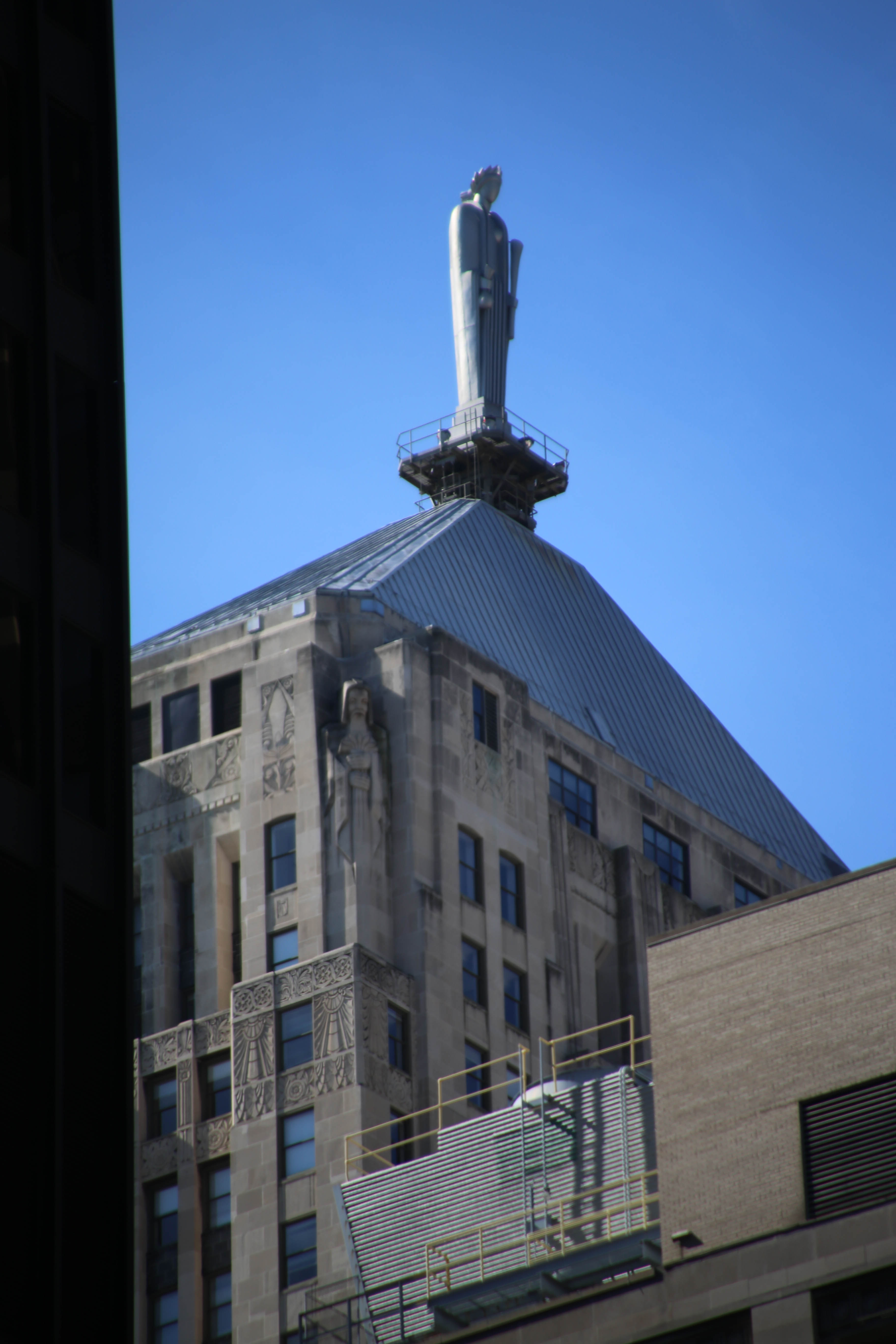
The current Chicago Board of Trade Building is the Art Deco tower at 141 West Jackson Boulevard, at the foot of the LaSalle Street canyon in the Loop — and the graph treats it as
| At a glance | |
|---|---|
| Type | PLACE — place |
| Dates | – |
| Chicago connection | CORE — see the Chicago connection section |
| Known for | The current Chicago Board of Trade Building is the Art Deco tower at 141 West Jackson Boulevard, at the foot of the |
| Verification | VERIFIED |
| CTL ID | CTL-ENC-000086 |
Overview
The current Chicago Board of Trade Building is the Art Deco tower at 141 West Jackson Boulevard, at the foot of the LaSalle Street canyon in the Loop — and the graph treats it as a separate record from the 1885 Boyington building it replaced, a distinction this entry and its photo pass both preserve. The building's own history, the graph's verification anchor, records that it was commissioned in 1925 to the architects Holabird & Root and officially opened on June 9, 1930, on the site of the 1885 building. It has served as the primary trading venue of the Chicago Board of Trade and, after the 2007 merger of the CBOT and the Chicago Mercantile Exchange, of the CME Group; in 2012 the CME Group sold the building to a consortium of real estate investors including GlenStar Properties and USAA Real Estate.
The tower's dimensions are the first thing every account reaches for, and they carry a small, honest variance. The reference record gives a 44-story, 604-foot (184-meter) skyscraper; the CultureTechLens tallest-buildings chronology and the graph's stored properties give 605 feet, and this program's Batch 001 staged list used 605 — the figure this entry carries, with the 604-foot reference variant flagged in the batch index rather than blended. Either way the reign is agreed: the building was Chicago's tallest from 1930 until 1965, when it was surpassed by the Richard J. Daley Center. The architecture is Indiana limestone in a stepped Art Deco massing, capped by a pyramidal roof and the building's signature: a three-story aluminum statue of Ceres, the Roman goddess of grain, by sculptor John Storrs — famously faceless, a streamlined figure holding a sheaf of wheat and a bag of corn, chosen because the building's business was agricultural futures.
History
Inside, the working floor was the attraction. The Board of Trade operated on the fourth floor, and the open-outcry trading pit became a sightseeing stop in its own right — during the 1933–34 Century of Progress exposition, visitors took in the Board of Trade's observation views and trading floor as part of the fair-era tour of the modern city. The original 1930s trading floor lasted until 2004. The building's later life has been preservation and adaptation: it was designated a Chicago Landmark in 1977 and a National Historic Landmark and National Register of Historic Places honoree in 1978, and it remains a popular sightseeing attraction and film location.
That public life around the pit is part of the building's documented character. Open outcry — hundreds of traders shouting and signaling bids in the octagonal pits — made the fourth floor one of the few working financial interiors that tourists were deliberately shown, and period guides treated the view down LaSalle and the visit to the floor as a pair: the canyon outside, the market inside. When electronic trading displaced the pits, the floor's 2004 closure ended a 74-year run for the original room, and the building's work shifted fully to offices while its landmark protections, in place since the 1970s, carried the exterior and the Ceres figure forward unchanged.
The connection to this graph's Black Chicago records is geographic and institutional rather than architectural: the Board of Trade stands at the north end of the LaSalle Street corridor, a few miles and a whole economy away from Bronzeville, and the grain and livestock futures traded under Ceres priced the agricultural world that the Great Migration's arrivals had left — and, in the stockyards and rail yards, continued to work in. The graph files the tower as a Place in Chicago's tallest-buildings succession, where its thirty-five years as the city's tallest building is the longest single reign between the Wrigley era and the Daley Center's. Kept distinct from Building I — different architects, different centuries of style, different fates — it is the surviving half of a pair: the 1885 building is a record, the 1930 building is a landmark, and Jackson Boulevard holds both.
Chicago connection
The current Chicago Board of Trade Building is the Art Deco tower at 141 West Jackson Boulevard, at the foot of the LaSalle Street canyon in the Loop — and the graph treats it as a separate record from the 1885 Boyington building it replaced, a distinction this entry and its photo pass both preserve. It has served as the primary trading venue of the Chicago Board of Trade and, after the 2007 merger of the CBOT and the Chicago Mercantile Exchange, of the CME Group; in 2012 the CME Group sold the building to a consortium of real estate investors including GlenStar Properties and USAA Real Estate. Either way the reign is agreed: the building was Chicago's tallest from 1930 until 1965, when it was surpassed by the Richard J. The building's later life has been preservation and adaptation: it was designated a Chicago Landmark in 1977 and a National Historic Landmark and National Register of Historic Places honoree in 1978, and it remains a popular sightseeing attraction and film location. The connection to this graph's Black Chicago records is geographic and institutional rather than architectural: the Board of Trade stands at the north end of the LaSalle Street corridor, a few miles and a whole economy away from Bronzeville, and the grain and livestock futures traded under Ceres priced the agricultural world that the Great Migration's arrivals had left — and, in the stockyards and rail yards, continued to work in. [S1]
Disputed and unresolved
| Claim | As recorded | CTL position |
|---|---|---|
| Contested point in the record | The tower's dimensions are the first thing every account reaches for, and they carry a small, honest variance. (depth record, sources as cited) | DISPUTED — shown as recorded; not resolved in this entry |
See also
Relationships
Relationships: none recorded yet — edges to follow. This entry's graph connections are being built; it publishes now on its sources.
Sources
- S1: Chicago Board of Trade Building. "History." CBOTBuilding.com. Accessed October 25, 2026. https://www.cbotbuilding.com/history/.
- S2: "Chicago Board of Trade Building." Wikipedia. Accessed October 25, 2026. https://en.wikipedia.org/wiki/Chicago_Board_of_Trade_Building.
- S3: Fullerton, Lindsay. "Chicago Board of Trade Building." Lindsay Fullerton (blog). Accessed October 25, 2026. http://www.lindsayfullerton.com/blog/tallest-building-in-chicago-1933.
Cite this entry
- Permanent ID: CTL-ENC-000086 · Crosswalked graph record: CTL-PL-0191 · Version: 0.1 · Date: 2026-10-29
- Chicago: CultureTechLens. "Chicago Board of Trade Building II." CultureTechLens Encyclopedia, version 0.1, October 29, 2026. CultureTechLens NFP. CTL-ENC-000086.
- APA: CultureTechLens. (2026). Chicago Board of Trade Building II (Version 0.1, Entry CTL-ENC-000086). CultureTechLens Encyclopedia. CultureTechLens NFP.
- MLA: CultureTechLens. "Chicago Board of Trade Building II." CultureTechLens Encyclopedia, version 0.1, CultureTechLens NFP, 29 Oct. 2026. Entry CTL-ENC-000086.
Further reading
- CultureTechLens Knowledge Graph record CTL-PL-0191 (no published graph register match located — see Editorial notes).
Image credits
- Chicago Board of Trade Building II photograph: see Images block in the frontmatter for the full credit line, rights status, and rights document.
Citation
CultureTechLens. "Chicago Board of Trade Building II." CultureTechLens Encyclopedia, Vol. 1 — Black Chicago, version 0.1, 2026-10-29. CultureTechLens NFP. CTL-ENC-000086.
<!-- =======================