 CULTURETECHLENS
The Encyclopedia · CTL-ENC-000112
Charlie Parker
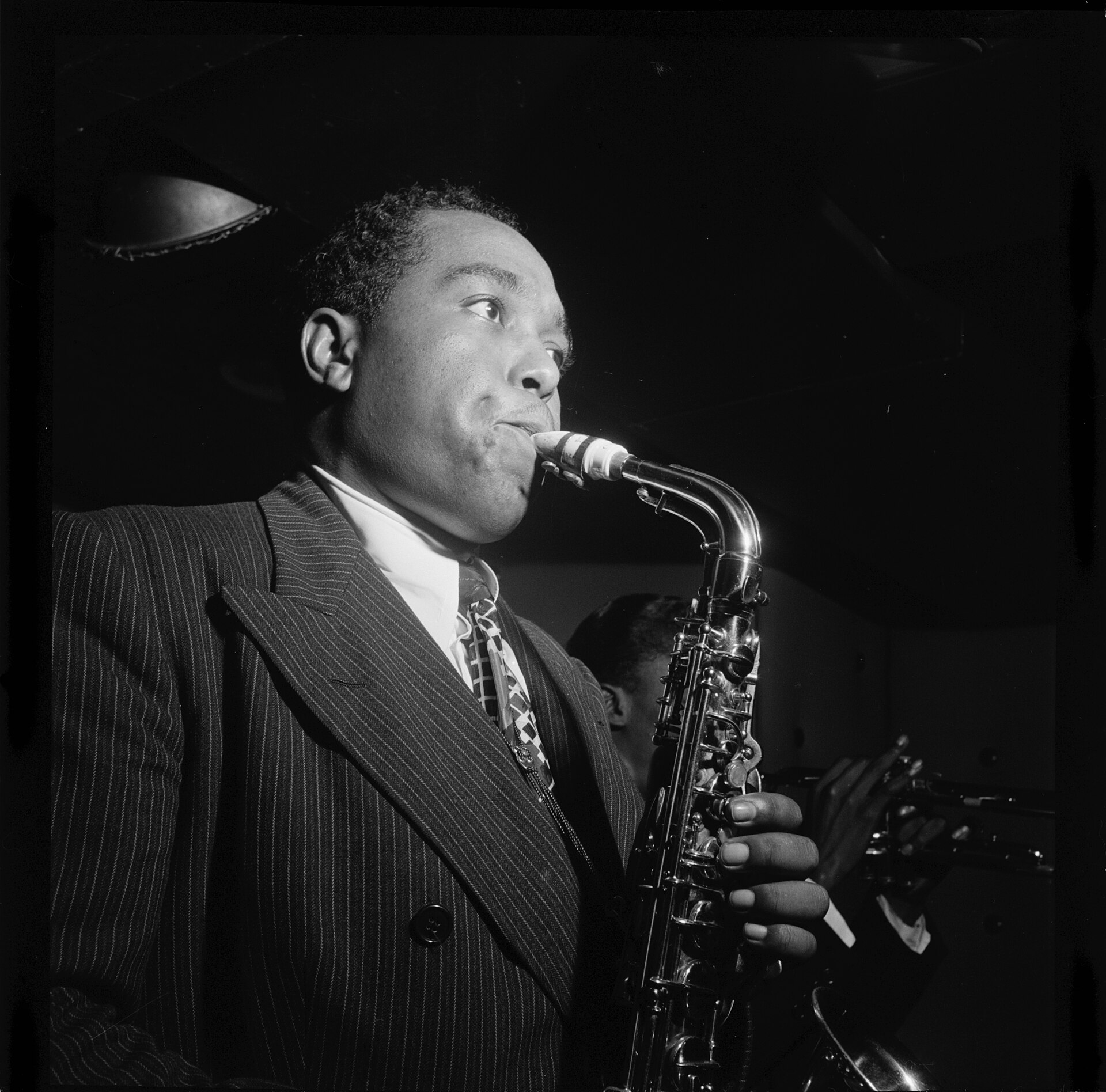
Charlie Parker (August 29, 1920 – March 12, 1955), known as "Bird" — short for "Yardbird," a nickname whose origin is disputed between the story of a chicken hit while driving on tour and the
| At a glance | |
|---|---|
| Type | PERSON — musician |
| Dates | – |
| Chicago connection | CORE — see the Chicago connection section |
| Known for | Charlie Parker (August 29, 1920 – March 12, 1955), known as "Bird" — short for "Yardbird," a nickname whose origin is |
| Verification | PROVISIONAL |
| CTL ID | CTL-ENC-000112 |
Overview
Charlie Parker (August 29, 1920 – March 12, 1955), known as "Bird" — short for "Yardbird," a nickname whose origin is disputed between the story of a chicken hit while driving on tour and the simpler image of playing free as a bird — was an American alto saxophonist and composer who, with Dizzy Gillespie, Thelonious Monk, and their circle, invented bebop, the harmonically complex, rhythmically irregular style that remade jazz as a modernist art. He was born in Kansas City, Kansas, to a performing family — his father was a stage performer — and raised in Kansas City, Missouri, where he discovered his talent in public-school music lessons. After dropping out of school he toured with bands, played Chicago, moved to New York to pursue music full-time, and joined Jay McShann's band, with which his recorded reputation began.
The bebop invention happened in the after-hours rooms of Harlem in the early 1940s, where Parker, Gillespie, Monk, and their peers worked out the new language, and by the end of the decade the style, and Parker's name with it, had come to define the jazz argument of the moment — the music's founding recordings made, its vocabulary set by his alto. His career ran in counterpoint with addiction and mental-health struggles that damaged his work and, in 1955, killed him at thirty-four.
Life and career
The Chicago chapter of the record is specific and is the reason the CultureTechLens graph carries him in its Chicago venue geography. In the fall of 1950 Parker played the Pershing Hotel Ballroom on Chicago's South Side — the ballroom of the Pershing Hotel, a center of Black Chicago social and musical life. The engagement is preserved as a live recording issued on LP as Charlie Parker at the Pershing Ballroom, Chicago 1950 (Zim Records, 1976), recorded by Don Coy, with liner notes drawing on the tape's forty-plus minutes of Bird in excellent form on one of the many one-nighters of his best period. The LP track list is the working repertoire of the mature Parker: "Indiana," "I Can't Get Started," "Anthropology," "Out of Nowhere," "Get Happy," "Hot House," "Embraceable You," "Body and Soul," "Cool Blues," "All the Things You Are," "Billie's Bounce," and "Pennies from Heaven." The personnel, per the LP credits, was a local rhythm section: Chris Anderson on piano, George Freeman on guitar, Leroy Jackson on bass, and Bruz Freeman on drums — the Freeman brothers being mainstays of the Chicago jazz scene.
The documentation carries an honest tangle, and this record states it rather than smoothing it. The Centennial project's session research dates the engagement October 23, 1950 — the date carried in the CultureTechLens build-ledger record — and identifies the tenor saxophonist on the surviving bootleg as Claude McLin, a twenty-four-year-old Lester Young disciple playing to a hometown crowd, correcting earlier identifications of Von Freeman and, on bootleg issues, Wardell Gray. The LP credits, by contrast, list tenor saxophone to Von Freeman. And Peter Losin's sessionography lists a Pershing Hotel Ballroom date on November 5, 1950, with a Parker septet. Whether the ballroom hosted Parker twice that fall or the listings divide one engagement between them is UNRESOLVED on the sources consulted; what is not in dispute is the engagement itself, the room, the local band, and the surviving tape.
Parker's afterlife in the graph is the bebop line itself: the Pershing date places the music's chief inventor in a Woodlawn ballroom with Chicago musicians behind him, five years before his death — the moment the new jazz, invented in Harlem jam sessions, was documented working a Black Chicago dance floor. The Centennial scholarship's care with the tape — who the tenor player was, which brothers were on the stand — is the measure of what the night still means to the city's jazz memory. This record is a staged proposal pending the founder's classification sitting.
Chicago connection
After dropping out of school he toured with bands, played Chicago, moved to New York to pursue music full-time, and joined Jay McShann's band, with which his recorded reputation began. The Chicago chapter of the record is specific and is the reason the CultureTechLens graph carries him in its Chicago venue geography. In the fall of 1950 Parker played the Pershing Hotel Ballroom on Chicago's South Side — the ballroom of the Pershing Hotel, a center of Black Chicago social and musical life. The engagement is preserved as a live recording issued on LP as Charlie Parker at the Pershing Ballroom, Chicago 1950 (Zim Records, 1976), recorded by Don Coy, with liner notes drawing on the tape's forty-plus minutes of Bird in excellent form on one of the many one-nighters of his best period. The LP track list is the working repertoire of the mature Parker: "Indiana," "I Can't Get Started," "Anthropology," "Out of Nowhere," "Get Happy," "Hot House," "Embraceable You," "Body and Soul," "Cool Blues," "All the Things You Are," "Billie's Bounce," and "Pennies from Heaven." The personnel, per the LP credits, was a local rhythm section: Chris Anderson on piano, George Freeman on guitar, Leroy Jackson on bass, and Bruz Freeman on drums — the Freeman brothers being mainstays of the Chicago jazz scene. Parker's afterlife in the graph is the bebop line itself: the Pershing date places the music's chief inventor in a Woodlawn ballroom with Chicago musicians behind him, five years before his death — the moment the new jazz, invented in Harlem jam sessions, was documented working a Black Chicago dance floor. [S1]
Disputed and unresolved
| Claim | As recorded | CTL position |
|---|---|---|
| Contested point in the record | Charlie Parker (August 29, 1920 – March 12, 1955), known as "Bird" — short for "Yardbird," a nickname whose origin is disputed between the story of a chicken hit while driving on tour and the simpler image of playing free as a bird — was an American alto saxophonist and composer who, with Dizzy Gillespie, Thelonious Monk, and their circle, invented bebop, the harmonically complex, rhythmically irregular style that remade jazz as a modernist art. (depth record, sources as cited) | DISPUTED — shown as recorded; not resolved in this entry |
See also
Relationships
- performed_at — Pershing Ballroom (CTL-E-0137) — Restated from the CultureTechLens Knowledge Graph: Charlie Parker (CTL-E-5082) performed_at Pershing Ballroom (CTL-E-0137), verification Verified.
- performed_at — Rhumboogie Cafe (CTL-E-0129) — Restated from the CultureTechLens Knowledge Graph: Charlie Parker (CTL-E-5082) performed_at Rhumboogie Cafe (CTL-E-0129), verification Provisional.
Sources
- S1: Charlie Parker Centennial Project. "Weekly Posting, October 23rd, 2020." Accessed October 26, 2026. https://charlieparkercentennial.com/2021/01/01/weekly-posting-october-23rd-2020/.
- S2: Discogs. "Charlie Parker — At the Pershing Ballroom, Chicago 1950." Accessed October 26, 2026. https://www.discogs.com/release/5674535-Charlie-Parker-At-The-Pershing-Ballroom-Chicago-1950.
- S3: Peter Losin. "Charlie Parker Sessions: 1950–1955." Accessed October 26, 2026. http://www.plosin.com/milesAhead/BirdSessions.aspx?d=5.
- S4: Zim Records. "Charlie Parker at the Pershing Ballroom — Liner Notes." Accessed October 26, 2026. http://www.fredparcells.com/charlieparker/images/pershingballroom.pdf.
- S5: GradeSaver. "Charlie Parker, Jazz, and the Rise of the 'Hipster.'" Accessed October 26, 2026. https://gradesaver-website-prod-tql6r.ondigitalocean.app/the-talented-mr-ripley-film/study-guide/charlie-parker-jazz-and-the-rise-of-the-hipster-in-the-1950s.
- S6: CultureTechLens Knowledge Graph (schema v0.3.1), entities.json and relationships.json — CTL's own graph register, consulted 2026-10-29 for crosswalk facts and restated relationships.
Cite this entry
- Permanent ID: CTL-ENC-000112 · Crosswalked graph record: CTL-ESS-0146 · Version: 0.1 · Date: 2026-10-29
- Chicago: CultureTechLens. "Charlie Parker." CultureTechLens Encyclopedia, version 0.1, October 29, 2026. CultureTechLens NFP. CTL-ENC-000112.
- APA: CultureTechLens. (2026). Charlie Parker (Version 0.1, Entry CTL-ENC-000112). CultureTechLens Encyclopedia. CultureTechLens NFP.
- MLA: CultureTechLens. "Charlie Parker." CultureTechLens Encyclopedia, version 0.1, CultureTechLens NFP, 29 Oct. 2026. Entry CTL-ENC-000112.
Further reading
- CultureTechLens Knowledge Graph record CTL-ESS-0146 (crosswalked; published graph register id CTL-E-5082).
Image credits
- Charlie Parker photograph: see Images block in the frontmatter for the full credit line, rights status, and rights document.
Citation
CultureTechLens. "Charlie Parker." CultureTechLens Encyclopedia, Vol. 1 — Black Chicago, version 0.1, 2026-10-29. CultureTechLens NFP. CTL-ENC-000112.
<!-- =======================