 CULTURETECHLENS
The Encyclopedia · CTL-ENC-000046
Celia Parker Woolley
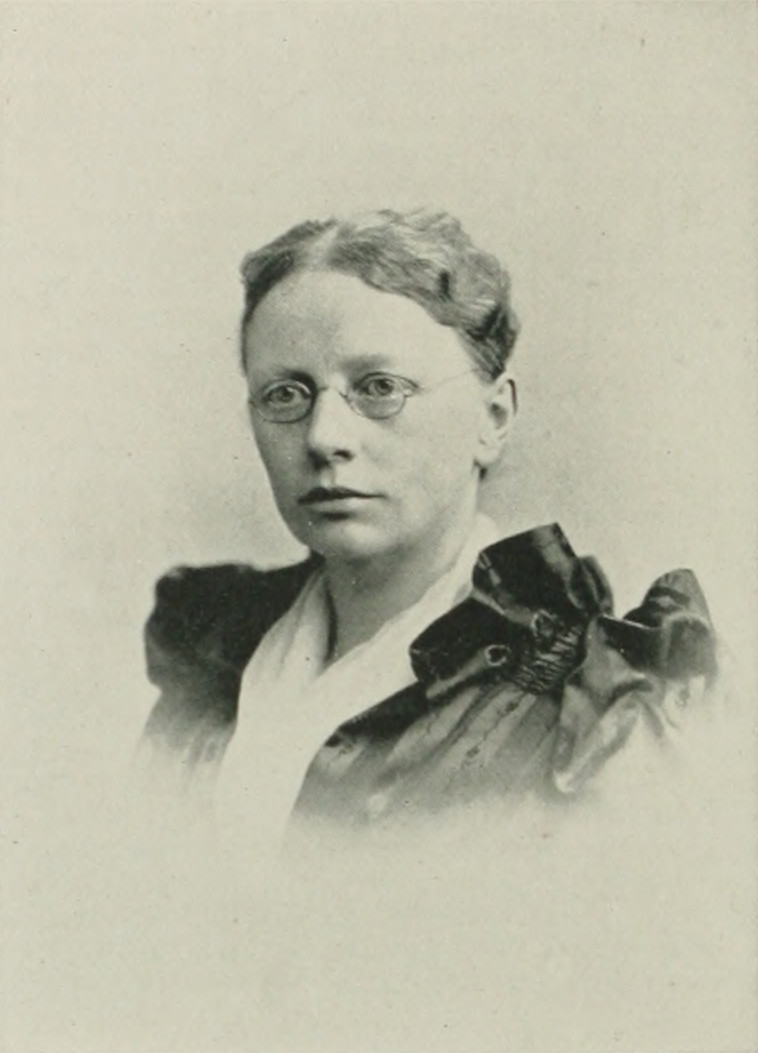
Celia Parker Woolley (June 14, 1848 – March 9, 1918) was a white Unitarian minister, novelist, and clubwoman who made Chicago's Black South Side the center of her life's last work: she founded the Frederick
| At a glance | |
|---|---|
| Type | PERSON — person |
| Dates | – |
| Chicago connection | CORE — see the Chicago connection section |
| Known for | Celia Parker Woolley (June 14, 1848 – March 9, 1918) was a white Unitarian minister, novelist, and clubwoman who made Chicago's Black |
| Verification | PROVISIONAL |
| CTL ID | CTL-ENC-000046 |
Overview
Celia Parker Woolley (June 14, 1848 – March 9, 1918) was a white Unitarian minister, novelist, and clubwoman who made Chicago's Black South Side the center of her life's last work: she founded the Frederick Douglass Center settlement in 1904 and, with Ida B. Wells, the Frederick Douglass Woman's Club in 1906. She enters the CultureTechLens record contextually — as an ally institution-builder inside Black Chicago's history, in the same lane as the other contextual figures the founder has directed be built framed plainly. Born Celia Parker in Toledo, Ohio, to Marcellus Harris Parker and Harriet Maria (Sage) Parker, she was raised in Coldwater, Michigan, graduated from the Coldwater Female Seminary in 1866, and married Dr. J. H. Woolley on December 29, 1868. The couple removed to Chicago in 1876. Her father's own religious path — breaking from orthodoxy through the Swedenborgians toward more radical thinkers, as the 1893 Woman of the Century profile recounts — set the household pattern her career followed.
In Chicago Woolley first became a literary woman. Until 1885 her writing was occasional contributions to Unitarian papers, mainly on social and literary subjects, and for eight years she was the Chicago correspondent of Boston's Christian Register. Her first novel, Love and Theology (1887), a decidedly theological work, passed into its fifth edition within a year and was reissued in paper as Rachel Armstrong. A Girl Graduate followed in 1889, and Roger Hunt in 1892, pronounced her best book by the contemporary profile; The Western Slope appeared in 1903. Lee Schweninger's 1998 scholarly study — the only book-length study of her writings, per its publisher — ranks her novels with those of Margaret Deland, Henry Adams, and William Dean Howells, and treats her work under the heads of equal-rights reform, the New Woman, and individual freedom and social responsibility. She was also a lecturer in demand, including on woman suffrage, and on literary subjects such as George Eliot and Robert Browning.
Life and career
The pulpit came next. Woolley was ordained to the Unitarian ministry in 1894 — the Harvard Square Library biography gives 1894, with service in Geneva, Illinois, and then at Chicago's North Side church; the Who's Who-derived listing dates her Geneva ministry 1893–1896 and the Independent Liberal Church pastorate 1896–1898, a one-year variance in the Geneva start that is flagged here rather than smoothed over. Jenkin Lloyd Jones, the uncle of Frank Lloyd Wright and a leading liberal minister, preached her ordination sermon, and she frequently supplied his pulpit at All Souls. At the North Side church she tried, in the library biography's phrase, to evoke a social conscience in her parishioners.
Her club work was the bridge to the South Side. Woolley was active in the Chicago Woman's Club from her arrival in 1876 and served as its president for three years, from 1888 to 1890. The club, founded the year she arrived, had been created to discuss literature, social reform, art, and education. In 1896 Fannie Barrier Williams, the Black clubwoman, educator, and civil rights activist with whom Woolley cultivated a close relationship, became the club's first Black member, with Woolley's intense lobbying and Jones's support behind the admission. Always concerned, the library biography says, with issues of racism and human rights, Woolley and her husband in 1904 moved into the Black neighborhood on Chicago's South Side. There she established the Frederick Douglass Center to provide programs and services that would open greater opportunities for Black Chicagoans and foster greater cooperation between the races, devoting many years to the community ministry in the place where she lived and worked. She had hoped at first for a settlement house on the classic model; it evolved instead into a meeting place where middle-class Black and white Chicagoans could find common ground, through concerts and teas, a poetry series, and lectures. The biography records the criticism fairly: she was faulted for not helping those with the greatest needs — and credits her, against that criticism, with doing much to break down racial barriers.
In 1906 she founded the Frederick Douglass Woman's Club, one of the few interracial women's clubs in Chicago, with Mrs. George W. Plummer as president and Ida B. Wells as vice president. The Center hosted Louis George Gregory in 1911 and 'Abdu'l-Bahá, then leader of the Bahá'í Faith, in September 1912 during his Western journeys, and its speakers fed into the 1912 NAACP conference in Chicago. The Chicago Defender's obituary notice of March 16, 1918, carried the headline that fixed her in Black Chicago's memory: "Mrs. Celia Parker Woolley Is Dead: Founder of Fred Douglass Center Passes Away." She died on Chicago's South Side on March 9, 1918. For CultureTechLens, Woolley's record is a study in the architecture of alliance: a white minister-novelist who spent her institutional capital — a club presidency, a pulpit, a South Side address — on rooms where Black Chicago set the terms of its own civic life, and whose center and club outlasted her as part of the Douglass-named landscape of the Black Metropolis. This record is a staged proposal pending the founder's classification sitting.
Chicago connection
Celia Parker Woolley (June 14, 1848 – March 9, 1918) was a white Unitarian minister, novelist, and clubwoman who made Chicago's Black South Side the center of her life's last work: she founded the Frederick Douglass Center settlement in 1904 and, with Ida B. She enters the CultureTechLens record contextually — as an ally institution-builder inside Black Chicago's history, in the same lane as the other contextual figures the founder has directed be built framed plainly. The couple removed to Chicago in 1876. In Chicago Woolley first became a literary woman. Until 1885 her writing was occasional contributions to Unitarian papers, mainly on social and literary subjects, and for eight years she was the Chicago correspondent of Boston's Christian Register. [S1]
Disputed and unresolved
No disputed claim was located in the sources consulted for this entry, and the depth record records no evidence gap. Open items, if any, are listed in Editorial notes.
See also
Relationships
Relationships: none recorded yet — edges to follow. This entry's graph connections are being built; it publishes now on its sources.
Sources
- S1: Harvard Square Library. "Woolley, Celia Parker (1848–1918)." Accessed October 26, 2026. https://www.harvardsquarelibrary.org/biographies/celia-parker-woolley/.
- S2: Wikipedia. "Celia Parker Woolley." Accessed October 26, 2026. https://en.wikipedia.org/wiki/Celia_Parker_Woolley.
- S3: Wikisource. "Woman of the Century — Celia Parker Woolley." Accessed October 26, 2026. https://En.Wikisource.org/wiki/Woman_of_the_Century/Celia_Parker_Woolley.
- S4: Edwin Mellen Press. "Writings of Celia Parker Woolley (1848–1919), Literary Activist." Accessed October 26, 2026. https://mellenpress.com/book/Writings-of-Celia-Parker-Woolley-1848-1919-Literary-Activist/652/.
- S5: Prabook. "Celia Parker Woolley." Accessed October 26, 2026. https://prabook.com/web/celia_parker.woolley/1098944.
Cite this entry
- Permanent ID: CTL-ENC-000046 · Crosswalked graph record: CTL-ESS-0133 · Version: 0.1 · Date: 2026-10-28
- Chicago: CultureTechLens. "Celia Parker Woolley." CultureTechLens Encyclopedia, version 0.1, October 28, 2026. CultureTechLens NFP. CTL-ENC-000046.
- APA: CultureTechLens. (2026). Celia Parker Woolley (Version 0.1, Entry CTL-ENC-000046). CultureTechLens Encyclopedia. CultureTechLens NFP.
- MLA: CultureTechLens. "Celia Parker Woolley." CultureTechLens Encyclopedia, version 0.1, CultureTechLens NFP, 28 Oct. 2026. Entry CTL-ENC-000046.
Further reading
- CultureTechLens Knowledge Graph record CTL-ESS-0133 (crosswalked; published graph register id CTL-E-3792).
Image credits
- Celia Parker Woolley photograph: see Images block in the frontmatter for the full credit line, rights status, and rights document.
Citation
CultureTechLens. "Celia Parker Woolley." CultureTechLens Encyclopedia, Vol. 1 — Black Chicago, version 0.1, 2026-10-28. CultureTechLens NFP. CTL-ENC-000046.
<!-- =======================