 CULTURETECHLENS
The Encyclopedia · CTL-ENC-000232
Celia Cruz
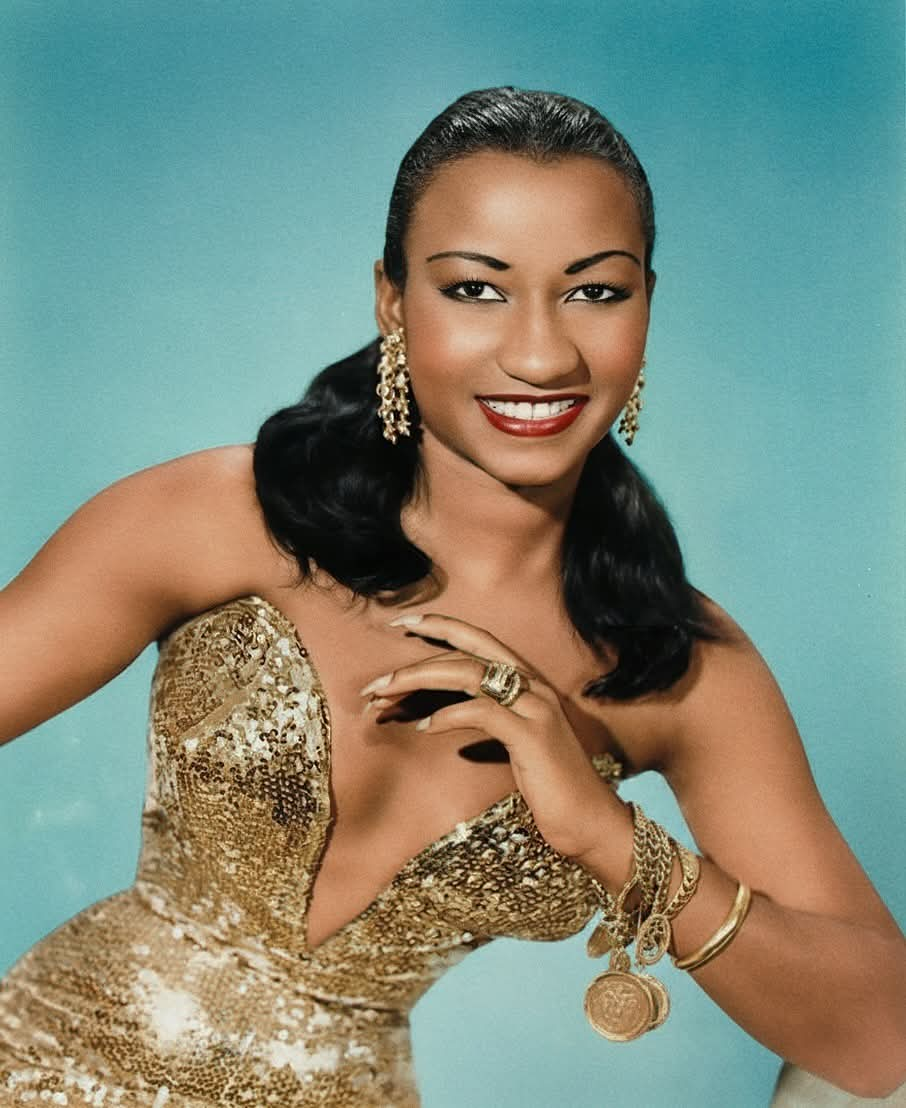
Celia Cruz (October 21, 1925 – July 16, 2003), born Celia Caridad Cruz Alfonso in Havana, Cuba, was the singer the world came to call the Queen of Salsa and, in Cuba, "La Guarachera de
| At a glance | |
|---|---|
| Type | PERSON — musician |
| Dates | – |
| Chicago connection | DIASPORA — The Caribbean — see the Chicago connection section |
| Known for | Celia Cruz (October 21, 1925 – July 16, 2003), born Celia Caridad Cruz Alfonso in Havana, Cuba, was the singer the |
| Verification | PROVISIONAL |
| CTL ID | CTL-ENC-000232 |
Overview
Celia Cruz (October 21, 1925 – July 16, 2003), born Celia Caridad Cruz Alfonso in Havana, Cuba, was the singer the world came to call the Queen of Salsa and, in Cuba, "La Guarachera de Cuba." The Smithsonian Institution's account of her life gives the spine of it: born in Havana in 1925, singing from her teens — All About Jazz places her in amateur contests at fourteen, studying music theory, piano, and voice at the National Music Conservatory — and attending a music academy in the late 1940s. In 1950 she joined La Sonora Matancera, the popular Cuban orchestra with which she would sing for fifteen years, a rare female member of a band in a male-dominated field; the Smithsonian's National Museum of American History calls her a musical chameleon, able to master many different genres of Afro-Caribbean song. With Sonora Matancera she recorded songs that became legendary, among them "Yerbero Moderno," "Burundanga," and "Caramelo," and by the end of the 1950s the group was the most popular in Cuba. It was in that band that she met trumpeter Pedro Knight, whom she married; the marriage lasted forty-two years, until her death.
In July 1960, following the political upheaval of the Cuban Revolution, Cruz and most of the orchestra's members left Cuba by way of a performance tour in Mexico and emigrated to the United States; she never returned to her homeland. In the United States her popularity helped bring salsa into the public eye, and she flourished, as the Smithsonian puts it, despite working in a genre with primarily male artists. Through the 1960s she recorded a series of albums with bandleader Tito Puente, and together they awakened Anglo and European interest in Latin music. In 1974 she joined the Fania label and recorded Celia y Johnny with Johnny Pacheco, including her signature "Quimbara." Her collaborators across the salsa era form the genre's honor roll: Pacheco, Willie Colón, Pete "El Conde" Rodríguez, Ray Barretto, the Sonora Ponceña, and the Fania All-Stars. She sang exclusively in Spanish throughout, and her stage cry — "¡Azúcar!," sugar, a word the Museum of American History reads as linking her art directly to Cuba's agricultural history and to the history of slavery on the island — became one of the most recognized signatures in popular music.
Life and career
The recorded legacy is numbered in the accounts her institutions give: a six-decade career, more than seventy records in All About Jazz's count and over eighty albums and twenty-three gold records in other tallies — the totals vary by source and are stated here as attributed — and a shelf of honors that includes three Grammy Awards and four Latin Grammy Awards in the Smithsonian's count (AllMusic's biography gives seven Grammy and Latin Grammy wins combined from nearly two dozen nominations; the discrepancy is in how the two families of awards are summed). She received a Smithsonian Lifetime Achievement Award and the President's National Medal of Arts, honorary doctorates from Yale University and the University of Miami, and a street renamed in her honor in Miami. Her trademark polka-dot dress and shoes entered the permanent collection of the Smithsonian, and in 2012 the National Museum of American History unveiled an object-based portrait of her by photographer Robert Weingarten, chosen after the public voted for Cruz from five historical figures represented in the museum's collections. On February 15, 2016, she received a posthumous Grammy Lifetime Achievement Award.
Cruz died on July 16, 2003, in Fort Lee, New Jersey, at seventy-seven, and was celebrated around the world, in the Museum's words, as the Queen of Latin Music and the Queen of Salsa. The honors have not stopped: she was portrayed on a United States postage stamp in the Latin Music Legends series, and in 2024 the United States Mint issued her quarter in the American Women Quarters Program, making her the first Afro-Caribbean woman honored on a United States quarter — her own estate's account notes the company she kept in that year's class, alongside Patsy Takemoto Mink, Mary Edwards Walker, Pauli Murray, and Zitkala-Ša. In the CultureTechLens record her Chicago appearances are part of the city's own salsa history: the build-ledger record documents performances including the Aragon Ballroom in the spring of 1995 and Fiesta Boricua-era appearances, dates on the city's North Side where generations of Chicago's Puerto Rican and Latino audiences heard, in person, the voice that had carried Afro-Cuban music from Havana's dance halls to the world. Cruz's graph place is therefore double: a global Black-diaspora artist in her own right, and a documented presence in Chicago's Latino music geography. This record is a staged proposal pending the founder's classification sitting.
Chicago connection
This entry stands in the encyclopedia's Diaspora tranche (territory: The Caribbean; Afro-Latino priority line) under the corridor rule: only documented connections are stated, and simultaneity is not causation. The source record documents the connection to the Chicago-centered corpus as follows. In the CultureTechLens record her Chicago appearances are part of the city's own salsa history: the build-ledger record documents performances including the Aragon Ballroom in the spring of 1995 and Fiesta Boricua-era appearances, dates on the city's North Side where generations of Chicago's Puerto Rican and Latino audiences heard, in person, the voice that had carried Afro-Cuban music from Havana's dance halls to the world. Cruz's graph place is therefore double: a global Black-diaspora artist in her own right, and a documented presence in Chicago's Latino music geography. [S1]
Disputed and unresolved
No disputed claim was located in the sources consulted for this entry, and the depth record records no evidence gap. Open items, if any, are listed in Editorial notes.
See also
Relationships
- performed_at — Aragon Ballroom (CTL-E-0468) — Restated from the CultureTechLens Knowledge Graph: Celia Cruz (CTL-E-0452) performed_at Aragon Ballroom (CTL-E-0468), verification Verified.
- related_to — Fiesta Boricua (CTL-E-0469) — Restated from the CultureTechLens Knowledge Graph: Celia Cruz (CTL-E-0452) related_to Fiesta Boricua (CTL-E-0469), verification Provisional.
- related_to — La Sonora Matancera (CTL-E-1668) — Restated from the CultureTechLens Knowledge Graph: Celia Cruz (CTL-E-0452) related_to La Sonora Matancera (CTL-E-1668), verification Verified.
Sources
- S1: Smithsonian Institution. "Celia Cruz." Accessed October 26, 2026. https://www.si.edu/spotlight/latin-music-legends-stamps/celia-cruz.
- S2: Smithsonian Institution. "National Museum of American History Reveals Celia Cruz Portrait." Accessed October 26, 2026. https://www.si.edu/newsdesk/releases/national-museum-american-history-reveals-celia-cruz-portrait.
- S3: AllMusic. "Celia Cruz — Biography." Accessed October 26, 2026. https://www.allmusic.com/artist/mn0000186312.
- S4: All About Jazz. "Celia Cruz — Biography." Accessed October 26, 2026. https://www.allaboutjazz.com/musicians/celia-cruz/.
- S5: CeliaCruz.com. "'Queen of Salsa' Has Her Own US Quarter." Accessed October 26, 2026. https://celiacruz.com/queen-of-salsa-has-her-own-us-quarter-celia-cruz-to-be-first-afro-caribbean-woman-on-the-coin/.
- S6: CultureTechLens Knowledge Graph (schema v0.3.1), entities.json and relationships.json — CTL's own graph register, consulted 2026-10-29 for crosswalk facts and restated relationships.
Cite this entry
- Permanent ID: CTL-ENC-000232 · Crosswalked graph record: CTL-ESS-0132 · Version: 0.1 · Date: 2026-10-29
- Chicago: CultureTechLens. "Celia Cruz." CultureTechLens Encyclopedia, version 0.1, October 29, 2026. CultureTechLens NFP. CTL-ENC-000232.
- APA: CultureTechLens. (2026). Celia Cruz (Version 0.1, Entry CTL-ENC-000232). CultureTechLens Encyclopedia. CultureTechLens NFP.
- MLA: CultureTechLens. "Celia Cruz." CultureTechLens Encyclopedia, version 0.1, CultureTechLens NFP, 29 Oct. 2026. Entry CTL-ENC-000232.
Further reading
- CultureTechLens Knowledge Graph record CTL-ESS-0132 (crosswalked; published graph register id CTL-E-0452).
Image credits
- Celia Cruz photograph: see Images block in the frontmatter for the full credit line, rights status, and rights document.
Citation
CultureTechLens. "Celia Cruz." CultureTechLens Encyclopedia, Vol. 1 — Black Chicago, version 0.1, 2026-10-29. CultureTechLens NFP. CTL-ENC-000232.
<!-- =======================