 CULTURETECHLENS
The Encyclopedia · CTL-ENC-000210
Buddy Guy
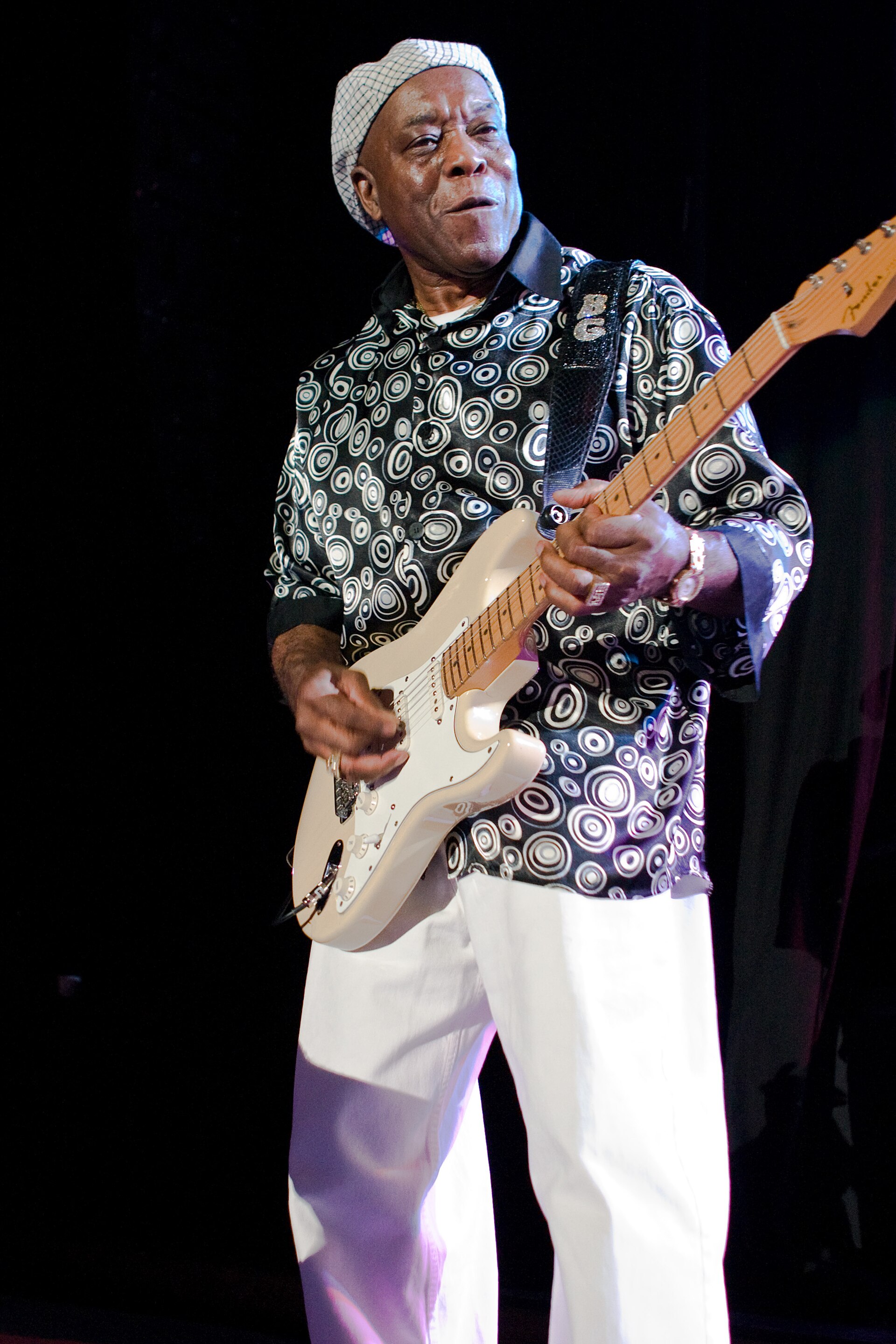
George "Buddy" Guy, born July 30, 1936, in Lettsworth, Louisiana, is the blues guitarist and singer who carried Chicago's electric West Side sound to the world and taught generations of rock guitarists how it was
| At a glance | |
|---|---|
| Type | PERSON — musician |
| Dates | – |
| Chicago connection | CORE — see the Chicago connection section |
| Known for | George "Buddy" Guy, born July 30, 1936, in Lettsworth, Louisiana, is the blues guitarist and singer who carried |
| Verification | VERIFIED |
| CTL ID | CTL-ENC-000210 |
Overview
George "Buddy" Guy, born July 30, 1936, in Lettsworth, Louisiana, is the blues guitarist and singer who carried Chicago's electric West Side sound to the world and taught generations of rock guitarists how it was done. The first of five children of sharecroppers Sam and Isabel Guy, he picked cotton as a child, built a two-string diddley bow, then made another guitar from a wire pulled off a screen door, and taught himself by trying to reproduce the John Lee Hooker records he heard on the radio. He was performing in Baton Rouge clubs while still a teenager.
In 1957 Guy moved to Chicago and fell under the influence of Muddy Waters, who became his mentor. In 1958 he won a contract with Artistic Records — the Cobra subsidiary — after beating West Side guitarists Magic Sam and Otis Rush in a head-cutting contest at the Blue Flame Club. Through the 1960s he worked at Chess Records mainly as a session guitarist, backing Waters, Howlin' Wolf, Little Walter, Sonny Boy Williamson and Koko Taylor, and began his long musical partnership with harmonica virtuoso Junior Wells; Chess, which thought his free, string-bending style too erratic, released only one album under his own name before he moved to Vanguard in 1967. He also recorded for Delmark under the pseudonym Friendly Chap. The irony of the Chess years is the record's center: the sideman American labels under-recorded was the guitarist young British musicians were studying. When the Beatles, the Rolling Stones and Led Zeppelin told interviewers their influences, they named Muddy Waters, Willie Dixon — and Buddy Guy.
Life and career
His influence list is documented on every reference page: Eric Clapton — who called him "the best guitar player alive" — Jimi Hendrix, Jimmy Page, Keith Richards, Stevie Ray Vaughan, Jeff Beck, Gary Clark Jr. and John Mayer. The revival came when Clapton asked Guy into the 24 Nights all-star guitar lineup at the Royal Albert Hall and Guy signed with Silvertone. Damn Right, I've Got the Blues (1991) opened a Grammy run that reached nine awards, including Living Proof (2010), Born to Play Guitar (2015), The Blues Is Alive and Well (2018) and Ain't Done with the Blues (2025), which won Best Traditional Blues Album at the 2026 Grammy Awards. The honors stack: Blues Hall of Fame (1985), Rock and Roll Hall of Fame (2005), the National Medal of Arts (2003), a Grammy Lifetime Achievement Award, and the Kennedy Center Honors (2012); Rolling Stone ranked him 27th on its 2023 list of the greatest guitarists of all time, and "Stone Crazy" 78th on its list of the greatest guitar songs. In Chicago he kept the music housed: the Checkerboard Lounge from 1972 to 1985, and Buddy Guy's Legends since 1989, where his January residencies became an institution. He told the story himself twice — Damn Right I've Got the Blues (1999), with Donald Wilcock, and the autobiography When I Left Home: My Story (2012).
The institutional honors at home matched the guitar world's. Guy collected twenty-three W.C. Handy Awards, the blues field's own honors, and was inducted into the Louisiana Music Hall of Fame in 2008 — the state he left in 1957 claiming the sharecropper's son it had lent Chicago. His brother Phil Guy was a blues musician in his own right. And in 2003, at sixty-seven, he released Blues Singer, his first acoustic blues album, stripping the West Side electricity back to the front-porch instrument he had built from screen-door wire — the full circle of a career that began with a homemade guitar and ended up redefining what the electric one could say.
Chicago connection
George "Buddy" Guy, born July 30, 1936, in Lettsworth, Louisiana, is the blues guitarist and singer who carried Chicago's electric West Side sound to the world and taught generations of rock guitarists how it was done. In 1957 Guy moved to Chicago and fell under the influence of Muddy Waters, who became his mentor. In Chicago he kept the music housed: the Checkerboard Lounge from 1972 to 1985, and Buddy Guy's Legends since 1989, where his January residencies became an institution. Handy Awards, the blues field's own honors, and was inducted into the Louisiana Music Hall of Fame in 2008 — the state he left in 1957 claiming the sharecropper's son it had lent Chicago. [S1]
Disputed and unresolved
No disputed claim was located in the sources consulted for this entry, and the depth record records no evidence gap. Open items, if any, are listed in Editorial notes.
See also
Relationships
- performed_at — Checkerboard Lounge (CTL-E-0131) — Restated from the CultureTechLens Knowledge Graph: Buddy Guy (CTL-E-0005) performed_at Checkerboard Lounge (CTL-E-0131), verification Verified.
- recorded_for — Chess Records (CTL-E-0165) — Restated from the CultureTechLens Knowledge Graph: Buddy Guy (CTL-E-0005) recorded_for Chess Records (CTL-E-0165), verification Verified.
- recorded_for — Cobra Records (CTL-E-1198) — Restated from the CultureTechLens Knowledge Graph: Buddy Guy (CTL-E-0005) recorded_for Cobra Records (CTL-E-1198), verification Verified.
- performed_at — House of Blues Chicago (CTL-E-0144) — Restated from the CultureTechLens Knowledge Graph: Buddy Guy (CTL-E-0005) performed_at House of Blues Chicago (CTL-E-0144), verification Verified.
- affiliated_with — AFM segregated Black local (Chicago) (CTL-E-0587) — Restated from the CultureTechLens Knowledge Graph: Buddy Guy (CTL-E-0005) affiliated_with AFM segregated Black local (Chicago) (CTL-E-0587), verification Verified.
- related_to — American Folk Blues Festival (CTL-E-0475) — Restated from the CultureTechLens Knowledge Graph: Buddy Guy (CTL-E-0005) related_to American Folk Blues Festival (CTL-E-0475), verification Verified.
Sources
- S1: Encyclopaedia Britannica. "Buddy Guy." Accessed October 26, 2026. https://www.britannica.com/biography/Buddy-Guy.
- S2: Wikipedia. "Buddy Guy." Accessed October 26, 2026. https://en.wikipedia.org/wiki/Buddy_Guy.
- S3: WBSS Media. "Buddy Guy." Accessed October 26, 2026. https://wbssmedia.com/artists/detail/1723.
- S4: Discogs. "Buddy Guy." Accessed October 26, 2026. https://www.discogs.com/artist/259799-Buddy-Guy.
- S5: CultureTechLens Knowledge Graph (schema v0.3.1), entities.json and relationships.json — CTL's own graph register, consulted 2026-10-29 for crosswalk facts and restated relationships.
Cite this entry
- Permanent ID: CTL-ENC-000210 · Crosswalked graph record: CTL-P-0035 · Version: 0.1 · Date: 2026-10-29
- Chicago: CultureTechLens. "Buddy Guy." CultureTechLens Encyclopedia, version 0.1, October 29, 2026. CultureTechLens NFP. CTL-ENC-000210.
- APA: CultureTechLens. (2026). Buddy Guy (Version 0.1, Entry CTL-ENC-000210). CultureTechLens Encyclopedia. CultureTechLens NFP.
- MLA: CultureTechLens. "Buddy Guy." CultureTechLens Encyclopedia, version 0.1, CultureTechLens NFP, 29 Oct. 2026. Entry CTL-ENC-000210.
Further reading
- CultureTechLens Knowledge Graph record CTL-P-0035 (crosswalked; published graph register id CTL-E-0005).
Image credits
- Buddy Guy photograph: see Images block in the frontmatter for the full credit line, rights status, and rights document.
Citation
CultureTechLens. "Buddy Guy." CultureTechLens Encyclopedia, Vol. 1 — Black Chicago, version 0.1, 2026-10-29. CultureTechLens NFP. CTL-ENC-000210.
<!-- =======================