 CULTURETECHLENS
The Encyclopedia · CTL-ENC-000023
Bobby Rush
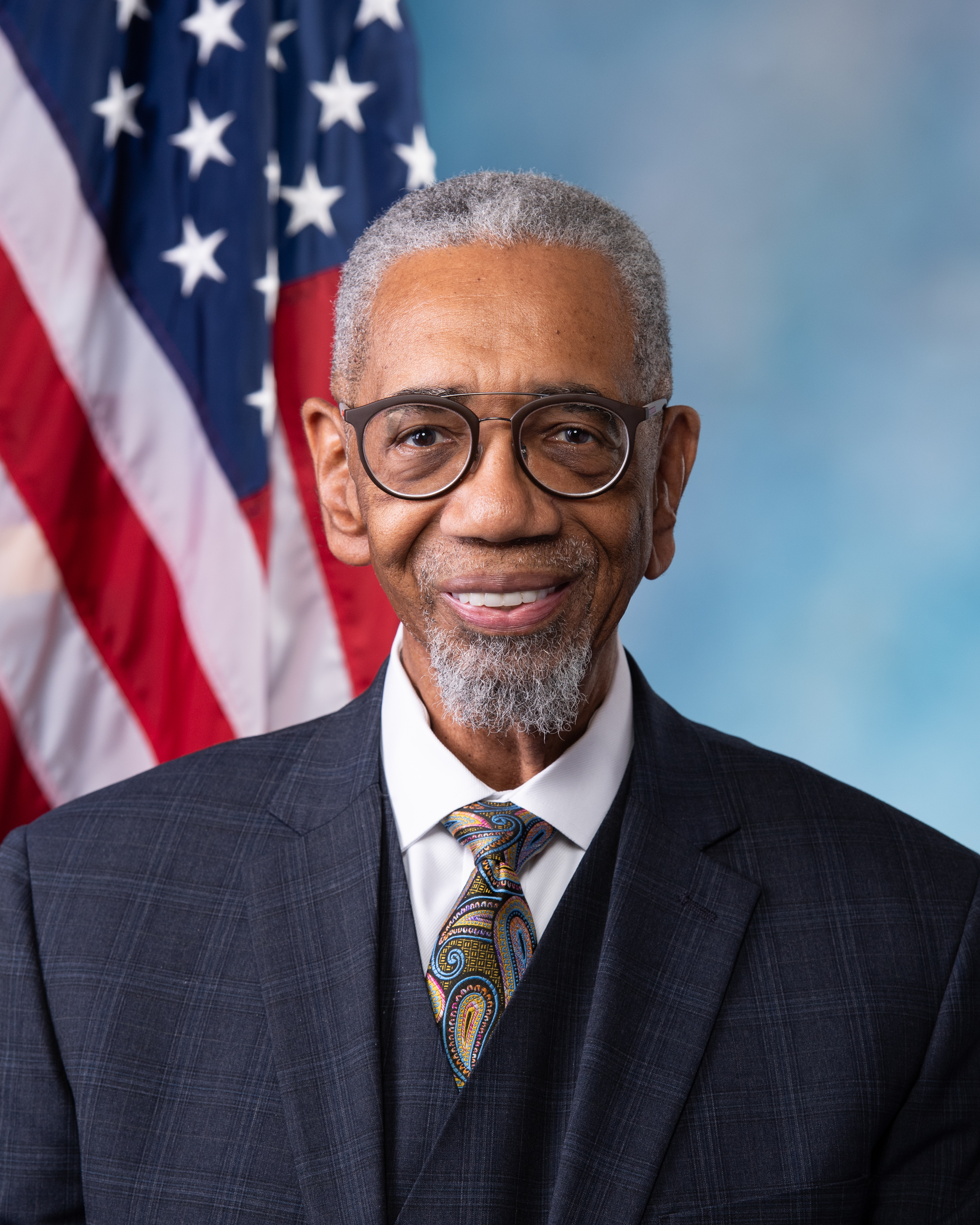
Bobby Lee Rush (born November 23, 1946, in Albany, Dougherty County, Georgia) is the former United States representative for Illinois's 1st congressional district — a Chicago Democrat who served fifteen terms in the U.S.
| At a glance | |
|---|---|
| Type | PERSON — politician |
| Dates | – |
| Chicago connection | CORE — see the Chicago connection section |
| Known for | Bobby Lee Rush (born November 23, 1946, in Albany, Dougherty County, Georgia) is the former United States representative for Illinois's 1st congressional |
| Verification | VERIFIED |
| CTL ID | CTL-ENC-000023 |
Overview
Bobby Lee Rush (born November 23, 1946, in Albany, Dougherty County, Georgia) is the former United States representative for Illinois's 1st congressional district — a Chicago Democrat who served fifteen terms in the U.S. House of Representatives, from January 3, 1993, to January 3, 2023, in a public career that began in the civil-rights movement, passed through the Illinois chapter of the Black Panther Party he co-founded, and ran through a decade as a Chicago alderman allied with Mayor Harold Washington. His family moved from Georgia to Chicago in 1953, when he was seven years old, and he was raised in Chicago; the South Side — Englewood among its neighborhoods — later formed both his congressional district and the ground of his ministry. The House History office records that he attended Marshall High School, and the reference literature notes that his mother worked as a Republican precinct organizer, an early household introduction to ward politics. This record is the congressman's, and his alone: he is not Bobby Rush the bluesman (Emmett Ellis Jr., born 1933), the singer of the same name, whose proposed CultureTechLens record is staged separately as CTL-ESS-0157.
At seventeen, in 1963, Rush enlisted in the U.S. Army and served honorably until 1968. He joined the Student Nonviolent Coordinating Committee in 1966 and, after leaving the Army, co-founded the Illinois chapter of the Black Panther Party — dated 1968 by the Congressional Black Caucus profile and most institutional accounts, though the Contemporary Black Biography entry gives 1967 for the Chicago chapter's founding; this record carries the variance rather than choosing silently. With Fred Hampton and the Chicago chapter he helped build the Party's survival programs: he operated the Free Breakfast for Children program and coordinated the chapter's Free Medical Clinic, which developed the nation's first mass sickle-cell anemia testing program. Hampton was killed in the police raid of December 4, 1969; Rush recalled in his 2022 retirement statement that officers came for him the next day — "By all rights, I should have been murdered on December 5, 1969, the day after the police assassinated [Black Panther leader] Fred Hampton. They came for me the next day, shot down my door, but — by the grace of God — my family and I were not home." The Contemporary Black Biography entry records that he directed the Panther-funded low-income medical clinic from 1970 to 1973 — the program work continuing after Hampton's death — that he was imprisoned for six months in 1972 on a weapons charge, and that he left the Panthers in 1974.
Life and career
Rush returned to school and took his bachelor's degree at Roosevelt University in Chicago — the House History office and the Biographical Directory of the U.S. Congress give 1974, while the Congressional Black Caucus profile gives 1973, with honors; the sources conflict, and this record states both rather than blending them. He worked as an insurance agent. His later education joined politics and theology: a master's degree in political science from the University of Illinois at Chicago in 1994 and a master's degree in theological studies from McCormick Theological Seminary in 1998. He is an ordained minister, and in 2001 he founded the Beloved Community Church of God in Christ on Chicago's South Side, the church whose pastor the institutional accounts record him to be.
His first run for the Second Ward alderman seat failed — The HistoryMakers dates the unsuccessful bid to 1975, the Contemporary Black Biography entry to 1974; the record carries both dates. In 1983, the year Harold Washington was elected Chicago's first Black mayor, Rush won the Second Ward seat on the South Side. Washington's own mayoral campaign records, preserved in the Harold Washington Archives at the Chicago Public Library, contain the campaign's endorsement file for Rush's ward candidacy, and Rush served as a Washington-allied alderman through the Council Wars years — the House biography dates his council service 1983–1993, while The HistoryMakers describes him as serving until his 1992 election to the House, the difference being the January 1993 handover, when his council service ended as his congressional term began. On the council, in the Congressional Black Caucus profile's summary, he helped pass significant environmental protection, gun control and neighborhood development legislation, and in 1990 he became deputy chairman of the Illinois Democratic Party.
Rush was elected to Congress on November 3, 1992, and served from January 3, 1993, to January 3, 2023 — the 103rd through the 117th Congresses. His committee home was the Committee on Energy and Commerce (in its earlier name, the House Committee on Commerce); The HistoryMakers records his service on its subcommittees on telecommunications, trade and consumer protection, and energy and power, and the Congressional Black Caucus Foundation's Avoice library records that he chaired the Subcommittee on Energy, sat on the Subcommittee on Consumer Protection, and also served on the Committee on Agriculture. Avoice counts among the legislation he introduced that became law the Consumer Product Safety Improvement Act of 2008 (P.L. 110-314), and records his Energy Subcommittee priority of increasing opportunities for minorities within the energy industry, carried in his 21st Century Energy Workforce Development Jobs Initiative Act (H.R. 338). The 1999 killing of his son by gun violence, documented in the Contemporary Black Biography entry, made the former Panther a leading congressional spokesman for gun control.
Rush ran for mayor of Chicago in 1999 and lost — the House biography records the unsuccessful candidacy against the Daley era. His most famous race followed in 2000, when State Senator Barack Obama challenged him in the Democratic primary for the 1st district: Rush won with about 61 percent of the vote to Obama's about 30 percent, the only election defeat of Obama's career, a distinction the retirement coverage of 2022 still led with. In 2004 the two men's paths crossed in scale rather than in office: Obama won the U.S. Senate election in Illinois that year, while Rush was re-elected to the House — by then a senior figure whose district, principally on Chicago's South Side, returned him in every cycle from 1992 onward.
In the first days of January 2022, Rush announced that he would not seek a sixteenth term. "Let me make it clear that I am not retiring, I am returning," he said. "I'm returning home, returning to my church, returning to my family and grandchildren — but my calling to a life of service is stronger than ever." He told National Public Radio that a conversation with his nineteen-year-old grandson had weighed in the decision: "I don't want my grandchildren to know me from a history book, from a media outlet. I want them to know me personally, the sound of my voice." He left the House on January 3, 2023, after thirty years. In the CultureTechLens graph, Rush is Chicago's longest modern bridge between movement and institution — Panther survival programs, Washington-era council politics, and three decades on Energy and Commerce carried in one biography.
Chicago connection
Bobby Lee Rush (born November 23, 1946, in Albany, Dougherty County, Georgia) is the former United States representative for Illinois's 1st congressional district — a Chicago Democrat who served fifteen terms in the U.S. House of Representatives, from January 3, 1993, to January 3, 2023, in a public career that began in the civil-rights movement, passed through the Illinois chapter of the Black Panther Party he co-founded, and ran through a decade as a Chicago alderman allied with Mayor Harold Washington. His family moved from Georgia to Chicago in 1953, when he was seven years old, and he was raised in Chicago; the South Side — Englewood among its neighborhoods — later formed both his congressional district and the ground of his ministry. He joined the Student Nonviolent Coordinating Committee in 1966 and, after leaving the Army, co-founded the Illinois chapter of the Black Panther Party — dated 1968 by the Congressional Black Caucus profile and most institutional accounts, though the Contemporary Black Biography entry gives 1967 for the Chicago chapter's founding; this record carries the variance rather than choosing silently. With Fred Hampton and the Chicago chapter he helped build the Party's survival programs: he operated the Free Breakfast for Children program and coordinated the chapter's Free Medical Clinic, which developed the nation's first mass sickle-cell anemia testing program. [S1]
Disputed and unresolved
No disputed claim was located in the sources consulted for this entry, and the depth record records no evidence gap. Open items, if any, are listed in Editorial notes.
See also
Relationships
- related_to — Fred Hampton (CTL-E-0082) — Restated from the CultureTechLens Knowledge Graph: Bobby Rush (CTL-E-0080) related_to Fred Hampton (CTL-E-0082), verification Verified. Rush founded the Illinois Black Panther Party chapter in which Hampton served as deputy chairman.
- affiliated_with — Illinois Chapter of the Black Panther Party (CTL-E-0291) — Restated from the CultureTechLens Knowledge Graph: Bobby Rush (CTL-E-0080) affiliated_with Illinois Chapter of the Black Panther Party (CTL-E-0291), verification Verified. Digital Chicago History's exhibit and contemporary FBI records identify Bobby Rush as co-founder and deputy minister of defense of the Illinois Chapter of the Black Panther Party.
- related_to — Patrick Woodtor (CTL-E-0378) — Restated from the CultureTechLens Knowledge Graph: Bobby Rush (CTL-E-0080) related_to Patrick Woodtor (CTL-E-0378), verification Verified. Rep. Bobby Rush honored Patrick and Dee Woodtor in the Congressional Record (August 23, 2022) for Africa International House and the festival.
Sources
- S1: U.S. House of Representatives, History, Art & Archives. "RUSH, Bobby L." Accessed October 26, 2026. https://history.house.gov/People/Listing/R/RUSH,-Bobby-L--(R000515)/.
- S2: Biographical Directory of the U.S. Congress. "RUSH, Bobby L. (1946– )." Accessed October 26, 2026. https://bioguideretro.congress.gov/Home/MemberDetails?memIndex=r000515.
- S3: The HistoryMakers. "The Honorable Bobby Rush." Accessed October 26, 2026. https://www.thehistorymakers.org/biography/honorable-bobby-rush.
- S4: "Rush, Bobby 1946–." In Contemporary Black Biography. Encyclopedia.com. Accessed October 26, 2026. https://www.encyclopedia.com/education/news-wires-white-papers-and-books/rush-bobby-1946.
- S5: Congressional Black Caucus Foundation. "Bobby L. Rush." Avoice Digital Library. Accessed October 26, 2026. https://avoice.cbcfinc.org/member/bobby-l-rush/.
- S6: Congressional Black Caucus. "Hon. Bobby L. Rush." Profile as republished by NorthStar News. Accessed October 26, 2026. http://www.northstarnews.com/nsextras/cbc/article/84/.
- S7: McCormick Theological Seminary. "Pastoral Calls to Political Arenas." January 29, 2024. Accessed October 26, 2026. https://www.mccormick.edu/news/pastoral-calls-to-political-arenas.
- S8: Chicago Public Library. "Harold Washington Archives & Collections: Mayoral Campaign Records." Finding aid. Accessed October 26, 2026. https://www.chipublib.org/fa-harold-washington-archives-collections-mayoral-campaign-records/.
- S9: Alana Wise. "Longtime Chicago Congressman Bobby Rush Is the Latest Democrat to Leave Washington." NPR, January 4, 2022. Accessed October 26, 2026. https://www.publicradioeast.org/us/2022-01-04/longtime-chicago-congressman-bobby-rush-is-the-latest-democrat-to-leave-washington.
- S10: A Martínez. "After 30 Years in the U.S. House, Illinois Rep. Bobby Rush Is Leaving." NPR, Morning Edition, January 7, 2022. Accessed October 26, 2026. https://www.wkyufm.org/2022-01-07/after-30-years-in-the-u-s-house-illinois-rep-bobby-rush-is-leaving.
- S11: The Cook Political Report. "House District Analysis: Illinois–Iowa." Accessed October 26, 2026. https://www.cookpolitical.com/analysis/house/house-overview/house-district-analysis-illinois-iowa.
- S12: Rosaland Tyler. "Could Abrams' Foiled Campaign Mirror Obama's Path?" The New Journal and Guide. Accessed October 26, 2026. https://thenewjournalandguide.com/could-abrams-foiled-campaign-mirror-obamas-path/.
- S13: CultureTechLens Knowledge Graph (schema v0.3.1), entities.json and relationships.json — CTL's own graph register, consulted 2026-10-28 for crosswalk facts and restated relationships.
Cite this entry
- Permanent ID: CTL-ENC-000023 · Crosswalked graph record: CTL-P-0068 · Version: 0.1 · Date: 2026-10-28
- Chicago: CultureTechLens. "Bobby Rush." CultureTechLens Encyclopedia, version 0.1, October 28, 2026. CultureTechLens NFP. CTL-ENC-000023.
- APA: CultureTechLens. (2026). Bobby Rush (Version 0.1, Entry CTL-ENC-000023). CultureTechLens Encyclopedia. CultureTechLens NFP.
- MLA: CultureTechLens. "Bobby Rush." CultureTechLens Encyclopedia, version 0.1, CultureTechLens NFP, 28 Oct. 2026. Entry CTL-ENC-000023.
Further reading
- CultureTechLens Knowledge Graph record CTL-P-0068 (crosswalked; published graph register id CTL-E-0080).
Image credits
- Bobby Rush photograph: see Images block in the frontmatter for the full credit line, rights status, and rights document.
Citation
CultureTechLens. "Bobby Rush." CultureTechLens Encyclopedia, Vol. 1 — Black Chicago, version 0.1, 2026-10-28. CultureTechLens NFP. CTL-ENC-000023.
<!-- =======================