 CULTURETECHLENS
The Encyclopedia · CTL-ENC-000236
Bob Marley
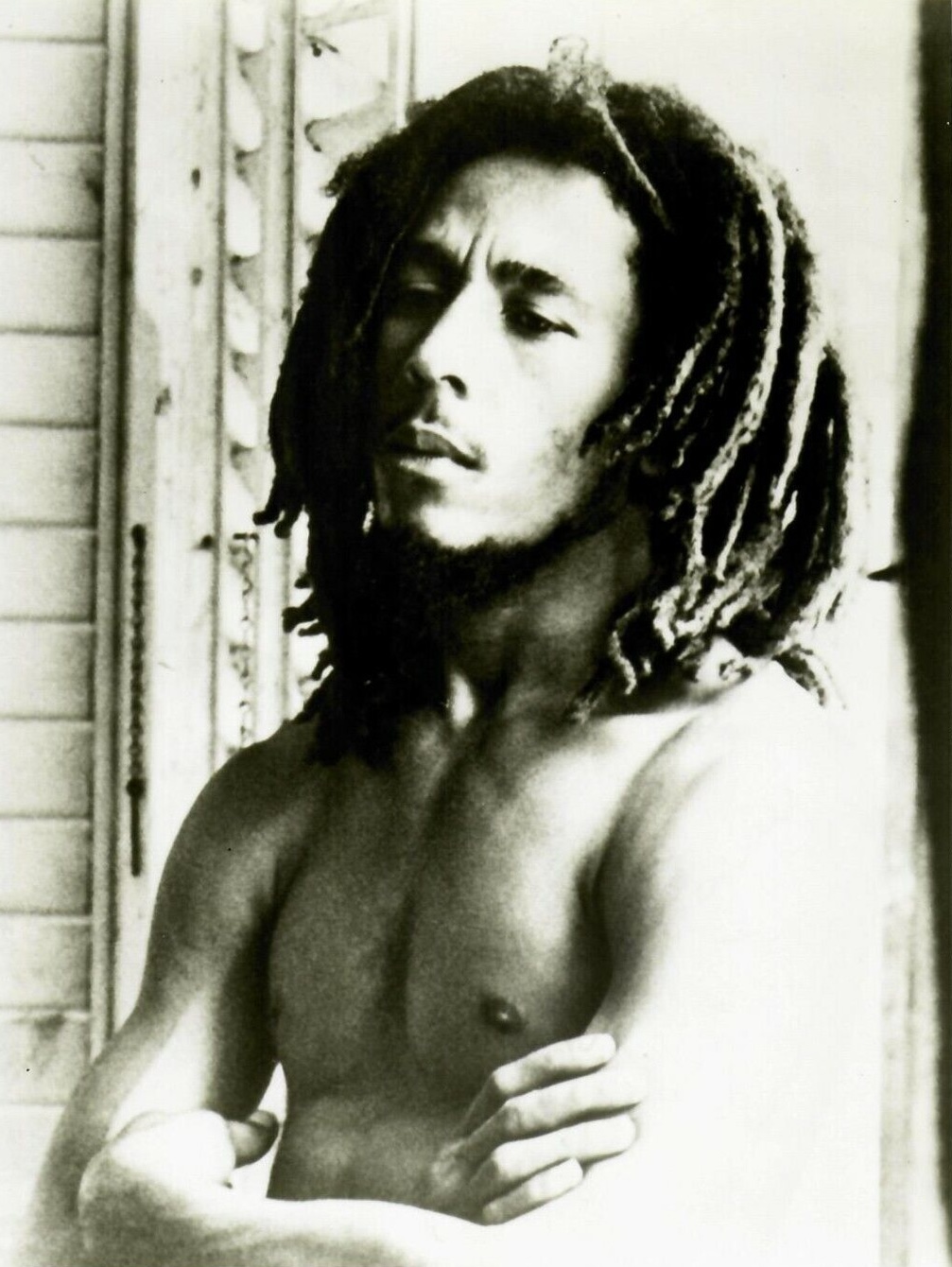
Bob Marley (Robert Nesta Marley, February 6, 1945 – May 11, 1981) was the Jamaican singer, songwriter, and guitarist who carried reggae — and with it the Rastafari movement — to a global audience, becoming
| At a glance | |
|---|---|
| Type | PERSON — musician |
| Dates | – |
| Chicago connection | DIASPORA — The Caribbean — see the Chicago connection section |
| Known for | Bob Marley (Robert Nesta Marley, February 6, 1945 – May 11, 1981) was the Jamaican singer, songwriter, and guitarist |
| Verification | PROVISIONAL |
| CTL ID | CTL-ENC-000236 |
Overview
Bob Marley (Robert Nesta Marley, February 6, 1945 – May 11, 1981) was the Jamaican singer, songwriter, and guitarist who carried reggae — and with it the Rastafari movement — to a global audience, becoming one of the best-selling and most recognizable musicians of the twentieth century. Born in Nine Mile, Jamaica, to a white English father and a Black Jamaican mother, he moved to Kingston's Trench Town as a teenager. In 1963 he formed the group that became the Wailers with Peter Tosh, Bunny Wailer, Junior Braithwaite, and Beverley Kelso; their 1964 single "Simmer Down" was an early ska hit in Jamaica. The group recorded prolifically through the ska and rocksteady eras — for Coxsone Dodd's Studio One, then for producer Lee "Scratch" Perry, whose sessions with the Upsetters produced songs Marley would re-record for decades.
The Wailers' international break came with their signing to Island Records: Catch a Fire and Burnin' (both 1973) reintroduced the group to the world, Burnin' containing "Get Up, Stand Up" and "I Shot the Sheriff," which Eric Clapton took to number one in the United States in 1974. After Tosh and Bunny Wailer left in 1974, the group continued as Bob Marley and the Wailers; Natty Dread (1974) and the live album Live! (1975), with "No Woman, No Cry," established the solo-era band. In December 1976, gunmen attacked Marley's home two days before a free concert; wounded, he performed anyway, then left Jamaica for London, where he recorded Exodus (1977) — later named the best album of the twentieth century by Time — and Kaya (1978). Returning to Jamaica, he played the One Love Peace Concert in April 1978, joining the hands of rival political leaders Michael Manley and Edward Seaga onstage; the United Nations awarded him its Peace Medal of the Third World that year.
Life and career
For the CultureTechLens graph, Marley's Chicago line is documented in the build ledger: he played Chicago's Uptown Theatre on May 27, 1978, on the Kaya tour — the city's great reggae room date of the era, in the same years the Exodus band was converting American audiences. His American breakthrough in those years ran through Rastaman Vibration (1976), which carried him into the Billboard soul charts' Top 50 with Clapton's cover still ringing. His final albums, Survival (1979) and Uprising (1980), deepened the Pan-African and spiritual themes of his work; a 1980 tour brought the famous Stanley Theatre shows in Pittsburgh, among his last performances. Diagnosed with the melanoma that would kill him, he died in Miami on May 11, 1981, at thirty-six, and was given a state funeral in Jamaica. The posthumous compilation Legend (1984) became the best-selling reggae album of all time; lifetime sales are put at more than 75 million records. Jamaica awarded him its Order of Merit, the nation's third-highest honor, in February 1981. Marley was inducted into the Rock and Roll Hall of Fame in 1994; in December 1999 Time named Exodus its Album of the Century and the BBC designated "One Love" Song of the Millennium; he received a Grammy Lifetime Achievement Award in 2001 and a star on the Hollywood Walk of Fame the same year. Legend, by the estate's accounting, has sold more than 250,000 copies a year in the SoundScan era alone, four decades after his death. In this graph he is the anchor node of reggae's Chicago reception — the diaspora circuit that brought Kingston's music to the Uptown — and the father of a performing family (Ziggy, Stephen, Damian, and others) whose members appear across the catalog. This record is a staged proposal pending the founder's classification sitting.
Chicago connection
This entry stands in the encyclopedia's Diaspora tranche (territory: The Caribbean) under the corridor rule: only documented connections are stated, and simultaneity is not causation. The source record documents the connection to the Chicago-centered corpus as follows. For the CultureTechLens graph, Marley's Chicago line is documented in the build ledger: he played Chicago's Uptown Theatre on May 27, 1978, on the Kaya tour — the city's great reggae room date of the era, in the same years the Exodus band was converting American audiences. In this graph he is the anchor node of reggae's Chicago reception — the diaspora circuit that brought Kingston's music to the Uptown — and the father of a performing family (Ziggy, Stephen, Damian, and others) whose members appear across the catalog. [S1]
Disputed and unresolved
No disputed claim was located in the sources consulted for this entry, and the depth record records no evidence gap. Open items, if any, are listed in Editorial notes.
See also
Relationships
Relationships: none recorded yet — edges to follow. This entry's graph connections are being built; it publishes now on its sources.
Sources
- S1: Encyclopaedia Britannica. "Bob Marley." Accessed October 26, 2026. https://www.britannica.com/biography/Bob-Marley.
- S2: DancehallMag. "Bob Marley." Accessed October 26, 2026. https://www.dancehallmag.com/artist/bob-marley.
- S3: Ohio State University African American and African Studies Community Extension Center. "Bob Marley." Accessed October 26, 2026. https://aaascec.osu.edu/people/bob-marley.
- S4: BobMarley.com. "History — Bob Marley." Accessed October 26, 2026. https://www.bobmarley.com/history/.
Cite this entry
- Permanent ID: CTL-ENC-000236 · Crosswalked graph record: CTL-ESS-0103 · Version: 0.1 · Date: 2026-10-29
- Chicago: CultureTechLens. "Bob Marley." CultureTechLens Encyclopedia, version 0.1, October 29, 2026. CultureTechLens NFP. CTL-ENC-000236.
- APA: CultureTechLens. (2026). Bob Marley (Version 0.1, Entry CTL-ENC-000236). CultureTechLens Encyclopedia. CultureTechLens NFP.
- MLA: CultureTechLens. "Bob Marley." CultureTechLens Encyclopedia, version 0.1, CultureTechLens NFP, 29 Oct. 2026. Entry CTL-ENC-000236.
Further reading
- CultureTechLens Knowledge Graph record CTL-ESS-0103 (crosswalked; published graph register id CTL-E-0413).
Image credits
- Bob Marley photograph: see Images block in the frontmatter for the full credit line, rights status, and rights document.
Citation
CultureTechLens. "Bob Marley." CultureTechLens Encyclopedia, Vol. 1 — Black Chicago, version 0.1, 2026-10-29. CultureTechLens NFP. CTL-ENC-000236.
<!-- =======================