 CULTURETECHLENS
The Encyclopedia · CTL-ENC-000054
Bishop Louis Henry Ford
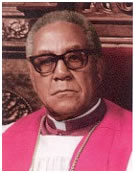
Louis Henry Ford (May 23, 1914 – March 31, 1995) was a Chicago pastor who rose from a three-member storefront congregation to become the fourth leader of the Church of God in Christ and its
| At a glance | |
|---|---|
| Type | PERSON — clergy |
| Dates | – |
| Chicago connection | CORE — see the Chicago connection section |
| Known for | Louis Henry Ford (May 23, 1914 – March 31, 1995) was a Chicago pastor who rose from a three-member storefront congregation to |
| Verification | PROVISIONAL |
| CTL ID | CTL-ENC-000054 |
Overview
Louis Henry Ford (May 23, 1914 – March 31, 1995) was a Chicago pastor who rose from a three-member storefront congregation to become the fourth leader of the Church of God in Christ and its second elected presiding bishop — and who, along the way, preached the funeral of Emmett Till, saved Chicago's oldest house, and put a Chicago congregation's pastor into the counsels of presidents. He was born in Clarksdale, Mississippi, orphaned young and raised in poverty, and educated at Saints Academy and College in Lexington, Mississippi, where the school's president, Dr. Arenia Mallory, mentored him. Raised in COGIC, he met the denomination's founder, Bishop Charles Harrison Mason, as a child; Mason became his inspiration and, in time, his personal mentor in the gospel. Ford accepted his call to the ministry in the late 1920s and was ordained in Chicago in 1933, having arrived in the city at nineteen and begun preaching on street corners.
In 1934 Ford established the St. Paul Church of God in Christ in Chicago with three members and married Margaret Little, a Chicagoan, that December; their two children, Charles Mason Ford and Janet Ford Hill, both became ministers. He pastored St. Paul for more than sixty years, until his death, and served as presiding prelate of the Historic Illinois First Jurisdiction. One Chicago preservation history credits his leadership with a second, unlikely legacy: under Ford, the congregation took responsibility for the Clarke House — Chicago's oldest house — which was designated a Chicago Landmark, among the first two buildings so named, and added to the National Register of Historic Places. The same account lists the through-lines of his Chicago ministry: delivering the sermon at Emmett Till's funeral in 1955, becoming one of the first Black preachers broadcast on Chicago radio, promoting the early days of gospel music, and advocating for jobs, education, and housing for the city's less fortunate.
Life and career
Ford completed the prescribed course of study at Saints College in Lexington, graduating in 1933 and taking ministerial orders — the formation that would sustain a pulpit career of more than six decades — and the Clarke House campaign showed his congregational organizing in another register: through the preservation effort, championed by the Colonial Dames' Illinois society, his congregation purchased the landmark house at public auction for $32,600 and restored it, the campaign through which the city's oldest house survived.
The Till funeral deserves its own sentence in any account of Ford: in September 1955, at the Roberts Temple Church of God in Christ, the young pastor's eulogy for the murdered fourteen-year-old — whose open-casket funeral drew thousands and helped ignite the modern civil rights movement — carried his name and voice across the denomination and the country. Within COGIC he rose steadily: first assistant to the presiding bishop from 1976, and, after Bishop J. O. Patterson Sr.'s death, elected presiding bishop on April 5, 1990, succeeding a line that ran from Mason himself. As presiding bishop he oversaw a church of more than four million members worldwide, remodeled Mason Temple in Memphis, upgraded the Saints Academy campus, and set building projects in motion. He had a close relationship with President Bill Clinton, who visited the church's Annual Holy Convocation in 1993 at Ford's invitation and received him at the White House. Chicago named October 25, 1990, "Louis Henry Ford Day," and Ebony listed him consistently among the 100 most influential Black Americans. He died on March 31, 1995, at eighty, still pastor of the congregation he had founded sixty-one years earlier with three members. In the CultureTechLens graph Ford is the Chicago terminus of the COGIC line: Mason's mentee carrying the founder's denomination into the city where this batch's church history converges. This record is a staged proposal pending the founder's classification sitting.
Chicago connection
Louis Henry Ford (May 23, 1914 – March 31, 1995) was a Chicago pastor who rose from a three-member storefront congregation to become the fourth leader of the Church of God in Christ and its second elected presiding bishop — and who, along the way, preached the funeral of Emmett Till, saved Chicago's oldest house, and put a Chicago congregation's pastor into the counsels of presidents. Ford accepted his call to the ministry in the late 1920s and was ordained in Chicago in 1933, having arrived in the city at nineteen and begun preaching on street corners. Paul Church of God in Christ in Chicago with three members and married Margaret Little, a Chicagoan, that December; their two children, Charles Mason Ford and Janet Ford Hill, both became ministers. One Chicago preservation history credits his leadership with a second, unlikely legacy: under Ford, the congregation took responsibility for the Clarke House — Chicago's oldest house — which was designated a Chicago Landmark, among the first two buildings so named, and added to the National Register of Historic Places. The same account lists the through-lines of his Chicago ministry: delivering the sermon at Emmett Till's funeral in 1955, becoming one of the first Black preachers broadcast on Chicago radio, promoting the early days of gospel music, and advocating for jobs, education, and housing for the city's less fortunate. [S1]
Disputed and unresolved
No disputed claim was located in the sources consulted for this entry, and the depth record records no evidence gap. Open items, if any, are listed in Editorial notes.
See also
Relationships
- related_to — Mamie Till-Mobley (CTL-E-0085) — Restated from the CultureTechLens Knowledge Graph: Bishop Louis Henry Ford (CTL-E-0098) related_to Mamie Till-Mobley (CTL-E-0085), verification Verified. Bishop Ford gave the eulogy at Emmett Till's funeral at Roberts Temple in 1955.
Sources
- S1: Legacy of Faith COGIC. "Presiding Bishop Louis Henry Ford." Accessed October 26, 2026. https://www.prayers1.com/XX/Unknown/1567578913534137/Legacy-of-Faith-COGIC.
- S2: Powerhouse COGIC. "Bishop Louis Henry Ford." Accessed October 26, 2026. https://www.powerhousecogic.com/history/ford.html.
- S3: Illinois Society, National Society of the Colonial Dames. "Bishop Ford Saved Clarke House." Accessed October 26, 2026. https://embed-rech-01.dialog.cm/nscda/docs/dames_discovery_fall_2020/s/11372925.
- S4: Wikipedia. "Louis Henry Ford." Accessed October 26, 2026. https://en.wikipedia.org/wiki/Louis_Henry_Ford.
- S5: Prabook. "Louis Henry Ford." Accessed October 26, 2026. https://prabook.com/web/louis_henry.ford/1682114.
- S6: CultureTechLens Knowledge Graph (schema v0.3.1), entities.json and relationships.json — CTL's own graph register, consulted 2026-10-28 for crosswalk facts and restated relationships.
Cite this entry
- Permanent ID: CTL-ENC-000054 · Crosswalked graph record: CTL-ESS-0097 · Version: 0.1 · Date: 2026-10-28
- Chicago: CultureTechLens. "Bishop Louis Henry Ford." CultureTechLens Encyclopedia, version 0.1, October 28, 2026. CultureTechLens NFP. CTL-ENC-000054.
- APA: CultureTechLens. (2026). Bishop Louis Henry Ford (Version 0.1, Entry CTL-ENC-000054). CultureTechLens Encyclopedia. CultureTechLens NFP.
- MLA: CultureTechLens. "Bishop Louis Henry Ford." CultureTechLens Encyclopedia, version 0.1, CultureTechLens NFP, 28 Oct. 2026. Entry CTL-ENC-000054.
Further reading
- CultureTechLens Knowledge Graph record CTL-ESS-0097 (crosswalked; published graph register id CTL-E-0098).
Image credits
- Bishop Louis Henry Ford photograph: see Images block in the frontmatter for the full credit line, rights status, and rights document.
Citation
CultureTechLens. "Bishop Louis Henry Ford." CultureTechLens Encyclopedia, Vol. 1 — Black Chicago, version 0.1, 2026-10-28. CultureTechLens NFP. CTL-ENC-000054.
<!-- =======================