 CULTURETECHLENS
The Encyclopedia · CTL-ENC-000201
Billie Holiday
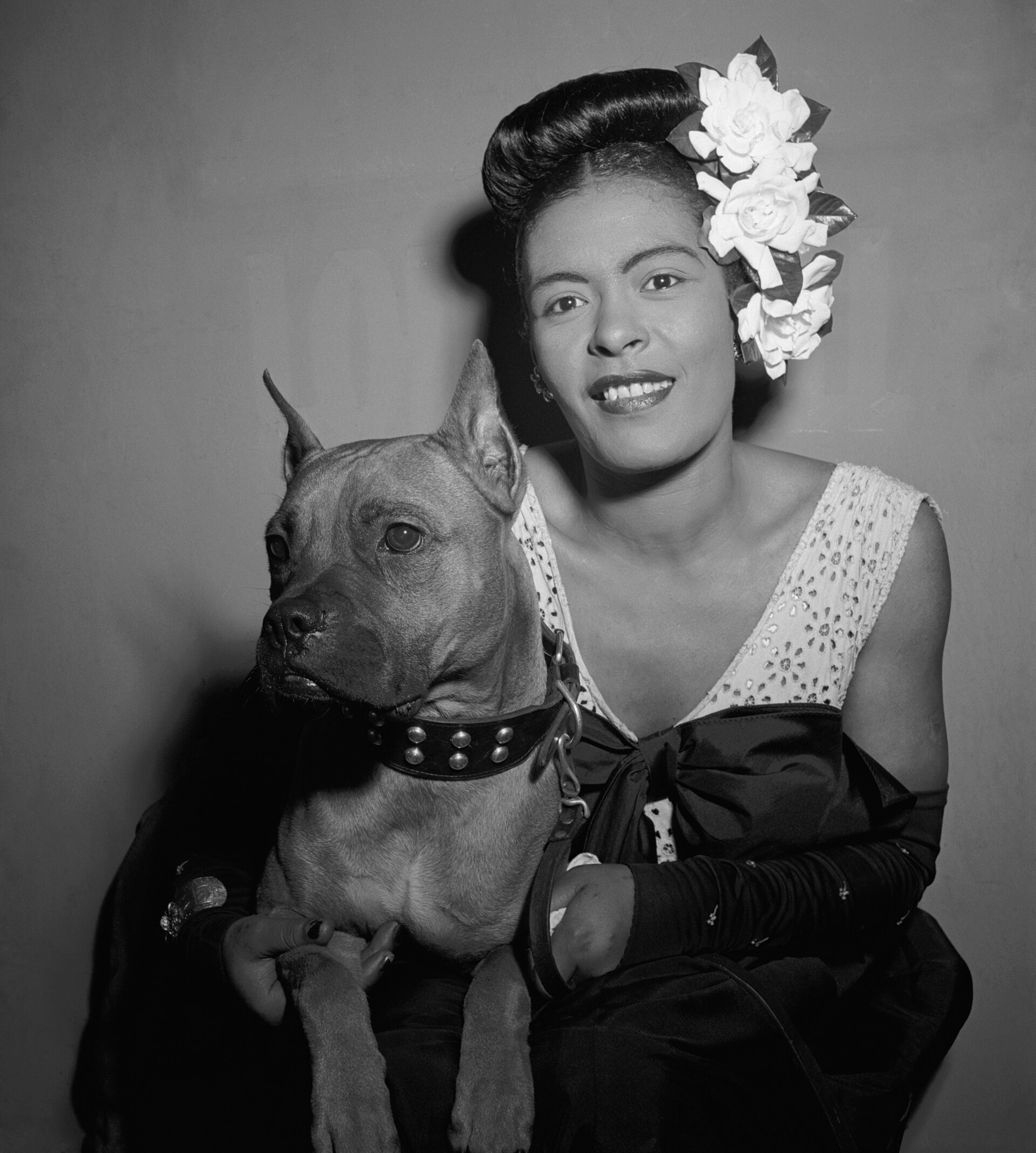
Billie Holiday (1915–1959), born Eleanora Fagan and known as Lady Day, was the most influential jazz vocalist of her century — a singer who, with a small voice and limited range, could put more emotion
| At a glance | |
|---|---|
| Type | PERSON — person |
| Dates | – |
| Chicago connection | SIGNIFICANT — see the Chicago connection section |
| Known for | Billie Holiday (1915–1959), born Eleanora Fagan and known as Lady Day, was the most influential jazz vocalist of her |
| Verification | PROVISIONAL |
| CTL ID | CTL-ENC-000201 |
Overview
Billie Holiday (1915–1959), born Eleanora Fagan and known as Lady Day, was the most influential jazz vocalist of her century — a singer who, with a small voice and limited range, could put more emotion into a song and swing it harder with her phrasing than more gifted vocalists, in the assessment of the JazzStandards biography. She emerged, in the Smithsonian's words, after a difficult and impoverished upbringing, learning from the records of Louis Armstrong and Bessie Smith the two poles of her art: Armstrong's rhythmic daring and Smith's emotional directness. Raised largely in Baltimore, she moved to New York as a teenager and built a reputation in Harlem clubs; producer John Hammond heard her in 1932–33, and in November 1933, at eighteen, she recorded her first commercial session with Benny Goodman's group at Columbia Records, as the Maryland State Archives' Women's Hall of Fame biography records.
Her mature method formed in the studio with pianist Teddy Wilson from 1935, cutting jukebox sides on which, as Columbia University's WKCR history puts it, she manipulated the melodies of dull pop songs with an emotive phrasing that would influence the future of jazz. Her closest musical partner was tenor saxophonist Lester Young, who named her "Lady Day"; she named him "Prez" in return, and their chamber-jazz classics made voice and saxophone curl around each other. She toured with Count Basie's orchestra in 1937 and in 1938 joined Artie Shaw's orchestra — one of America's first racially integrated bands, a white band with a Black female lead singer — enduring the era's humiliations at venues and on the road before resigning in 1939.
Life and career
That year, at New York's integrated Café Society, she first performed "Strange Fruit," Abel Meeropol's song about the lynching of African Americans. The Smithsonian's National Museum of American History, which holds her 1939 Commodore recording, notes that her performances of the song were filled with emotion, that the recording reached number 16 on the charts, and that it remained the best-selling record of her career. Columbia had declined the subject; she recorded it for Commodore, and the Maryland biography records that she risked her career to do so — the performance marked her emergence not only as a musician but as an advocate against racial violence. The songs she introduced or made her own kept coming: "God Bless the Child," which she co-wrote, "Lover Man," "Good Morning Heartache," "Don't Explain," "Fine and Mellow," "Easy Living."
The 1940s brought fame and damage together. A 1947 narcotics conviction led to imprisonment and the loss of her New York cabaret card, choking off club work in her home city and pushing her toward concert halls. She published her autobiography, Lady Sings the Blues, in 1956, and sang a triumphant Carnegie Hall concert tied to it; her 1957 television appearance on The Sound of Jazz, performing "Fine and Mellow" with Young, Webster, Hawkins, Mulligan, and Eldridge, remains a canonical document of jazz singing. Her voice, aged early by addiction, alcohol, and abusive relationships, lost elasticity but none of its emotion. She died in New York on July 17, 1959, at forty-four.
Chicago heard her across that career: the University of Chicago Library's jazz-venues guide documents the South Side rooms — the Regal Theater, the Pershing Hotel's lounges — through thousands of Chicago Defender citations from her performing years, and Frank Holzfeind's Blue Note in the Loop kept a tape, recalled in a WFMT conversation with Studs Terkel, of Louis Armstrong spotting Holiday in the audience, calling "Hey Lady Day! Come on, get up here," and the two singing together — by that account the only recording of Armstrong and Holiday in duet. In the CultureTechLens graph her record carries that Chicago thread: a documented Pershing-era performer whose art was made in the same Defender-covered room circuit the graph maps. This record is a staged proposal pending the founder's classification sitting.
Chicago connection
Chicago heard her across that career: the University of Chicago Library's jazz-venues guide documents the South Side rooms — the Regal Theater, the Pershing Hotel's lounges — through thousands of Chicago Defender citations from her performing years, and Frank Holzfeind's Blue Note in the Loop kept a tape, recalled in a WFMT conversation with Studs Terkel, of Louis Armstrong spotting Holiday in the audience, calling "Hey Lady Day! In the CultureTechLens graph her record carries that Chicago thread: a documented Pershing-era performer whose art was made in the same Defender-covered room circuit the graph maps. [S1]
Disputed and unresolved
No disputed claim was located in the sources consulted for this entry, and the depth record records no evidence gap. Open items, if any, are listed in Editorial notes.
See also
Relationships
- performed_at — Pershing Hotel club (Pershing Lounge / Budland) (CTL-E-0959) — Restated from the CultureTechLens Knowledge Graph: Billie Holiday (CTL-E-1450) performed_at Pershing Hotel club (Pershing Lounge / Budland) (CTL-E-0959), verification Provisional.
- performed_at — Green Mill Cocktail Lounge (CTL-E-0502) — Restated from the CultureTechLens Knowledge Graph: Billie Holiday (CTL-E-1450) performed_at Green Mill Cocktail Lounge (CTL-E-0502), verification Provisional.
Sources
- S1: Smithsonian Music. "Billie Holiday's 'Strange Fruit' (1939)." National Museum of American History. Accessed October 26, 2026. https://music.si.edu/object-day/billie-holidays-strange-fruit-1939.
- S2: Maryland State Archives. "Eleanora Fagan." Maryland Women's Hall of Fame. Accessed October 26, 2026. https://msa.maryland.gov/msa/educ/exhibits/womenshallfame/html/fagan.html.
- S3: WKCR 89.9 FM. "Billie Holiday Birthday Broadcast." Columbia University. Accessed October 26, 2026. https://www.cc-seas.columbia.edu/wkcr/story/billie-holiday-birthday-broadcast-monday-april-7.
- S4: Burlingame, Sandra. "Billie Holiday Biography." JazzStandards.com. Accessed October 26, 2026. https://www.jazzstandards.com/biographies/biography_172.htm.
- S5: University of Chicago Library. "Chicago Jazz Venues." Library Guides. Accessed October 26, 2026. https://guides.lib.uchicago.edu/c.php?g=297184&p=1983832.
- S6: WFMT. "Studs Terkel and William (Bill) Leonard Discuss Their Favorite Memories of Frank Holzfeind and the Blue Note Jazz Club." Accessed October 26, 2026. https://studsterkel.wfmt.com/programs/studs-terkel-and-william-bill-leonard-discuss-their-favorite-memories-frank-holzfeind-and.
- S7: CultureTechLens Knowledge Graph (schema v0.3.1), entities.json and relationships.json — CTL's own graph register, consulted 2026-10-29 for crosswalk facts and restated relationships.
Cite this entry
- Permanent ID: CTL-ENC-000201 · Crosswalked graph record: CTL-ESS-0089 · Version: 0.1 · Date: 2026-10-29
- Chicago: CultureTechLens. "Billie Holiday." CultureTechLens Encyclopedia, version 0.1, October 29, 2026. CultureTechLens NFP. CTL-ENC-000201.
- APA: CultureTechLens. (2026). Billie Holiday (Version 0.1, Entry CTL-ENC-000201). CultureTechLens Encyclopedia. CultureTechLens NFP.
- MLA: CultureTechLens. "Billie Holiday." CultureTechLens Encyclopedia, version 0.1, CultureTechLens NFP, 29 Oct. 2026. Entry CTL-ENC-000201.
Further reading
- CultureTechLens Knowledge Graph record CTL-ESS-0089 (crosswalked; published graph register id CTL-E-1450).
Image credits
- Billie Holiday photograph: see Images block in the frontmatter for the full credit line, rights status, and rights document.
Citation
CultureTechLens. "Billie Holiday." CultureTechLens Encyclopedia, Vol. 1 — Black Chicago, version 0.1, 2026-10-29. CultureTechLens NFP. CTL-ENC-000201.
<!-- =======================