 CULTURETECHLENS
The Encyclopedia · CTL-ENC-000092
Art Ensemble of Chicago
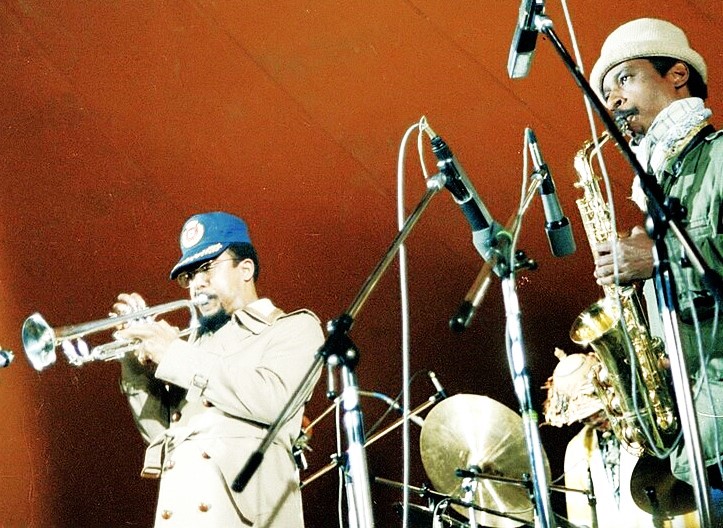
No single member is this record's subject; the group is.
| At a glance | |
|---|---|
| Type | ORGANIZATION — group |
| Dates | – |
| Chicago connection | CORE — see the Chicago connection section |
| Known for | No single member is this record's subject; the group is. |
| Verification | PROVISIONAL |
| CTL ID | CTL-ENC-000092 |
Overview
No single member is this record's subject; the group is. The Art Ensemble of Chicago grew out of Chicago's Association for the Advancement of Creative Musicians in the late 1960s, when saxophonist Roscoe Mitchell's band — Mitchell, trumpeter Lester Bowie, and bassist Malachi Favors, AACM members all — joined forces with saxophonist Joseph Jarman. Mitchell and Favors had been AACM founding members in the summer of 1965, Bowie joined Mitchell's band in 1966, and the group's early recordings appeared under the members' own names: Sound by the Roscoe Mitchell Sextet (1966), Numbers 1 & 2 under Bowie's name, and Congliptious by the Roscoe Mitchell Art Ensemble (1968). In June 1969 the four traveled to Paris and assumed the name Art Ensemble of Chicago — the city in their name carried as a banner into exile.
Paris made them. Performing and recording opportunities and a degree of acclaim they had never experienced at home opened at once: the BYG-Actuel sessions, among them People in Sorrow, a forty-minute work by the four-piece lineup released in 1969 and now regarded as a masterpiece of the music, and Message to Our Folks (1969). In Paris in 1970 drummer Famoudou Don Moye joined, completing the classic quintet that held for twenty-nine years. They returned to the United States within a few years — claiming, in the famous statement preserved by Encyclopedia.com, that they missed "the inspiration of the ghetto" — and most members settled in New York, where they participated in the cooperative loft jazz movement of the mid-to-late 1970s.
History
Their motto named the whole project: "Great Black Music, Ancient to the Future." The music integrated styles spanning the entire history of jazz and beyond — marches, blues, free improvisation — and made theatre of it: African-style face paint and costumes, silence used as material, Bowie appearing in a chef's hat and white medical coat, Jarman waving flags and sounding sirens. Their multi-instrumentalism, especially the "little instruments" — bicycle horns, bells, party noisemakers, wind chimes, and a vast array of found percussion — became a signature no other band shared. Their stagecraft extended beyond dress: Ohio State's arts program describes performances pairing original compositions with elaborate costumes, poetry, and dance, and in Paris they recorded with the singer Brigitte Fontaine on her landmark 1970 album Comme à la radio. The recordings carried the argument onto the era's defining labels: Nice Guys (1978) and Full Force for ECM vaulted them, in Soundohm's assessment, to the top of improvised-music groups worldwide, and Dreaming of the Masters (1987) extended the ECM run. Ohio State's arts program counts more than seventy recordings of live shows and studio sessions across the group's career.
Mortality edited the lineup, as it edits every long band. Bowie died in 1999, ending the classic quintet's run; Favors died in early 2004; Jarman died in 2019. For the fiftieth anniversary that year, the surviving members — Mitchell and Moye — reorganized the Ensemble not as a replacement quintet but as a sprawling chamber orchestra of some eighteen musicians, recording We Are on the Edge: A 50th Anniversary Celebration (2019) and performing at the Big Ears Festival, then capturing the expanded band live in Paris for The Sixth Decade: From Paris to Paris. Encyclopedia.com's verdict stands as the group's place in the record: the ensembles formed by AACM members have proved among the most significant in jazz, and the Art Ensemble is their flagship. For CultureTechLens, this group record anchors the graph's AACM cluster beside its individual members — Mitchell, Bowie, Jarman, Favors, and Moye each hold their own stories, but the Ensemble is a separate entity with its own. This record is a staged proposal pending the founder's classification sitting.
Chicago connection
The Art Ensemble of Chicago grew out of Chicago's Association for the Advancement of Creative Musicians in the late 1960s, when saxophonist Roscoe Mitchell's band — Mitchell, trumpeter Lester Bowie, and bassist Malachi Favors, AACM members all — joined forces with saxophonist Joseph Jarman. In June 1969 the four traveled to Paris and assumed the name Art Ensemble of Chicago — the city in their name carried as a banner into exile. [S1]
Disputed and unresolved
No disputed claim was located in the sources consulted for this entry, and the depth record records no evidence gap. Open items, if any, are listed in Editorial notes.
See also
Relationships
- member_of_organization — Association for the Advancement of Creative Musicians (CTL-E-0290) — Restated from the CultureTechLens Knowledge Graph: Art Ensemble of Chicago (CTL-E-0349) member_of_organization Association for the Advancement of Creative Musicians (CTL-E-0290), verification Verified.
- recorded_for — BYG-Actuel (CTL-E-0470) — Restated from the CultureTechLens Knowledge Graph: Art Ensemble of Chicago (CTL-E-0349) recorded_for BYG-Actuel (CTL-E-0470), verification Verified.
- recorded_for — ECM Records (CTL-E-1647) — Restated from the CultureTechLens Knowledge Graph: Art Ensemble of Chicago (CTL-E-0349) recorded_for ECM Records (CTL-E-1647), verification Verified.
- related_to — Muhal Richard Abrams (CTL-E-0024) — Restated from the CultureTechLens Knowledge Graph: Art Ensemble of Chicago (CTL-E-0349) related_to Muhal Richard Abrams (CTL-E-0024), verification Verified.
- performed_at — Jazz Showcase (CTL-E-5075) — Restated from the CultureTechLens Knowledge Graph: Art Ensemble of Chicago (CTL-E-0349) performed_at Jazz Showcase (CTL-E-5075), verification Verified.
Sources
- S1: Encyclopedia.com. "Association for the Advancement of Creative Musicians." Accessed October 25, 2026. https://www.encyclopedia.com/history/encyclopedias-almanacs-transcripts-and-maps/association-advancement-creative-musicians.
- S2: Ohio State University. "Art Ensemble of Chicago." Arts at Ohio State. Accessed October 25, 2026. http://arts.osu.edu/events/art-ensemble-chicago.
- S3: The Absolute Sound. "Art Ensemble of Chicago: The Sixth Decade — From Paris to Paris." Accessed October 25, 2026. https://www.theabsolutesound.com/articles/art-ensemble-of-chicago-the-sixth-decade-from-paris-to-paris-live-at-sons-dhiver/.
- S4: Soundohm. "Art Ensemble of Chicago." Accessed October 25, 2026. https://cdn.soundohm.com/artist/art-ensemble-of-chicago?layout=big-grid.
- S5: CultureTechLens Knowledge Graph (schema v0.3.1), entities.json and relationships.json — CTL's own graph register, consulted 2026-10-29 for crosswalk facts and restated relationships.
Cite this entry
- Permanent ID: CTL-ENC-000092 · Crosswalked graph record: CTL-ESS-0048 · Version: 0.1 · Date: 2026-10-29
- Chicago: CultureTechLens. "Art Ensemble of Chicago." CultureTechLens Encyclopedia, version 0.1, October 29, 2026. CultureTechLens NFP. CTL-ENC-000092.
- APA: CultureTechLens. (2026). Art Ensemble of Chicago (Version 0.1, Entry CTL-ENC-000092). CultureTechLens Encyclopedia. CultureTechLens NFP.
- MLA: CultureTechLens. "Art Ensemble of Chicago." CultureTechLens Encyclopedia, version 0.1, CultureTechLens NFP, 29 Oct. 2026. Entry CTL-ENC-000092.
Further reading
- CultureTechLens Knowledge Graph record CTL-ESS-0048 (crosswalked; published graph register id CTL-E-0349).
Image credits
- Art Ensemble of Chicago photograph: see Images block in the frontmatter for the full credit line, rights status, and rights document.
Citation
CultureTechLens. "Art Ensemble of Chicago." CultureTechLens Encyclopedia, Vol. 1 — Black Chicago, version 0.1, 2026-10-29. CultureTechLens NFP. CTL-ENC-000092.
<!-- =======================