 CULTURETECHLENS
The Encyclopedia · CTL-ENC-000133
Archibald Motley
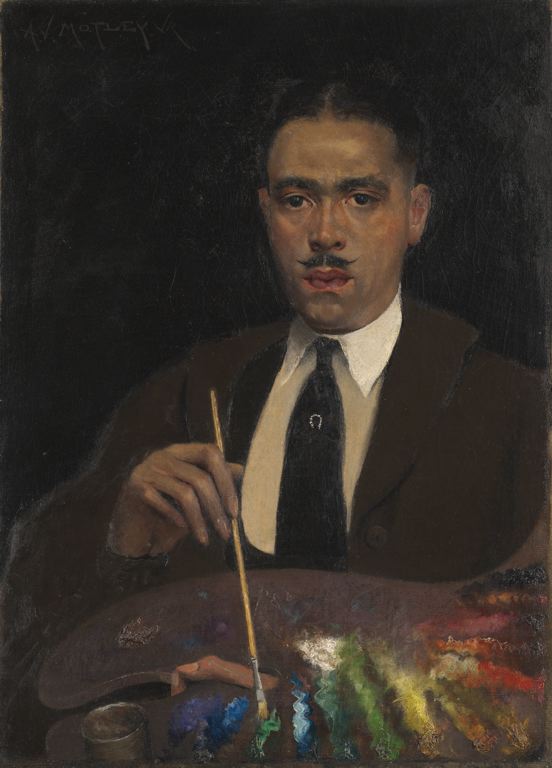
The painter of Bronzeville's nightlife was not born to it.
| At a glance | |
|---|---|
| Type | PERSON — artist |
| Dates | – |
| Chicago connection | CORE — see the Chicago connection section |
| Known for | The painter of Bronzeville's nightlife was not born to it. |
| Verification | VERIFIED |
| CTL ID | CTL-ENC-000133 |
Overview
The painter of Bronzeville's nightlife was not born to it. Archibald John Motley Jr. was born in New Orleans in 1891, the grandson of enslaved people and the son of a Pullman porter of Creole ancestry, and his family moved to Chicago while he was young, settling in the mostly white, middle-class Englewood neighborhood. His mother worked as a schoolteacher. The mixed neighborhood of his childhood mattered to the art: growing up among several races gave him, as the exhibition record puts it, sources and material for paintings of the rich culture Black Chicagoans brought to the urban scene. The CultureTechLens master's verification — carried in both of this subject's master records — fixes the essential facts the same way: American painter, 1891–1981, whose Nightlife (1943) hangs in the Art Institute of Chicago and whose subject was contemporary Black social life in Bronzeville, the Black Belt neighborhood that held more than ninety percent of the city's Black population by the 1930s.
Motley trained at the School of the Art Institute of Chicago from 1914 to 1918, studying under the realist George Bellows and graduating in 1918 with highly accomplished figure studies in oil — subdued in color, careful in modeling — that give little warning of the chromatic explosion to come. His public career began as advocacy as much as painting: influenced by W. E. B. Du Bois and Alain Locke, he published "The Negro in Art" in the Chicago Defender on July 6, 1918, pressing for creative opportunity and legitimate recognition for Black artists alongside their white counterparts.
Life and career
The mature work divides into portraits and scenes. The portraits — among them Mulatress with Figurine and Dutch Landscape, the 1920 canvas of a well-dressed woman with a figurine, books, and a Chinese incense burner that won the Art Institute's Frank G. Logan Prize in 1925 — examine identity, race, and cultural mixture in middle-class Black life with psychological directness. The scenes are the glory: Cocktails (1926), Blues (1929), painted after his Paris period and set in a Paris café, and Tongues (Holy Rollers) (1929), worshippers at a Black church rendered with the same energy as the clubs. In Nightlife (1943), his most celebrated painting, dancers inside a Bronzeville nightspot move in pulsing, jumping rhythms against glowing violet-red tones; the Art Institute's own teaching text reads the simplified geometric figures and diagonal composition as the sound and motion of jazz made visible, and quotes Motley's purpose — "an expression of the numerous shades and colors which exist in such great variety" among African Americans in Chicago. The Institute's text adds a wartime reading: painted during the Second World War, Nightlife shows figures who seem to have left the world's troubles behind, exuberant inside the club while the world outside was at war. He painted family members as well, including his grandmother, and his wife, Edith Granzo, whose working-class white family had objected to their marriage. Later scenes, The Boys in the Back Room (1934), The Plotters (1933), The Liar (1936), The Picnic (1936), Barbecue (1960), and Hot Rhythm (1961), sustained the chronicle for four decades.
The honors came late and then all at once. His work showed in Chicago, New York, and European exhibitions from the late 1920s; the Art Institute awarded him an honorary doctorate in fine arts in 1980, and that year he was one of ten African American artists honored by President Jimmy Carter at the White House. He died in Chicago in 1981, having spent most of his life in the city he painted. Posthumous scholarship consolidated the standing: the retrospective Archibald Motley: Jazz Age Modernist toured to the Whitney Museum of American Art in 2015, presenting him as a defining modernist of the Jazz Age. For CultureTechLens, Motley is the visual counterpart of the graph's music records — the painter who documented, from inside, the Bronzeville world the blues and jazz entries describe in sound.
Chicago connection
was born in New Orleans in 1891, the grandson of enslaved people and the son of a Pullman porter of Creole ancestry, and his family moved to Chicago while he was young, settling in the mostly white, middle-class Englewood neighborhood. The mixed neighborhood of his childhood mattered to the art: growing up among several races gave him, as the exhibition record puts it, sources and material for paintings of the rich culture Black Chicagoans brought to the urban scene. The CultureTechLens master's verification — carried in both of this subject's master records — fixes the essential facts the same way: American painter, 1891–1981, whose Nightlife (1943) hangs in the Art Institute of Chicago and whose subject was contemporary Black social life in Bronzeville, the Black Belt neighborhood that held more than ninety percent of the city's Black population by the 1930s. Motley trained at the School of the Art Institute of Chicago from 1914 to 1918, studying under the realist George Bellows and graduating in 1918 with highly accomplished figure studies in oil — subdued in color, careful in modeling — that give little warning of the chromatic explosion to come. Du Bois and Alain Locke, he published "The Negro in Art" in the Chicago Defender on July 6, 1918, pressing for creative opportunity and legitimate recognition for Black artists alongside their white counterparts. In Nightlife (1943), his most celebrated painting, dancers inside a Bronzeville nightspot move in pulsing, jumping rhythms against glowing violet-red tones; the Art Institute's own teaching text reads the simplified geometric figures and diagonal composition as the sound and motion of jazz made visible, and quotes Motley's purpose — "an expression of the numerous shades and colors which exist in such great variety" among African Americans in Chicago. [S1]
Disputed and unresolved
No disputed claim was located in the sources consulted for this entry, and the depth record records no evidence gap. Open items, if any, are listed in Editorial notes.
See also
Relationships
- associated_with — Bronzeville (CTL-E-0205) — Restated from the CultureTechLens Knowledge Graph: Archibald Motley (CTL-E-0483) associated_with Bronzeville (CTL-E-0205), verification Verified.
- associated_with — Englewood (CTL-E-0213) — Restated from the CultureTechLens Knowledge Graph: Archibald Motley (CTL-E-0483) associated_with Englewood (CTL-E-0213), verification Verified.
- related_to — W. E. B. Du Bois (CTL-E-1484) — Restated from the CultureTechLens Knowledge Graph: Archibald Motley (CTL-E-0483) related_to W. E. B. Du Bois (CTL-E-1484), verification Verified.
- associated_with — The Stroll (CTL-E-0222) — Restated from the CultureTechLens Knowledge Graph: Archibald Motley (CTL-E-0483) associated_with The Stroll (CTL-E-0222), verification Provisional.
Sources
- S1: Art Institute of Chicago. "Archibald Motley." Art Access, hosted by DePaul University. Accessed October 25, 2026. https://teacher.depaul.edu/Documents/ArchibaldMotley-AICArtAccess.pdf.
- S2: Illustration History. "Archibald Motley, Jr." Accessed October 25, 2026. https://www.illustrationhistory.org/artists/archibald-motley-jr.
- S3: Gapers Block. "Archibald Motley's Brilliant, Vivid Paintings Light Up the Cultural Center." Accessed October 25, 2026. http://gapersblock.com/ac/2015/04/22/archibald-motleys-brilliant-vivid-paintings-light-up-the-cultural-center/.
- S4: CultureTechLens Knowledge Graph (schema v0.3.1), entities.json and relationships.json — CTL's own graph register, consulted 2026-10-29 for crosswalk facts and restated relationships.
Cite this entry
- Permanent ID: CTL-ENC-000133 · Crosswalked graph record: CTL-P-0143 · Version: 0.1 · Date: 2026-10-29
- Chicago: CultureTechLens. "Archibald Motley." CultureTechLens Encyclopedia, version 0.1, October 29, 2026. CultureTechLens NFP. CTL-ENC-000133.
- APA: CultureTechLens. (2026). Archibald Motley (Version 0.1, Entry CTL-ENC-000133). CultureTechLens Encyclopedia. CultureTechLens NFP.
- MLA: CultureTechLens. "Archibald Motley." CultureTechLens Encyclopedia, version 0.1, CultureTechLens NFP, 29 Oct. 2026. Entry CTL-ENC-000133.
Further reading
- CultureTechLens Knowledge Graph record CTL-P-0143 (crosswalked; published graph register id CTL-E-0483).
Image credits
- Archibald Motley photograph: see Images block in the frontmatter for the full credit line, rights status, and rights document.
Citation
CultureTechLens. "Archibald Motley." CultureTechLens Encyclopedia, Vol. 1 — Black Chicago, version 0.1, 2026-10-29. CultureTechLens NFP. CTL-ENC-000133.
<!-- =======================