 CULTURETECHLENS
The Encyclopedia · CTL-ENC-000220
Annie Turnbo Malone
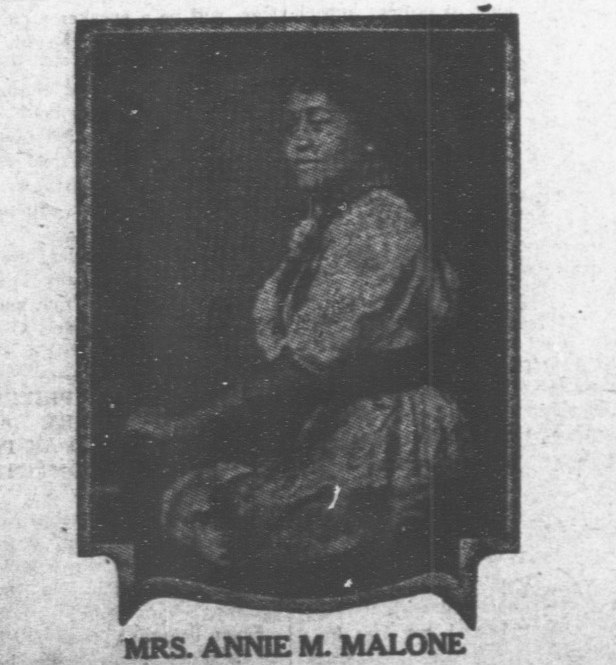
Before there was a Madam C.J.
| At a glance | |
|---|---|
| Type | PERSON — businessperson |
| Dates | – |
| Chicago connection | CORE — see the Chicago connection section |
| Known for | Before there was a Madam C.J. |
| Verification | PROVISIONAL |
| CTL ID | CTL-ENC-000220 |
Overview
Before there was a Madam C.J. Walker empire, there was Poro, and before Poro there was a young woman in southern Illinois mixing scalp treatments in a home kitchen. Annie Turnbo Malone (August 9, 1869 – May 10, 1957) was an entrepreneur, businesswoman, and community builder who became one of the nation's wealthiest Black women by building a cosmetics company for Black women — and who trained, as a protégée, the woman who became her most famous successor. The Missouri State University Public Affairs Hall of Fame records that she was born Annie Minerva Turnbo in Metropolis, Illinois, on August 9, 1869, to Robert Turnbo and Isabella Cook, who had been enslaved; her father served in the Union Army during the Civil War.
Orphaned young, she was raised by a sister in Peoria, Illinois. BlackPast records that she attended school in Peoria but never finished high school; the Missouri Encyclopedia adds that she was a sickly child who attended sporadically and discovered an affinity for chemistry in her brief high-school attendance. Instead of a diploma, she practiced hairdressing with her sister. In Lovejoy, Illinois — Brooklyn, Illinois, in some accounts — she decided to become a "beauty doctor." At twenty she had developed her own shampoo and scalp treatment to grow and straighten hair, and she promoted it the way she would promote everything after: in person, going around in a buggy, making speeches and demonstrating the product.
Life and career
By 1902 the home venture had outgrown southern Illinois. She moved to St. Louis, Missouri — then home to one of the nation's largest African American populations and booming ahead of the 1904 Louisiana Purchase Exposition — and trademarked her line under the name "Poro"; the Missouri Encyclopedia dates the Poro trademark to 1906. Denied access to regular distribution channels because she was a Black woman, she sold to the city's African American population directly and built an agent network. One of her protégés was Sarah Breedlove, who later became Madam C.J. Walker. She married in 1903; when her husband sought to control the business, she divorced him. On April 28, 1914, she married Aaron Eugene Malone, a school principal; that marriage lasted thirteen years and also ended in divorce.
What the money built is the part of the record Chicago and St. Louis still stand on. In 1918, Poro's success let her open Poro College in St. Louis's historic Black neighborhood of The Ville: a four-story, million-dollar factory and beauty school complex that, in BlackPast's account, employed over 175 people and let young Black women pursue high school and college educations by providing jobs and lodging. The Missouri Encyclopedia inventories the building — a beauty operators' training school, a five-hundred-seat auditorium, a roof garden, committee rooms, and an elegant dining room — and records that in 1920 Marian Anderson, Roland Hayes, and Ethel Waters performed on the Poro College auditorium stage. Under segregation, the complex doubled as a community center for meetings, banquets, and gatherings Black St. Louisans were barred from holding elsewhere.
Malone was, in the Hall of Fame's summary, a generous philanthropist who supported education and orphanages and served on boards, including support for the St. Louis Colored Orphans Home. Seeking a fresh start after her divorce, she relocated her business headquarters to Chicago in 1930, while continuing to visit and support St. Louis. The Depression and a series of lawsuits hit the company hard, but branches endured: she died in Chicago on May 10, 1957, leaving Poro beauty colleges across some thirty cities — thirty-two branches in the ELCA account — a distribution-and-training system built, decades before the term existed, on Black women selling to Black women. This record is a staged proposal pending the founder's classification sitting.
Chicago connection
What the money built is the part of the record Chicago and St. Seeking a fresh start after her divorce, she relocated her business headquarters to Chicago in 1930, while continuing to visit and support St. The Depression and a series of lawsuits hit the company hard, but branches endured: she died in Chicago on May 10, 1957, leaving Poro beauty colleges across some thirty cities — thirty-two branches in the ELCA account — a distribution-and-training system built, decades before the term existed, on Black women selling to Black women. [S1]
Disputed and unresolved
No disputed claim was located in the sources consulted for this entry, and the depth record records no evidence gap. Open items, if any, are listed in Editorial notes.
See also
Relationships
- associated_with — South Side (CTL-E-0224) — Restated from the CultureTechLens Knowledge Graph: Annie Turnbo Malone (CTL-E-1348) associated_with South Side (CTL-E-0224), verification Verified.
- affiliated_with — Poro College (CTL-E-1371) — Restated from the CultureTechLens Knowledge Graph: Annie Turnbo Malone (CTL-E-1348) affiliated_with Poro College (CTL-E-1371), verification Verified.
Sources
- S1: Missouri State University. "Annie Malone." Missouri Public Affairs Hall of Fame. Accessed October 25, 2026. https://PublicAffairs.MissouriState.edu/HallOfFame/annie-malone.htm.
- S2: BlackPast.org. "Annie Turnbo Malone (1869–1957)." Accessed October 25, 2026. https://blackpast.org/african-american-history/annie-turnbo-malone-1869-1957/.
- S3: State Historical Society of Missouri. "Annie Minerva Turnbo Pope Malone (1869–1957)." Missouri Encyclopedia. Accessed October 25, 2026. https://missouriencyclopedia.org/people/malone-annie-minerva-turnbo-pope.
- S4: CultureTechLens Knowledge Graph (schema v0.3.1), entities.json and relationships.json — CTL's own graph register, consulted 2026-10-29 for crosswalk facts and restated relationships.
Cite this entry
- Permanent ID: CTL-ENC-000220 · Crosswalked graph record: CTL-ESS-0003 · Version: 0.1 · Date: 2026-10-29
- Chicago: CultureTechLens. "Annie Turnbo Malone." CultureTechLens Encyclopedia, version 0.1, October 29, 2026. CultureTechLens NFP. CTL-ENC-000220.
- APA: CultureTechLens. (2026). Annie Turnbo Malone (Version 0.1, Entry CTL-ENC-000220). CultureTechLens Encyclopedia. CultureTechLens NFP.
- MLA: CultureTechLens. "Annie Turnbo Malone." CultureTechLens Encyclopedia, version 0.1, CultureTechLens NFP, 29 Oct. 2026. Entry CTL-ENC-000220.
Further reading
- CultureTechLens Knowledge Graph record CTL-ESS-0003 (crosswalked; published graph register id CTL-E-1348).
Image credits
- Annie Turnbo Malone photograph: see Images block in the frontmatter for the full credit line, rights status, and rights document.
Citation
CultureTechLens. "Annie Turnbo Malone." CultureTechLens Encyclopedia, Vol. 1 — Black Chicago, version 0.1, 2026-10-29. CultureTechLens NFP. CTL-ENC-000220.
<!-- =======================