 CULTURETECHLENS
The Encyclopedia · CTL-ENC-000173
Amanda Berry Smith
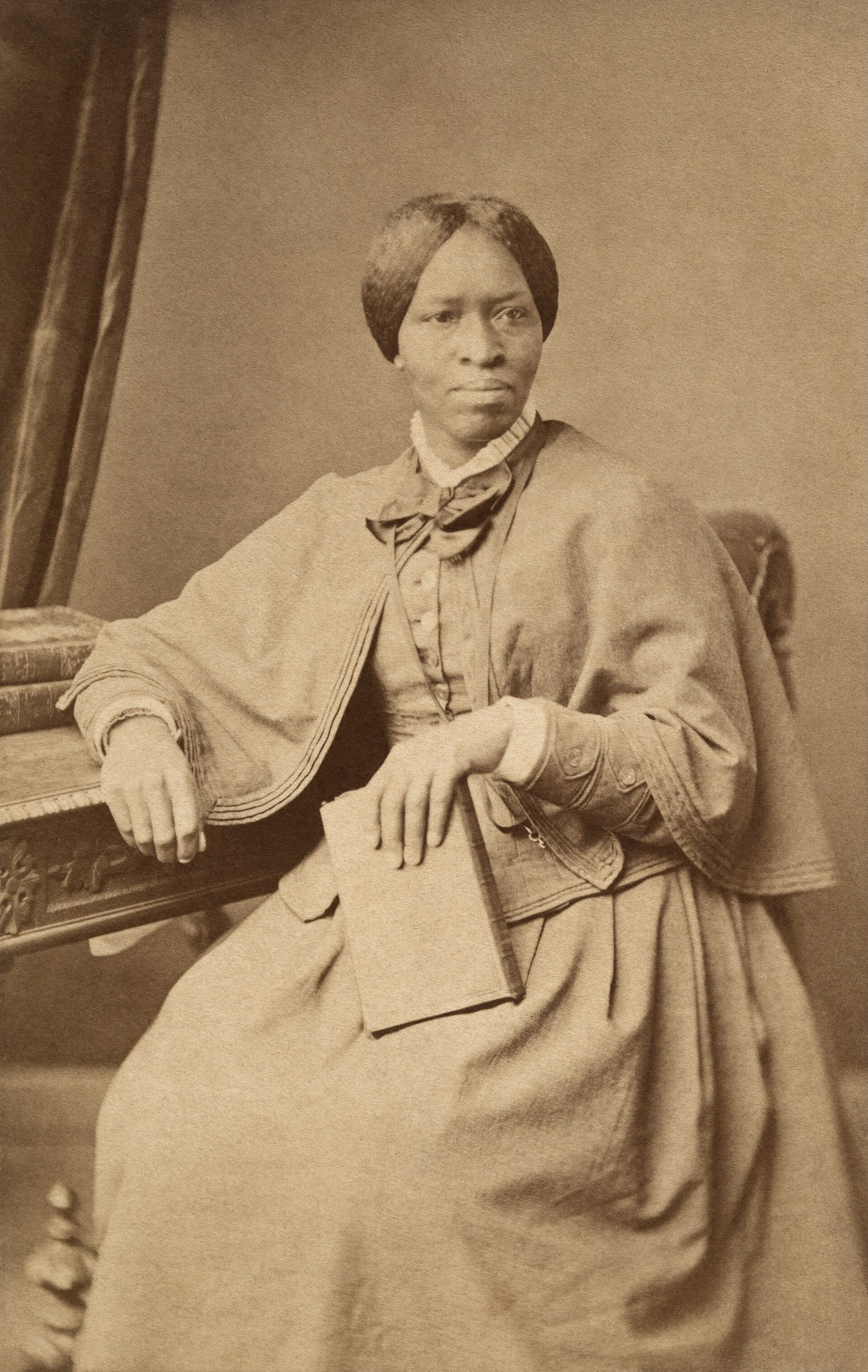
Amanda Berry Smith (January 23, 1837 – February 24, 1915) was born enslaved in Long Green, Maryland, and became an international Methodist evangelist and the founder of an orphanage for Black children in Harvey, Illinois.
| At a glance | |
|---|---|
| Type | PERSON — clergy |
| Dates | – |
| Chicago connection | CORE — see the Chicago connection section |
| Known for | Amanda Berry Smith (January 23, 1837 – February 24, 1915) was born enslaved in Long Green, Maryland, and became an |
| Verification | PROVISIONAL |
| CTL ID | CTL-ENC-000173 |
Overview
Amanda Berry Smith (January 23, 1837 – February 24, 1915) was born enslaved in Long Green, Maryland, and became an international Methodist evangelist and the founder of an orphanage for Black children in Harvey, Illinois. She was the youngest of thirteen children of Samuel Berry and Mariam Matthews Berry. Her father, trusted enough to manage his enslaver's widow's farm, worked nights making brooms and husk mats for the Baltimore market until he had purchased his own freedom and then his family's; the Berry home in Pennsylvania, the World Religion and Spirituality Project records, became a station on the Underground Railroad. Amanda's formal schooling totalled about three months; her parents taught her to read and write.
She married Calvin Devine in September 1854; he died serving in the Civil War. Converted in 1856, she married James Smith in 1865 and moved to New York City, where she took in washing and cleaned houses and worshipped in the African Methodist Episcopal Church. In September 1868, at Green Street Methodist Church, she experienced the sanctification that made her a preacher of the Wesleyan-Holiness doctrine of entire sanctification. James Smith died in 1869, and that year, the New York Public Library's guide records, she felt called to preach — a decision that met resistance from AME clergy, since she was a woman and unordained. She obeyed anyway, preaching first in New York and New Jersey, and by October 1870 evangelism was her only work. By the end of the decade she was known from Maine to Tennessee.
Life and career
In 1875 Smith became a charter member of the Woman's Christian Temperance Union, one of the few Black women visible in that organization. From 1878 to 1890 she preached abroad — England, then India for two years, then Liberia and Sierra Leone — emerging, in the NYPL guide's assessment, as one of the AME Church's most effective missionaries and widening the way for Black women who would answer the call after her. She supported herself entirely on donations; no denomination underwrote her.
In 1892 she settled in Harvey, a temperance community near Chicago, and in 1893 published An Autobiography: The Story of the Lord's Dealings with Mrs. Amanda Smith, the Colored Evangelist, in large part to raise money for her final project: the care of homeless Black children. On June 28, 1899, funded by book proceeds, preaching fees and donations, she opened the Amanda Smith Orphanage and Industrial Home for Abandoned and Destitute Colored Children in Harvey. It was the institutional form of everything her preaching had argued — that Black children deserved an organized, Black-led refuge. In 1912, her health failing, she retired to Sebring, Florida, at the urging of supporter George Sebring, who provided her a house. She died in Florida in February 1915 and was buried in Illinois; the home passed to the state and continued as the Amanda Smith Industrial School for Girls.
For CultureTechLens, Smith carries the Chicago tie in a specific, dated form: a Maryland-born, formerly enslaved evangelist who chose the Chicago area for the one permanent institution she built, and whose Harvey orphanage is a South Suburban landmark of Black women's institution-building a generation before the Great Migration peaked. This record is a staged proposal pending the founder's classification sitting.
Smith's posthumous recognition in Illinois closed the circle her Harvey institution opened. When she died in Sebring, Florida, white ministers of that town served as pallbearers for the train carrying her body back to Chicago, and her funeral on March 1, 1915, was among the largest in the history of Chicago's African American community — yet she was buried in an unmarked grave. The marker came seventy-six years later: in 1991 the Commission on the Status and Role of Women of the Northern Illinois Conference of the United Methodist Church placed a headstone on her grave, and on April 23, 1991, the Illinois House of Representatives adopted a resolution honouring her rare achievements. The orphanage she had funded out of book royalties and preaching fees outlived her under state charter as the Amanda Smith Industrial School for Girls, until fire destroyed it in 1918. Between the unmarked grave and the legislative resolution sits the whole pattern of her career: work done without institutional sponsorship, recognised by institutions only generations later.
Chicago connection
In 1892 she settled in Harvey, a temperance community near Chicago, and in 1893 published An Autobiography: The Story of the Lord's Dealings with Mrs. For CultureTechLens, Smith carries the Chicago tie in a specific, dated form: a Maryland-born, formerly enslaved evangelist who chose the Chicago area for the one permanent institution she built, and whose Harvey orphanage is a South Suburban landmark of Black women's institution-building a generation before the Great Migration peaked. When she died in Sebring, Florida, white ministers of that town served as pallbearers for the train carrying her body back to Chicago, and her funeral on March 1, 1915, was among the largest in the history of Chicago's African American community — yet she was buried in an unmarked grave. [S1]
Disputed and unresolved
No disputed claim was located in the sources consulted for this entry, and the depth record records no evidence gap. Open items, if any, are listed in Editorial notes.
See also
Relationships
- founded — Amanda Smith Orphanage and Industrial Home for Abandoned and Destitute Colored Children (CTL-E-1219) — Restated from the CultureTechLens Knowledge Graph: Amanda Berry Smith (CTL-E-3038) founded Amanda Smith Orphanage and Industrial Home for Abandoned and Destitute Colored Children (CTL-E-1219), verification Verified.
Sources
- S1: Wikipedia. "Amanda Smith." Accessed October 25, 2026. https://en.wikipedia.org/wiki/Amanda_Smith.
- S2: New York Public Library LibGuides. "African American Women Writers of the 19th Century: Amanda Smith." Accessed October 25, 2026. https://libguides.nypl.org/african-american-women-writers-of-the-19th-Century/Smith-Taylor.
- S3: World Religion & Spirituality Project (WRSP). "Amanda Berry Smith (1837-1915) Historical Marker / timeline." Accessed October 25, 2026. https://wrldrels.org/category/special-projects/page/8/.
- S4: CultureTechLens Knowledge Graph (schema v0.3.1), entities.json and relationships.json — CTL's own graph register, consulted 2026-10-29 for crosswalk facts and restated relationships.
Cite this entry
- Permanent ID: CTL-ENC-000173 · Crosswalked graph record: CTL-ESS-0026 · Version: 0.1 · Date: 2026-10-29
- Chicago: CultureTechLens. "Amanda Berry Smith." CultureTechLens Encyclopedia, version 0.1, October 29, 2026. CultureTechLens NFP. CTL-ENC-000173.
- APA: CultureTechLens. (2026). Amanda Berry Smith (Version 0.1, Entry CTL-ENC-000173). CultureTechLens Encyclopedia. CultureTechLens NFP.
- MLA: CultureTechLens. "Amanda Berry Smith." CultureTechLens Encyclopedia, version 0.1, CultureTechLens NFP, 29 Oct. 2026. Entry CTL-ENC-000173.
Further reading
- CultureTechLens Knowledge Graph record CTL-ESS-0026 (crosswalked; published graph register id CTL-E-3038).
Image credits
- Amanda Berry Smith photograph: see Images block in the frontmatter for the full credit line, rights status, and rights document.
Citation
CultureTechLens. "Amanda Berry Smith." CultureTechLens Encyclopedia, Vol. 1 — Black Chicago, version 0.1, 2026-10-29. CultureTechLens NFP. CTL-ENC-000173.
<!-- =======================