 CULTURETECHLENS
The Encyclopedia · CTL-ENC-000174
Alex Bradford
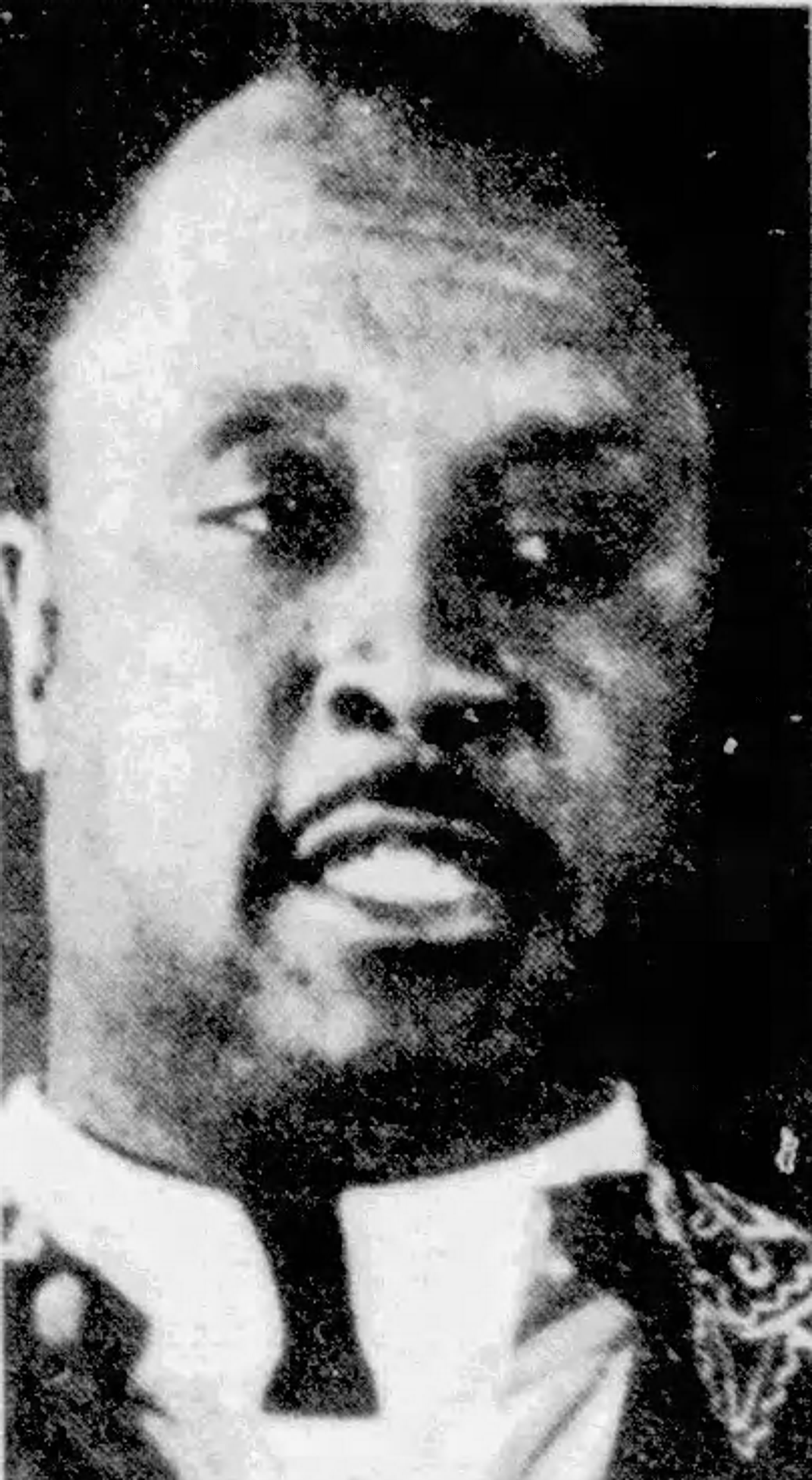
Professor Alex Bradford (January 23, 1927 – February 15, 1978) was a gospel singer, composer, arranger and choir director whose flamboyant command of a gospel stage changed what male gospel singing could be.
| At a glance | |
|---|---|
| Type | PERSON — musician |
| Dates | – |
| Chicago connection | CORE — see the Chicago connection section |
| Known for | Professor Alex Bradford (January 23, 1927 – February 15, 1978) was a gospel singer, composer, arranger and choir |
| Verification | SUPPORTED |
| CTL ID | CTL-ENC-000174 |
Overview
Professor Alex Bradford (January 23, 1927 – February 15, 1978) was a gospel singer, composer, arranger and choir director whose flamboyant command of a gospel stage changed what male gospel singing could be. Born in Bessemer, Alabama, he first appeared on stage at age four, joined a children's gospel group at thirteen and soon had his own radio show, an itinerary the Newport Jazz Festival's program notes record in brief. After his mother sent him to New York following a racial incident, he returned to Alabama to attend the Snow Hill Institute, where he acquired the title "Professor" while teaching as a student — the honorific that stayed attached to his billing for the rest of his career.
In 1947 Bradford moved to Chicago. He worked briefly with Roberta Martin and toured with Mahalia Jackson, then struck out on his own, first with the Bradford Singers and then with the Bradford Specials. AllMusic's biography, by Dave Marsh, calls him arguably the most influential male artist of gospel's post-World War II Golden Age: a composer, a singer alternating between a rough, husky chest voice and a falsetto that turned him into a male soprano, a stage and altar performer, a record producer, and a group and choir leader. His signature composition, "Too Close to Heaven" — "I'm Too Close to Heaven and I Can't Turn Around" — was recorded in 1954, billed as Professor Alex Bradford and his singers, sold over a million copies and earned a gold disc. The Newport notes date the hit's breakthrough to the Bradford Specials period and make the structural point AllMusic also makes: the Specials were the first male group to adopt the innovations brought to gospel by the female quartets of Roberta Martin and Clara Ward.
Life and career
Bradford's influence ran in several directions at once. He wrote hit material for Roberta Martin, Sallie Martin and Mahalia Jackson, all of whom he also served as accompanist. As choir director of Newark's Abyssinian Baptist Church he proved, AllMusic records, a fine talent scout, giving starts to Cissy Houston and the Sweet Inspirations, Dionne and Dee Dee Warwick and Judy Clay. And his performing style — the gravelly bass rising to a whooping falsetto, the flamboyant stage presence — was studied carefully by Little Richard, by Ray Charles, who based his Raelettes on the Bradford Specials, and, AllMusic adds, by Sam Cooke. His 1962 composition "Let the Lord Be Seen in Me" was recorded in 1964 by a young Bob Marley with the Spiritual Sisters in Jamaica.
When his recording career declined, Bradford carried gospel onto the secular stage. In 1961 he joined the cast of Black Nativity, built on the writings of Langston Hughes, which toured Europe in 1962 — a move AllMusic credits with pioneering the extension of gospel to secular contexts. He appeared in Don't Bother Me, I Can't Cope, winning an Obie Award in 1972, and died in Newark, New Jersey, in 1978 after a stroke, while the musical Your Arms Too Short to Box with God was in production. For CultureTechLens, Bradford is a hinge record between Chicago gospel's golden age and the soul and rock-and-roll styles that borrowed its techniques, a Bessemer-born singer whose decisive decade was spent in Chicago.
Bradford's Chicago decade also rewired who could sing gospel and how. AllMusic's biography stresses the combination that made him singular among the era's major gospel figures: he was an instrumentalist as well as a vocalist, a producer and choir director as well as a soloist, and a composer whose songs other stars recorded. The Bradford Specials' importance was formal as much as commercial — a male group adopting the arrangement and presentation innovations that Roberta Martin's and Clara Ward's female groups had pioneered changed the sound of male gospel quartets and choirs after them, and AllMusic credits Bradford with helping to bring about the modern mass choir movement in gospel. The Newport program notes from 1959, when Bradford and the Specials appeared at the Newport Jazz Festival's gospel workshop, show the crossover already working in his lifetime: a festival audience hearing Chicago gospel presented as part of the nation's jazz heritage, with Bradford billed as soloist, pianist, arranger and choir director in one line.
Chicago connection
In 1947 Bradford moved to Chicago. For CultureTechLens, Bradford is a hinge record between Chicago gospel's golden age and the soul and rock-and-roll styles that borrowed its techniques, a Bessemer-born singer whose decisive decade was spent in Chicago. Bradford's Chicago decade also rewired who could sing gospel and how. The Newport program notes from 1959, when Bradford and the Specials appeared at the Newport Jazz Festival's gospel workshop, show the crossover already working in his lifetime: a festival audience hearing Chicago gospel presented as part of the nation's jazz heritage, with Bradford billed as soloist, pianist, arranger and choir director in one line. [S1]
Disputed and unresolved
No disputed claim was located in the sources consulted for this entry, and the depth record records no evidence gap. Open items, if any, are listed in Editorial notes.
See also
Relationships
- related_to — Mahalia Jackson (CTL-E-0016) — Restated from the CultureTechLens Knowledge Graph: Alex Bradford (CTL-E-0579) related_to Mahalia Jackson (CTL-E-0016), verification Verified.
- related_to — Roberta Martin (CTL-E-0019) — Restated from the CultureTechLens Knowledge Graph: Alex Bradford (CTL-E-0579) related_to Roberta Martin (CTL-E-0019), verification Verified.
- related_to — Thomas A. Dorsey (CTL-E-0017) — Restated from the CultureTechLens Knowledge Graph: Alex Bradford (CTL-E-0579) related_to Thomas A. Dorsey (CTL-E-0017), verification Provisional.
- collaborated_with — Langston Hughes (CTL-E-0338) — Restated from the CultureTechLens Knowledge Graph: Alex Bradford (CTL-E-0579) collaborated_with Langston Hughes (CTL-E-0338), verification Verified.
Sources
- S1: AllMusic (Dave Marsh). "Prof. Alex Bradford — Biography." Accessed October 25, 2026. http://www.allmusic.com/artist/prof-alex-bradford-mn0000620491.
- S2: Moshpit / Newport Jazz Festival program notes. "Professor Alex Bradford and the Bradford Specials — Newport Jazz Festival, July 5, 1959." Accessed October 25, 2026. https://www.moshpit.com/professor-alex-bradford-and-the-bradford-specials-newport-jazz-festival-jul-5-1959/.
- S3: CultureTechLens canonical CSV master (vendored copy, website/master/entities.csv). "Alex Bradford (CTL-P-0122) — canonical master verification." Accessed October 25, 2026. https://www.bmansbluesreport.com/2013/02/watcha-gonna-do-professor-alex-bradford.html?m=0.
- S4: CultureTechLens Knowledge Graph (schema v0.3.1), entities.json and relationships.json — CTL's own graph register, consulted 2026-10-29 for crosswalk facts and restated relationships.
Cite this entry
- Permanent ID: CTL-ENC-000174 · Crosswalked graph record: CTL-P-0122 · Version: 0.1 · Date: 2026-10-29
- Chicago: CultureTechLens. "Alex Bradford." CultureTechLens Encyclopedia, version 0.1, October 29, 2026. CultureTechLens NFP. CTL-ENC-000174.
- APA: CultureTechLens. (2026). Alex Bradford (Version 0.1, Entry CTL-ENC-000174). CultureTechLens Encyclopedia. CultureTechLens NFP.
- MLA: CultureTechLens. "Alex Bradford." CultureTechLens Encyclopedia, version 0.1, CultureTechLens NFP, 29 Oct. 2026. Entry CTL-ENC-000174.
Further reading
- CultureTechLens Knowledge Graph record CTL-P-0122 (crosswalked; published graph register id CTL-E-0579).
Image credits
- Alex Bradford photograph: see Images block in the frontmatter for the full credit line, rights status, and rights document.
Citation
CultureTechLens. "Alex Bradford." CultureTechLens Encyclopedia, Vol. 1 — Black Chicago, version 0.1, 2026-10-29. CultureTechLens NFP. CTL-ENC-000174.
<!-- =======================