 CULTURETECHLENS
The Encyclopedia · CTL-ENC-000221
Ahmad Jamal
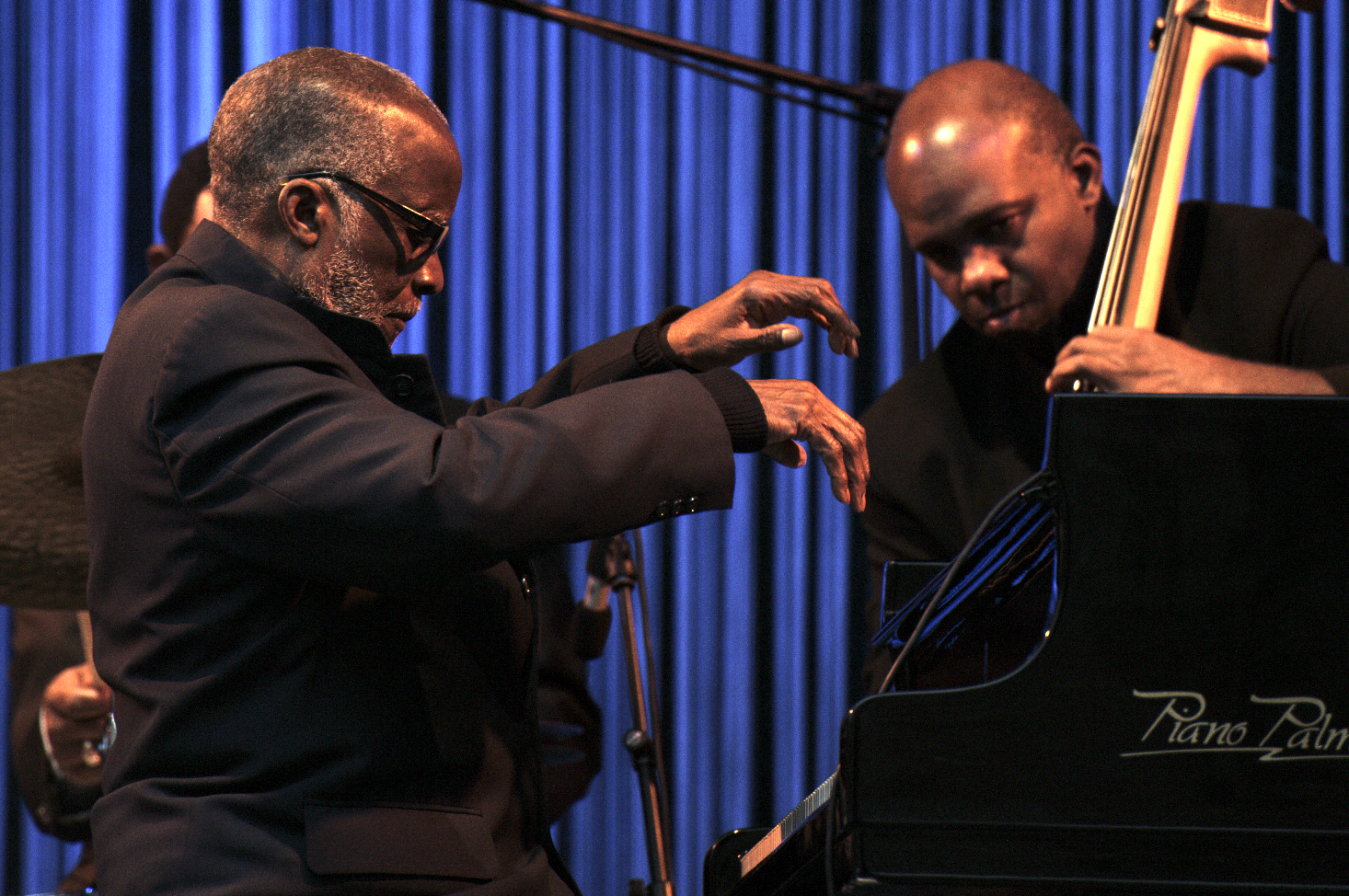
Miles Davis said he learned about space from him; hip-hop producers later learned about samples from his records.
| At a glance | |
|---|---|
| Type | PERSON — musician |
| Dates | – |
| Chicago connection | CORE — see the Chicago connection section |
| Known for | Miles Davis said he learned about space from him; hip-hop producers later learned about samples from his records. |
| Verification | VERIFIED |
| CTL ID | CTL-ENC-000221 |
Overview
Miles Davis said he learned about space from him; hip-hop producers later learned about samples from his records. Ahmad Jamal (born Frederick Russell Jones, July 2, 1930, Pittsburgh, Pennsylvania — died April 16, 2023, Ashley Falls, Massachusetts) was an American pianist and small-group leader whose use of space, dynamic contrast, and silence inside the arrangement made his trio one of the most successful in jazz. The CultureTechLens master carries him at VERIFIED on the National Endowment for the Arts' own description, quoted in his master record: "one of the subtlest virtuosos of jazz piano," known for leadership of small ensembles and the 1958 album At the Pershing. This record holds that grade exactly.
The prodigy facts are unusually well dated. He sat down at a piano at age three, copying his uncle Lawrence; formal lessons began at seven with Mary Cardwell Dawson, the concert singer who founded the National Negro Opera Company, and continued with James Miller. By ten he was composing and orchestrating; Art Tatum heard him in his teens and called him "a coming great." He joined the musicians' union at fourteen — admitted, in the JamBase account, two years before the typical age requirement — graduated from Westinghouse High School in 1948 (a school that also produced Erroll Garner, Billy Strayhorn, and Mary Lou Williams), and toured with George Hudson's orchestra at seventeen.
Life and career
In 1950 he moved to Chicago, converted to Islam, and took the name Ahmad Jamal — a change he described, in the biographical record, as re-establishing his original name rather than adopting a new one. He formed his own group in 1951, and with John Hammond's help began recording for Okeh Records. The trio that fixed his reputation — Israel Crosby on bass, Vernel Fournier on drums — became the house band at Chicago's Pershing Hotel lounge, and the live album recorded there, At the Pershing: But Not for Me (1958), became one of the most successful recordings in the history of instrumental music, per his official biography as carried in the obituary record. Its arrangement of "Poinciana" became his signature tune. Jamal himself, asked late in life for his favorite of his own records, named the Pershing album as the one closest to artistic perfection he could get.
The influence ran in two documented directions. Within jazz, his spacious approach was heralded as laying groundwork for cool jazz, and his small-group leadership influenced Davis and the pianists who followed. Across genres, his recordings — the Pershing album and the 1970 trio album The Awakening prominently — were sampled by hip-hop acts including De La Soul, Pete Rock, Nas, 9th Wonder, and Earl Sweatshirt, carrying his touch into a music made two generations later. He disliked the word "jazz" itself, calling his music American classical music and correcting interviewers who used the label — a position he held, per the biographical account, for seventy years, on the stated ground that the tradition deserved the same claim to seriousness as any European one.
The honors are institutional and late-career as well as early: the NEA named him a Jazz Master in 1994 — the master's verification claim — Yale named him a Duke Ellington Fellow the same year, the Kennedy Center named him a Living Jazz Legend in 2007, and the Recording Academy gave him the Grammy Lifetime Achievement Award in 2017. His last official recording was the 2019 album Ballades. He died on April 16, 2023, at ninety-two; his death was confirmed by his daughter, Sumayah Jamal. For CTL he is a Chicago-made record inside a Pittsburgh birth: the trio, the album, and the style were all formed at the Pershing, on the South Side.
Chicago connection
In 1950 he moved to Chicago, converted to Islam, and took the name Ahmad Jamal — a change he described, in the biographical record, as re-establishing his original name rather than adopting a new one. The trio that fixed his reputation — Israel Crosby on bass, Vernel Fournier on drums — became the house band at Chicago's Pershing Hotel lounge, and the live album recorded there, At the Pershing: But Not for Me (1958), became one of the most successful recordings in the history of instrumental music, per his official biography as carried in the obituary record. For CTL he is a Chicago-made record inside a Pittsburgh birth: the trio, the album, and the style were all formed at the Pershing, on the South Side. [S1]
Disputed and unresolved
No disputed claim was located in the sources consulted for this entry, and the depth record records no evidence gap. Open items, if any, are listed in Editorial notes.
See also
Relationships
- recorded_for — Chess Records (CTL-E-0165) — Restated from the CultureTechLens Knowledge Graph: Ahmad Jamal (CTL-E-0029) recorded_for Chess Records (CTL-E-0165), verification Verified.
- performed_at — Pershing Hotel club (Pershing Lounge / Budland) (CTL-E-0959) — Restated from the CultureTechLens Knowledge Graph: Ahmad Jamal (CTL-E-0029) performed_at Pershing Hotel club (Pershing Lounge / Budland) (CTL-E-0959), verification Verified.
- performed_at — Kitty Kat Club (CTL-E-0949) — Restated from the CultureTechLens Knowledge Graph: Ahmad Jamal (CTL-E-0029) performed_at Kitty Kat Club (CTL-E-0949), verification Verified.
- recorded_for — Argo Records → Cadet Records (CTL-E-1194) — Restated from the CultureTechLens Knowledge Graph: Ahmad Jamal (CTL-E-0029) recorded_for Argo Records → Cadet Records (CTL-E-1194), verification Verified.
- affiliated_with — AFM segregated Black local (Chicago) (CTL-E-0587) — Restated from the CultureTechLens Knowledge Graph: Ahmad Jamal (CTL-E-0029) affiliated_with AFM segregated Black local (Chicago) (CTL-E-0587), verification Verified.
- performed_at — Jazz Showcase (CTL-E-5075) — Restated from the CultureTechLens Knowledge Graph: Ahmad Jamal (CTL-E-0029) performed_at Jazz Showcase (CTL-E-5075), verification Verified.
Sources
- S1: National Endowment for the Arts. "Ahmad Jamal." NEA Jazz Masters. Carried as the CTL master verification source for CTL-P-0043. Accessed October 25, 2026. https://www.arts.gov/honors/jazz/ahmad-jamal.
- S2: Pianoers. "Ahmad Jamal: Biography, Musical Style & Key Recordings." Accessed October 25, 2026. https://pianoers.com/ahmad-jamal-biography/.
- S3: JamBase. "Renowned Jazz Pianist Ahmad Jamal Has Died." Accessed October 25, 2026. https://www.jambase.com/article/ahmad-jamal-obituary.
- S4: CultureTechLens Knowledge Graph (schema v0.3.1), entities.json and relationships.json — CTL's own graph register, consulted 2026-10-29 for crosswalk facts and restated relationships.
Cite this entry
- Permanent ID: CTL-ENC-000221 · Crosswalked graph record: CTL-P-0043 · Version: 0.1 · Date: 2026-10-29
- Chicago: CultureTechLens. "Ahmad Jamal." CultureTechLens Encyclopedia, version 0.1, October 29, 2026. CultureTechLens NFP. CTL-ENC-000221.
- APA: CultureTechLens. (2026). Ahmad Jamal (Version 0.1, Entry CTL-ENC-000221). CultureTechLens Encyclopedia. CultureTechLens NFP.
- MLA: CultureTechLens. "Ahmad Jamal." CultureTechLens Encyclopedia, version 0.1, CultureTechLens NFP, 29 Oct. 2026. Entry CTL-ENC-000221.
Further reading
- CultureTechLens Knowledge Graph record CTL-P-0043 (crosswalked; published graph register id CTL-E-0029).
Image credits
- Ahmad Jamal photograph: see Images block in the frontmatter for the full credit line, rights status, and rights document.
Citation
CultureTechLens. "Ahmad Jamal." CultureTechLens Encyclopedia, Vol. 1 — Black Chicago, version 0.1, 2026-10-29. CultureTechLens NFP. CTL-ENC-000221.
<!-- =======================