 CULTURETECHLENS
The Encyclopedia · CTL-ENC-000186
Addie Wyatt
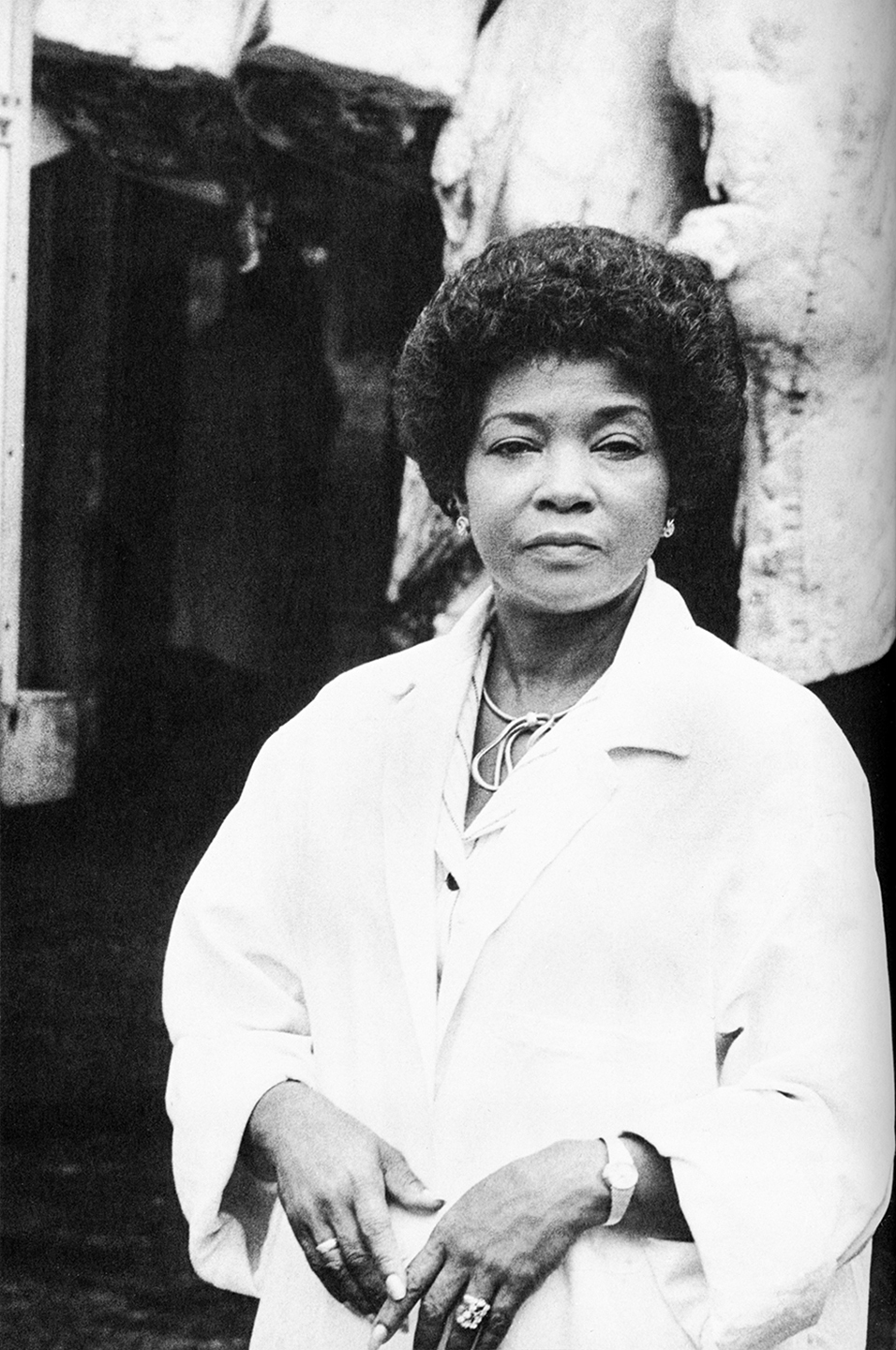
She described her own fight in one sentence the labor movement kept quoting: she was fighting on behalf of workers, fighting as a Black person, and fighting as a female.
| At a glance | |
|---|---|
| Type | PERSON — activist |
| Dates | – |
| Chicago connection | CORE — see the Chicago connection section |
| Known for | She described her own fight in one sentence the labor movement kept quoting: she was fighting on behalf of workers, |
| Verification | PROVISIONAL |
| CTL ID | CTL-ENC-000186 |
Overview
She described her own fight in one sentence the labor movement kept quoting: she was fighting on behalf of workers, fighting as a Black person, and fighting as a female. Addie L. Wyatt (born Addie Loraine Cameron, March 28, 1924, Brookhaven, Mississippi — died 2012) was a labor leader, ordained minister, and civil rights and women's rights activist whose career ran from a Chicago meatpacking line in 1941 to the international vice presidency of her union. Her family left Mississippi for Chicago in 1930, part of the Great Migration, and she grew up witnessing the systemic inequalities African Americans faced in the workplace and beyond. At sixteen she married Claude Wyatt Jr., her high school sweetheart, in 1940, and the couple had two children.
In 1941 she applied for a typist's job at an Armour & Company meatpacking plant. Black women were barred from clerical positions, so she was put to work canning stew for the army — and discovered, as the UFCW's history recounts, that the union contract paid her more on the packinghouse floor than the typist's job would have, in a union that did not discriminate against its members. She joined the United Packinghouse Workers of America in 1942; the UPWA was an interracial union with a significant and active African American and female membership and a progressive stance on racial and gender equality. Her organizing rose fast: in 1953 she was elected vice president of UPWA Local 56 — the first Black woman to hold a senior office in a major American labor union, in the Bay State Banner's formulation — and in 1954 she became the first African American woman president of a UPWA local, negotiating contracts that improved wages, safety conditions, and benefits while bridging racial and gender divides.
Life and career
The structure changed around her and she kept rising through it. When the UPWA merged with the Amalgamated Meat Cutters and Butcher Workmen of North America in 1968, Wyatt became the founding director of its Women's Affairs Department. In 1976 she became the first female international vice president in the Amalgamated's history and, after the 1979 merger that formed the United Food and Commercial Workers, the first female African American international vice president of the UFCW, directing its human rights, women's affairs, and civil rights work. Time named her one of its Twelve Women of the Year in 1975–76 (the sources differ by a year on the honor's dating).
The union hall was one of three pulpits. Wyatt was ordained in 1955, and she and her husband, the Rev. Claude Wyatt, founded the Vernon Park Church of God in Chicago that year. She served on President John F. Kennedy's Commission on the Status of Women from 1962, working on the labor legislation committee to which Eleanor Roosevelt appointed her; she was a founding member of the National Organization for Women, a founder of the Coalition of Labor Union Women — delivering the keynote to the 3,200 delegates at CLUW's first gathering — and a founding member of the Coalition of Black Trade Unionists. She worked alongside Dr. Martin Luther King Jr., participated in the 1963 March on Washington, the Selma to Montgomery march, and the Chicago movement's demonstrations, and fought for the Equal Rights Amendment, equal pay, child care, and better health care for working women. She formally retired from the labor movement in 1984 and was inducted into the Civil Rights Walk of Fame in Atlanta in 2005. For CTL, Wyatt is Chicago labor history at its intersection point: the packinghouse worker whose three fights — worker, Black, female — she refused, on the record, to separate. This record is a staged proposal pending the founder's classification sitting.
Chicago connection
Wyatt (born Addie Loraine Cameron, March 28, 1924, Brookhaven, Mississippi — died 2012) was a labor leader, ordained minister, and civil rights and women's rights activist whose career ran from a Chicago meatpacking line in 1941 to the international vice presidency of her union. Her family left Mississippi for Chicago in 1930, part of the Great Migration, and she grew up witnessing the systemic inequalities African Americans faced in the workplace and beyond. Claude Wyatt, founded the Vernon Park Church of God in Chicago that year. Martin Luther King Jr., participated in the 1963 March on Washington, the Selma to Montgomery march, and the Chicago movement's demonstrations, and fought for the Equal Rights Amendment, equal pay, child care, and better health care for working women. For CTL, Wyatt is Chicago labor history at its intersection point: the packinghouse worker whose three fights — worker, Black, female — she refused, on the record, to separate. [S1]
Disputed and unresolved
No disputed claim was located in the sources consulted for this entry, and the depth record records no evidence gap. Open items, if any, are listed in Editorial notes.
See also
Relationships
- collaborated_with — Martin Luther King Jr. (CTL-E-0342) — Restated from the CultureTechLens Knowledge Graph: Addie Wyatt (CTL-E-0084) collaborated_with Martin Luther King Jr. (CTL-E-0342), verification Provisional.
- affiliated_with — Vernon Park Church of God (CTL-E-1407) — Restated from the CultureTechLens Knowledge Graph: Addie Wyatt (CTL-E-0084) affiliated_with Vernon Park Church of God (CTL-E-1407), verification Verified.
- member_of_organization — Operation Breadbasket (CTL-E-0296) — Restated from the CultureTechLens Knowledge Graph: Addie Wyatt (CTL-E-0084) member_of_organization Operation Breadbasket (CTL-E-0296), verification Provisional.
- member_of_organization — Operation PUSH (CTL-E-0288) — Restated from the CultureTechLens Knowledge Graph: Addie Wyatt (CTL-E-0084) member_of_organization Operation PUSH (CTL-E-0288), verification Provisional.
- related_to — Barack Obama (CTL-E-0079) — Restated from the CultureTechLens Knowledge Graph: Addie Wyatt (CTL-E-0084) related_to Barack Obama (CTL-E-0079), verification Provisional.
- based_in — City of Chicago (CTL-E-1475) — Restated from the CultureTechLens Knowledge Graph: Addie Wyatt (CTL-E-0084) based_in City of Chicago (CTL-E-1475), verification Provisional.
Sources
- S1: United Food and Commercial Workers International Union. "Addie Wyatt." Black History Month, 2022. Accessed October 25, 2026. https://www.ufcw.org/black-history-month-2022/.
- S2: BlackPast.org. "Addie Wyatt (1924–2012)." Accessed October 25, 2026. https://blackpast.org/african-american-history/wyatt-rev-addie-1924-2012/.
- S3: JRank. "Addie L. Wyatt Biography." Accessed October 25, 2026. https://biography.jrank.org/pages/3000/Wyatt-Addie-L.html.
- S4: Coalition of Labor Union Women. "CLUW Memorial Page: Addie Wyatt." Accessed October 25, 2026. https://www.cluw.org/index.cfm?zone=/unionactive/view_article.cfm&HomeID=266081&page=CLUW20Memorial20Page.
- S5: CultureTechLens Knowledge Graph (schema v0.3.1), entities.json and relationships.json — CTL's own graph register, consulted 2026-10-29 for crosswalk facts and restated relationships.
Cite this entry
- Permanent ID: CTL-ENC-000186 · Crosswalked graph record: CTL-ESS-0016 · Version: 0.1 · Date: 2026-10-29
- Chicago: CultureTechLens. "Addie Wyatt." CultureTechLens Encyclopedia, version 0.1, October 29, 2026. CultureTechLens NFP. CTL-ENC-000186.
- APA: CultureTechLens. (2026). Addie Wyatt (Version 0.1, Entry CTL-ENC-000186). CultureTechLens Encyclopedia. CultureTechLens NFP.
- MLA: CultureTechLens. "Addie Wyatt." CultureTechLens Encyclopedia, version 0.1, CultureTechLens NFP, 29 Oct. 2026. Entry CTL-ENC-000186.
Further reading
- CultureTechLens Knowledge Graph record CTL-ESS-0016 (crosswalked; published graph register id CTL-E-0084).
Image credits
- Addie Wyatt photograph: see Images block in the frontmatter for the full credit line, rights status, and rights document.
Citation
CultureTechLens. "Addie Wyatt." CultureTechLens Encyclopedia, Vol. 1 — Black Chicago, version 0.1, 2026-10-29. CultureTechLens NFP. CTL-ENC-000186.
<!-- =======================