 CULTURETECHLENS
The Encyclopedia · CTL-ENC-000241
A. Philip Randolph
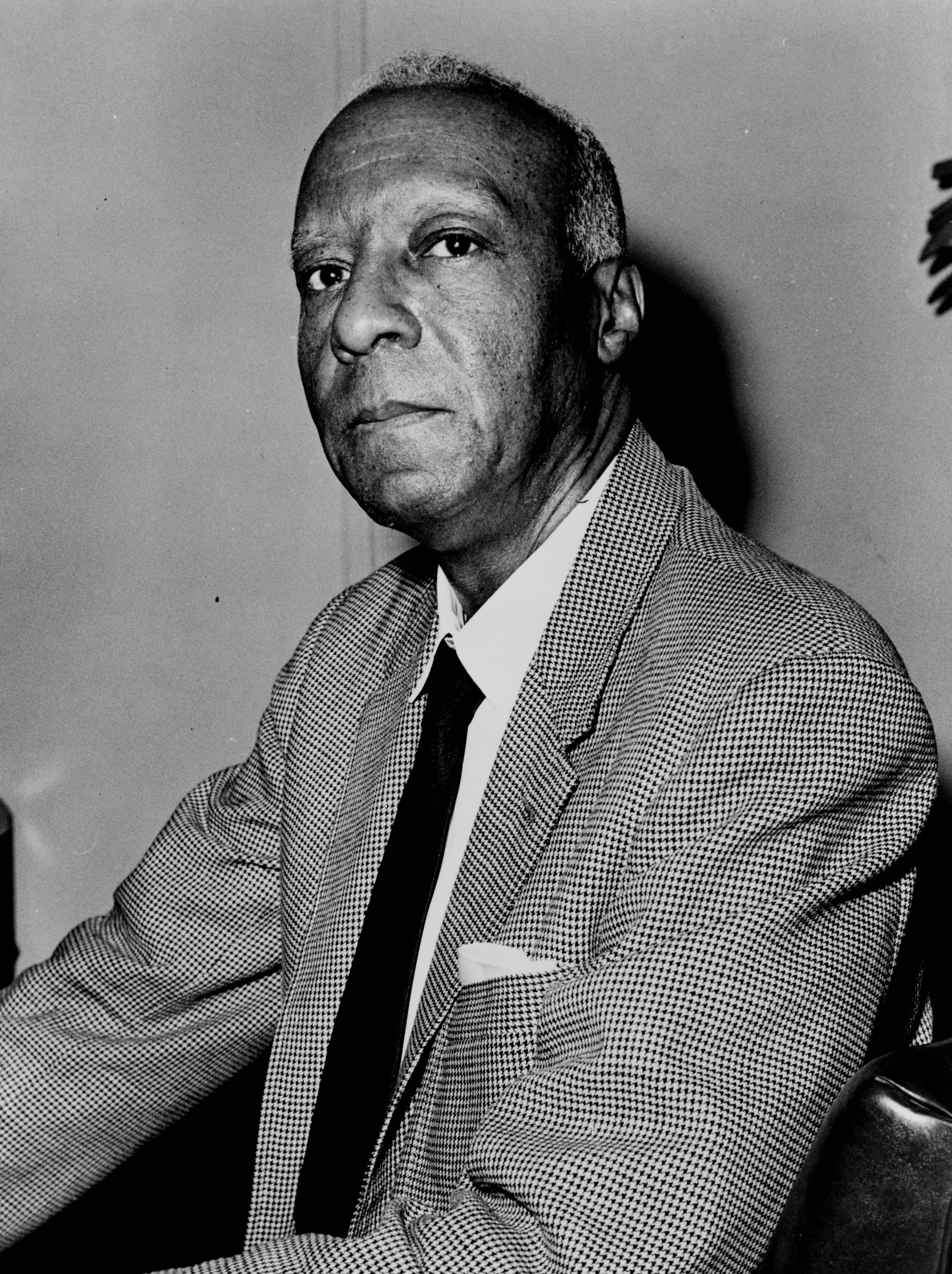
He organized the porters first, and the country had to follow.
| At a glance | |
|---|---|
| Type | PERSON — person |
| Dates | – |
| Chicago connection | SIGNIFICANT — see the Chicago connection section |
| Known for | He organized the porters first, and the country had to follow. |
| Verification | PROVISIONAL |
| CTL ID | CTL-ENC-000241 |
Overview
He organized the porters first, and the country had to follow. Asa Philip Randolph (1889–1979), born in Crescent City, Florida, and raised in Jacksonville, was the labor leader who founded the Brotherhood of Sleeping Car Porters in 1925 and turned a workplace fight into the strategic template of the modern civil-rights movement. The King Institute at Stanford records that he graduated from Cookman Institute in 1911 and, after moving to New York, studied at the City College of New York while working as an elevator operator, a porter, and a waiter. In 1917 he co-founded The Messenger, an African-American socialist journal critical of American involvement in World War I; the Columbia Encyclopedia adds that he organized a small union of elevator operators that same year and ran unsuccessfully for New York secretary of state on the Socialist ticket.
The porters were the decisive assignment. Pullman sleeping-car porters were Black workers subjected to low pay, long hours, and company opposition to any independent union. Randolph was elected president of the Brotherhood of Sleeping Car Porters when it was formed in 1925, and despite bitter opposition by the Pullman Company he eventually won recognition for the union, pay increases, and shorter hours; Stanford dates his national prominence to 1937, when he successfully battled the Pullman Palace Car Company for recognition of the union. The AFL-CIO, where he later served as a vice president, summarizes the drive as a ten-year campaign that made the Brotherhood the first successful Black trade union.
Life and career
The method — the credible threat of mass march — came in 1941. Randolph organized the March on Washington Movement to protest job discrimination in the defense industry; the march never had to happen, because, as both the Columbia Encyclopedia and the King Institute record, President Franklin D. Roosevelt issued Executive Order 8802 in June 1941, banning racial discrimination in federal employment and defense industries and establishing the Fair Employment Practices Committee. After the war he founded the League for Nonviolent Civil Disobedience Against Military Segregation, and his campaign influenced President Harry S. Truman to desegregate the armed services in 1948. Britannica Kids records that he was awarded the Spingarn Medal in 1942 and the Presidential Medal of Freedom in 1964.
Inside the house of labor he fought the same fight. Following the merger of the AFL with the CIO, Randolph was appointed to the AFL-CIO executive council in 1955 and became a vice president in 1957 — Britannica gives his vice-presidential service as 1957 to 1977 — and he helped found the Negro American Labor Council in 1960 to fight discrimination within the AFL-CIO itself. In 1963 he was director of the March on Washington for Jobs and Freedom, one of the largest civil-rights demonstrations ever conducted in the United States, the march his 1941 movement had prefigured. The A. Philip Randolph Institute was founded in 1964 to promote cooperation between labor and the Black community. He retired from the presidency of the Brotherhood in 1968 and died on May 16, 1979. For Chicago, his union's largest division and its Pullman hometown politics made the city a second headquarters of the movement he led; for CTL, Randolph is the connective record between Black labor history and the civil-rights movement proper.
The wartime record also preserves the costs of the method. During the First World War, Randolph and his Messenger co-editor Chandler Owen were arrested under the Espionage Act, charged with treason after opposing African Americans joining the army — the case that first made his name national as a dissenter rather than only a journalist. After that war he lectured at the Rand School of Social Science, and in 1940 he helped establish the Union for Democratic Action, which called for American assistance to defeat fascism. The sequence matters for reading the later triumphs: the man who would face down two presidents over Executive Orders 8802 and 9981 had been prosecuting his argument about Black labour, war, and citizenship in public for a quarter-century before either order was signed. This record is a staged proposal pending the founder's classification sitting.
Chicago connection
For Chicago, his union's largest division and its Pullman hometown politics made the city a second headquarters of the movement he led; for CTL, Randolph is the connective record between Black labor history and the civil-rights movement proper. [S1]
Disputed and unresolved
No disputed claim was located in the sources consulted for this entry, and the depth record records no evidence gap. Open items, if any, are listed in Editorial notes.
See also
Relationships
- related_to — Martin Luther King Jr. (CTL-E-0342) — Restated from the CultureTechLens Knowledge Graph: A. Philip Randolph (CTL-E-0352) related_to Martin Luther King Jr. (CTL-E-0342), verification Verified.
- related_to — A. Philip Randolph / Milton P. Webster / Brotherhood of Sleeping Car Porters (CTL-E-0898) — Restated from the CultureTechLens Knowledge Graph: A. Philip Randolph (CTL-E-0352) related_to A. Philip Randolph / Milton P. Webster / Brotherhood of Sleeping Car Porters (CTL-E-0898), verification Verified.
- initiated — March on Washington for Jobs and Freedom (1963) (CTL-E-1561) — Restated from the CultureTechLens Knowledge Graph: A. Philip Randolph (CTL-E-0352) initiated March on Washington for Jobs and Freedom (1963) (CTL-E-1561), verification Verified.
- related_to — W. E. B. Du Bois (CTL-E-1484) — Restated from the CultureTechLens Knowledge Graph: A. Philip Randolph (CTL-E-0352) related_to W. E. B. Du Bois (CTL-E-1484), verification Verified.
- affiliated_with — Pullman porters (distribution network) (CTL-E-0486) — Restated from the CultureTechLens Knowledge Graph: A. Philip Randolph (CTL-E-0352) affiliated_with Pullman porters (distribution network) (CTL-E-0486), verification Verified.
- member_of_organization — Brotherhood of Sleeping Car Porters (CTL-E-3288) — Restated from the CultureTechLens Knowledge Graph: A. Philip Randolph (CTL-E-0352) member_of_organization Brotherhood of Sleeping Car Porters (CTL-E-3288), verification Verified.
- affiliated_with — Pullman sleeping car porters (CTL-E-1086) — Restated from the CultureTechLens Knowledge Graph: A. Philip Randolph (CTL-E-0352) affiliated_with Pullman sleeping car porters (CTL-E-1086), verification Verified.
Sources
- S1: Columbia University Press. "Randolph, Asa Philip." Columbia Electronic Encyclopedia, 6th ed. Accessed October 25, 2026. https://www.FactMonster.com/encyclopedia/people/social-science/labor/randolph-asa-philip.
- S2: The Martin Luther King, Jr. Research and Education Institute, Stanford University. "From A. Philip Randolph." Accessed October 25, 2026. https://kinginstitute.stanford.edu/king-papers/documents/philip-randolph.
- S3: Encyclopaedia Britannica. "Asa Philip Randolph." Britannica Kids. Accessed October 25, 2026. https://kids.britannica.com/students/article/Asa-Philip-Randolph/313139.
- S4: Spartacus Educational. "Asa Philip Randolph." Accessed October 25, 2026. https://spartacus-educational.com/USArandolph.htm.
- S5: CultureTechLens Knowledge Graph (schema v0.3.1), entities.json and relationships.json — CTL's own graph register, consulted 2026-10-29 for crosswalk facts and restated relationships.
Cite this entry
- Permanent ID: CTL-ENC-000241 · Crosswalked graph record: CTL-ESS-0007 · Version: 0.1 · Date: 2026-10-29
- Chicago: CultureTechLens. "A. Philip Randolph." CultureTechLens Encyclopedia, version 0.1, October 29, 2026. CultureTechLens NFP. CTL-ENC-000241.
- APA: CultureTechLens. (2026). A. Philip Randolph (Version 0.1, Entry CTL-ENC-000241). CultureTechLens Encyclopedia. CultureTechLens NFP.
- MLA: CultureTechLens. "A. Philip Randolph." CultureTechLens Encyclopedia, version 0.1, CultureTechLens NFP, 29 Oct. 2026. Entry CTL-ENC-000241.
Further reading
- CultureTechLens Knowledge Graph record CTL-ESS-0007 (crosswalked; published graph register id CTL-E-0352).
Image credits
- A. Philip Randolph photograph: see Images block in the frontmatter for the full credit line, rights status, and rights document.
Citation
CultureTechLens. "A. Philip Randolph." CultureTechLens Encyclopedia, Vol. 1 — Black Chicago, version 0.1, 2026-10-29. CultureTechLens NFP. CTL-ENC-000241.
<!-- =======================