 CULTURETECHLENS
Chicago Black Renaissance
STAGED RECORD — this record is staged and has not been merged into the canonical CultureTechLens Knowledge Graph. It is preserved as intake backlog for the graph’s enrichment program; the STAGED label replaces any evidence grade until the record is graded into the canonical store.
UNVERIFIED (no verification object) evidence grade — master store (canonical CSV)
STAGED evidence grade — build store (JSON graph)
Combined Graph record U-03657 · provenance: canonical master store (CSV), record CTL-E-0210 + build store (JSON graph), record CTL-E-5492. Master record source: CTL priority intake 2026-10-18 — UNVERIFIED, verify before public citation.
The Chicago Black Renaissance was the creative movement that flowered in Chicago's South Side Black Belt — Bronzeville — from the 1930s through the 1950s, when writers, visual artists, dancers, scholars, and musicians built a self-consciously Black urban culture out of the Great Migration's raw material. Its literary core — Richard Wright, Margaret Walker, Gwendolyn Brooks, Willard Motley, and the South Side Writers Group — turned away from the Harlem Renaissance's folk retrospect toward a literary naturalism of kitchenettes, stockyards, and South Side streets, theorized in Wright's "Blueprint for Negro Writing" and crowned when Brooks's Annie Allen won the Pulitzer Prize in 1950. Its institutions were community-built: Vivian G. Harsh's Hall Branch Library, whose Special Negro Collection and Book Review and Lecture Forum made a public library the movement's salon; the South Side Community Art Center, opened in 1940 and dedicated by Eleanor Roosevelt in 1941; the Illinois Writers' Project; and the Chicago Defender's pages. In visual art, Archibald Motley, Charles White, Eldzier Cortor, and Margaret Burroughs painted and organized; in music, Thomas A. Dorsey's gospel and the South Side's blues and jazz carried the same neighborhoods into sound. More working-class, more politically radical, and far less dependent on white patrons than Harlem's Renaissance, Chicago's movement was documented as it happened by St. Clair Drake and Horace Cayton's Black Metropolis — and it seeded the Black-run institutions, above all Burroughs's DuSable Museum, that carried Black Chicago culture into the civil-rights era.
Answer summary · this record in brief, from its own record text
The Chicago Black Renaissance was the creative movement that flowered in Chicago's South Side Black Belt — Bronzeville — from the 1930s through the 1950s, when writers, visual artists, dancers, scholars, and musicians built a self-consciously Black urban culture out of the Great Migration's raw material.
The record
- Also known as: Black Chicago Renaissance
Notes
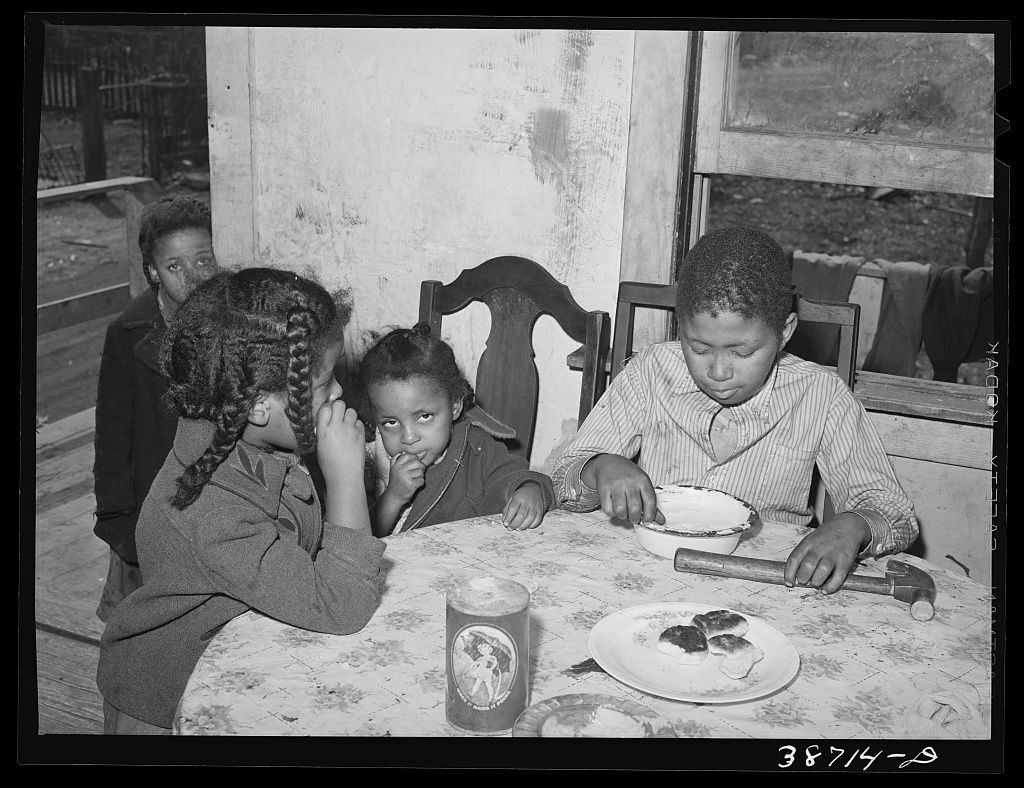
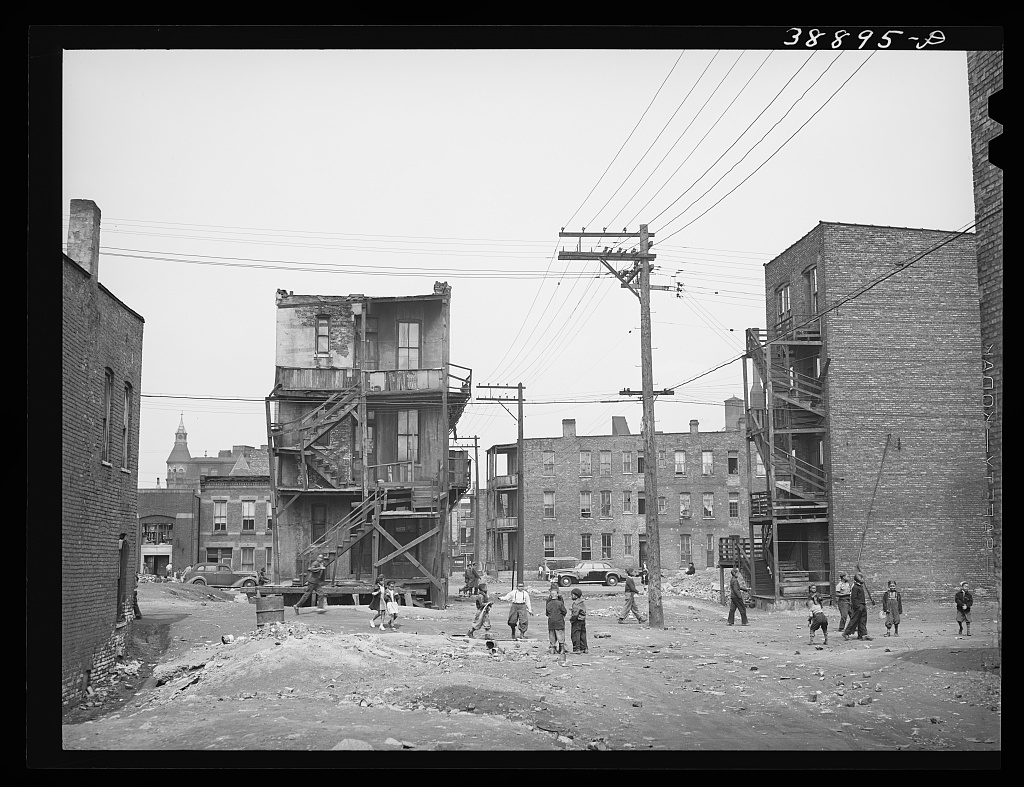
STAGED 2026-10-16 under CTL-GOV-006 from the CULTGRAPH seed audit — NOT merged; founder merge go required. Five components: (1) abstract = description above; (2) facts and (3) statistics in the packet MD (statistics sourced and dated; no movement-membership census exists and none is invented); (4) references = sources above plus packet MD reference list; (5) Curator's Judgment is in the packet MD, labeled DRAFT for William's review, and is not evidence. Form: type Event / subtype 'other' is a PATTERN CALL for William (no Movement type exists in schema v0.2.6; Harlem Renaissance sits in the graph as Practice/other, CTL-E-5413 — the alternative form, flagged in the packet). Gate A duplicate sweep 2026-10-16: no exact, normalized, or alias match for 'Chicago Black Renaissance' in entities.json (3,200 records); nearest records are Harlem Renaissance (CTL-E-5413, DISTINCT) and The Renaissance Collaborative (CTL-E-0909, unrelated organization). Media layer (sixth component) is staged in the media field: map SPEC, one CLEARED visual with a PHOTO-001 condition + one HELD, chart BUILT, video HELD with reason, audio one FILLED (LOC Brooks 1961) + one HELD. Harsh Collection caution: the graph carries three Harsh Collection records (CTL-E-0202 / 0507 / 4220) already in the GOV-006 merge queue; this packet deliberately stages no relationship to any of them until that merge adjudication lands — the Hall Branch Library (CTL-E-1243) carries the institutional link instead. MEDIA LAYER (staged 2026-10-16; full per-asset PHOTO-001 records + embed specs in the packet's staged JSON, Drive packet folder): map = SPEC — address-based embed staged; coordinates not asserted; geocode pending | visual_assets = CLEARED — with PHOTO-001 condition noted: Negro boys on Easter morning. Southside, Chicago, Illinois; HELD: The bar at the Palm Tavern, 47th Street, Chicago (Russell Lee, April 1941) | chart = BUILT | video = HELD (No CTL-owned @culturetechlens video on this subject exists: the CTL Shorts link map (2026-10-15) was checked a) | audio = FILLED: Gwendolyn Brooks reading her poems with comment — Recording Laboratory, Library of Congress, January 19, 1961; HELD: Period gospel and South Side recordings associated with Thomas A. Dorsey and circle musicians Project ID assigned at merge 2026-10-16: BVM-005. Staged as 'CULTGRAPH' (the origin program of the 2026-08-26 seed set) — not a registered schema project; corrected at merge per validate.py on the Kirkland precedent. Registering CULTGRAPH as a schema project is a separate Gate D step, not done inside this merge.
Relationships
- Archibald Motley — related to
Archibald Motley, the movement's defining painter of Bronzeville nightlife, in the South Side Community Art Center's inaugural 1940 exhibition circle. - Bronzeville — held at
The movement was centered in Bronzeville, the South Side Black Belt — the geography every account of the movement names as its ground. - Bronzeville — located in
STRONG EVIDENCE - DuSable Black History Museum — related to
Institutional legacy link: the DuSable Museum of African American History, founded by movement artist Margaret Burroughs, carries the Renaissance's institution-building into the present. Legacy, not period, link — stated as such. - George Cleveland Hall Branch Library — held at
The George Cleveland Hall Branch Library (opened January 1932) under Vivian G. Harsh housed the Special Negro Collection and, from 1933, the Book Review and Lecture Forum — a key site of the movement. - Great Migration — related to
The Great Migration supplied the movement's people and subject: tens of thousands of Black Southerners reached Chicago's South Side, and its writers and artists turned that migration into literature, art, and scholarship. - Gwendolyn Brooks — related to
Gwendolyn Brooks, the movement's poetic voice: A Street in Bronzeville (1945) and Annie Allen (1949), which won the Pulitzer Prize in 1950; a Hall Branch Book Review and Lecture Forum guest (1949 forum flyer, Harsh Collection). - Harlem Renaissance — related to
Sibling movement, held DISTINCT: Harlem's Renaissance was centered in New York in the 1920s; Chicago's flowered a decade later on the South Side, more working-class and politically radical, with its own institutions. The two are linked, never merged. - Katherine Dunham — related to
Katherine Dunham, dancer and choreographer named among the movement's artists in the standard accounts, formed in the same South Side institutional world. - Lorraine Hansberry — related to
Lorraine Hansberry, raised in the movement's South Side world; her A Raisin in the Sun (graph era 1959) is staged here as the movement's late flowering. - Margaret Burroughs — related to
Margaret Burroughs, movement artist and organizer: co-founder of the South Side Community Art Center circle and founder of the DuSable Museum — the movement's institutional heir. - Margaret Walker — related to
Margaret Walker, South Side Writers Group member and movement poet (For My People), part of the Wright circle at the Abraham Lincoln Centre. - Richard Wright — related to
Richard Wright, the movement's literary center: a South Side Writers Group member whose 'Blueprint for Negro Writing' is treated as the movement's central piece of literary theory, and whose Native Son (1940) defined its naturalism. - South Side Community Art Center — held at
The South Side Community Art Center opened December 15, 1940 with WPA Federal Art Project support and an inaugural exhibition of the movement's Black artists; it was the movement's visual-arts home, dedicated by Eleanor Roosevelt on May 7, 1941. - Thomas A. Dorsey — related to
Thomas A. Dorsey, named in the standard accounts among the movement's musicians: the gospel music he built in Bronzeville churches is the movement's sacred sound. - Willard Motley — related to
Willard Motley, movement novelist of Chicago's Black Belt and South Side Writers Group contemporary; his fiction carried the movement's naturalism into the postwar novel.
Referenced by
- Arna Bontemps — related to → this record
- Charles White — related to → this record
- Fenton Johnson — related to → this record
- Frank Marshall Davis — related to → this record
- William McBride — related to → this record
Sources
- City of Chicago, Commission on Chicago Landmarks, theme report: The Chicago Black Renaissance Literary Movement (1930s-1950s) — supports: the movement's 1930s-1950s span, its Illinois Writers' Project and Chicago School of Sociology influences, its literary-naturalism turn, and its Bronzeville institutions (Parkway Community House, South Side Community Art Center, Hall Library) (primary source · build store)
- Chicago Public Library, 'Vivian G. Harsh: Librarian of the Chicago Black Renaissance' (chipublib.org) — supports: Hall Branch opening January 1932 at 48th and Michigan in Bronzeville, Harsh as first African American branch head, and the Special Negro Collection as a resource for the movement's writers (build store)
- Black Metropolis Research Consortium exhibit text (University of Chicago Library), drawing on the Vivian G. Harsh Research Collection — supports: the Book Review and Lecture Forum (begun 1933, bimonthly) as a key site of the movement, and the Illinois Writers' Project study The Negro in Illinois (1936-1942, 100+ researchers under Arna Bontemps and Jack Conroy) (build store)
- Robert Bone, 'Richard Wright and the Chicago Renaissance,' Callaloo 28 (1986) — supports: the scholarly naming of the movement and Wright's centrality to it (build store)
- Anne Meis Knupfer, The Chicago Black Renaissance and Women's Activism (University of Illinois Press, 2006), and Elizabeth Schroeder Schlabach, Along the Streets of Bronzeville (University of Illinois Press, 2013) — support: the movement's definition (arts, Pan-African interest, social activism), the South Side Writers Group (debuted June 1936, some twenty members), and the movement's institutional geography (build store)
- Library of Congress, Gwendolyn Brooks author page and Archive of Recorded Poetry and Literature — supports: A Street in Bronzeville (1945), Annie Allen (1949) and its Pulitzer Prize, and Brooks's place in the movement's literary core (build store)
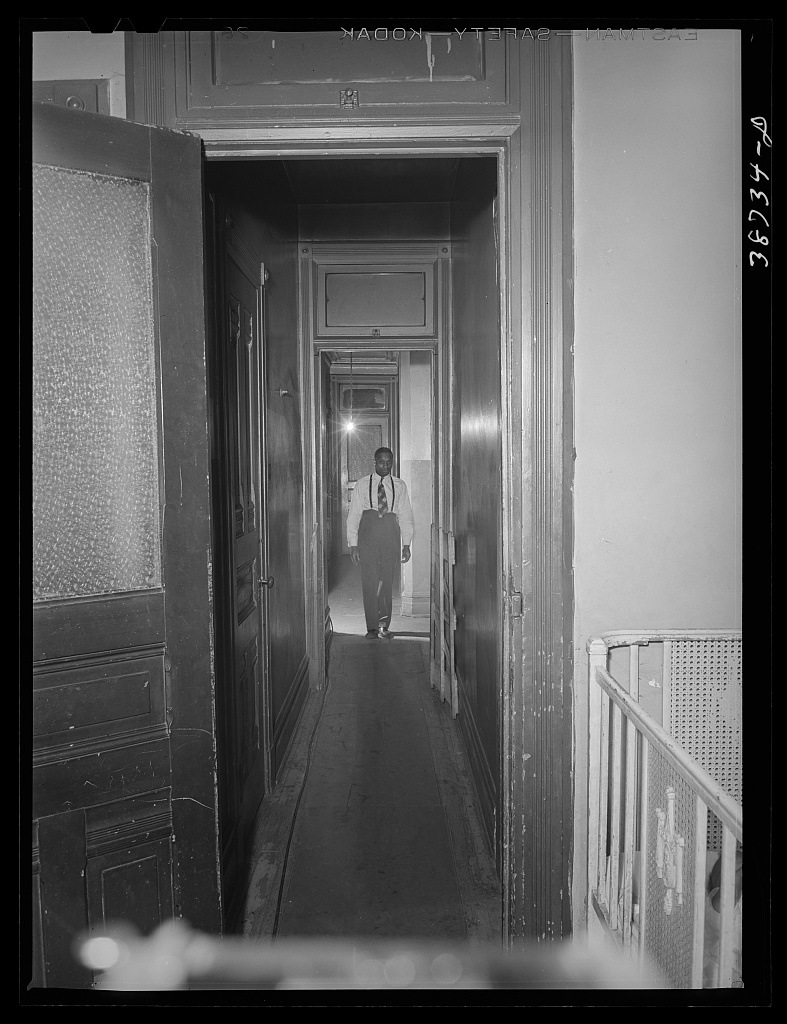
- Library of Congress, Prints & Photographs Division, FSA/OWI collection item 2017789025 (Russell Lee, April 1941) — supports: the movement's South Side setting as documented in period, and the staged visual asset CTL-VIS-CBR-001 (primary source · build store)
More event records
- City Club of Chicago: Larita Clark
- City Club of Chicago: Lieutenant Governor Juliana Stratton
- City Club of Chicago: Making a Difference for Chicago Youth in 2016
- City Club of Chicago: Martin Nesbitt
- City Club of Chicago: Nearing the Finish Line: Chicago's 2026 Budget
- City Club of Chicago: Promoting Equitable Cancer Care and Research in Chicago's Communities of Color in support of the Leukemia & Lymphoma Society
Browse the full directory: all entity records
Record CTL-E-5492 · Combined Graph record U-03657 · CultureTechLens Knowledge Graph · 7 sources · 21 mapped relationships.
Directory: all entity records · the knowledge graph
Researched and maintained by the CultureTechLens research program · CultureTechLens Combined Graph, Release 2026-11-04. Corrections are public: the corrections log.
Cite this record
Chicago: CultureTechLens. “Chicago Black Renaissance (CTL-E-5492).” CultureTechLens Combined Graph. Chicago, IL: CultureTechLens, 2026. https://culturetechlens.com/graph/entities/ctl-e-5492/
APA: CultureTechLens. (2026). Chicago Black Renaissance (CTL-E-5492) [Entity record]. CultureTechLens Combined Graph. https://culturetechlens.com/graph/entities/ctl-e-5492/
MLA: CultureTechLens. “Chicago Black Renaissance (CTL-E-5492).” CultureTechLens Combined Graph, 2026, https://culturetechlens.com/graph/entities/ctl-e-5492/
Citation guidance for teachers, journalists, and funders: How to Cite Us.
From the Archive
The archive in pictures
The people, places, and institutions this work documents. Photographs from the CultureTechLens research record — rights-cleared, credited, and cited like everything else here.
Trust & evidence
Evidence before authority. CultureTechLens publishes its methods, its limits, and its corrections alongside its findings. Claims carry grades — STAGED, SUPPORTED, PROVISIONAL, DISPUTED, UNRESOLVED — and unknowns are never reported as zero.
Every claim graded. Every source named. Every correction public — see the corrections log.