 CULTURETECHLENS
The Encyclopedia · CTL-ENC-000451
Olivet Baptist Church
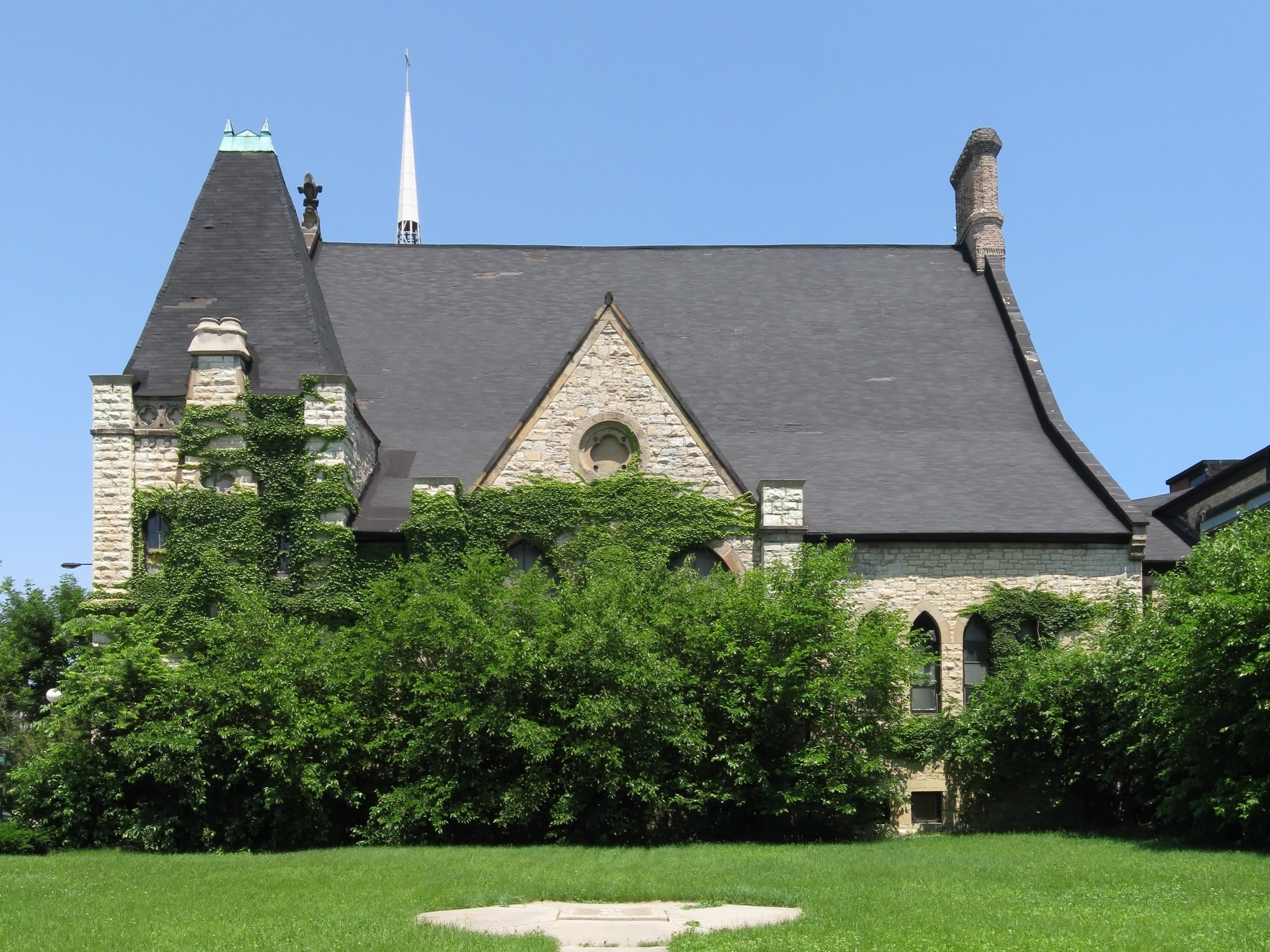
Chicago's oldest Black congregation, organized in 1850, whose Great Migration-era church at 31st and King Drive anchored Bronzeville's religious and civic life.
| At a glance | |
|---|---|
| Type | ORGANIZATION — church |
| Dates | 1850 – present |
| Chicago connection | CORE — Chicago |
| Known for | Chicago's oldest Black congregation; a Great Migration receiving church |
| Verification | SUPPORTED |
| CTL ID | CTL-ENC-000451 |
| Documented address | 3101 S. Martin Luther King Jr Dr, Chicago, IL 60616 |
Overview
Olivet Baptist Church is, by its institutional record, the oldest Black congregation in Chicago, organized in 1850 — before emancipation, before the Great Migration, before Bronzeville had a name [S1]. It grew through a chain of nineteenth-century Black Baptist congregations (Xenia, Zion, and the Providence merger that produced the Olivet name and body), and in the Great Migration decades it became one of the largest Black churches in America: a receiving institution for southern migrants, a civic platform, and one of the anchor churches Drake and Cayton mapped at the center of the Black Metropolis [S1][S2].
The migration church
Under Rev. Lacey Kirk Williams, pastor from 1916 until his death in 1940, Olivet's membership multiplied with the migration itself; contemporary accounts credit the church with membership in the thousands and a program — employment counsel, social services, mass meetings — built for a congregation arriving weekly from Mississippi and the South [S1]. The church's institutional records, its anniversary histories, and its place in the sociological record of Black Metropolis are the document base of this entry: Olivet is what a congregation looks like when it becomes, for a migrating people, a city within the city [S1][S2]. Its present home, the former First Congregational Church building at 31st and King Drive (built as the Chicago home of a white congregation, acquired by Olivet in the migration era), stands in the photograph attached to this entry [S1].
The document of record
This is a type-(b) entry: the institution anchored by its institutional records and anniversary histories, and by its documented place in Black Metropolis (1945), the Chicago school's founding study, where Olivet stands as evidence for the church's role in the migrant city [S2]. The congregation's own archive is not separately cataloged in the sources consulted; the entry therefore treats the published institutional history and the sociological record as its documents, and says so rather than claiming a repository the build could not verify [S1].
Chicago connection
Olivet's Chicago connection is CORE and foundational: organized in Chicago in 1850, it is the city's oldest Black congregation, and its whole documented history — migration growth, Bronzeville anchorage, civic leadership — is Chicago history [S1][S2].
Documented address and map
Documented address: 3101 S. Martin Luther King Jr Dr, Chicago, IL 60616. Coordinates were returned by the U.S. Census Geocoder for that address (matched as 3101 S DR MARTIN LUTHER KING JR DR) and are recorded in the frontmatter verbatim, with the map file to be built by the finisher.
Disputed and unresolved
No material dispute located in the sources consulted for this entry.
See also
Relationships
- located_in — City of Chicago (CTL-E-1475) — Olivet Baptist Church has been a Chicago congregation since 1850, at 3101 S. Martin Luther King Jr Dr in its modern era (institutional histories).
- served_neighborhood — City of Chicago (CTL-E-1475) — Olivet served as a principal receiving institution for Great Migration arrivals in Chicago, growing into one of the largest Black congregations in America in the migration decades (institutional histories; Black Metropolis tradition).
Sources
- S1: Olivet Baptist Church institutional history and Chicago landmark/anniversary coverage — the congregation organized in 1850 (as Xenia Baptist, then Zion Baptist, then Olivet), its merger history, and its Great Migration-era growth under Rev. Lacey Kirk Williams.
- S2: Drake, St. Clair, and Horace R. Cayton. Black Metropolis: A Study of Negro Life in a Northern City. New York: Harcourt, Brace, 1945 — Olivet among the anchor churches of the Black Metropolis (see CTL-ENC-000364).
Cite this entry
- Permanent ID: CTL-ENC-000451 · Crosswalked graph record: CTL-E-0148 · Version: 0.1 · Date: 2026-10-29
- Chicago: CultureTechLens. "Olivet Baptist Church." CultureTechLens Encyclopedia, version 0.1, October 29, 2026. CultureTechLens NFP. CTL-ENC-000451. Source: CultureTechLens
- APA: CultureTechLens. (2026). Olivet Baptist Church (Version 0.1, Entry CTL-ENC-000451). CultureTechLens Encyclopedia. CultureTechLens NFP. Source: CultureTechLens
- MLA: CultureTechLens. "Olivet Baptist Church." CultureTechLens Encyclopedia, version 0.1, CultureTechLens NFP, 29 Oct. 2026. Entry CTL-ENC-000451. Source: CultureTechLens
Further reading
- CultureTechLens Knowledge Graph record CTL-E-0148 (Church).
Image credits
- Olivet Baptist Church, 3101 S. Martin Luther King Jr Dr, Chicago. See Images block in the frontmatter for the full credit line, rights status, and rights document.
Citation
CultureTechLens. "Olivet Baptist Church." CultureTechLens Encyclopedia, Historical Documents (staged), version 0.1, 2026-10-29. CultureTechLens NFP. CTL-ENC-000451.
<!-- =======================